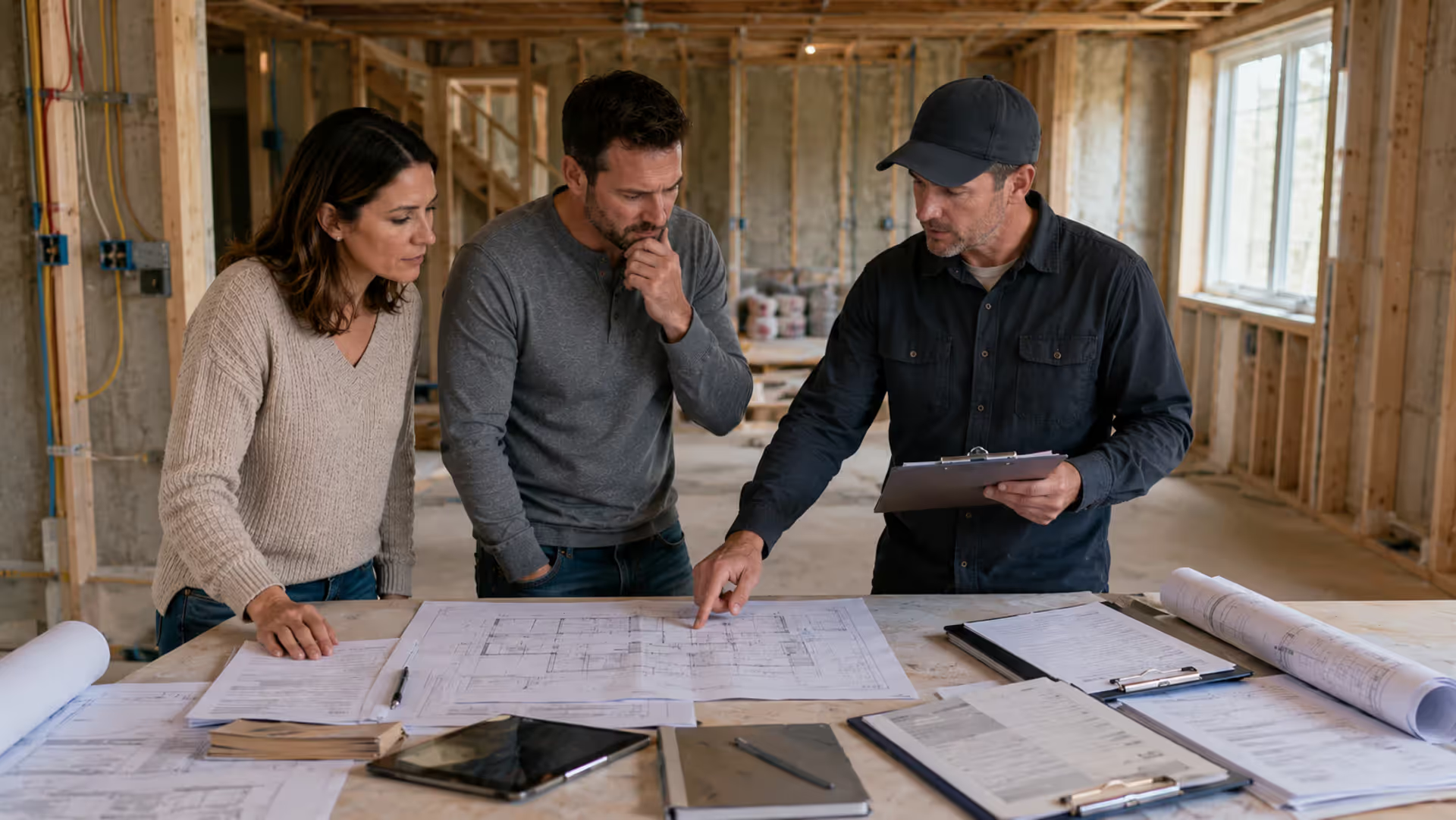

Homeowners comparing multiple renovation estimates and contractor bids at a table
How to Compare Remodeling Estimates the Right Way?

Content
Choosing the right contractor for your home renovation isn't just about finding someone who can do the work. It's about finding someone who can communicate clearly, price fairly, and deliver what they promise. That starts with understanding the estimates they give you.
Most homeowners make the mistake of looking at the bottom-line number first. Big mistake. The real story lives in the details, and those details can mean the difference between a smooth project and a nightmare that drags on for months. Let's break down exactly how to evaluate renovation estimates so you can make a smart decision.
Why Getting Multiple Contractor Bids Matters for Your Project
You wouldn't buy the first car you test drive, right? Same principle applies here.
Getting multiple bids protects you in several ways. First, it gives you a realistic sense of what your project should cost. One estimate tells you nothing. Three or four? Now you've got context. If one bid comes in at $45,000 and two others are around $68,000, you know something's off.
Second, comparing bids reveals different approaches to the same project. One contractor might suggest a material you hadn't considered. Another might flag a structural issue the first guy missed. These differences matter.
Industry standard? Three to five bids for most residential projects. Less than three and you're flying blind. More than five becomes unmanageable unless you're using remodeling estimate software to keep everything organized.
Timing matters too. For smaller projects under $10,000, you can probably handle comparison manually with a spreadsheet. But once you're looking at kitchen remodels, additions, or whole-home renovations, software tools become genuinely helpful. They organize quotes in a standardized format, highlight missing information, and make side-by-side comparison actually possible.
The pattern I see most often is homeowners who skip this step and regret it later. They hire based on a friend's recommendation or the first person who shows up, then discover the hard way that not all contractors work the same way.
What Should Be Included in Every Renovation Estimate
A proper estimate isn't a napkin sketch with a number scrawled at the bottom. It's a detailed document that spells out exactly what you're paying for.
Here's what should always be there: labor costs broken down by trade, materials with specific brands and grades, project timeline with start and completion dates, payment schedule tied to milestones, permit costs and who's pulling them, warranty information for both labor and materials, and a clear list of exclusions.
That last part trips people up constantly. Exclusions tell you what's NOT included. If the estimate doesn't say who's handling debris removal, you might find yourself with a dumpster bill you didn't expect.

Author: Sophie Langston;
Source: johnhranec.com
Understanding the Cost Breakdown in Your Estimate
Labor typically runs 40-60% of total project cost for most renovations. If you're seeing 70% or more going to labor, ask why. Maybe it's justified for highly specialized work. Or maybe not.
Materials should list specific products. "Kitchen cabinets" means nothing. "KraftMaid Vantage semi-custom cabinets in maple with shaker door style" tells you exactly what you're getting. Generic descriptions are a warning sign.
The payment schedule reveals a lot about contractor confidence and financial stability. Red flag: asking for 50% or more upfront. Standard practice: 10-20% deposit, then payments tied to completion milestones, with 10-15% held back until final walkthrough.
Line Items You Should Always See
Every legitimate estimate includes these specific line items:
Demolition and disposal (who's hauling away the old stuff?), site protection (how are they protecting your floors and belongings?), materials with quantities and specifications, labor by trade (carpentry, electrical, plumbing should be separate), permits and inspections, project management or supervision fees, and contingency allowance for unforeseen issues.
That contingency line is actually a good sign. Contractors who include a 10-15% contingency are being realistic. Those who don't are either inexperienced or planning to hit you with change orders later.
How to Read and Analyze a Contractor's Quote
Start at the top, not the bottom.
First, verify basic information: contractor's business name, license number, insurance details, and expiration dates. Call your state licensing board if you need to verify. Takes five minutes and can save you thousands.
Next, check the scope of work description. Does it match what you discussed? Word for word matters here. "Update bathroom" is vague. "Remove existing tub and tile, install new 60-inch acrylic tub, tile surround with 12x24 porcelain tile, new vanity with quartz top, new toilet, new light fixtures" is specific.
Compare line items across multiple bids. You'll notice differences fast. One contractor includes moving your furniture, another doesn't mention it. One prices premium paint, another uses builder-grade. These aren't apples-to-apples comparisons until you account for the differences.
Watch for vague language like "as needed" or "per plan" without defining what that means. Good estimates quantify everything. Not "install lighting as needed" but "install four recessed LED lights and one pendant fixture."
Markup versus actual cost is harder to spot, but not impossible. Most contractors mark up materials 15-30% and that's fair. They're taking responsibility for ordering, receiving, and storing everything. But if you see $800 for a faucet you found online for $200, that's excessive.
Red Flags That Signal a Problem with a Renovation Bid
Some warning signs scream at you. Others whisper.
Author: Sophie Langston;
Source: johnhranec.com
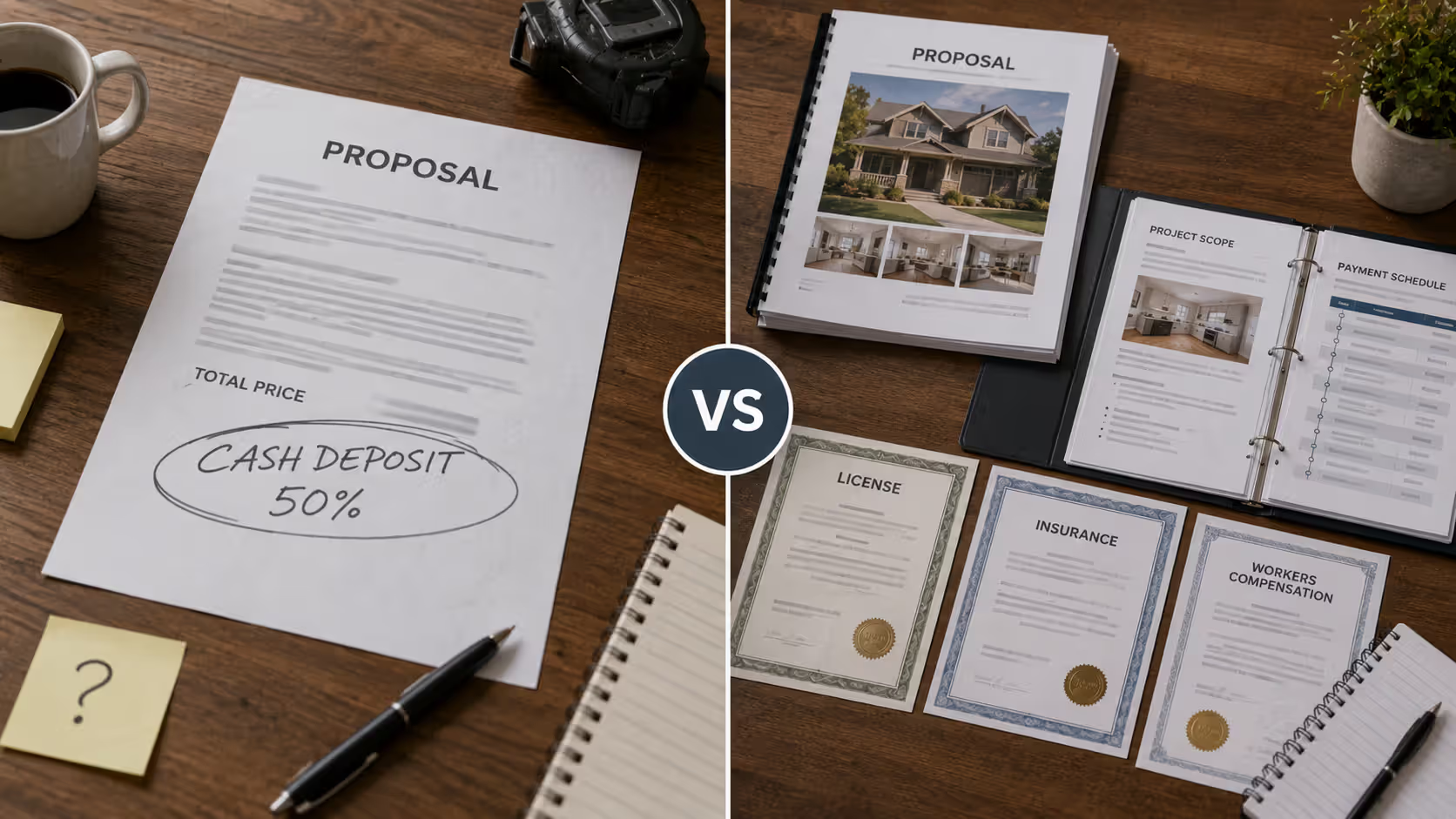
The screaming ones: bids significantly lower than others (20% or more), no written contract offered, pressure to sign immediately, requests for large cash payments, no license or insurance information, and missing contact details or physical address.
That unusually low bid? It's low for a reason. Either they're cutting corners, using subpar materials, planning to nickel-and-dime you with change orders, or they're desperate for work because nobody else will hire them. None of these are good.
The whispering red flags are subtler: excessive use of allowances without guidance, no timeline provided, verbal promises that contradict the written estimate, reluctance to provide references, and generic estimates that could apply to any house.
Allowances can be legitimate, but they're often abused. "Tile allowance: $3,000" might sound fine until you realize that buys you the cheapest option at Home Depot, and anything decent requires you to pay the difference. Better contractors specify what the allowance actually covers.
Cash-only requests deserve special mention. There's exactly one reason a contractor wants cash: they're not reporting income. That means they're probably not carrying proper insurance, not paying workers comp, and not pulling permits. When something goes wrong—and it will—you have zero recourse.
Step-by-Step Checklist for Comparing Bids Fairly
Let's make this systematic. Use this checklist for every bid you receive:

Author: Sophie Langston;
Source: johnhranec.com
Verify credentials first. Check license status with your state board. Confirm insurance coverage and get a certificate if needed. Search for complaints with the Better Business Bureau and your state attorney general's office. Look up online reviews, but read between the lines.
Compare scope of work line by line. Create a spreadsheet listing every task mentioned in any bid. Mark which bids include each item. This reveals gaps fast.
Evaluate materials specifications. Are they comparing the same quality levels? Research any products you don't recognize. Check if brands are comparable in quality and warranty.
Assess timeline realism. Does the schedule account for permit delays, material lead times, and weather? Unrealistically short timelines often mean rushed work or missed deadlines.
Review payment terms. Are payments tied to specific milestones? Is the final payment large enough to ensure completion? Never agree to pay the full amount before final inspection.
Check communication quality. Did they respond promptly to questions? Are they willing to explain line items? Do they listen to your concerns? Communication during bidding predicts communication during construction.
Request and contact references. Don't just ask for them—actually call. Ask about timeline accuracy, budget adherence, problem-solving ability, and cleanliness. Would they hire this contractor again?
Assess value, not just price. The middle bid often represents the best value. Lowest price rarely means best deal. Highest price doesn't guarantee quality either.
Here's a comparison showing how three different estimates might look for the same bathroom renovation project:
| Component | Estimate A | Estimate B | Estimate C |
| Detail Level | Vague, 8 line items | Moderate, 15 line items | Detailed, 32 line items |
| Demolition | "Demo existing bathroom: $800" | "Remove tub, tile, vanity, toilet: $1,200" | "Demo tub and surround, remove tile floor, disconnect plumbing, haul debris: $1,400" |
| Materials Spec | "Tub and tile" | "Standard tub, ceramic tile" | "American Standard Cambridge 60" tub, Daltile 12x24 porcelain" |
| Labor Breakdown | Single "Labor" line: $8,500 | Separated by trade: $9,200 total | Itemized by task with hours: $9,800 total |
| Timeline | Not mentioned | "3-4 weeks" | "Start date, milestone dates, 18 working days" |
| Permits | Not mentioned | "Included" | "Plumbing and electrical permits: $350" |
| Warranty | Not mentioned | "1 year" | "2 years labor, manufacturer warranty on materials" |
| Payment Schedule | 50% down, 50% at completion | 30% down, 40% mid-project, 30% completion | 15% down, 35% at rough-in, 35% at fixture install, 15% final |
| Total | $18,500 | $24,200 | $26,800 |
Look at that first estimate. That low price comes with almost no detail, no timeline, and a payment structure that puts you at serious risk. Estimate C costs more, but you know exactly what you're getting and when.
How Remodeling Estimate Software Helps Homeowners
Digital tools have changed how homeowners can evaluate contractor bids. Not dramatically, but meaningfully.

Author: Sophie Langston;
Source: johnhranec.com
Good remodeling estimate software does several things well. It standardizes how you view different quotes, making comparison actually possible. It highlights missing information automatically. It stores all communication with contractors in one place. And it helps you track which questions you've asked and which contractors have responded.
Some platforms go further, offering cost databases so you can verify if line items are priced reasonably. Others connect you with verified contractors and facilitate the bidding process from start to finish.
The simpler option usually wins here. You don't need enterprise-level software. You need something that organizes quotes clearly and flags obvious problems.
Popular features include side-by-side comparison views, document storage for contracts and invoices, communication logs, budget tracking, and timeline visualization. The best tools also include educational resources explaining what different line items mean.
But here's the thing: software can't replace judgment. It organizes information and surfaces patterns, but you still need to evaluate quality, assess contractor fit, and make the final decision. Think of it as a really good filing system, not a decision-making oracle.
For projects over $30,000, the investment in estimate software usually pays for itself by helping you catch discrepancies and negotiate better terms. For smaller projects, a detailed spreadsheet might be enough.
The single biggest mistake homeowners make is choosing a contractor based solely on price. A detailed, written estimate isn't just about numbers—it's about trust and accountability. When a contractor takes time to document every aspect of the project, they're demonstrating professionalism and setting clear expectations. That clarity protects both parties and leads to better outcomes.
— Thompson David
Frequently Asked Questions About Renovation Estimates
You've collected your bids. You've compared them line by line. You've checked references and verified credentials. Now what?
Trust your gut, but verify it with data. If a contractor feels right but their bid seems high, talk to them about it. Ask where the extra cost comes from. Often it's better materials, more experienced labor, or more realistic timelines.
If a contractor feels wrong despite a good price, listen to that instinct. You'll be working with this person for weeks or months. Communication matters. Reliability matters. Professionalism matters.
The best estimate combines fair pricing, clear communication, appropriate detail, realistic timelines, and a contractor you actually want to work with. All five factors matter. Four out of five isn't enough.
Document everything. Keep copies of all estimates, correspondence, and notes from conversations. When you make your choice, get a formal contract that matches the estimate you accepted. Read it carefully before signing. Ask questions about anything unclear.
And remember: the estimate is just the beginning. The real test comes during construction. A good estimate from a good contractor sets you up for success, but staying involved, asking questions, and maintaining open communication throughout the project ensures you get the results you're paying for.
Your renovation should improve your home and your life. Starting with a clear, detailed, fair estimate makes that outcome far more likely.