
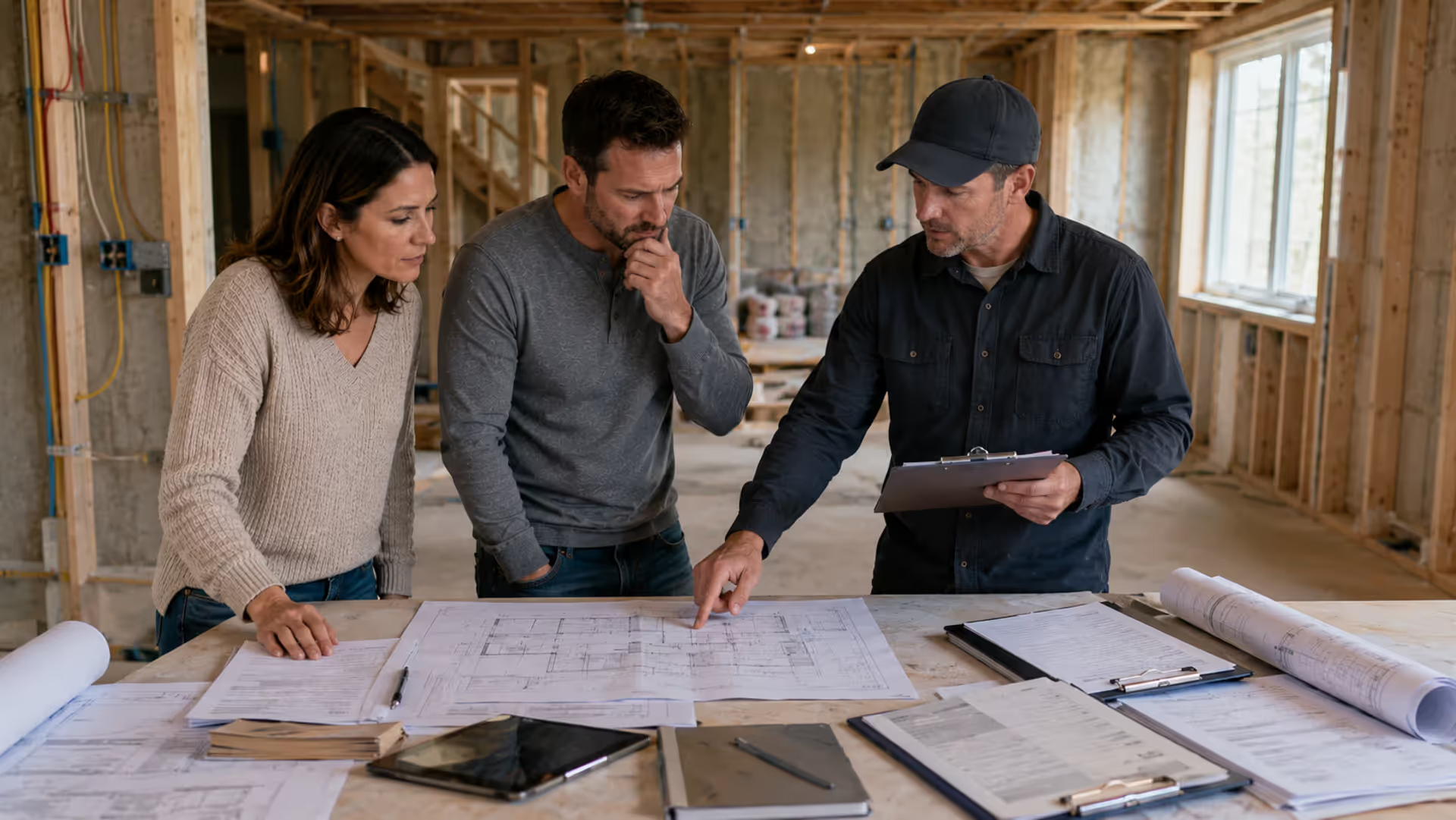
Homeowners reviewing basement finishing plans and permit documents with contractor and inspector
Finish Basement Without a Permit Guide

Content
Converting your basement into usable square footage transforms wasted storage into functional rooms your family will actually use. Skip the permitting process, though, and you're setting yourself up for consequences that dwarf the few hundred dollars you thought you'd save. We're talking potential fines reaching five figures, mandatory demolition of completed work, and insurance nightmares that could leave you financially devastated. Here's the unvarnished truth about what actually happens when you bypass permits for basement renovations.
Why Building Permits Exist and What They Cover
Think permits are just another way for local government to collect fees? That's a dangerous misconception that could cost you dearly.
The permit system creates accountability checkpoints throughout your project. Licensed inspectors examine your plans before work begins and physically review the construction at critical phases. They're hunting for violations that create fire hazards, compromise structural integrity, or introduce health risks. Your newly finished basement might photograph beautifully, but inadequate wiring or undersized emergency exits transform it into a genuine safety threat.
Documentation represents another crucial function. Future buyers need verification that renovations followed legal procedures and met safety standards. This official record protects everyone who touches the property transaction.
Which projects trigger permit requirements? Generally speaking, any modifications touching structural elements, electrical infrastructure, plumbing systems, or habitable space designation. A renovation permit guide for homeowners usually encompasses basement conversions, room additions, substantial remodels, and system overhauls. Surface-level changes like fresh paint or cabinet swaps typically fly under the radar. The moment you're relocating walls, installing new circuits, or converting storage into bedrooms, you've entered regulated territory.
What permits are required for home renovation varies significantly across municipalities. Urban centers often enforce stricter standards than rural areas. Contact your building department before breaking ground—every single time.
Legal Consequences of Unpermitted Basement Finishing
Let's talk about the hammer that local authorities can drop on unpermitted construction. This goes way beyond inconvenience.
Author: Nathan Cole;
Source: johnhranec.com
Financial penalties hit first. Jurisdictions across the country assess fines ranging from $500 for minor infractions up to $5,000 or more for substantial violations. Some municipalities calculate penalties as percentages of total project costs—meaning your $30,000 basement conversion could trigger a $10,000 fine.
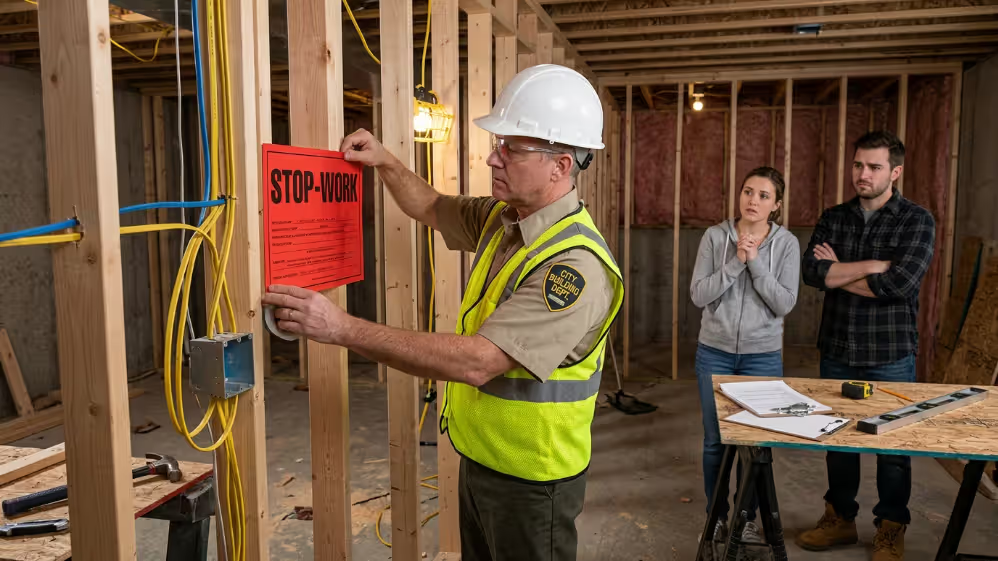
Stop-work orders arrive when inspectors catch ongoing unpermitted construction. Your project halts completely until you've filed proper applications, submitted detailed plans, paid all fees plus penalties, and received official approval. This bureaucratic maze can stretch across months.
The nuclear option? Forced removal of completed work. When your construction violates code beyond repair, municipalities possess legal authority to mandate complete demolition. Picture yourself sledgehammering that new bathroom, ripping finished drywall off studs, and hauling your investment to the landfill. This nightmare scenario plays out more frequently than most homeowners realize.
Certain jurisdictions classify egregious violations as criminal misdemeanors. While prosecution remains uncommon for residential projects, criminal charges become possible when unpermitted work causes injuries or significant property damage to others.
The biggest mistake homeowners make is thinking they won't get caught. Between neighbor complaints, routine inspections, and disclosure requirements during home sales, unpermitted work almost always surfaces eventually. By that time, fixing the problem costs three to five times what the original permit would have cost.
— Morrison James
Financial Risks When You Skip the Permit Process
Legal penalties represent just your opening salvo of financial pain. Unpermitted construction creates monetary time bombs that can detonate years after you've finished the project.
Property valuation takes a direct hit. Professional appraisers cannot factor unpermitted improvements into their assessments. Your $40,000 basement transformation might contribute absolutely nothing to appraised value without proper documentation. Worse yet, buyers often discount asking prices when they calculate remediation costs.
Insurance carriers take a hardline stance on undocumented work. Should fire originate in your unpermitted basement space, your carrier might reject your claim entirely—covering neither the basement nor any other damaged areas. Their argument centers on material misrepresentation of your property's true condition. Families have lost everything because of this exact scenario.
Refinancing hits unexpected roadblocks. Mortgage lenders mandate professional appraisals, and appraisers flag unpermitted modifications in their reports. Numerous lenders refuse to approve financing on properties carrying substantial undocumented improvements. Retroactive permits become mandatory before loan processing continues.
Property tax consequences depend on local regulations. Some homeowners deliberately avoid permits hoping to dodge reassessments. Tax assessors conduct independent property reviews, though, and eventually discover major modifications. Discovery triggers back taxes plus interest and penalties.

Author: Nathan Cole;
Source: johnhranec.com
How Unpermitted Work Affects Home Sales and Inspections
Attempting to sell property with unpermitted construction is where theoretical risks become concrete problems.
Most states mandate disclosure of unpermitted modifications. Concealing this information exposes you to fraud lawsuits after closing. These legal battles drag on for years and generate costs exponentially higher than original permit fees.
Full disclosure doesn't eliminate problems—it just makes them transparent. Buyers typically demand one of three remedies: documented proof of retroactive permits, substantial purchase price reductions, or escrow accounts covering permit acquisition costs. Price cuts usually win because they're simplest.
Professional home inspectors identify unpermitted work in their formal reports. While they don't enforce building codes, experienced inspectors recognize telltale signs. Missing ground wires, inadequate emergency egress, improper ceiling clearances, insufficient ventilation—these red flags populate inspection documents and arm buyers with negotiating ammunition.
Appraisers compound these challenges. They document unpermitted improvements and frequently exclude them from valuation calculations. When buyers require financing, lenders review these appraisals and either mandate permit resolution before closing or reduce approved loan amounts.
Title insurance companies occasionally inject themselves into the situation. They're focused on clear title, and unpermitted construction can muddy those waters. Some companies refuse issuing policies until permit questions are definitively resolved.
The pattern I've witnessed countless times: sellers believe they've saved $1,500 by skipping permits, then slash their asking price by $10,000 to $15,000 because of permit complications. The economics never favor the shortcut.
Common Home Projects That Require Permits
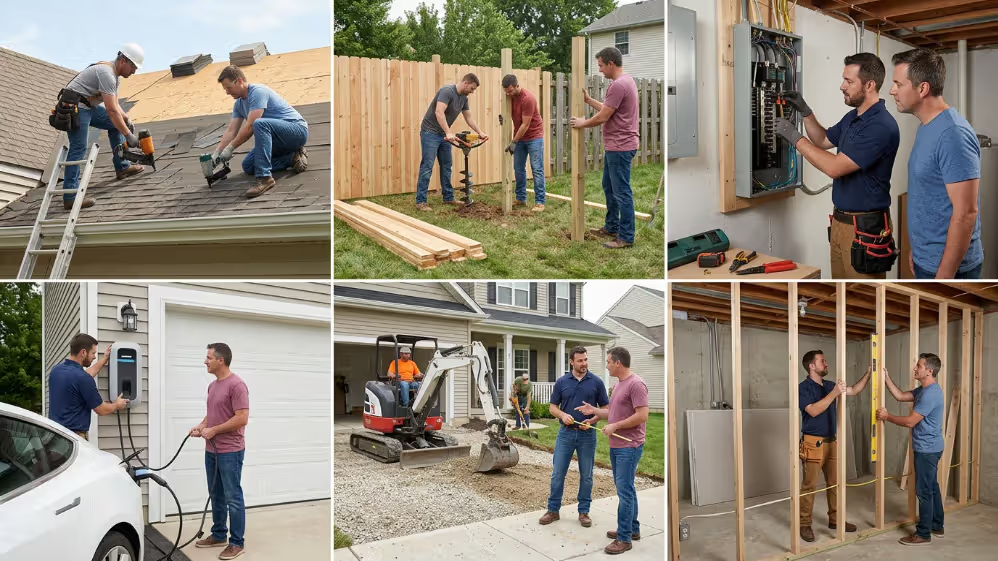
Basement conversions aren't the only renovations that catch homeowners off guard. Let's examine other frequent projects requiring official approval.
Author: Nathan Cole;
Source: johnhranec.com
Roofing and Exterior Work
Roof replacement permit requirements surprise many property owners who assume they can simply hire contractors and proceed.
Do you need a permit to replace a roof? Most building departments say yes. The specific answer hinges on project scope. Simple overlay installations adding shingles over existing materials might escape permit requirements in certain areas. Complete tear-offs with full replacements typically mandate permits. Structural modifications, skylight additions, or roofline alterations definitely require official approval.
Do i need a permit to replace my roof? Beyond basic permits, building departments often require separate inspection stages. Officials verify decking integrity, proper underlayment installation, and compliance with manufacturer specifications plus local wind load ratings.
Do you need a building permit to replace a roof? Expect permit costs between $150 and $500, scaling with property value and geographic location.
Fencing and Property Boundaries
Fence installation permits come with numerous exceptions and special circumstances.
Do i need a permit to build a fence? Generally yes, but with significant caveats. Do you need a permit for a fence? Height, positioning, and construction type all factor into the equation. Many municipalities exempt fences under 6 feet tall from permit requirements, but only when they're set back from front property lines. Corner properties face additional restrictions. Pool enclosures almost universally require permits because they're classified as safety installations.
Fence permits cost relatively little, typically $50 to $150. They serve critical functions beyond revenue generation: confirming you're building within your property boundaries, not encroaching on neighboring land. Setback regulations exist to prevent disputes.
Electrical Upgrades and EV Chargers
Do i need a permit to upgrade my electrical panel? This question has exactly one answer across every jurisdiction: absolutely yes, without exception.
Electrical system work carries inherent dangers. Improperly upgraded panels cause structure fires, electrocution injuries, and equipment destruction. Permits guarantee that licensed electricians perform the work and that installations pass rigorous inspections.
Do i need a permit to install ev charger? Nearly always. Level 2 EV charging station installation requires new 240-volt circuit installation, which constitutes electrical work demanding permits and inspections.
Certain municipalities have streamlined EV charger approval processes to encourage electric vehicle adoption. These expedited permits might cost $100 to $200 and receive approval within days instead of weeks. Official authorization remains mandatory regardless.
Driveway Extensions and Hardscaping
Do i need a permit to extend my driveway? Most likely, particularly when adding substantial square footage or creating new street connections.
Driveway permits address drainage patterns, stormwater management, and public right-of-way concerns. Municipalities want assurance that your expanded paving won't redirect water onto adjacent properties or accelerate erosion.
Costs fluctuate dramatically, from $75 in smaller communities to $500 or more in major metropolitan areas. Some building departments additionally require professional engineering drawings when additions exceed specific square footage thresholds.
How to Fix Unpermitted Basement Work
Discovered undocumented construction in your property? Or perhaps you completed basement renovations without authorization and now need to correct the situation? Here's your roadmap to compliance.
Author: Nathan Cole;
Source: johnhranec.com
Step 1: Initiate contact with your building department. Transparency matters here. Inspectors respond more favorably to homeowners who voluntarily come forward versus those caught during enforcement sweeps. Provide complete details about what was constructed and when.
Step 2: File retroactive permit applications. You'll need comprehensive work descriptions, typically including photographs, architectural drawings, and material specifications. Certain jurisdictions mandate professional drawings even for after-the-fact permits.
Step 3: Remit fees and penalties. Anticipate paying double or triple standard permit costs. Many municipalities charge current permit rates plus penalties equaling 100% to 200% of those fees. A $500 permit might cost $1,500 when filed retroactively.
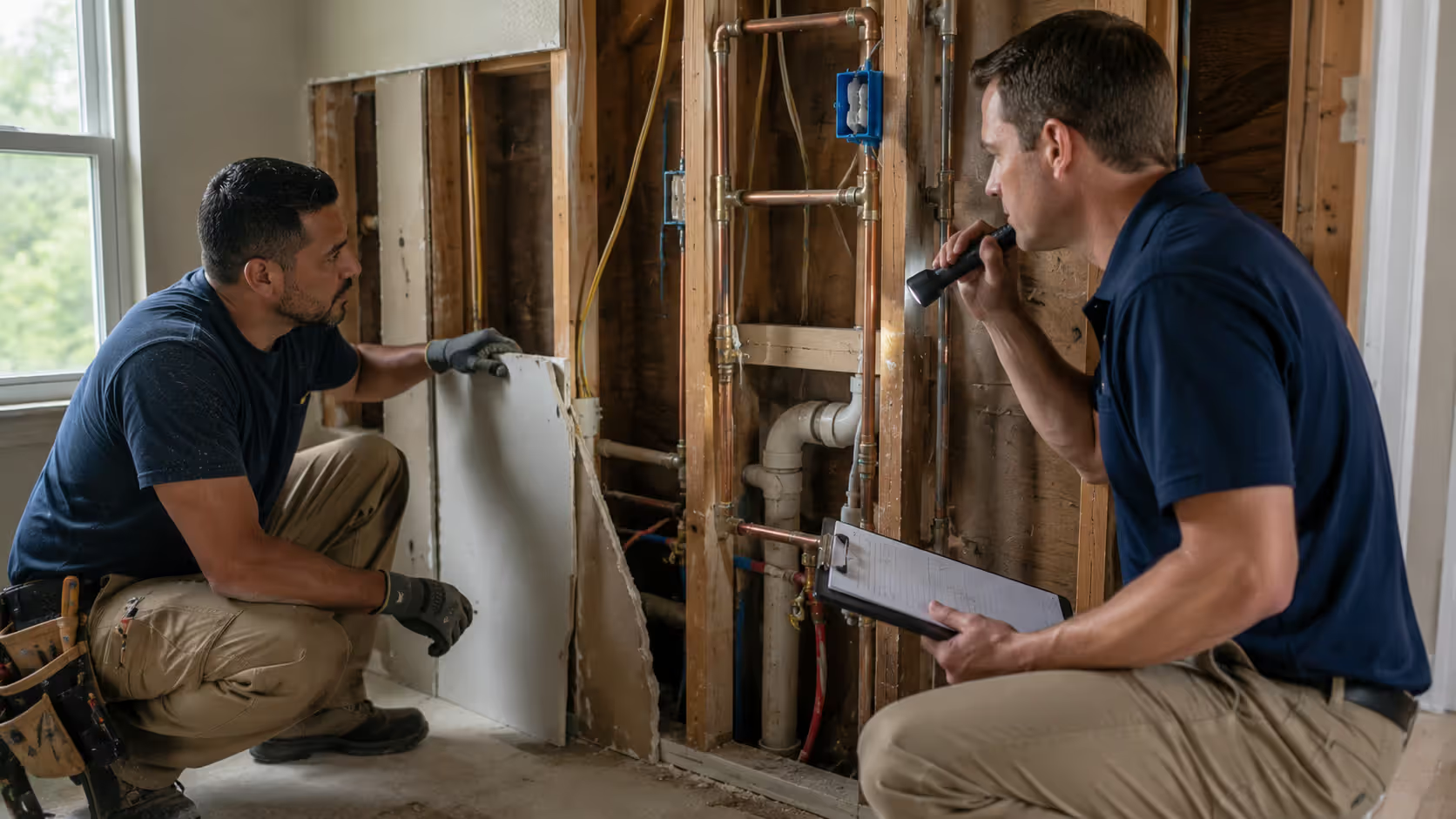
Step 4: Expose concealed work. This is where things get painful. Inspectors need visual confirmation that electrical, plumbing, and structural elements comply with code. That means removing drywall at strategic locations to reveal what's behind finished surfaces. You'll likely expose electrical junction boxes, plumbing connections, framing members, and insulation installations.
Step 5: Remediate code violations. Inspections almost invariably uncover problems. Perhaps your outlets lack proper grounding. Maybe emergency egress windows fall below minimum size requirements. Ceiling heights might be inadequate in certain zones. Every identified violation requires correction before inspectors grant approval.
Step 6: Arrange inspection appointments. Depending on construction complexity, you might need multiple inspection phases: rough framing, electrical rough-in, plumbing rough-in, insulation, and final walkthrough. Each stage must pass before advancing to the next.
Step 7: Obtain permit closure. Once everything passes muster, inspectors issue final approval documentation. This paperwork becomes part of your property's permanent official record and provides proof that work was completed legally.
Total costs? Budget $3,000 to $10,000 for typical basement projects, encompassing permit fees, inspection charges, and repairs bringing everything into compliance. These expenses come on top of your original construction investment.
Permit Requirements by Common Home Project
Here's a comprehensive reference showing typical permit requirements and associated costs for frequent home improvement projects:
| Project Category | Permit Typically Needed? | Standard Permit Cost | Notable Exemptions |
| Basement conversion | Yes | $500–$2,000 | No exemptions—permits always mandatory |
| Roof replacement | Yes | $150–$500 | Minor repairs under $5,000 in select jurisdictions |
| Fence construction | Varies | $50–$150 | Fences under 4–6 feet in rear/side yards (location-dependent) |
| Panel upgrade (electrical) | Yes | $100–$300 | No exemptions—permits always mandatory |
| EV charging station | Yes | $100–$250 | No exemptions for Level 2 installations |
| Driveway expansion | Usually | $75–$500 | Minor repairs or resurfacing existing pavement |
| Deck installation | Yes | $200–$800 | Ground-level decks under 200 sq ft (some areas) |
| HVAC system replacement | Yes | $50–$200 | Direct equipment swaps in certain jurisdictions |
Remember these figures represent permit fees exclusively. They exclude design costs, inspection fees, or actual construction expenses.
FAQ: Home Improvement Permit Questions Answered
Permits won't make your basement more attractive or add features you'll enjoy using. They do, however, safeguard your financial investment and protect your family's wellbeing.
The expenses are tangible but reasonable. Several hundred dollars in permit fees and several weeks of processing time feel burdensome—until you weigh them against alternatives. Thousands in fines, forced demolition, insurance claim denials, and transaction complications make permits look remarkably affordable.
Planning a basement conversion? Begin by contacting your building department. Inquire about required permits, procedural steps, and processing timelines. Most building officials are genuinely helpful and eager to guide you through the system correctly.
Already completed unpermitted construction? Address it immediately, before listing your property or before problems emerge. The retroactive permit process isn't enjoyable, but it's infinitely better than the alternatives.
Real estate represents most families' largest financial asset. Protect that investment by following proper procedures. Obtain required permits, pass scheduled inspections, and enjoy peace of mind knowing your finished basement is safe, legal, and won't generate future complications.