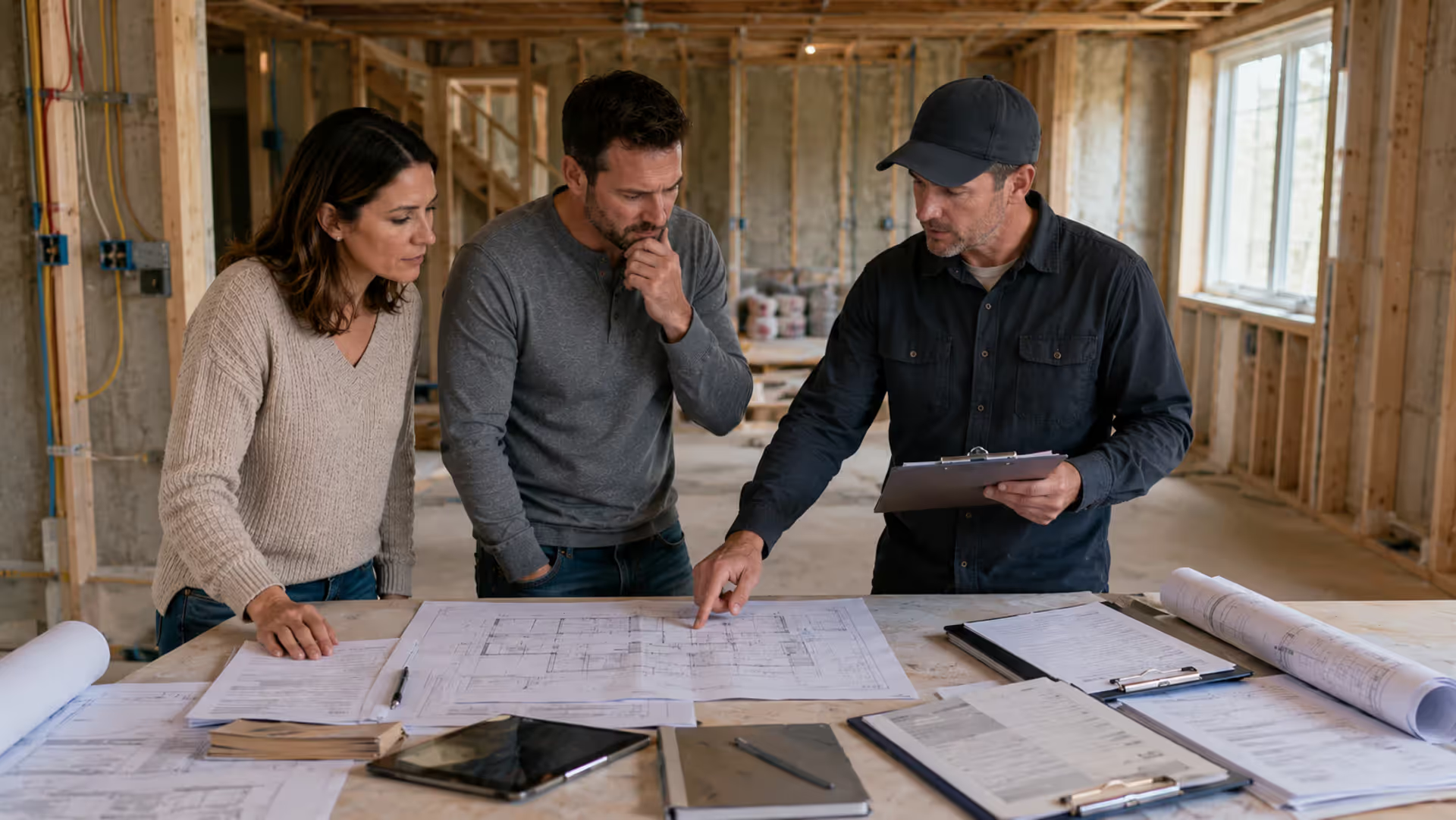

Homeowners reviewing credentials, estimates, and materials with a bathroom remodeling contractor
How to Choose a Bathroom Remodeling Contractor?

Content
Here's what nobody tells you about hiring the wrong bathroom contractor: you'll spend the next decade living with their mistakes. I'm talking about shower tiles that crack within six months, mold growing behind walls because someone skipped the waterproofing membrane, and electrical outlets positioned so awkwardly you can't plug in your hair dryer without contortionist moves. The financial damage? One homeowner I know spent $22,000 fixing a $12,000 bathroom because the original contractor didn't understand proper shower pan installation. That's money you'll never recover, and it doesn't count the stress of ripping everything out and starting over.
Why Contractor Selection Matters for Your Bathroom Remodel
Bad contractors leave destruction that lasts years after they've cashed your checks.
Think beyond delayed timelines. Poor contractor choices create permit violations that surface when you're trying to sell your house, forcing you to either disclose unpermitted work or pay thousands to bring everything up to code retroactively. They install beautiful tile over inadequate substrates that crack within months. They wire outlets that trip your breakers constantly. They create moisture problems that won't show up until black mold appears two years later.
Last year, a couple hired an unlicensed "contractor" they found through a neighborhood app. The guy charged $8,000 and finished in three weeks—seemed like a win. Fast forward eighteen months: tiles popping off the shower wall, water damage in the ceiling below, and a $15,000 repair bill from a legitimate contractor who had to tear out everything and rebuild it properly. The original guy? Disconnected phone number, no way to recover a dime.
Quality contractors bring more than tools and trucks. They've built relationships with local building inspectors over years of consistent work. They understand your municipality's specific code requirements (which vary more than you'd think—what passes in one county might fail inspection ten miles away). They spot potential problems—rotted subfloors, outdated plumbing, undersized electrical circuits—before closing up walls and creating permanent headaches.
Here's a reality check on bathroom contractor selection tips: the cheapest bid almost always becomes the most expensive choice. How? Low-ball estimates either mean the contractor doesn't understand what your project actually requires, or they're planning to hit you with endless "change orders" once work begins and you're trapped mid-renovation.
Timeline matters more than most people realize until they're living through it. Competent contractors finish standard bathrooms in 3-4 weeks. I've seen incompetent ones drag simple remodels across three months, leaving families sharing one bathroom and showering at the gym. Your morning routine, your kids' schedules, your ability to have guests over—all held hostage by someone's poor planning.
Budget overruns don't happen because of bad luck. They happen because inexperienced contractors either don't know how to estimate properly or deliberately lowball to win contracts, then nickel-and-dime you with "unexpected" costs any seasoned pro would've anticipated from day one.
Verify Credentials and Legal Requirements
Credentials separate real contractors from people who own a pickup truck and watched some YouTube videos.

Author: Olivia Hartwel;
Source: johnhranec.com
License and Insurance Verification
Start with your state's contractor licensing board website. Most offer searchable databases where you plug in the business name or license number. California's Contractors State License Board, for example, lets you see license status, complaint history, and any disciplinary actions pending or completed.
Some states don't require contractor licenses for smaller projects—but here's the thing: legitimate professionals carry licenses anyway because it demonstrates they've met minimum competency standards and care about their reputation.
Get the license number straight from the contractor's mouth. Then—and this matters—conduct your own bathroom contractor license check through official channels. Don't just accept a photocopy of their license. That five-minute search reveals:
- Whether the license is actually current (not expired)
- Bond status
- Workers' comp coverage
- Complaint history
- License classification (make sure it covers bathroom work specifically)
Insurance documentation is where many homeowners get lazy and regret it later. You need written proof of general liability insurance and workers' compensation. General liability protects your property if they damage something. Workers' comp protects you from lawsuits if someone gets hurt on your property.
Demand certificates sent directly from the insurance company to you—never accept documents the contractor provides. Why? Insurance certificate fraud happens more often than you'd imagine. Call the insurance company yourself if needed. They'll verify coverage for homeowners at no charge.
Bonding and Warranty Coverage
Contractor bonds provide financial protection when contractors abandon jobs or violate contract terms. Many states require bonds, typically ranging from $12,500 to $25,000.
Bonds work differently than insurance—they're essentially a guarantee fund you can tap into when things go wrong. If your contractor disappears mid-project, you file a claim against their bond to recover losses.
Warranty coverage should include both workmanship and materials. Standard workmanship warranties run 1-2 years. Material warranties vary by manufacturer but often extend 5-10 years or longer for fixtures and tile.
Get warranty terms in writing before signing anything. Some contractors advertise "lifetime warranties" that sound impressive until you read the fine print excluding basically every common failure point.
Evaluate Experience Through Portfolio and References
Past performance predicts future results better than any sales pitch.

Author: Olivia Hartwel;
Source: johnhranec.com
What to Look for in a Contractor's Portfolio
Smart bathroom contractor portfolio review tips focus on relevance. Look at bathrooms similar to yours—comparable size, similar scope, similar budget range. Someone who specializes in luxury master suites might not be the right fit for a basic hall bathroom update.
Check for:
- Before-and-after photos of actual projects (not just the glamorous "after" shots)
- Tile work showing clean grout lines and proper pattern alignment
- Fixtures mounted level and plumb
- Attention to detail like symmetrical outlet placement and consistent caulk lines
- Problem-solving examples (ask how they handled unexpected issues)
Ask contractors about specific portfolio projects. How long did that bathroom take? What was the budget range? What surprises came up? If they can't remember details about recent projects, they probably didn't do the work themselves.
Watch for stock photos. Run reverse image searches on a few portfolio pictures. You'd be shocked how many "contractors" are showing work they found on Pinterest.
Another common trick: contractors showing only their best work from five years ago. Ask about projects completed in the last six months. Trends change, products evolve, and recent work proves they're actively working.
How to Contact and Screen References
Ask for at least three references from jobs completed in the past year. Older references lose value because memories fade and contractor practices change.
When you call references, ask:
- Did they finish on time and on budget?
- How did they handle unexpected problems?
- Did they keep the work area reasonably clean?
- Did subcontractors show up when scheduled?
- Would you hire them again?
- What's one thing you wish had gone differently?
That last question is gold. Happy customers will mention something minor that didn't really bother them. Unhappy customers will hesitate, then the truth comes out.
Visit a completed project if possible. Photos hide a lot. Seeing work in person reveals quality issues like uneven tile spacing, sloppy caulking, or fixtures that don't sit flush.
Don't rely only on provided references. Check online reviews on Google, Yelp, and the Better Business Bureau. Look for patterns in complaints. One unhappy customer might be unreasonable. Five customers complaining about the same thing? That's a pattern.
Essential Questions to Ask Before Hiring
The questions to ask bathroom contractor before signing a contract separate professionals from pretenders. Their answers—and how quickly they answer—tell you everything.
What's your specific experience with bathroom remodeling? General contractors who "do bathrooms sometimes" lack the specialized knowledge of waterproofing systems, tile installation, and the tight tolerances bathroom work requires.
Who will actually be working on-site? Some contractors are essentially project managers who subcontract everything. That's fine if they're upfront about it, but you deserve to know who's doing the actual work.
How do you handle permits and inspections? They should pull all required permits and schedule inspections. If they suggest skipping permits to "save money," walk away immediately.
What's your typical timeline, and what causes delays? Realistic contractors build in buffer time for material delivery delays and unexpected issues. Be skeptical of anyone promising unusually fast completion.
Do you carry workers' compensation insurance? Without it, your homeowner's insurance becomes liable if someone gets hurt.
What's your process for change orders? Changes happen on almost every project. You need a clear process for pricing and approving changes before work happens.
What's your payment schedule? We'll dive deeper into this below, but establish expectations upfront. Large deposits are red flags.
Who will be my main contact, and what are your communication expectations? Poor communication kills more projects than poor skills.
What happens if I'm not satisfied with work? Good contractors have clear processes for addressing concerns.
Can you provide an itemized written estimate? Verbal estimates are worthless. You need line-item breakdowns for materials and labor.
What warranties do you offer? Both workmanship and materials should come with written guarantees.
How will you protect the rest of my home during construction? Dust barriers, floor protection, and dedicated entry/exit paths matter when you're living in the house during renovation.
Pay attention to how they answer. Vague responses indicate inexperience or dishonesty.
Red Flags That Signal an Unreliable Contractor
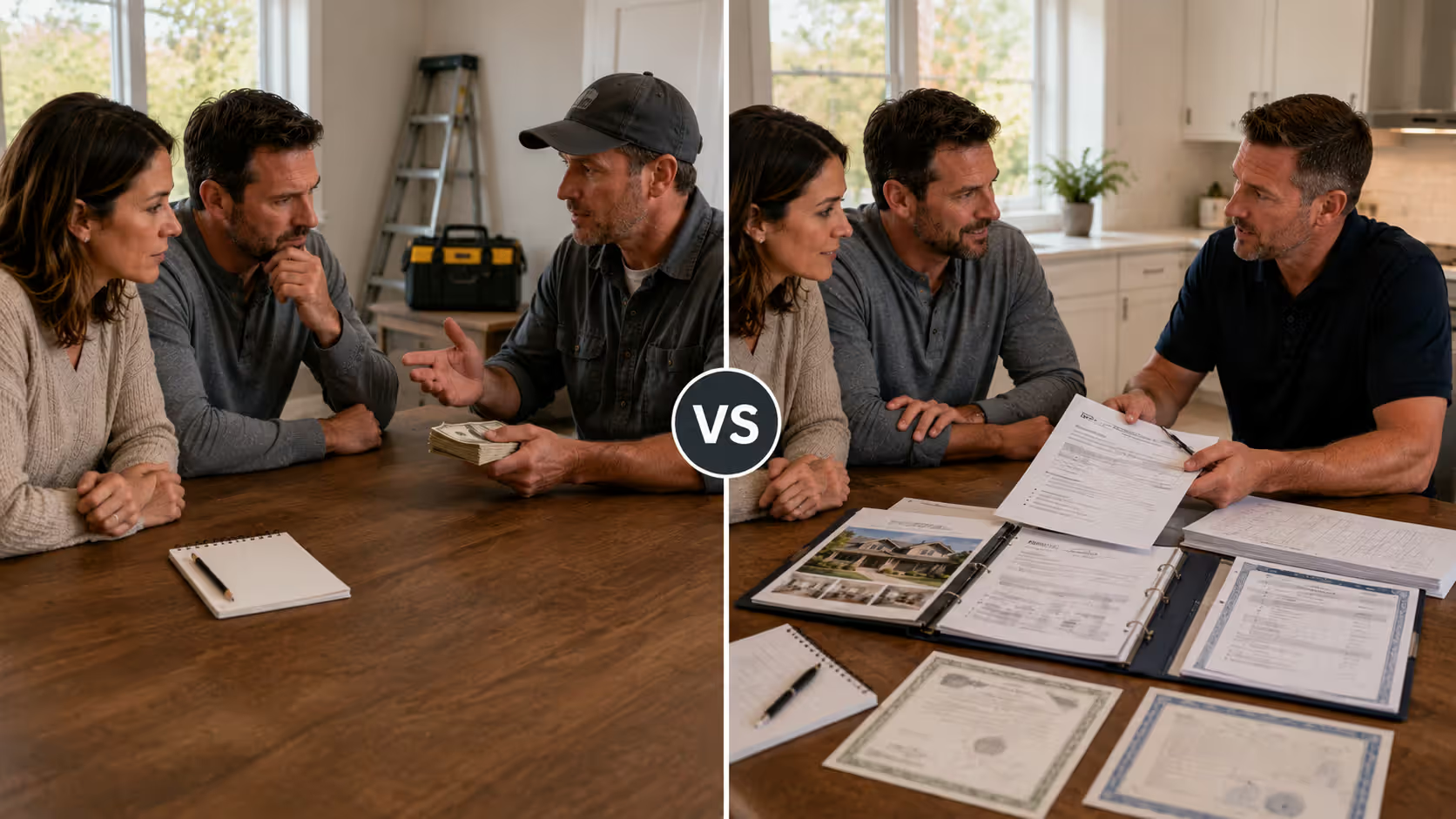
Some bathroom renovation contractor warning signs scream danger. Others whisper. Learn to hear both.
Author: Olivia Hartwel;
Source: johnhranec.com
No written contract. Handshake deals protect nobody. When contractors resist putting terms in writing, they're setting up wiggle room to exploit later.
Pressure tactics. "This price is only good today" is manipulation, not business. Professional contractors don't rush you into decisions.
Large upfront deposits. Anything over 10-15% of the total project cost raises concerns. Some states legally limit deposits—California caps them at 10% or $1,000 (whichever is less) for projects under $5,000.
No physical business address. PO boxes or residential addresses suggest fly-by-night operations. Established contractors have commercial locations.
Cash-only payments. This usually indicates tax evasion and eliminates paper trails you'll need for dispute resolution.
No license or insurance. Worth repeating even though we covered it earlier. Never hire unlicensed contractors, no matter how good the price sounds.
Hard to reach before the project starts. If they're difficult to contact during the sales phase, they'll be impossible to reach when problems arise.
No references or portfolio. Everyone starts somewhere, but your bathroom shouldn't be someone's training ground.
Suspiciously low bids. When one estimate comes in 40% below everyone else, something's wrong. They're either planning shortcuts, preparing to hit you with change orders, or don't understand the scope.
Asking you to pull permits. Contractors suggest this to hide their license status or because they've had licenses revoked.
Negative online reviews with defensive responses. How contractors respond to criticism reveals their character. Professional acknowledgment shows accountability. Angry, blame-shifting responses preview what you'll deal with when issues arise.
Trust your gut. When something feels off, it usually is.
Understanding Payment Terms and Contract Structure
The bathroom contractor payment terms guide starts with one ironclad rule: never pay everything upfront. Ever.
Standard payment schedules follow project milestones:
- 10-15% deposit to secure your start date and order materials
- 25-30% after demo and rough plumbing/electrical are complete
- 25-30% when tile work and fixtures are installed
- 25-30% upon final inspection passing
- Final 10% after walkthrough and your approval
This structure protects both sides. Contractors get cash flow for materials and labor. You keep financial leverage ensuring quality work.
Some contractors request larger deposits for custom materials or special-order fixtures. That's reasonable when they show you invoices proving actual costs. But deposits should never exceed real material expenses.
Payment schedules in contracts need to specify exactly what work must be complete before each payment. "50% at midpoint" is too vague. "50% upon completion of tile installation, waterproofing inspection passing, and fixture rough-in" is specific and enforceable.
Lien waivers matter more than most homeowners realize. When you make payments, contractors should provide signed lien waivers for those amounts. This prevents subcontractors or suppliers from putting liens on your property if the general contractor doesn't pay them.
Your contract must include:
- Detailed scope of work with specific materials, brands, and model numbers
- Project timeline with start and completion dates
- Payment schedule tied to specific milestones
- Change order process with pricing methodology
- Warranty terms for labor and materials
- Cleanup and disposal responsibilities
- Permit responsibilities
- Insurance requirements
- Dispute resolution process
Read every word before signing. Contractors who rush you through contracts are hiding something.
Generally speaking, fixed-price contracts beat time-and-materials arrangements for most bathroom remodels. You know the total cost upfront, and contractors have incentive to work efficiently.

Author: Olivia Hartwel;
Source: johnhranec.com
Bathroom Contractor Evaluation Checklist
Here's how to separate qualified contractors from pretenders:
| Must-Have Credentials | Bonus Qualifications That Impress | Run Away If You See This |
| Valid, current contractor license | Manufacturer certifications (tile systems, fixture installation) | No license or "license pending" |
| General liability insurance ($1M+ minimum) | Trade association membership (NARI, NKBA) | Demanding huge deposits upfront (>15%) |
| Active workers' comp policy | 5+ years focused on bathroom work | No physical business address |
| Current bond (if your state requires it) | In-house tile experts (not subcontracted out) | Pressure to sign contract immediately |
| Written contract with all details | Design services or 3D rendering capabilities | Negative reviews with no contractor responses |
| Verifiable local references | Warranties exceeding standard terms | Suggesting you skip permits |
| Proven ability to pull permits | Past projects in your neighborhood | Can't provide insurance certificates |
| Detailed written estimate | Dedicated project manager assigned | Only verbal or vague estimates provided |
Use this as your baseline. Every contractor you seriously consider should check every box in the "Must-Have" column. The "Bonus Qualifications" separate good contractors from great ones. Any red flag should immediately disqualify them.
The biggest mistake homeowners make? Choosing contractors based purely on price. Quality waterproofing and structural work in bathrooms directly impacts your home's long-term value and safety. Contractors who cut corners on the invisible stuff—vapor barriers, proper shower pan slope, backing for grab bars—create problems that won't show up for years. When they finally do, fixing them costs triple what the original project cost.
— Thompson Michael
Renovation Contractor Evaluation Guide: Cross-Application Tips
The process for choosing bathroom contractors applies to other renovation projects with minor adjustments. Kitchen remodels involve similar considerations but add complexity around appliance installation, ventilation requirements, and typically more extensive electrical and plumbing work.
When evaluating contractors for any home renovation, the same principles apply: verify credentials, review recent work, ask specific questions, watch for red flags, and structure payments around milestone completion.
The main difference between bathroom and kitchen contractor selection is specialization. Kitchen contractors need cabinet installation expertise and relationships with countertop fabricators. Bathroom contractors need tile-setting skills and waterproofing system knowledge.
Some contractors excel at both. Others specialize. Don't assume great kitchen remodelers automatically do great bathrooms. Ask for specific examples of the type of work you need.
FAQ: Bathroom Contractor Selection Questions Answered