
More Space, Same Address
Home Additions Guide

Content
Your living room's cramped. The kids are doubled up in bedrooms. Your kitchen barely fits two people. Sound familiar? Last year, over 400,000 American homeowners tackled addition projects—and here's what surprised me most: 73% said their biggest regret was waiting so long to start.
Maybe you need a home office that isn't your kitchen table. Maybe aging parents are moving in. Whatever's driving your search, you're facing dozens of decisions about contractors, costs, permits, and design. Let's break down exactly what works (and what doesn't) when you're adding square footage to your house.
What Qualifies as a Home Addition
Here's the difference that matters: a home addition builds new square footage onto your existing structure. You're not just rearranging what you've got.
Knocking down a wall between your kitchen and dining room? That's renovation. Building outward or upward to create a brand-new 300-square-foot space? That's adding a room to a house.
Why does this distinction matter beyond semantics? Three reasons that'll hit your wallet and timeline:
Permits get more involved. Additions modify your home's actual footprint, which means zoning departments scrutinize everything more carefully. They're checking setbacks, lot coverage percentages, and whether your expansion violates any restrictions.
Costs run higher per square foot. You're building from scratch—pouring foundation, framing walls, adding roofing, connecting utilities. A renovation might cost $50-100 per square foot. An addition? Expect $80-200 or more.
Your property value changes differently. Additions increase your home's total square footage, which appraisers weigh heavily. Renovations improve existing space but don't add to that magic number.
So when does a home addition make more sense than working with what you've got?
Your floor plan can't be reworked to solve the problem. I've walked through plenty of houses where no amount of wall removal or room reshuffling would create the space families actually need. Got three kids in one bedroom with no adjacent space to expand into? You need more square footage, period.
Your lot has room to grow. Check this before you fall in love with any design. Setback rules in most suburbs require 5-10 feet of clearance from property lines. I've seen homeowners spend $3,000 on architectural plans only to discover their lot won't legally accommodate their vision.
The math works better than moving. Quality additions typically return 50-80% of costs when you sell. Compare that against realtor commissions (5-6%), moving expenses, and the hassle of uprooting your life. Staying put often wins financially.
Common Types of Home Additions and Their Uses
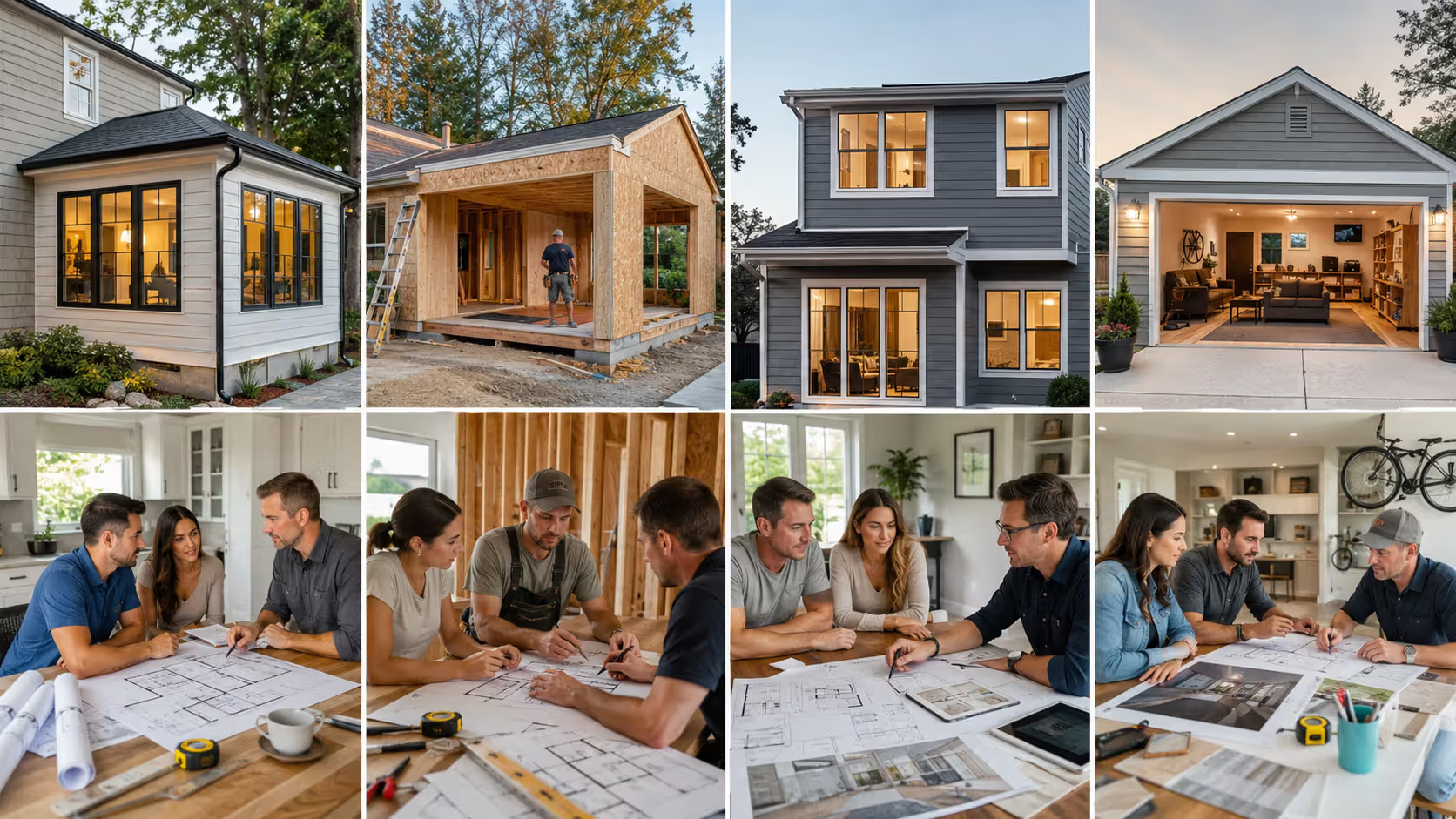
Different projects solve different problems. Here's what actually gets built in 2026.
Author: Olivia Hartwel;
Source: johnhranec.com
Bump Out Additions
A bump out pushes one exterior wall outward by 2-4 feet, typically along a 10-15 foot section. You're not creating a whole new room—you're making an existing one bigger.
Why do bump outs make sense? Many don't require new foundation work. Engineers can cantilever the structure off your existing frame, which cuts costs dramatically. You might spend $8,000-$30,000 instead of $40,000+ for a full addition.
Where I see these work best: expanding a cramped bathroom to fit a double vanity, adding a breakfast nook to a narrow kitchen, or creating a window seat in a bedroom. They solve one specific problem rather than adding entirely new functionality.
The limitation? Push out more than about four feet, and you'll need foundation support anyway. At that point, you might as well consider a full room addition.
Room Additions
These create completely new spaces—think 12x12 feet minimum. You're building foundation, four walls, a roof, and integrating everything with your home's existing systems.
Ground-level room additions are what most people picture when they hear "home addition." They work great if you've got yard space and want maximum flexibility. Need a primary bedroom suite? A dedicated home office? A family room? This approach delivers.
Costs run $80-$200 per square foot depending on complexity and finishes. A 300-square-foot addition might cost $24,000-$60,000, though I've seen projects exceed $80,000 when homeowners choose premium materials.
Timeline? Figure 3-6 months from permit approval to move-in ready. Weather delays, inspection scheduling, and material availability all affect this. One contractor told me he adds 20% to every timeline estimate, and he still occasionally runs over.
Second Story Additions
Can't build out? Build up. Second story addition ideas appeal to homeowners on small lots or in areas where setback requirements eliminate ground-level options.
You're essentially constructing an entire floor on top of your existing house. This requires structural engineering to verify your foundation and framing can handle the extra weight. Many older homes need reinforcement, which adds to costs.
Budget $100-$300 per square foot. A 500-square-foot second story might run $50,000-$150,000 or considerably more in high-cost markets.
The upside? You can potentially double your living space without sacrificing yard. The downside? You'll deal with more disruption since construction happens directly above your daily life. One family I know moved out for two months during their second-story project. They said the dust and noise were unbearable.
Garage Conversions and In-Law Suites
Technically, converting existing space isn't an addition—but it solves similar problems at lower costs.
Garage conversions transform underused parking space into living area. You'll need insulation, HVAC, windows, and flooring, but the walls and roof already exist. Costs typically run $10,000-$25,000 for basic conversions.
In-law suites create self-contained living quarters, often built above garages or as ground-floor wings. These include sleeping areas, full bathrooms, and small kitchens. They accommodate aging parents, adult children returning home, or generate rental income.
Zoning complicates in-law suites. Many jurisdictions restrict separate dwelling units on single-family lots. Check local regulations before designing anything—some areas require special permits or prohibit them entirely.
How to Plan a Home Addition from Start to Finish
Author: Olivia Hartwel;
Source: johnhranec.com
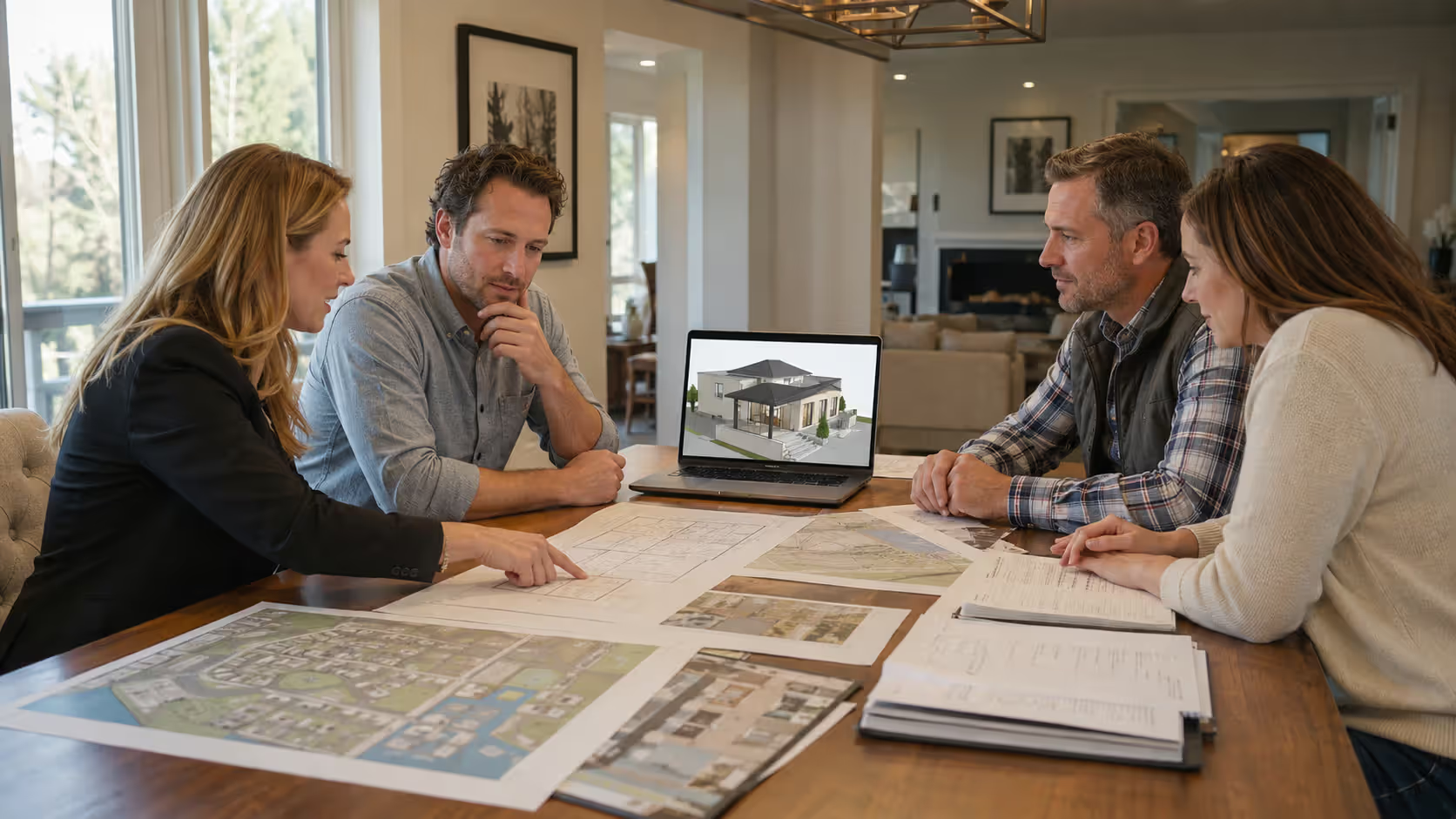
Skip steps here, pay later. Here's the sequence that prevents expensive mistakes.
Start with zoning research, not design dreams. Before sketching layouts or browsing Pinterest, call your local building department. Ask about setback requirements, lot coverage limits, and height restrictions. Some neighborhoods have architectural review boards that must approve exterior changes.
This takes a few phone calls but saves thousands in redesign costs. I know someone who spent $5,000 on architectural drawings for a second-story addition, only to learn their historic district prohibited it.
Set your budget, then cut it by 20% for actual construction. That cushion covers the unexpected issues that will surface—and trust me, something always surfaces. Discovered foundation problems. Supply price increases. Design changes mid-project.
Decide now which elements you'll compromise on when costs creep up. Premium finishes? Total square footage? Specific features? Having these priorities clear prevents stress later.
Hire an architect or design professional for anything over 120 square feet. Professional design services pay for themselves. Architects ensure your addition meets building codes, matches your home's style, and uses space efficiently.
Design fees typically run 5-15% of construction costs. Ask for references and look at completed projects before signing contracts. I've seen beautiful renderings that translated to awkward, poorly functioning spaces because the designer lacked experience with additions specifically.
Choose your contractor like you're hiring family. This decision matters more than any other. Get at least three bids from licensed, insured contractors with specific experience in home additions. Check references thoroughly—not just the ones they provide, but ask to visit current job sites.
The lowest bid usually isn't your best value. Look for detailed proposals breaking down costs by category, with payment tied to completion milestones rather than arbitrary dates.
Get permits before anyone swings a hammer. Contractors usually handle applications, but you're legally responsible. Unpermitted work can derail future home sales and void insurance claims if problems arise.
Permit processing takes 2-8 weeks in most jurisdictions. Factor this into your schedule. Trying to skip permits to save $1,500? You're risking far more if you ever need to sell.
Expect multiple inspections throughout construction. Building departments inspect at key points: foundation, framing, electrical, plumbing, and final walkthrough. Work can't proceed until inspections pass. Schedule these promptly to avoid delays.
Communicate constantly. Weekly contractor meetings catch small issues before they become big problems. Speak up immediately if something concerns you. It's your house and your money—never feel awkward about asking questions.
The biggest mistake homeowners make is not understanding their property's constraints before they start designing. I've seen families invest thousands in architectural plans only to discover their lot won't support what they want to build. Always verify zoning and setbacks first—it's the unsexy part of planning that saves you from heartbreak later.
— James Martinez
Cost Factors That Affect Home Addition Pricing
Why does one room addition cost $30,000 while another hits $100,000? Several variables control pricing.
Foundation requirements dramatically impact total costs. Slab foundations cost less than crawlspace or basement options. Challenging soil conditions require deeper footings or specialized engineering. Sloped properties need more extensive foundation work than flat lots.
Square footage obviously matters, though per-square-foot costs decrease as projects grow larger. A 100-square-foot bump out might run $200 per square foot. A 400-square-foot addition might average $120 per square foot.
Structural complexity includes roof integration, modifications to load-bearing walls, and tying into existing systems. Second-story additions cost more than ground-level projects because of necessary structural reinforcement.
Material and finish choices range from builder-grade basics to luxury options. The gap between laminate countertops and quartz, vinyl plank and hardwood flooring, or standard fixtures and designer selections can double project budgets.
Location affects both labor rates and material costs. Metropolitan areas with higher wages see steeper construction costs. Remote locations might face material delivery premiums.
Your home's current condition factors in too. Older houses often need electrical panel upgrades, HVAC capacity increases, or foundation repairs before addition work can begin.
Here's how different addition types compare:
| Addition Type | Cost Range | Square Footage Added | Construction Time | Best For | Permit Complexity |
| Bump Out | $8,000-$30,000 | 30-100 sq ft | 2-6 weeks | Bathroom expansion, breakfast nook, storage | Low to Moderate |
| Single-Room Addition | $24,000-$80,000 | 120-300 sq ft | 3-6 months | Home office, bedroom, living space | Moderate |
| Second Story Addition | $50,000-$200,000+ | 400-1,000+ sq ft | 6-12 months | Multiple bedrooms, primary suite, full floor | High |
| Garage Conversion | $10,000-$25,000 | 200-400 sq ft | 4-8 weeks | Guest room, gym, studio | Low to Moderate |
Author: Olivia Hartwel;
Source: johnhranec.com
Mistakes Homeowners Make When Adding a Room
Learn from others' expensive lessons.
Underestimating total project costs tops the list. Your construction contract doesn't include furniture, window treatments, landscaping restoration, or temporary housing if needed. Add 15-25% to your contractor's quote for these extras.
Most people forget permit fees, design professional costs, and loan interest if you're financing. These can add $5,000-$15,000 to smaller projects.
Ignoring resale implications creates over-improvement situations. Adding a $150,000 second story to a home in a neighborhood where houses top out at $400,000? You won't recover that investment.
Match your addition's quality to neighborhood standards. Don't go ultra-budget if comparable homes feature mid-range finishes, but don't install luxury materials in modest neighborhoods either.
Poor contractor vetting causes most horror stories you hear about. Hiring based solely on price or personal connections without verifying credentials, insurance, and references invites disaster.
Always verify contractor licensing through your state's regulatory board. Confirm they carry both liability insurance and workers' compensation. Get everything in writing—everything.
Skipping permits seems like a money-saver until you try selling. Home inspectors spot unpermitted work, which can kill deals or force price reductions. Some lenders won't finance homes with unpermitted additions.
Permits exist for safety. The $1,500 you might save bypassing them creates risks far exceeding any benefit.
Design mismatches happen when additions clash with your original home's architecture. A modern glass structure attached to a traditional colonial looks jarring and hurts resale value.
Your addition should look intentional, not tacked on. Match rooflines, exterior materials, and window styles to create visual cohesion. I've seen beautiful additions that looked like afterthoughts because contractors didn't bother matching the original brick or siding profile.
Failing to plan for disruption creates unnecessary family stress. Construction means mess, noise, and invasion of your space. Adding onto your kitchen? Where will you cook for three months? If contractors need to shut off utilities, where will you stay?
Budget for increased restaurant meals, temporary storage, or short-term rentals if projects impact essential living areas. One family told me they spent an extra $4,000 on takeout during their kitchen addition—something they hadn't anticipated.

Author: Olivia Hartwel;
Source: johnhranec.com
How to Choose the Right Addition for Your Property
Not every property can accommodate every addition type. Here's how to match needs with reality.
Assess lot size first. Measure distances from your house to property lines and compare against local setback requirements. Most areas require 5-10 feet of clearance on sides and rear.
Narrow lots might eliminate side additions while still allowing bump outs or vertical expansion. Deep lots provide more flexibility for rear additions.
Consider architectural compatibility. Your addition should enhance your home's existing character, not fight against it. Ranch-style homes naturally suit single-level additions. Two-story colonials can integrate second-floor additions more seamlessly than single-story cottages.
Pay attention to roofline integration. Matching existing roof pitch creates a unified look. Mismatched roofing screams "addition" in an unflattering way.
Research ROI for your specific market. National averages don't matter—your neighborhood determines value. Look at recent sales of similar homes with and without comparable additions.
Bathroom additions typically recover 50-60% of costs. Primary suite additions return 55-65%. Home offices gained popularity during remote work shifts and continue appealing to buyers in 2026.
Author: Olivia Hartwel;
Source: johnhranec.com
Match additions to household needs. Think five years ahead, not just today. If kids will leave for college soon, will that extra bedroom still serve you? Planning to age in place? Does a second-story addition make practical sense?
The simplest solution usually wins. Don't add complexity you won't use.
Consider phased construction if budget's tight. Some projects work well in stages. You might complete foundation and framing now, finish interior spaces later. This works better for detached additions than integrated ones.
Phasing reduces immediate costs but increases total expenses since you're paying mobilization twice. It's worth it when cash flow limits full investment upfront.
FAQ: Home Addition Questions Answered