How Often Should You Paint Your House?
Content
You've just finished binge-watching another home renovation show, and now your beige living room looks... tired. But before you grab a brush and dive into that trendy terracotta accent wall, you need to know the real timeline for house painting—and how your color choices today will affect your wallet (and sanity) for years to come.
Typical Repainting Timelines for Different Surfaces
Let's cut straight to the numbers. Different parts of your home age at different rates.
Exterior surfaces need the most frequent attention. Wood siding typically requires repainting every 3–7 years, depending on quality and exposure. Aluminum siding stretches that to 5–10 years. Stucco can last 5–6 years before showing wear. Brick? You're looking at 15–20 years, though most brick homes only need the trim painted.
Fiber cement siding sits comfortably in the 10–15 year range when properly maintained. It's become wildly popular in the past decade for exactly this reason—it holds paint better than wood without the maintenance headaches.
Interior walls follow a gentler schedule. High-traffic areas like hallways, kitchens, and kids' rooms usually need fresh paint every 3–5 years. Living rooms and bedrooms can stretch to 5–7 years. Low-traffic spaces like guest rooms or formal dining rooms? You can easily go 8–10 years.
Ceilings last the longest—10–15 years in most cases. They don't get touched, scuffed, or exposed to grease splatters.
Trim and doors take more abuse than walls. Plan on repainting every 4–6 years for interior trim, especially around doorknobs and light switches where oils from hands create visible wear. Exterior trim needs attention every 3–5 years since it faces weather directly.
One thing I've noticed: most homeowners wait too long on trim. The difference between year 4 and year 7 trim is dramatic.
Author: Olivia Hartwel;
Source: johnhranec.com
Factors That Determine When to Repaint
The timelines above are starting points, not gospel. Several factors push that schedule earlier or later.
Climate hits hard. Homes in the Southwest facing intense UV exposure need repainting 30–40% more frequently than identical homes in mild coastal climates. Freeze-thaw cycles in the Northeast crack paint faster. High humidity in the Southeast promotes mildew growth that degrades finishes.
Paint quality matters more than most people realize. Premium paints from Sherwin-Williams or Benjamin Moore contain higher resin content and better pigments. They cost 50–80% more per gallon but can extend your timeline by 3–5 years. That math works out heavily in favor of quality paint.
Surface preparation determines everything. A properly prepped surface—cleaned, scraped, primed, and sanded—will hold paint twice as long as a quick slap-over-old-paint job. Contractors estimate that prep work should take 70% of project time, painting just 30%.
The material underneath your paint changes the game too. Fiber cement holds paint longer than wood. Smooth drywall lasts longer than textured surfaces that collect dust and grime.
Sun exposure creates microclimates on a single house. South and west-facing walls fade and chalk 2–3 years before north-facing walls. Dark colors absorb more heat and break down faster—a dark blue exterior might need repainting in 5 years while a light gray goes 8–10 years.
Signs Your House Needs Repainting Now
Don't wait for the calendar. Watch for these signals:
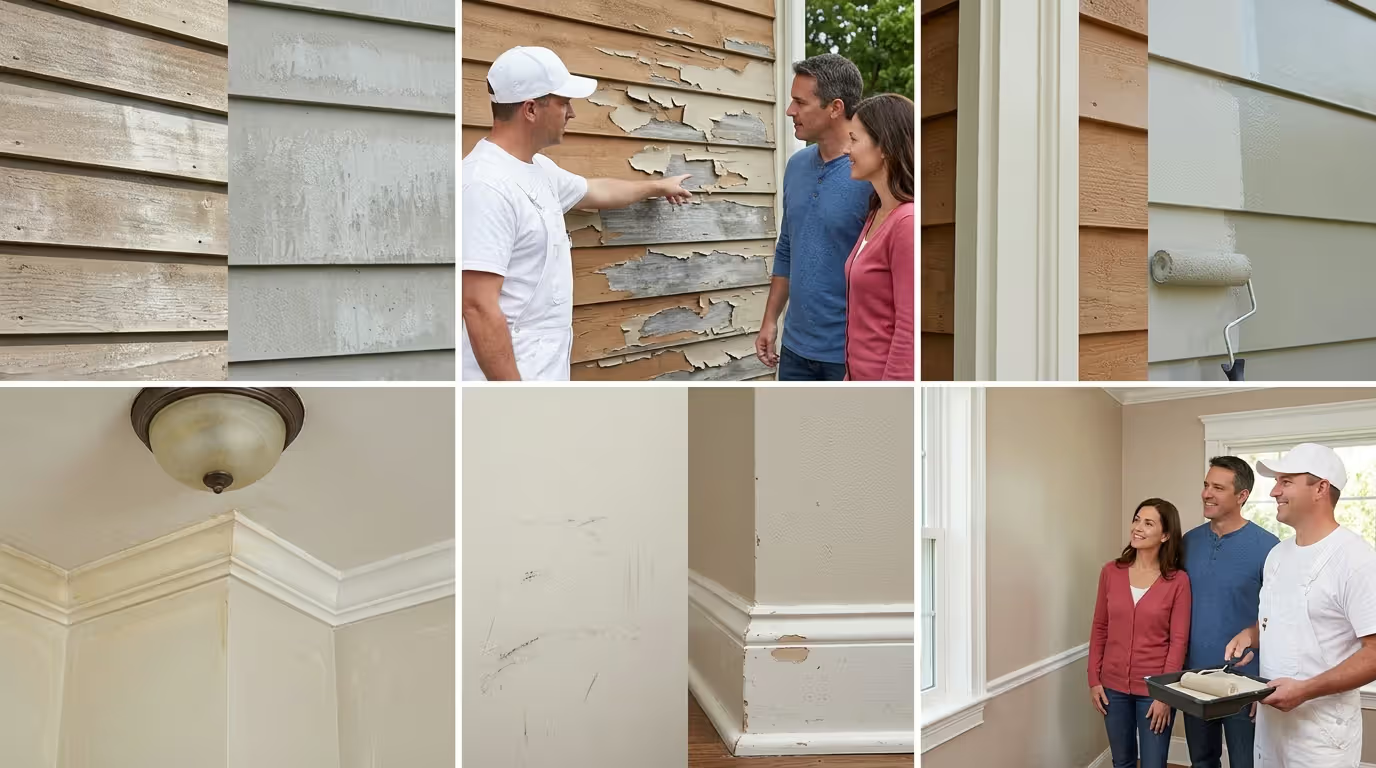
Chalking appears when you run your hand across the surface and white powder comes off. It's the paint literally breaking down from UV exposure.
Cracking and peeling means moisture has gotten behind the paint film. This needs immediate attention—it's not just cosmetic.
Fading becomes obvious when you move furniture or pictures and see the original color underneath. If the contrast is stark, you're overdue.
Mildew and mold show up as black or green spots, especially on north-facing walls or shaded areas. Sometimes cleaning works, but persistent growth means the paint has lost its mildewcide properties.
Caulk gaps around windows and doors signal it's time. When caulk fails, water gets in, and your paint job deteriorates fast.
Choosing Paint Colors That Won't Date Your Home
Here's where timeless versus trendy becomes a real financial decision, not just a design philosophy.
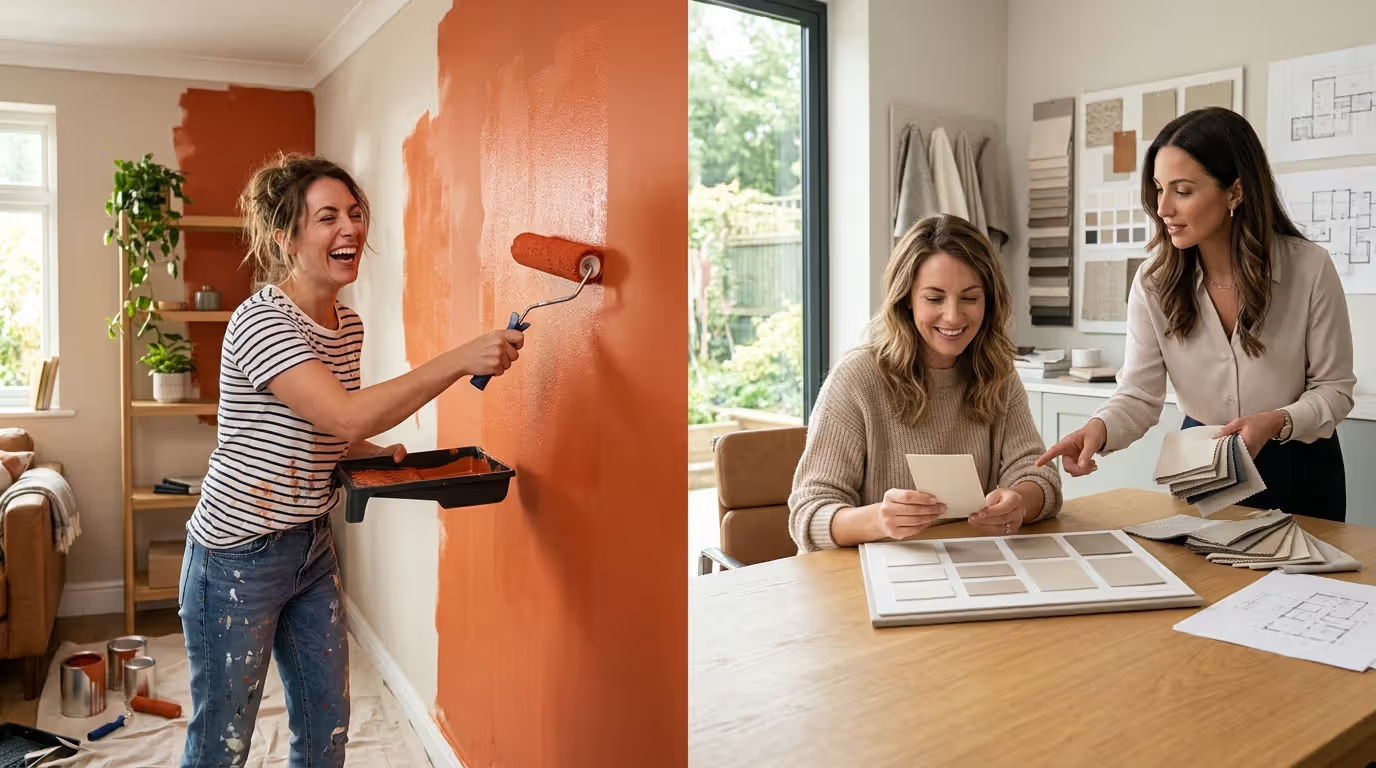
Trendy colors cycle through roughly every 5–7 years. Remember when everyone painted their dining room deep plum in 2018? Or when gray-blue was the "it" color in 2021? These colors look dated the moment the trend shifts, creating psychological pressure to repaint even when the paint itself is still functional.
The pattern I see most often: homeowners choose a trendy color, love it for 2–3 years, tolerate it for another 2 years, then feel embarrassed by it and repaint well before the paint has actually failed.
Timeless neutrals work differently. Soft whites, warm beiges, greiges (gray-beige hybrids), and light taupes don't scream a particular era. They create a backdrop rather than making a statement. You can live with them for 10–15 years without feeling dated.
This doesn't mean your home needs to look boring. The strategy that works: use timeless neutrals as your base (walls, trim, exterior), then inject trend through easily changeable elements like pillows, art, and small accent pieces.
Bold accent walls occupy a middle ground. A single accent wall in a trending color costs less to change than an entire room. You get the visual interest without committing your entire space to a color that might feel wrong in three years.
For exteriors, the stakes are even higher. A trendy exterior color (think the millennial pink trend or sage green that peaked in 2024) can affect resale value when it falls out of favor. Classic combinations—white with black shutters, gray with white trim, soft blues, warm neutrals—never hurt a sale.
Regional differences matter too. What's timeless in coastal California (soft whites, ocean blues) might look out of place in the Southwest (warm terracottas, desert tones). Choose colors that fit your area's architectural vernacular.
Author: Olivia Hartwel;
Source: johnhranec.com
Long-Lasting Paint Finishes and Application Methods
The finish you choose affects both durability and how well your paint ages.
Flat or matte finishes hide imperfections beautifully but show every scuff and can't be scrubbed. They're ideal for low-traffic areas and ceilings. Most designers consider flat white ceilings timeless—the finish hasn't changed in decades.
Eggshell provides a slight sheen and better durability. It's become the go-to for living rooms and bedrooms. You can wipe it down without damaging the finish.
Satin works well in higher-traffic areas—hallways, kids' rooms, kitchens. It's washable and holds up to regular cleaning. The slight shine can highlight wall imperfections, though.
Semi-gloss and gloss belong on trim, doors, and sometimes kitchens or bathrooms. They're the most durable and easiest to clean, but the shine emphasizes every flaw in the surface underneath.
For exteriors, satin and semi-gloss finishes last longest. Flat exterior paint exists but typically needs repainting 2–3 years sooner than satin.
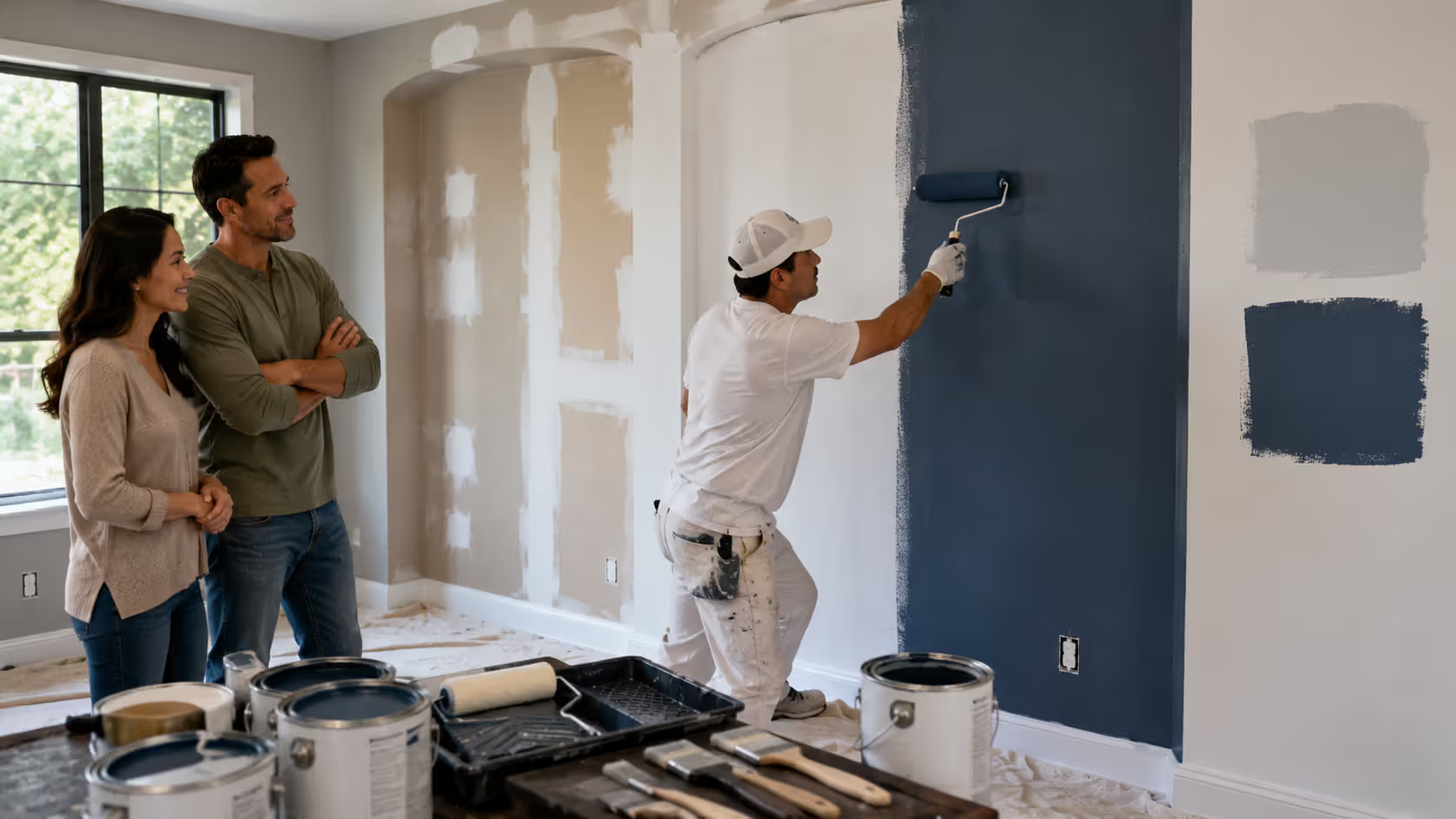
Application method impacts longevity dramatically. Spraying creates a thinner, more even coat but uses more paint. Rolling and brushing take longer but build thicker films. Two thin coats always outlast one thick coat—better adhesion, fewer runs, more even coverage.
Professional painters typically deliver a finish that lasts 40–50% longer than DIY work. They know proper prep, use better equipment, and apply paint at optimal thickness. If you're choosing colors meant to last 15 years, professional application makes sense.
Premium paint brands formulate specifically for longevity. Benjamin Moore's Aura line, Sherwin-Williams' Duration, and Behr's Marquee all contain advanced resins and UV blockers. They cost $65–85 per gallon versus $35–45 for mid-grade paint, but the cost-per-year-of-coverage actually favors premium paint.
Author: Olivia Hartwel;
Source: johnhranec.com
Cost Comparison: Frequent Trendy Repaints vs. Timeless Choices
Let's put real numbers to this decision. Here's what painting a typical 2,000 square foot home costs over 15 years with different approaches:
| Approach | Paint Quality | Repaint Frequency | Cost Per Repaint | Number of Repaints (15 years) | Total 15-Year Cost |
| Trendy colors, budget paint | Mid-grade ($40/gal) | Every 5 years | $3,200 | 3 | $9,600 |
| Trendy colors, premium paint | Premium ($75/gal) | Every 6–7 years | $4,500 | 2–3 | $9,000–13,500 |
| Timeless neutrals, mid-grade | Mid-grade ($40/gal) | Every 8–10 years | $3,200 | 1–2 | $3,200–6,400 |
| Timeless neutrals, premium | Premium ($75/gal) | Every 12–15 years | $4,500 | 1 | $4,500 |
These numbers assume professional labor at $2,400–3,000 for a 2,000 sq ft interior. The cost difference over 15 years between the worst approach (trendy + premium, unlucky timing) and best approach (timeless + premium) is roughly $9,000.
That's not even counting the hassle factor—moving furniture, living with paint fumes, scheduling contractors, and lost time.
For exteriors, the numbers are larger. A full exterior repaint runs $4,500–8,000 for an average home depending on siding type and regional labor costs. The difference between a 5-year cycle and 12-year cycle is $13,500–24,000 over 15 years.

Author: Olivia Hartwel;
Source: johnhranec.com
How to Make Paint Design Decisions You Won't Regret
Avoiding renovation design regret with paint comes down to a few tested strategies.
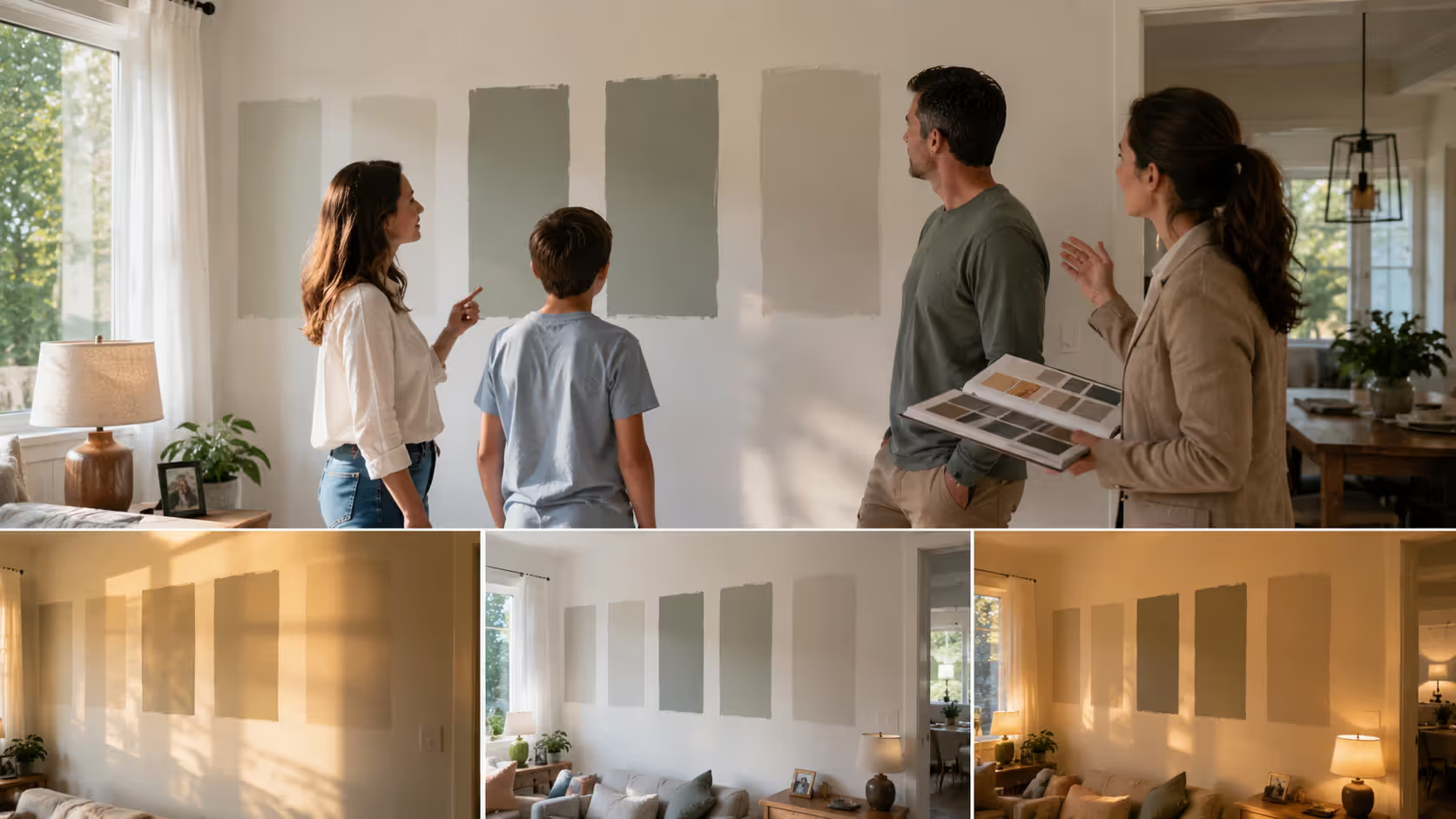
Test extensively before committing. Buy sample pots ($5–8 each) and paint 2x2 foot squares on different walls. Live with them for at least a week. Watch how they look in morning light, afternoon sun, and evening artificial light. Colors shift dramatically based on lighting.
Many homeowners skip this step and regret it within months.
Author: Olivia Hartwel;
Source: johnhranec.com
Consider the 10-year test. Ask yourself: "Will I still like this color in 10 years?" If the honest answer is "probably not," you're choosing a trend. That's fine for an accent wall or powder room, but risky for your entire main floor.
Think about resale value, even if you're not planning to sell soon. Life changes. You might need to move in 5 years. Neutral, broadly appealing colors protect your investment. That doesn't mean builder-grade beige—modern neutrals include warm whites, soft grays, and greiges that feel current without being trendy.
Balance personal style with longevity. The sweet spot: timeless base colors that reflect your style preferences. Love warm tones? Choose a warm white or beige base. Prefer cool tones? Opt for gray-based neutrals. You can express personality within the timeless category.
Use the 60-30-10 rule. Designers recommend 60% dominant color (walls), 30% secondary color (furniture, large pieces), 10% accent color (accessories, small items). Keep your 60% timeless. Go bolder with the 30%. Get trendy with the 10%—it's easy and cheap to swap out.
The biggest mistake I see is homeowners choosing paint colors based on what looks good in the can or on a tiny chip. Paint transforms in your actual space with your actual lighting. And choosing a color because it's popular right now is like buying clothes that only fit this season—you'll need a whole new wardrobe soon.
— Martinez Elena
Document your paint colors. Keep a record of brand, color name, and finish for every room. When you need touch-ups or want to repaint one room to match others, you'll have exact information. Take photos of the paint can labels—many homeowners throw away this information and spend hours trying to match colors later.
FAQ: House Painting Questions Answered
Painting your house isn't just about slapping color on walls. It's a financial decision that ripples through years of homeownership.
The numbers don't lie. Choosing timeless colors and quality paint can save you $10,000–20,000 over 15 years compared to chasing trends with budget materials. That's a kitchen remodel. Or a year of mortgage payments.
But it's not purely financial. There's real value in living in a home that feels current and comfortable for a decade rather than feeling outdated after five years. Timeless doesn't mean boring—it means you're choosing colors based on how they work in your space rather than what's trending on design blogs this season.
Start with your exterior. It's the most expensive to repaint and the most visible to everyone. Get that right with quality paint and classic colors, and you're set for 10–15 years. For interiors, use the 60-30-10 rule to balance timeless bases with personal style.
And remember: the best paint job is the one you don't have to think about for the next decade. Choose accordingly.