

Plan Your Renovation the Right Way
How Much to Renovate a House?

Content
Renovating a house is one of the biggest financial decisions you'll make as a homeowner. The costs can range wildly—from $20,000 for a light refresh to $400,000 or more for a luxury gut renovation. But the price tag is only part of the story. You also need to understand how long the work will take, what order makes sense, and how to plan a project that doesn't spiral out of control. Most homeowners underestimate both the budget and the timeline, which leads to stress, delays, and buyer's remorse. This guide walks you through the real numbers, the planning stages, and the sequencing that keeps your renovation on track.
Average House Renovation Costs by Scope and Size
National averages give you a starting point, but your actual costs will depend on where you live, the condition of your home, and how much you want to change. That said, here's what most homeowners spend in 2026.
A cosmetic refresh—new paint, flooring, fixtures, and minor updates—typically runs $15 to $50 per square foot. A mid-range remodel that includes some structural changes, updated systems, and quality finishes falls between $100 and $200 per square foot. A high-end gut renovation, where you're tearing down to the studs and rebuilding with premium materials, can easily hit $200 to $400+ per square foot.
For a 1,500-square-foot home, that translates to roughly $22,500 to $75,000 for cosmetic work, $150,000 to $300,000 for a mid-range remodel, and $300,000 to $600,000 for a luxury overhaul. Location matters a lot here. Coastal cities and metros like San Francisco, New York, and Seattle push the high end of these ranges, while smaller markets in the Midwest or South tend to come in lower.
Whole House Renovation Cost Breakdown
When you're planning a whole house renovation, it helps to know where the money goes. Labor typically accounts for 40 to 60 percent of your total budget. Materials make up another 30 to 40 percent. The rest goes to permits, design fees, project management, and contingency.

Author: Nathan Cole;
Source: johnhranec.com
Here's a rough breakdown for a $200,000 mid-range whole house remodel:
- Labor: $80,000 to $120,000
- Materials: $60,000 to $80,000
- Permits and fees: $5,000 to $10,000
- Design and architecture: $10,000 to $20,000
- Contingency (10–15%): $20,000 to $30,000
That contingency line is non-negotiable. You will encounter surprises—old wiring, hidden water damage, outdated plumbing that needs replacement. Budget for them upfront.
Room-by-Room Renovation Costs
If you're not ready to tackle the whole house, you can renovate room by room. Here's what you can expect to spend on the most common projects in 2026:
- Kitchen remodel: $25,000 to $75,000 (mid-range); $75,000 to $150,000+ (high-end)
- Bathroom remodel: $10,000 to $30,000 (mid-range); $30,000 to $60,000+ (high-end)
- Primary bedroom suite addition: $50,000 to $150,000
- Basement finishing: $30,000 to $75,000
- Living room and dining room refresh: $5,000 to $25,000
Kitchens and bathrooms eat up the biggest chunks of budget because they involve plumbing, electrical, cabinetry, and high-wear finishes. Bedrooms and living spaces are cheaper because they're mostly cosmetic.
| Project Scope | 1,000 sq ft | 1,500 sq ft | 2,500 sq ft |
| Cosmetic refresh | $15,000 – $50,000 | $22,500 – $75,000 | $37,500 – $125,000 |
| Mid-range remodel | $100,000 – $200,000 | $150,000 – $300,000 | $250,000 – $500,000 |
| High-end gut renovation | $200,000 – $400,000 | $300,000 – $600,000 | $500,000 – $1,000,000+ |
What Affects the Cost of a Home Renovation
You can't control every variable, but understanding what drives costs helps you make smarter choices.
Labor rates vary by region and trade. Electricians, plumbers, and HVAC techs command higher hourly rates than painters or carpenters. In high-cost markets, you might pay $100 to $150 per hour for skilled trades. In lower-cost areas, that drops to $50 to $80.
Material choices have a massive impact. Laminate countertops cost $20 to $50 per square foot. Quartz runs $60 to $120. Marble or custom stone? $100 to $250 or more. The same logic applies to flooring, cabinetry, fixtures, and finishes.
Permits and inspections add time and cost, but skipping them is a bad idea. Most jurisdictions require permits for structural changes, electrical work, plumbing, and HVAC. Expect to pay $500 to $2,000 for a typical whole house renovation, more if you're adding square footage or doing major structural work.
Structural and systems work is where budgets blow up. If your foundation has cracks, your roof is failing, or your electrical panel is outdated, you'll need to fix those before you can do anything cosmetic. Structural repairs can run $10,000 to $50,000 or more, depending on severity.
Home age matters. Older homes often have hidden issues—asbestos, lead paint, knob-and-tube wiring, outdated plumbing. Remediation and upgrades add cost. On the flip side, newer homes are easier to work with but may have less character or fewer opportunities for value-add improvements.
Design complexity also drives price. Custom millwork, intricate tile patterns, vaulted ceilings, and open-concept layouts all require more labor and expertise than straightforward, boxy rooms.
The biggest mistake homeowners make is treating the budget as a wish list instead of a planning tool. If you don't document every detail in your scope of work, you'll end up with change orders that add 20 to 30 percent to your final bill.
— Martinez Elena
House Renovation Planning Stages and Timeline
A successful renovation starts long before the first wall comes down. Here's how the process unfolds, stage by stage.
Pre-planning and goal setting (1 to 3 weeks): This is where you define what you want to achieve. Are you updating for resale? Aging in place? Adding space for a growing family? Your goals shape every decision that follows. You'll also set a preliminary budget and start researching contractors, architects, or designers.
Design and documentation (4 to 12 weeks): If you're hiring an architect or designer, this phase takes the longest. You'll create floor plans, elevations, material selections, and a detailed scope of work. Even if you're working directly with a contractor, you need clear drawings and specs. The more detailed your plans, the fewer surprises later.
Permitting (2 to 8 weeks): Once your plans are finalized, you submit them to your local building department. Review times vary wildly. Some cities turn permits around in two weeks. Others take two months or more. Don't skip this step—unpermitted work can haunt you at resale and may violate your insurance policy.
Demolition (1 to 2 weeks): This is the fun part. Out with the old. Demo goes fast, but it's also when you discover what's hiding behind the walls. Budget extra time if you're dealing with hazardous materials or unexpected structural issues.
Rough construction (4 to 10 weeks): This is the heavy lifting—framing, plumbing, electrical, HVAC, insulation. It's not glamorous, but it's the foundation of everything that comes next. Inspections happen during this phase, and delays here cascade through the rest of the schedule.
Finishes and installation (4 to 8 weeks): Drywall goes up, flooring goes down, cabinetry and fixtures get installed, painting happens. This phase is where your design vision finally becomes visible. It's also where small decisions—like cabinet hardware or light switch plates—pile up and slow things down.
Final inspections and punch list (1 to 2 weeks): Your contractor walks through with you and the building inspector to confirm everything is up to code and matches the plans. You'll create a punch list of minor fixes, which the contractor completes before final payment.

Author: Nathan Cole;
Source: johnhranec.com
How Long Does a Home Remodel Take
For a whole house renovation, expect 3 to 6 months from demolition to move-in. Smaller projects—like a single bathroom or kitchen—can wrap in 6 to 12 weeks. Larger, more complex remodels can stretch to 9 months or a year, especially if you're adding square footage or dealing with permitting delays.
Timeline killers include: back-ordered materials, contractor scheduling conflicts, surprise structural issues, and scope changes mid-project. The pattern I see most often is homeowners underestimating the design and permitting phases, which pushes the entire schedule back before construction even starts.
| Renovation Phase | Typical Duration | Key Tasks |
| Pre-planning | 1–3 weeks | Define goals, set budget, research pros |
| Design and documentation | 4–12 weeks | Floor plans, material selections, scope of work |
| Permitting | 2–8 weeks | Submit plans, await approval |
| Demolition | 1–2 weeks | Remove old finishes, expose structure |
| Rough construction | 4–10 weeks | Framing, plumbing, electrical, HVAC, insulation |
| Finishes and installation | 4–8 weeks | Drywall, flooring, cabinetry, painting, fixtures |
| Final inspections/punch list | 1–2 weeks | Walk-through, minor fixes, final sign-off |
What Order to Renovate a House for Best Results
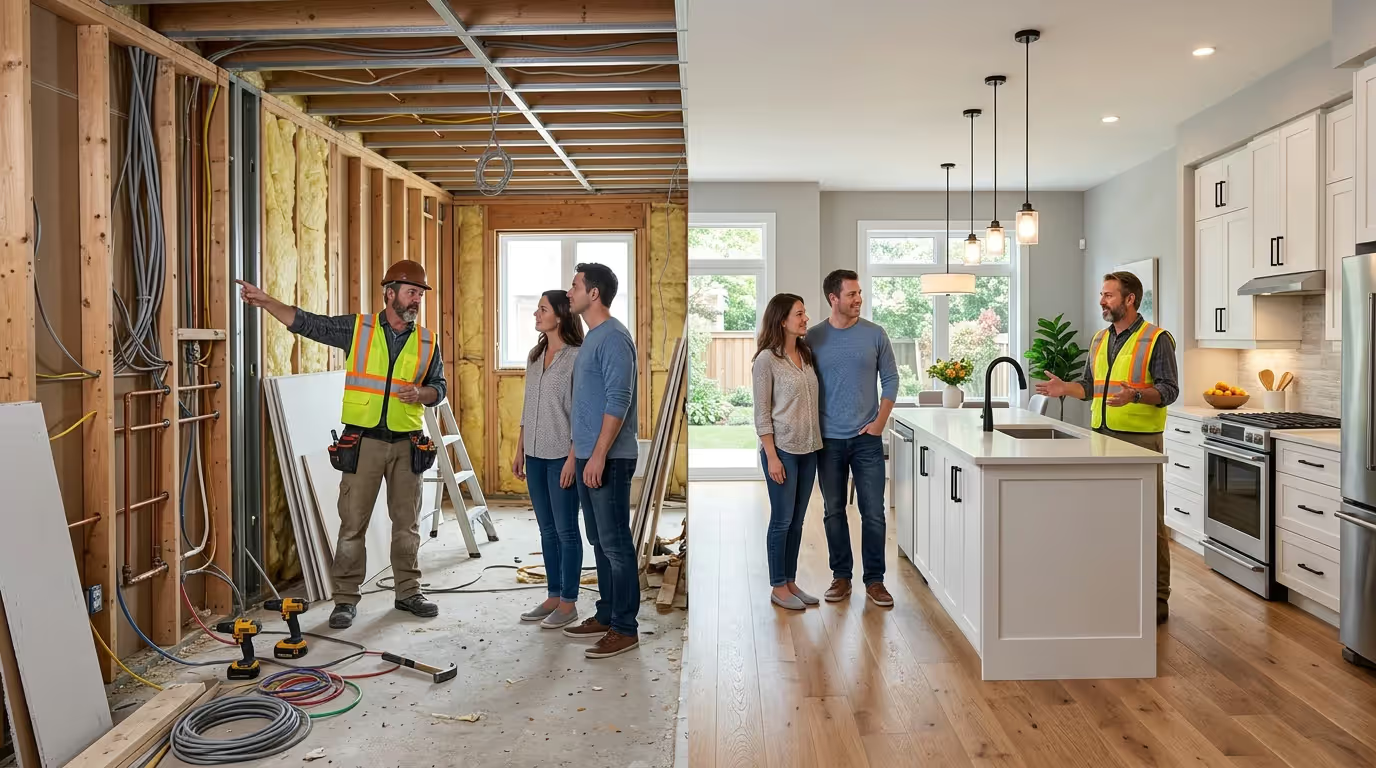
Sequence matters. Do things out of order and you'll pay twice—once to install, once to rip out and redo.
Start with structural and foundational work. If your foundation is cracked, your roof is leaking, or your framing is compromised, fix that first. Nothing else matters if the bones aren't sound.
Next, address major systems: electrical, plumbing, HVAC. Run new wiring, upgrade your panel, replace old pipes, install ductwork. This work happens before drywall goes up, so coordinate it carefully with your framing and insulation.
Then move to insulation and drywall. Once the rough work is inspected and approved, insulate and close up the walls. This is your last chance to make changes to what's hidden—after drywall, it gets expensive.
Install flooring before cabinetry if you're doing hardwood or tile. It's easier to run flooring under cabinets than to try to fit it around them later. If you're doing carpet or luxury vinyl, you can wait until after cabinets.
Cabinetry and built-ins come next. Once they're in place, you can template for countertops.
Countertops and backsplash follow cabinetry. Templating requires precise measurements, so don't rush this step.
Painting happens after drywall but can overlap with other trades. Just protect finished surfaces.
Fixtures, hardware, and trim are the final touches—light fixtures, faucets, cabinet pulls, baseboards, door casings. These go in last to avoid damage during construction.
One mistake I see often: homeowners install expensive finishes too early, then watch them get scratched, chipped, or stained by other trades. Protect what you've finished, or delay installation until the end.
Author: Nathan Cole;
Source: johnhranec.com
Creating a Whole House Renovation Scope of Work
Your scope of work is the blueprint for your budget and your contract. It's a detailed, room-by-room list of every task, material, and finish in your project. Without it, you're guessing—and guessing leads to cost overruns and disputes.
Start with the big picture. List every room and space you're renovating. For each one, note whether you're doing cosmetic updates, moderate remodeling, or a full gut and rebuild.
Break down each room by trade. What does the electrician need to do? The plumber? The framer? The painter? Be specific. "Update bathroom" is too vague. "Replace vanity with 48-inch double-sink unit, install new Moen faucet, retile floor with 12x24 porcelain, install frameless glass shower enclosure" is better.
Specify materials and finishes. Don't just say "new countertops." Say "quartz countertops, Caesarstone Statuario Nuvo, 3cm thickness, with eased edge profile." The more precise you are, the more accurate your bids will be—and the less room there is for misunderstanding.
Include quantities and dimensions. How many square feet of tile? How many linear feet of crown molding? How many light fixtures? Contractors need this to price accurately.
Note what's excluded. If you're providing your own appliances, say so. If landscaping isn't part of the scope, spell that out. Exclusions prevent scope creep.
Attach drawings, photos, and product links. Visual references eliminate ambiguity. If you found the perfect tile on a manufacturer's website, include the link and product code.
Build in a contingency line item. Set aside 10 to 15 percent of your budget for unknowns. This isn't a slush fund—it's insurance against surprises.
A solid scope of work serves as your contract appendix, your communication tool, and your budget tracker. It's the single most useful document in your renovation project.

Author: Nathan Cole;
Source: johnhranec.com
Common Renovation Budget Mistakes and How to Avoid Them
Even experienced homeowners make these errors. Here's how to sidestep them.
Underestimating contingency. Ten percent is the bare minimum. Fifteen is safer. If your home is old or you're doing major structural work, consider 20 percent. You won't use it all if things go smoothly, but you'll be grateful it's there if they don't.
Skipping the planning phase. Jumping straight to demolition without detailed plans and a locked-in scope is a recipe for chaos. You'll make expensive decisions on the fly, and you'll regret half of them. Spend the time upfront to plan thoroughly.
DIY overconfidence. You can save money doing some tasks yourself—painting, demo, simple trim work. But plumbing, electrical, structural work, and anything requiring a permit should go to licensed pros. One mistake can cost more to fix than you saved.
Choosing the lowest bid without vetting. The cheapest contractor is often cheap for a reason—inexperience, poor quality, or a habit of lowballing to win work and then hitting you with change orders. Get at least three bids, check references, verify licenses and insurance, and trust your gut.
Scope creep. "While we're at it, let's also…" is the most expensive phrase in renovation. Every change adds cost and time. If you want to make a change mid-project, get a written change order with a price and timeline impact before you approve it.
Ignoring resale value. Not every dollar you spend comes back at resale. Over-improving for your neighborhood—like installing a $100,000 kitchen in a $250,000 house—rarely pays off. Renovate for your enjoyment, but keep an eye on market norms.

Author: Nathan Cole;
Source: johnhranec.com
FAQ: House Renovation Cost and Planning Questions Answered
Renovating a house is a big commitment—financially, emotionally, and logistically. But with realistic budgeting, thorough planning, and a clear scope of work, you can navigate the process without losing your mind or your savings.
Start by defining your goals and setting a budget that includes contingency. Invest time in the design and planning stages, even if it feels slow. Hire the right professionals and communicate clearly about expectations, timelines, and costs. Follow the logical sequence—structure first, systems next, finishes last—and resist the urge to make changes mid-stream.
The homeowners who have the smoothest renovations aren't the ones with unlimited budgets. They're the ones who plan carefully, ask questions, and stay flexible when surprises arise. You can be one of them.