
How to Use Home Equity for Renovations?

Content
Your home's value has climbed. Maybe you bought at $280,000 five years ago, and now comparable houses on your street are selling for $380,000. That $100,000 difference? It's equity you can potentially borrow against to finally gut that 1970s kitchen or add the primary suite you've been dreaming about.
But here's the thing—accessing that equity isn't as simple as writing yourself a check. You'll need to navigate loan products with confusing acronyms, survive the application gauntlet, and then actually manage the money without torpedoing your financial future. Let me walk you through how this actually works, including the preparation steps nobody tells you about until it's too late.
Understanding Your Home Equity Options
Three different financial products let you tap into your home's value, and they function in completely different ways.
The first is a traditional home equity loan. Picture this: you sit down at closing, sign the papers, and walk away with—let's say—$75,000 deposited in your account. You'll make identical payments every month for the next 15 years (or however long your term runs), usually at an interest rate that never changes. It's essentially strapping a second mortgage onto your house. This approach makes sense when you've gotten firm bids from contractors and know your kitchen remodel will run $68,000, so you borrow $80,000 to cover the work plus a reasonable cushion.
The second option—a HELOC—works completely differently. Think of it as a credit card backed by your house. The lender approves you for, say, $100,000 in available credit. You can tap into that money whenever you want over the next decade (that's your "draw period"). Need $15,000 for new windows in March? Draw it. Another $22,000 for bathroom fixtures in July? Draw that too. You only pay interest on what you've actually borrowed. After your draw period ends, you'll spend the next 10-20 years paying back what you used. The catch? Your interest rate bounces around based on the prime rate. HELOCs work beautifully when you're renovating in stages or can't pin down exact costs yet.
The third path is cash-out refinancing. You're basically replacing your current mortgage with a bigger one and keeping the difference. Say you owe $180,000 on a house now worth $400,000. You refinance for $250,000, pay off the original $180,000, and pocket $70,000 (minus closing costs). This made fantastic sense in 2020 and 2021 when rates dropped below 3%. In today's environment? If you're sitting on a 3.25% mortgage and current rates hover around 6.5%, you'd be doubling your interest rate just to access some cash. Run those numbers twice before going this route.
How Different Equity Products Actually Work
| Product Type | How Interest Works | Payment Pattern | Works Best For | How Long It Takes |
| Traditional Equity Loan | Locked in at closing | Same payment monthly, 5-30 year term | Fixed renovation budget, prefer payment certainty | 2-6 weeks |
| HELOC Credit Line | Fluctuates with prime rate | Pay interest on borrowed amount during 10-year draw window, then repay principal | Multi-phase projects, uncertain final costs | 2-4 weeks |
| Cash-Out Refi | Fixed or adjustable | Replaces your current mortgage entirely | Securing lower rate than existing mortgage, need substantial cash | 4-8 weeks |
Here's what lenders actually require: you'll need to keep 15-20% equity in your home even after borrowing. Let's make this concrete. Your house appraises at $400,000. You still owe $200,000 on your mortgage. That means you've got $200,000 in equity sitting there. But lenders won't let you borrow all of it. They'll cap you at 80-85% of your home's value in total debt. So your existing $200,000 mortgage plus new borrowing can't exceed $320,000-$340,000. That leaves you roughly $120,000-$140,000 you can actually access.
Your credit score matters enormously here. Most lenders draw a hard line at 620—below that, you're not getting approved. Above 700? You'll see noticeably better rates, potentially saving you thousands over the loan's life. They'll also scrutinize your debt-to-income ratio. Add up all your monthly debt payments (car loans, student loans, credit cards, your mortgage, plus this new loan payment). That total needs to stay under 43% of your gross monthly income for most lenders.
The biggest mistake homeowners make is treating home equity like free money. It's debt secured by your home—if you can't repay it, you risk foreclosure. Always borrow with a clear repayment plan and never max out your available equity on renovations that won't add proportional value.
— Chen Michael
Calculating How Much Equity You Need
Start by collecting actual contractor estimates—not guesses scribbled on napkins, but detailed written bids that break out labor and materials line by line.
Then multiply that number by 1.2. Yes, add 20% on top.
I know that sounds excessive. But renovation budgets explode with depressing regularity. Your contractor opens up that wall and discovers the previous owner did their own electrical work that now needs complete replacement. The tile you fell in love with gets discontinued mid-project. Your "simple" bathroom update reveals a slow leak that's been rotting the subfloor for three years. That 20% buffer isn't paranoia—it's pattern recognition from thousands of projects that went sideways.
Here's a real example. You want to remodel your kitchen. Your contractor quotes $45,000 for cabinets, countertops, appliances, flooring, and labor. Add $9,000 as your contingency fund. You should borrow $54,000, not $45,000. That extra cushion keeps you from panicking when surprises inevitably appear.
Should you borrow even more, just to be safe? That depends entirely on which product you're using. With a HELOC, you can get approved for $75,000 but only draw the $54,000 you need. You're only paying interest on the $54,000. Smart move. But with a traditional lump-sum equity loan, you'll pay interest on every dollar from the day you close. Borrowing $75,000 when you only need $54,000 means you're paying interest on $21,000 that's just sitting in your checking account. That's burning money for no reason.
Think about your home's value trajectory too. If you're in a hot market where prices keep climbing 5-8% annually, borrowing a bit more might make sense—your equity is growing faster than your loan balance. But in a flat or declining market, conservative borrowing protects you from owing more than your house is worth if values drop.
Here's something that trips people up: sometimes borrowing less makes more financial sense even when you qualify for more. Say you're in a neighborhood where homes sell for $290,000-$330,000. A $75,000 kitchen renovation might not increase your home's value by anywhere near that amount. You could be better off doing a $45,000 renovation that delivers 80% of the wow factor at 60% of the cost. The extra equity stays available for actual emergencies or future needs.

Author: Nathan Cole;
Source: johnhranec.com
What to Do Before Your Renovation Starts
The difference between smooth renovations and absolute disasters usually comes down to preparation work done 4-8 weeks before the first sledgehammer swings.
Securing Permits and Approvals
Any work touching your home's structure, electrical system, plumbing, or square footage almost certainly requires permits. Your contractor should handle the paperwork, but here's the uncomfortable truth: you're legally responsible if they don't pull proper permits.
Pick up the phone and call your city or county building department directly. Describe exactly what you're planning. They'll tell you which permits you need. Permit costs typically run $200-$2,000 depending on your project's scope and your location—a bathroom remodel might cost $350 in permits, while a second-story addition could hit $2,500. Budget 2-6 weeks for permit approval in most places, though some jurisdictions move faster.
Don't even think about skipping permits to save money or time. Unpermitted work will haunt you when you try to sell—buyers' inspectors will spot it, lenders may refuse to finance the sale, and you could be forced to rip out completed work and start over. Insurance companies can also deny claims for damage related to unpermitted work.
If you live under HOA rules, submit your plans for architectural review before doing anything else. HOAs can shut down your entire project if it violates community covenants. Get their written approval first, not forgiveness later.
Pre-Renovation Home Preparation Checklist
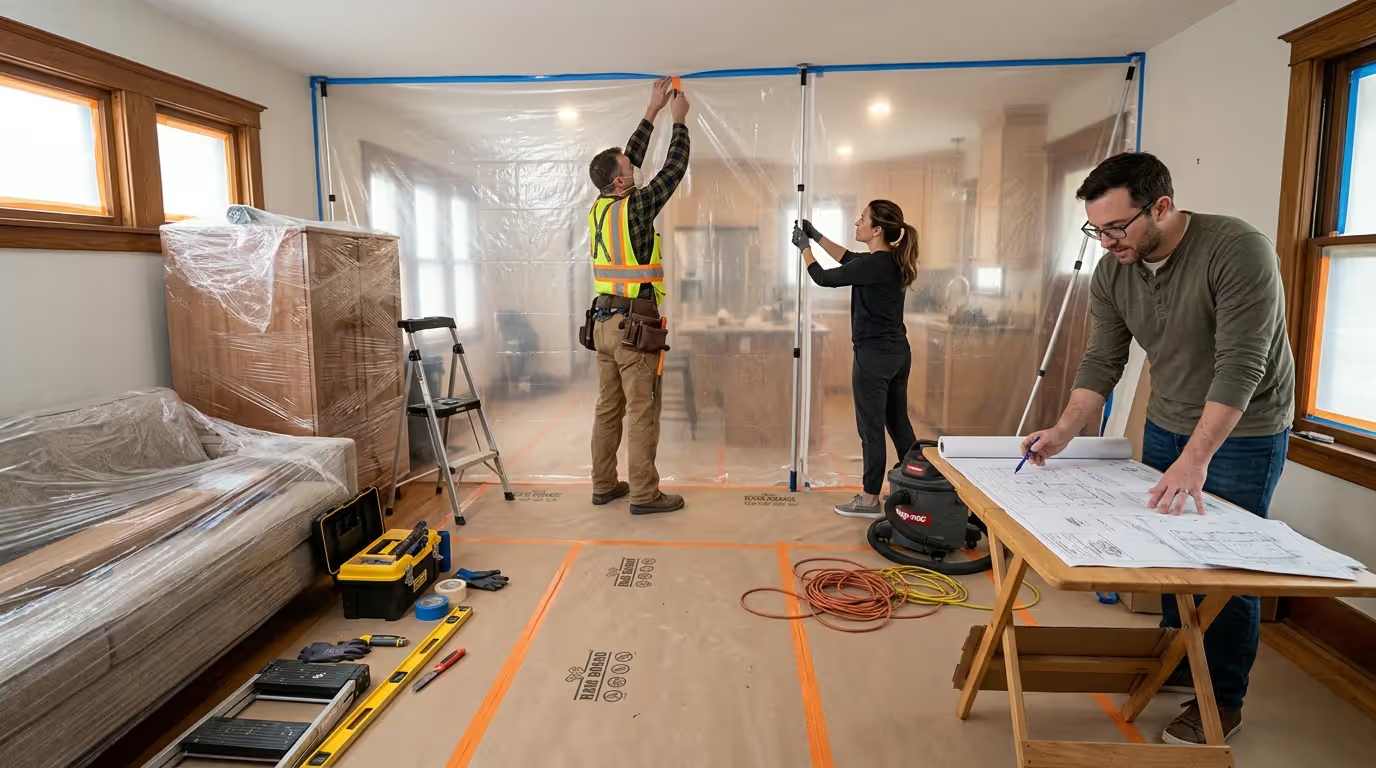
Your house needs serious protection before demolition day arrives.
Critical Tasks Before Demolition Begins
| What Needs Doing | Timing | Who Handles It | What It Costs |
| Empty furniture from work zones completely | 7 days out | You or moving company | $0-$500 |
| Tape plastic sheeting over HVAC vents/returns | 1-2 days out | You or contractor | $20-$100 |
| Install heavy plastic dust barriers with zip walls | Day before | Contractor | $50-$200 |
| Turn off water supply to renovation areas | Start day | You or plumber | $0-$150 |
| Mark one entrance for contractor use only | Before start | You | $0 |
| Pack up valuables, photos, fragile items | 7 days out | You | $0 |
| Build temporary kitchen setup if needed | Before start | You | $100-$500 |
| Take detailed photos/video of existing conditions | 7 days out | You | $0 |
Don't just shove furniture into corners of the room—get it out entirely. Construction dust is insidious. It'll coat everything within 20 feet of the work zone, even with barriers up.
Install serious physical barriers between your construction zone and living areas. Heavy-duty plastic sheeting (at least 6 mil thick) combined with zip wall poles creates effective temporary walls. Seal every gap with painter's tape. This won't stop all dust—nothing will—but it'll cut dust migration by 80% or more.
If you're redoing a kitchen, set up a functional temporary version somewhere else. A microwave, mini-fridge, electric kettle, and toaster oven in your garage or dining room can keep you fed without restaurant bills destroying your budget. For bathroom renovations with only one full bath in the house, establish clear morning schedules before work starts to prevent family meltdowns.
Protecting Your Home During Construction
Start with floor protection. Ram board (heavy-duty cardboard designed for construction) outperforms drop cloths dramatically for high-traffic paths. Contractors will drag lumber across your floors, drop tools, and track in mud daily for weeks. Spend $100 on proper floor protection or spend $3,000 fixing gouged hardwood later.
Cover every HVAC return vent in or near your work area. Construction dust will otherwise get sucked into your ductwork and blown throughout your entire house. Plan to change your HVAC filter weekly during active construction—it'll clog 5-10 times faster than normal.
Designate one specific door for contractor entry and exit. Put floor protection down along this entire path. Ask contractors to remove boots or wear disposable booties when moving between dusty demo areas and finished spaces. Yes, this feels picky. No, it's not unreasonable.
Photograph and video everything before work starts. Document wall conditions, floor conditions, landscaping near the work area, and any fixtures staying in place. If something gets damaged, you'll have proof of its pre-construction condition. I've seen this save homeowners thousands in disputes over who damaged what.
Spell out your expectations in writing before day one. Where can contractors park? Can they use your bathroom or should they rent a porta-potty? What are acceptable work hours? How much noise is okay? When should they check with you before making decisions? These conversations feel awkward upfront but prevent massive conflicts later.
Author: Nathan Cole;
Source: johnhranec.com
Applying for Home Equity Financing
The application process varies by lender but follows a predictable pattern you can prepare for.
Shop rates from at least three different lenders before committing. Check your current mortgage company, a local credit union, and one online lender. I've seen rate quotes for the same borrower vary by 0.75-1.25 percentage points between lenders. On a $75,000 loan, that difference costs you $5,000-$8,000 over the loan's life.
Gather these documents before you start applying:
- Your last two months of pay stubs
- Two complete years of tax returns with all schedules
- Your last 2-3 months of bank statements for all accounts
- Your current mortgage statement
- Your homeowners insurance declaration page
- Government-issued photo ID
- A list of all other debts with monthly payments and balances
Lenders will order either a full appraisal or an automated valuation model (AVM) to confirm what your home is actually worth today. Full appraisals cost $300-$600 and require 1-2 weeks to schedule and complete. Some lenders skip appraisals for smaller loan amounts (under $50,000) or borrowers with excellent credit and substantial equity.
Underwriting takes 2-6 weeks for most equity loans and HELOCs. Cash-out refinances run longer—typically 4-8 weeks—because you're replacing your primary mortgage and lenders scrutinize these more carefully.
During underwriting, respond to lender requests immediately. They might ask for explanations of large deposits, proof that a paid-off loan is actually closed, or clarification on employment gaps. Every day you delay adds days to your timeline. Don't make any major financial moves during this period—no new car purchases, no job changes, no large unexplained deposits or withdrawals.
After approval, you'll review and sign a mountain of closing documents. Closing costs for equity loans and HELOCs typically run 2-5% of your loan amount, though some lenders advertise no-closing-cost options (you'll pay a slightly higher interest rate instead).
Federal law gives you a three-day right of rescission after signing—a cooling-off period where you can cancel without penalty. Once those three days pass, your funds become available. HELOCs give you immediate access to draw money as needed. Lump-sum loans typically hit your account 1-3 business days after the rescission period ends.

Author: Nathan Cole;
Source: johnhranec.com
Managing Your Equity Funds During the Remodel
How you handle the money determines whether you finish on budget or spiral into financial chaos.
For lump-sum loans, open a separate checking account exclusively for renovation expenses. Don't mix this with your regular checking account where you're paying for groceries and utilities. This separation makes tracking spending trivial and prevents you from accidentally spending renovation money on other stuff.
With a HELOC, draw funds only as you actually need them. Your contractor wants a 30% deposit to order materials? Draw that amount. Materials arrive and need payment? Draw that amount. This approach minimizes interest charges since you're only paying interest on money you've actually borrowed.
Most contractors structure payments around project milestones: deposit at contract signing (typically 10-30%), payment when materials are delivered (20-30%), payment at rough-in inspection when framing and mechanicals are complete (25-30%), payment at substantial completion (20-25%), and final payment after punch-list items are finished (5-10%). Never pay the full amount upfront—that's how contractors disappear mid-project.
Walk through the work before releasing each payment. Verify that completed work matches your contract specifications. Check that the work is actually done, not 90% done. Confirm that subcontractors were paid (get lien waivers in writing) so you don't face mechanic's liens later. Then release payment.
Save every receipt, invoice, contract, and payment confirmation. You'll need this paper trail for taxes if you qualify for interest deductions, and these records become critical if disputes arise with contractors or lenders.
Track spending against your budget every single week. Create a simple spreadsheet with columns for budgeted amount, actual cost, and variance. When you spot overruns early—say, your tile costs are running 15% over budget—you can trim other line items before you run out of money entirely.
Fight the temptation to upgrade mid-project. Those "small" improvements add up shockingly fast. Upgrading from standard to premium countertops adds $3,000. Better cabinet hardware adds $800. Higher-end light fixtures add $1,200. Suddenly you're $5,000 over budget on "minor" changes. Stick to your original plan unless you've got substantial cushion remaining.
If you're using a HELOC and finish under budget, that unused credit line stays available. Keep it open for genuine emergencies, but don't feel pressure to spend it just because it exists. Unspent HELOC capacity costs you nothing.

Author: Nathan Cole;
Source: johnhranec.com
Common Mistakes When Using Equity for Renovations
Over-improving for your neighborhood is the mistake I see most often. If you're in a neighborhood where houses sell for $285,000-$330,000, dumping $125,000 into renovations might not return anywhere close to that value. You'll have the nicest house on the block, but you've priced yourself out of your local market. Buyers who can afford your asking price will shop in nicer neighborhoods.
Research recent sales in your area before committing to expensive upgrades. A luxury chef's kitchen with commercial-grade appliances might look incredible, but if buyers in your neighborhood prioritize finished basements, outdoor living space, or additional bedrooms instead, you may never recover the cost.
Another common issue is underestimating carrying costs during the renovation. Your monthly expenses don't stop while construction is happening. In fact, they often increase. You may spend hundreds more each month eating at restaurants because your kitchen is unusable. Utility bills can climb from temporary heating or cooling setups. Storage costs, short-term rentals, pet boarding, and unexpected hotel stays can quietly drain your savings alongside the actual renovation.
Timing mistakes also create serious financial pressure. Starting a major remodel during peak contractor season can mean higher labor costs and longer delays. Renovating during winter might reduce contractor pricing in some markets, but weather delays can create entirely different problems. If your project depends on custom materials, shipping delays alone can push timelines back by weeks or even months.
Some homeowners make the mistake of opening multiple financing products at once. They take a HELOC, then apply for new credit cards to cover furnishings, then finance appliances separately. Suddenly their debt-to-income ratio balloons, monthly payments become difficult to manage, and financial flexibility disappears. Keep your financing strategy as simple as possible.
Avoid borrowing against every dollar of available equity. Maintaining a healthy equity cushion protects you if home values decline or unexpected financial hardship hits later. Houses don't always appreciate forever, and market corrections happen faster than many homeowners expect.
FAQ