
What Does It Cost to Finish a Basement?
How Much to Finish a Basement?
Content
Last weekend, my neighbor Steve showed me his basement plans. "Twenty grand, tops," he said, pointing to sketches of a new family room. I nodded politely. See, I've watched this movie before. Steve's brother-in-law spent $18,000 on his basement three years ago—or so the story goes. What Steve doesn't know yet: his brother-in-law actually wrote checks totaling $52,000 by the time everything wrapped up. Foundation repairs nobody anticipated. An electrical panel that couldn't handle the new load. Moisture issues hiding behind old paneling. These surprises aren't rare—they're typical. Count on spending $30,000 to $75,000 for most basement projects. Want that home theater with the full bar? You're looking at six figures. But here's the thing: knowing where money actually goes means you can make smart choices instead of just hoping for the best.
Average Basement Finishing Costs
Contractors quote anywhere from $25 to $100 per square foot. Why such a massive range? Because "finishing a basement" means different things to different people.
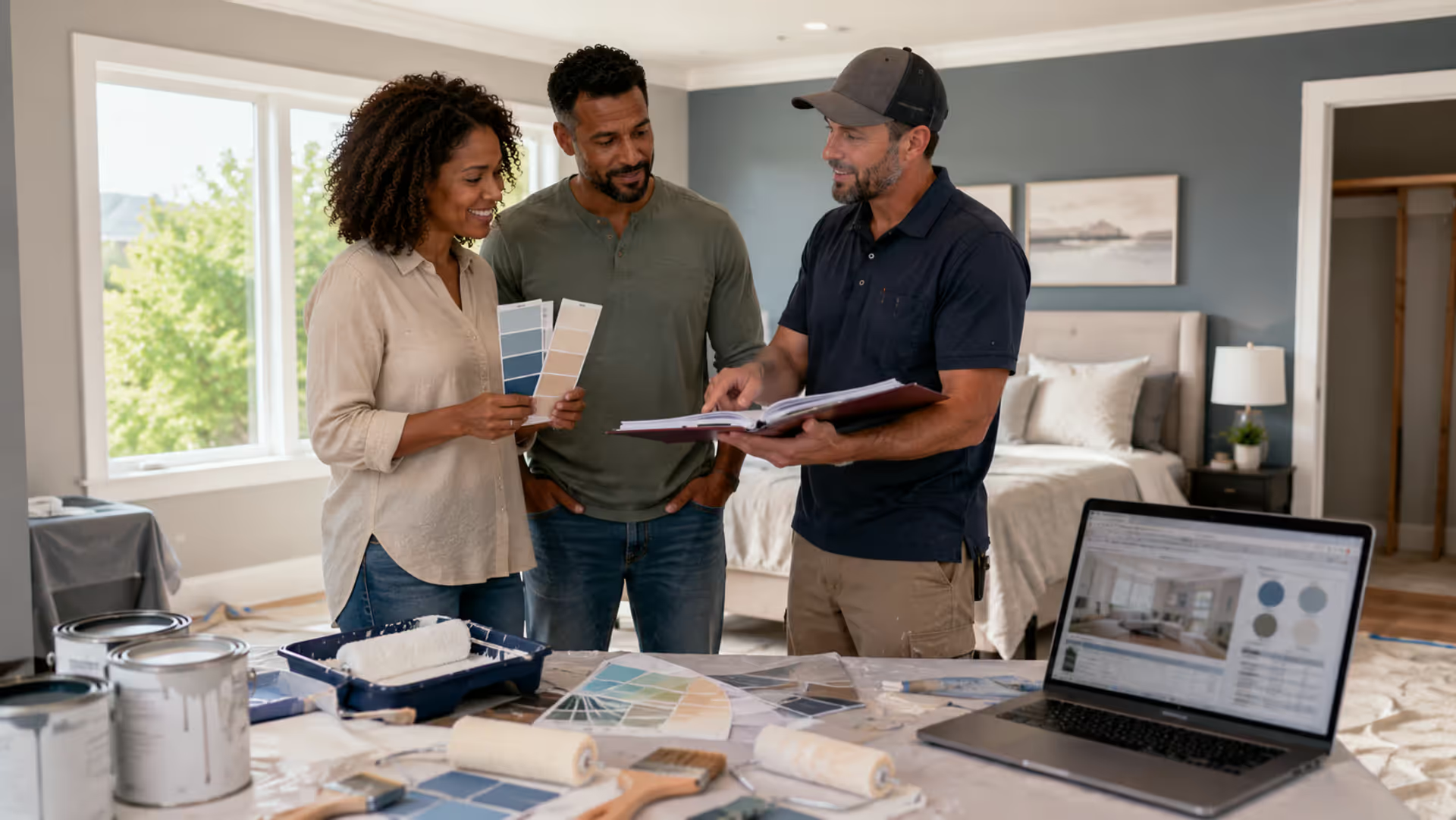
Spend $30 per square foot and you get walls, basic carpet, some outlets. Nothing fancy, but it works. Spend $85 per square foot and suddenly you've got custom built-ins, designer tile work, and fixtures that look like they belong in a magazine.
Here's what homeowners actually spend on a standard 1,000-square-foot basement:
- Basic finish: $25,000–$40,000
- Mid-range remodel: $40,000–$75,000
- High-end renovation: $75,000–$150,000+
Start with your actual square footage. Got a smaller 600-square-foot area? Maybe you only need $18,000 to turn it into a home office or playroom—assuming you skip plumbing entirely. But throw in moisture problems, a 6'8" ceiling that barely meets code, and wiring from 1987? Now you're at $35,000 before picking out paint colors.
Where you live changes everything. The exact same project costs $38,000 in Indianapolis and $72,000 in Seattle. Materials cost roughly the same everywhere—it's labor driving these differences. Midwest contractors often charge $35–$50 per square foot. Coastal markets? Try $75–$90 per foot. Labor eats 40–60% of your total budget.
Most residential basements run 600 to 1,200 square feet. Here's realistic spending by size:
- 600 sq ft: $15,000–$60,000
- 800 sq ft: $20,000–$80,000
- 1,000 sq ft: $25,000–$100,000
- 1,200 sq ft: $30,000–$120,000
Those lower numbers? No bathrooms, cheap materials, minimal electrical work. Upper numbers include full bathrooms, nice finishes, maybe custom entertainment centers or wine storage.
What Affects the Cost of Finishing a Basement
Some basements are ready to go. Others need serious work before anyone hangs the first sheet of drywall.
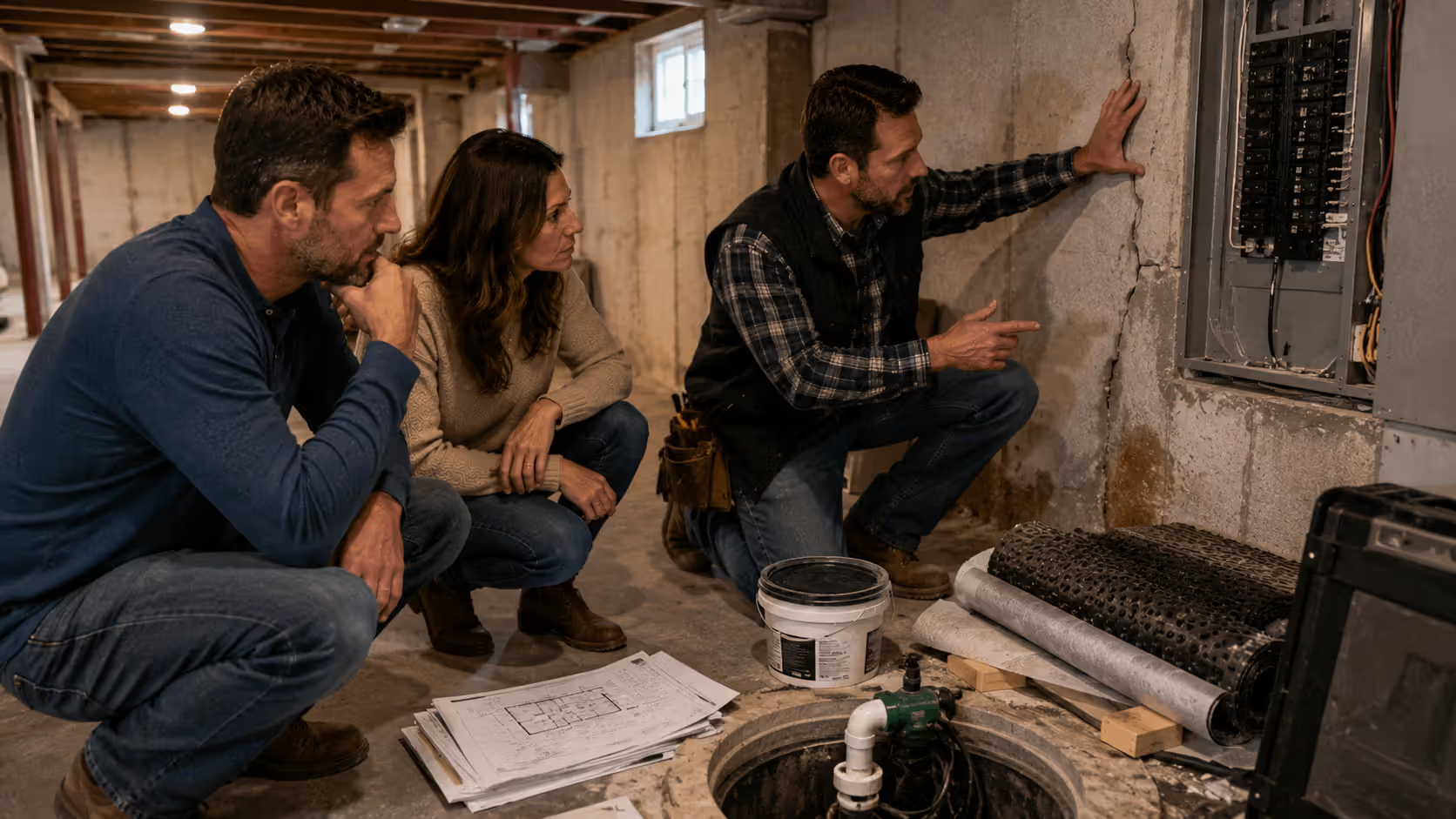
Foundation condition decides whether you're building on solid ground or dealing with major structural headaches. Small cracks get sealed easily. Walls bowing inward or serious settlement? You're looking at stabilization work costing $2,000–$15,000. Covering up foundation problems with pretty walls guarantees you'll regret it later.
Moisture and waterproofing separate projects that last from projects that fail. Notice any dampness down there? Fix it before doing anything else. Comprehensive waterproofing systems run $3,000–$10,000 depending on severity. French drains, sump pumps, vapor barriers—nobody gets excited about this stuff, but it protects everything else you're about to spend.
Ceiling height can kill projects before they start. Building codes typically require 7-foot clearance in finished basements. Measure 6'6"? You'd need underpinning to lower the floor, which costs $50,000–$100,000. At that point, most people just stop.
Existing utilities make a huge difference. Already have electrical panels, plumbing stacks, and HVAC roughed in? You'll spend way less than starting from zero. Just adding bathroom plumbing costs $3,000–$8,000 when nothing's there.
Local labor rates create the biggest geographic price swings. Contractors in smaller cities charge $40–$55 hourly. Big metro areas? $85–$125 per hour for identical work. Multiply that across electricians, plumbers, HVAC techs, drywall crews—it adds up fast.
Permit requirements add cost and time. Your city building department wants permits for electrical work, plumbing additions, and structural changes. Permit fees themselves run $500–$2,000, but the real cost comes from meeting code requirements. Finding violations after you finish means ripping out walls you just paid to install.
Author: Caleb Norton;
Source: johnhranec.com
Cost Breakdown by Project Type
Two people say they're "remodeling their basement." One spends $28,000. The other spends $95,000. Both got what they wanted. Let me explain.
Basic Finishing vs. Full Remodel
A basic finish at $25–$50 per square foot gets you:
- Framed walls with insulation
- Drywall and standard paint
- Simple flooring (carpet or vinyl plank)
- Basic lighting and outlets
- No plumbing or bathroom
This creates usable space affordably. Perfect for home offices, playrooms, or hobby areas that don't need running water.
A full remodel at $60–$100+ per square foot includes:
- Everything from basic finish
- Bathroom or wet bar with plumbing
- Upgraded flooring (hardwood, tile)
- Recessed lighting and enhanced electrical
- Built-ins or custom features
- Premium finishes throughout
Full remodels cost as much per square foot as new construction—except you're working in an existing space while dealing with basement-specific challenges like egress windows and moisture control.
I see this pattern constantly: people plan basic finishes, then start adding features during construction. That's the expensive way to do it. Decide on bathrooms and bars before framing starts, not after.
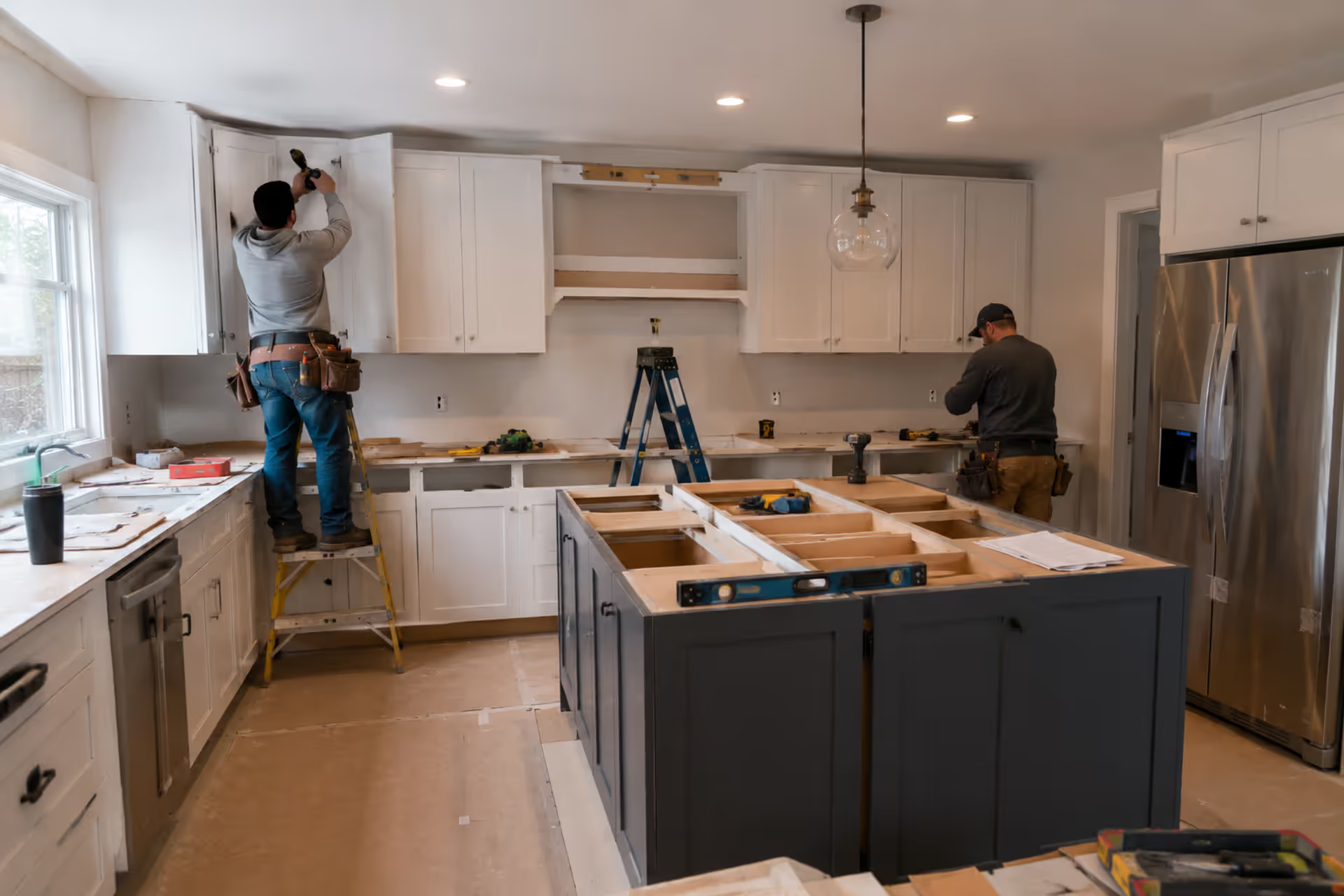
Framing and Drywall Costs
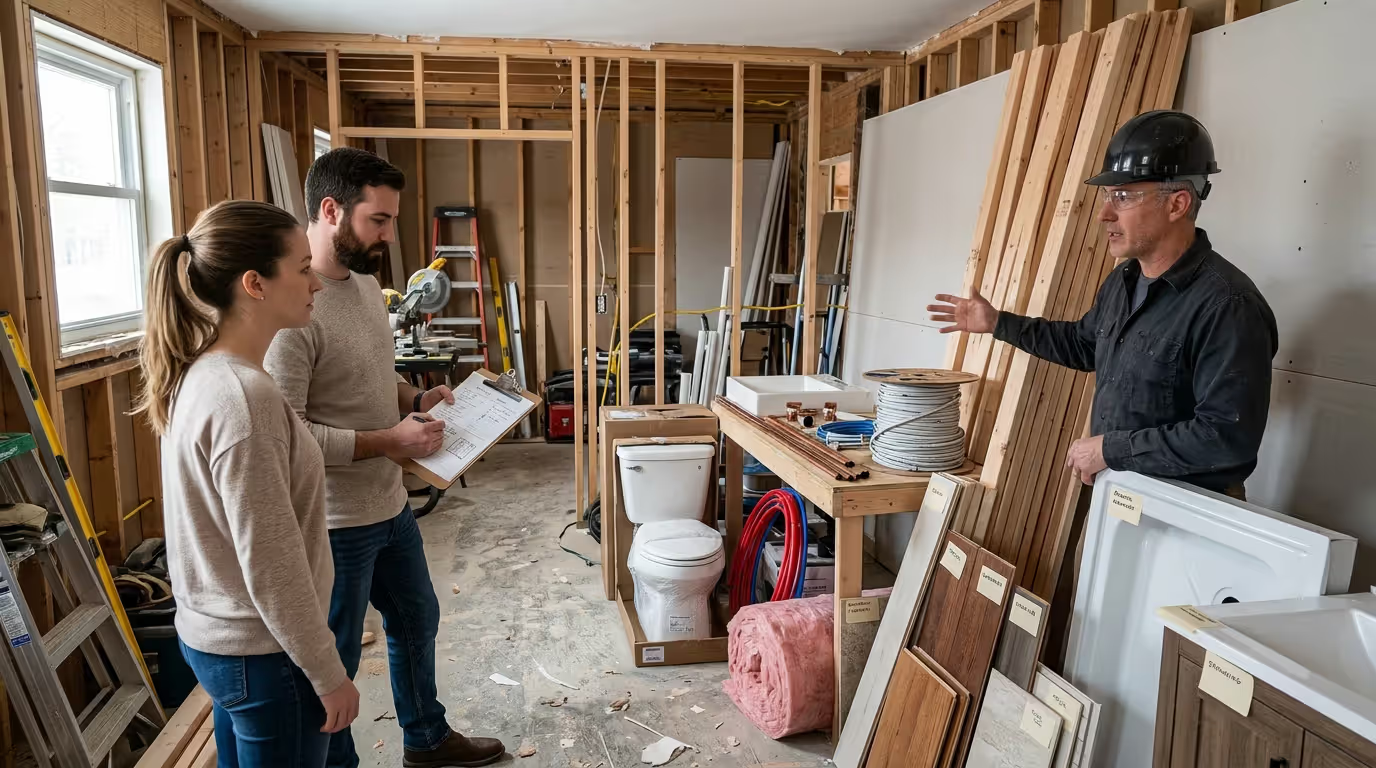
Standard 2x4 walls with insulation run $7–$16 per linear foot. A typical 1,000-square-foot basement needs roughly 200–250 linear feet of framing. That's $1,400–$4,000 for materials and installation combined.
Professional drywall work costs $1.50–$3.50 per square foot—that includes hanging, taping, mudding, and basic texturing. Walls and ceilings in a 1,000-square-foot space total around $3,000–$7,000.
These numbers assume straightforward 8-foot ceilings and simple layouts. Bulkheads around ductwork, multiple small rooms, or fancy ceiling designs increase labor hours and costs.
Most contractors bundle framing, insulation, and drywall into one quote. Expect combined pricing around $15–$25 per square foot—more efficient than hiring separate trades.
Author: Caleb Norton;
Source: johnhranec.com
Adding Bedrooms, Bathrooms, or Kitchens
Bedrooms need egress windows for legal compliance and safety. Installing egress windows costs $2,500–$5,000 per window, including window wells and complete installation. Without proper egress, you legally can't call the space a bedroom—period.
Bathrooms increase costs more than anything else you can add. Simple half-baths with toilets and sinks run $5,000–$12,000. Full bathrooms with showers cost $12,000–$25,000. Luxury bathrooms featuring tiled showers, heated floors, and premium fixtures easily hit $35,000.
Plumbing creates most bathroom expenses. Basements below main sewer lines need ejector pump systems costing $1,500–$3,000. Running new supply lines and drain pipes through concrete adds $2,000–$5,000 before you even install fixtures.
Kitchens or wet bars range from $5,000 for simple bars with sinks to $30,000+ for full kitchenettes with appliances, cabinets, and countertops. Plumbing and electrical rough-ins account for 30–40% of these totals.
DIY vs. Hiring a Contractor
Author: Caleb Norton;
Source: johnhranec.com
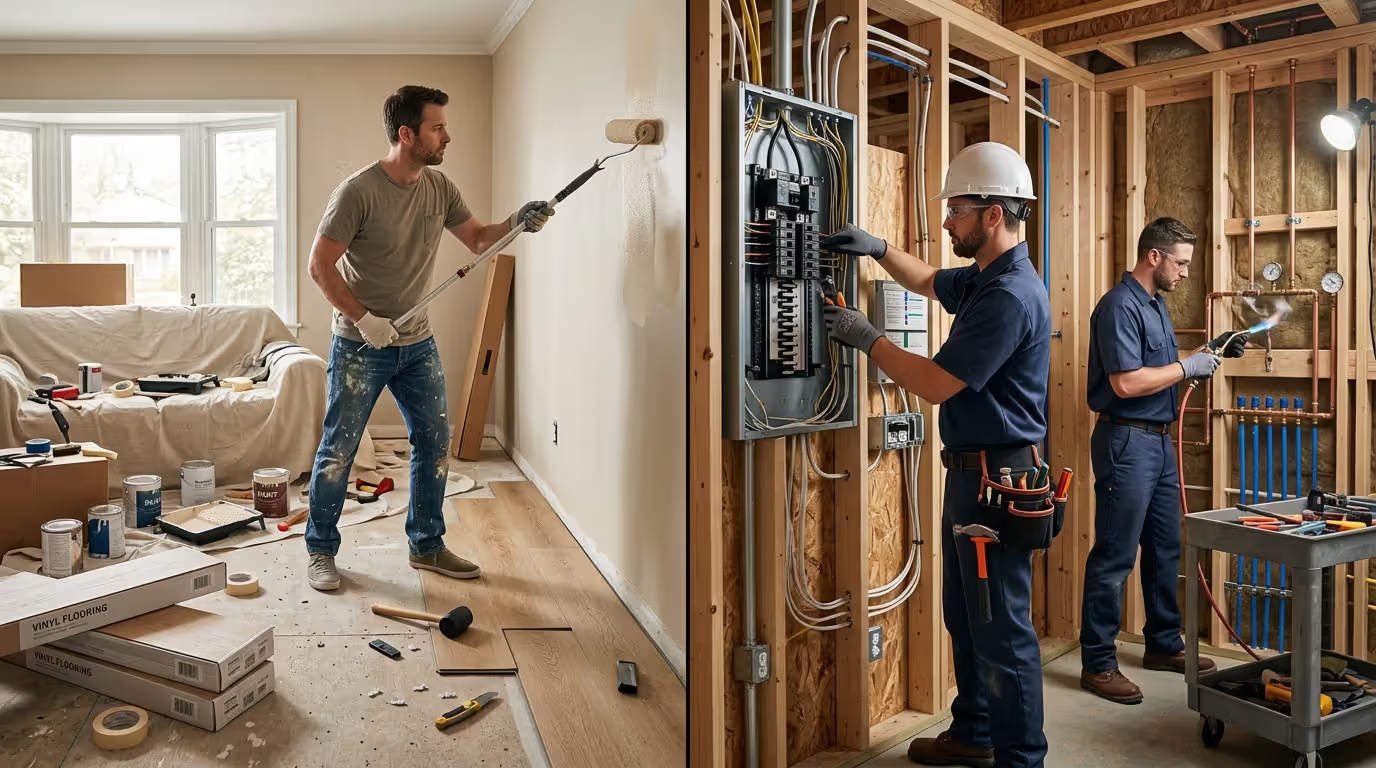
Handling some work yourself can cut total costs by 30–50%. But not everything belongs on your weekend project list.
What you can realistically handle:
- Demolition and cleanup
- Painting
- Installing flooring (vinyl plank, carpet)
- Basic trim and finishing work
- Simple shelving and organization
These tasks take time and effort but don't require specialized skills. Motivated homeowners save $5,000–$15,000 tackling this work over several weekends.
What requires professional help:
- Electrical work (code compliance and safety)
- Plumbing (especially below-grade installations)
- HVAC modifications
- Structural changes
- Waterproofing systems
Licensed contractors carry insurance and pull necessary permits. Faulty DIY electrical work causing fires? Your insurance company might deny the claim—risk far outweighing potential savings.
The middle ground works well. Hire general contractors for framing, electrical, and plumbing. Then handle painting, flooring, and finishing work yourself. This saves money while ensuring critical systems meet code.
Cost comparison for a 1,000 sq ft basement:
- Full contractor: $50,000–$75,000
- Contractor for rough work, DIY finishing: $35,000–$50,000
- Mostly DIY with licensed trades for electrical/plumbing: $25,000–$35,000
Timeline matters too. Contractors finish most basements in 6–12 weeks. DIY projects stretch to 6–12 months, especially working evenings and weekends.
The biggest cost surprise homeowners face is always the hidden stuff—old plumbing that needs updating, electrical panels that can't handle the new load, or moisture problems nobody noticed until we opened the walls. I tell clients to budget an extra 15–20% beyond their initial estimate for these discoveries. The basements that go smoothly are the ones where we did a thorough assessment before committing to a number.
— Martinez David
Ways to Reduce Basement Finishing Costs
Smart planning cuts costs without sacrificing quality. Here's what actually works.
Take a phased approach. Finish the main space first, then add bathrooms or wet bars in phase two. This spreads costs over 1–2 years and lets you adjust plans based on how you actually use the space. Lots of homeowners discover they don't really need that wet bar they originally planned.
Choose materials strategically. Luxury vinyl plank looks great and costs $3–$7 per square foot installed. Hardwood runs $10–$18 per square foot. That's a $7,000+ difference in a 1,000-square-foot space. Same principle applies to lighting—standard can lights cost half what recessed LED systems run.
Do your own prep work. Clearing storage, removing old paneling, and cleaning the space yourself saves $1,000–$3,000 in contractor time. Not glamorous, but it's straightforward money saved.
Avoid common expensive mistakes:
- Don't move plumbing or HVAC unless absolutely necessary
- Keep bathroom and kitchen layouts simple
- Use standard-size doors and windows instead of custom
- Skip the home theater wiring if you're uncertain about using it
Work with existing layouts. Every wall you add costs $800–$1,500 to frame and finish. Open floor plans with minimal walls save thousands and often feel more spacious anyway.
A 1,000-square-foot space that might run $60,000 with premium everything can come in around $35,000–$40,000 with thoughtful material selection and phasing.

Author: Caleb Norton;
Source: johnhranec.com
Basement Finishing Cost Estimator
Use this breakdown to estimate your project based on size and scope. These ranges reflect typical costs across most U.S. markets.
| Square Footage | Basic Finish | Mid-Range Remodel | High-End Renovation |
| 400 sq ft | $10,000–$16,000 | $20,000–$32,000 | $40,000–$60,000+ |
| 800 sq ft | $20,000–$32,000 | $40,000–$64,000 | $80,000–$120,000+ |
| 1,200 sq ft | $30,000–$48,000 | $60,000–$96,000 | $120,000–$180,000+ |
Basic Finish covers framed walls, insulation, drywall installation, basic flooring materials, paint, standard lighting fixtures, and electrical outlets. Plumbing not included.
Mid-Range Remodel adds one bathroom, upgraded flooring options, recessed lighting, trim details, and improved finishes throughout.
High-End Renovation features luxury bathroom, wet bar or kitchenette, premium flooring and fixtures, custom built-ins, and designer finishes.
Add 15–25% to these ranges for high-cost markets (major coastal metro areas). Subtract 10–15% for lower-cost regions (Midwest, South).
Frequently Asked Questions About Basement Finishing Costs
Basement finishing expenses vary dramatically based on your specific goals, existing conditions, and local market factors. Starting with realistic expectations helps avoid budget shock halfway through construction. Focus on addressing moisture and structural issues first—these aren't optional. Then prioritize features that match how you'll actually use the space rather than chasing every possible upgrade.