How Much Does a Deck Cost?
How Much Does a Deck Cost?

Content
Want to expand your living space outdoors? A deck might be exactly what you need—but you'll want to know what you're getting into financially before the first board gets cut.
Here's the reality: deck prices swing wildly. You might spend $4,000 on a basic setup or drop $25,000+ on something elaborate. The final number depends on what you're building, what you're building it with, and who's swinging the hammer. Size matters, sure, but your material choice? That's where things get expensive fast.
Let me walk you through what actually drives these costs so you can budget realistically.
Average Deck Cost by Size
The bigger your deck, the fatter your bill. Pretty straightforward, right? More square footage means you're buying more lumber, pouring more concrete footings, and paying your contractor for additional hours.
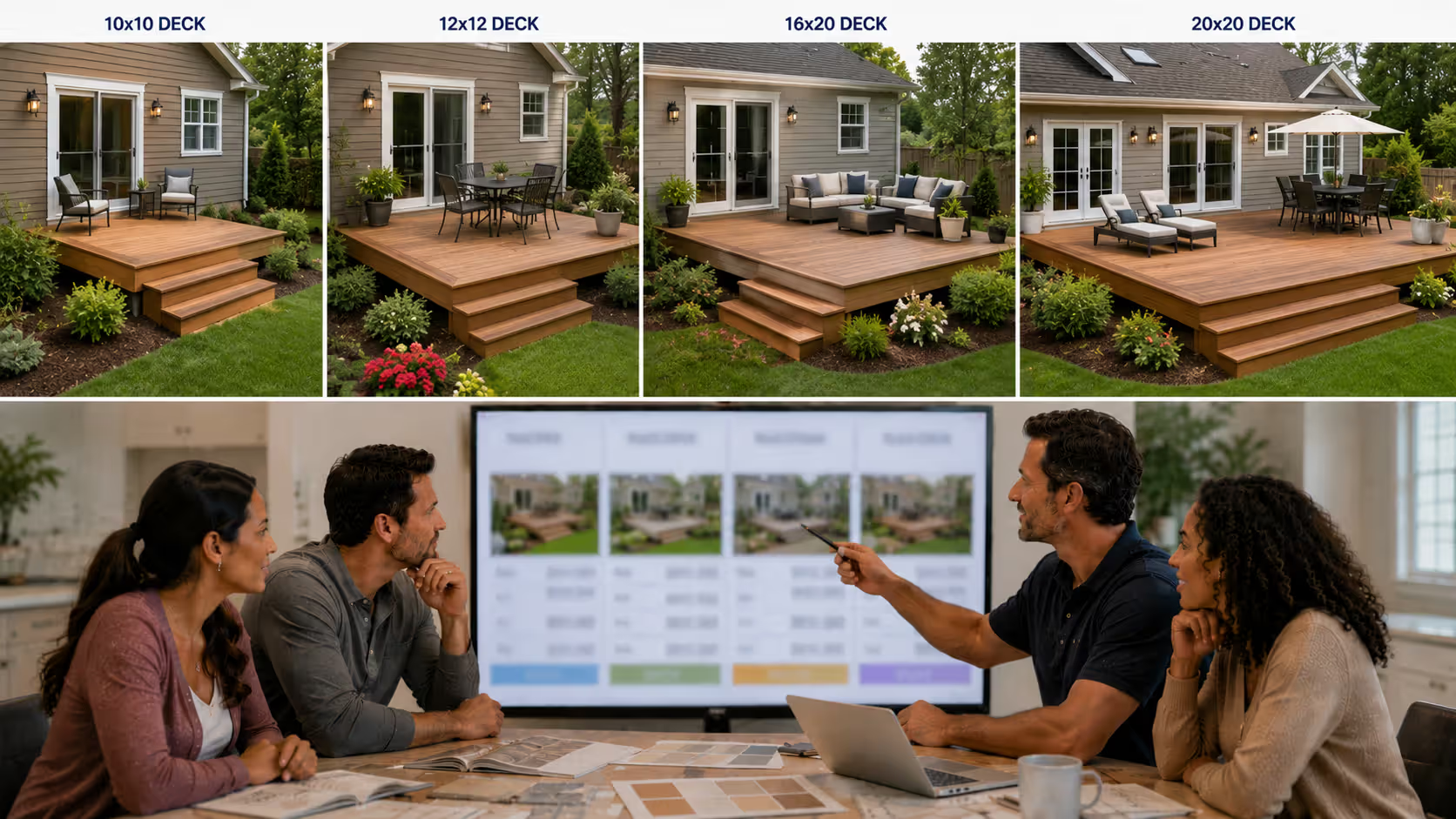
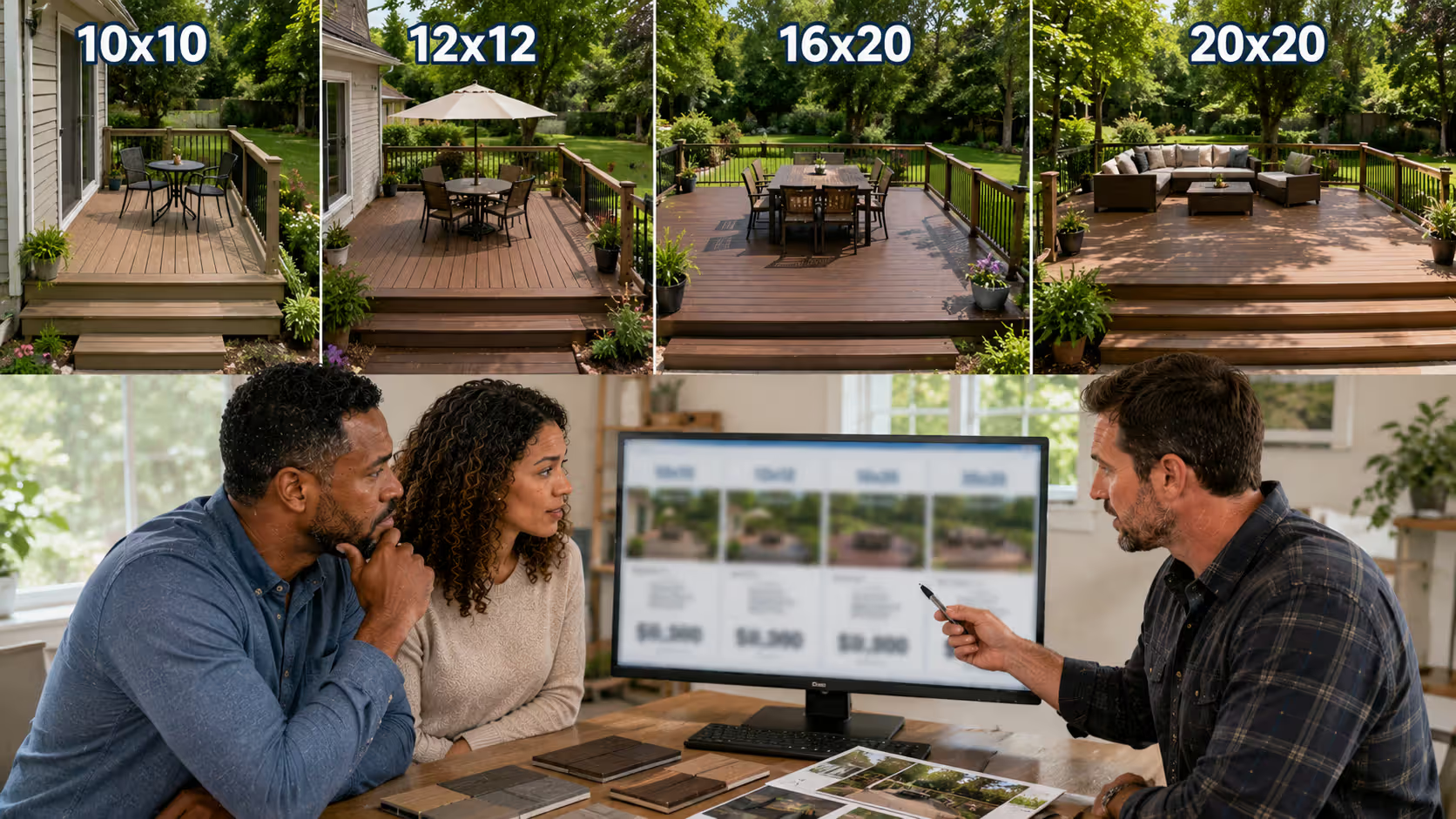
Here's what you're looking at for common sizes:
Those economy numbers? That's basic pressure-treated pine. Standard pricing gets you composite materials. High-end covers PVC or fancy imported hardwoods. Your contractor's labor typically eats up 50-60% of whatever you're spending.
One thing catches people off guard: they look at a 12x12 deck and think "that's tiny." Then the bill arrives. You're not just paying for 144 square feet of boards—you're paying for the entire support structure underneath. Posts sunk in concrete. Beams spanning between them. Joists running every 16 inches. It adds up shockingly fast.
| Deck Dimensions | Economy Build | Standard Price | High-End Cost |
| 10x10 (100 sq ft) | $1,500 | $3,500 | $6,500 |
| 12x12 (144 sq ft) | $2,200 | $5,000 | $9,400 |
| 16x16 (256 sq ft) | $3,800 | $8,900 | $16,600 |
| 16x20 (320 sq ft) | $4,800 | $11,200 | $20,800 |
| 20x20 (400 sq ft) | $6,000 | $14,000 | $26,000 |
Author: Olivia Hartwel;
Source: johnhranec.com
Deck Material Costs Compared
Your material choice? This decision makes or breaks your budget. We're talking potential differences of thousands of dollars on the same size deck.
| Material Type | Cost Per Sq Ft | How Long It Lasts | What It Demands From You |
| Pressure-Treated Pine | $15-$25 | 15-20 years | Annual sealing or you'll regret it |
| Composite | $30-$45 | 25-30 years | Occasional hosing down |
| Cedar/Redwood | $25-$35 | 15-20 years | Seal every few years |
| PVC | $40-$60 | 25-30+ years | Almost nothing |
| Exotic Hardwood | $50-$75 | 25-50 years | Periodic oiling |
Pressure-Treated Wood Decking
This is your wallet-friendly option. You're looking at $15-$25 per square foot installed, which makes it perfect when you're watching every dollar.
The wood gets soaked in preservatives that fight off decay and bugs. Works great—for a while. The catch? You're signing up for serious maintenance. Skip your annual staining appointment and watch your beautiful deck turn into a splintery, warped mess within two seasons. I've seen it happen.
The upside: when a board goes bad, replacing it costs almost nothing. You don't need special tools or expertise.
Composite Decking
This stuff mixes wood particles with plastic. Installation runs $30-$45 per square foot. Trex dominates this market, but TimberTech and Azek have loyal followings too.
Yeah, you're paying double what pressure-treated costs. But here's what you're buying: freedom. No staining. No sealing. No sanding splinters every spring. Spray it with your garden hose when it gets dirty. That's it.
Families with kids running around barefoot love this stuff. No splinters to dig out. Modern formulas hold their color way better than the early composite products that faded to weird gray-pink within five years.
One mistake people make? Assuming all composite performs identically. The cheap stuff still fades and stains more than premium lines. Read those warranties carefully—they tell you everything about quality differences.
Author: Olivia Hartwel;
Source: johnhranec.com
Cedar and Redwood Decking
These natural woods split the difference at $25-$35 per square foot installed. They're gorgeous—beautiful grain patterns and that woodsy smell some people love.
They resist rot naturally without chemical baths. The softer texture feels nicer underfoot compared to pressure-treated pine, especially when you're walking around barefoot on summer evenings.
You'll need to seal them every 2-3 years if you want to keep that rich reddish color. Or don't—they weather to an attractive silvery gray naturally. Some homeowners prefer that look. Others hate it.
Factors That Affect Deck Building Costs
Size and materials tell part of the story. But plenty of other variables can jack up your final bill by thousands.
Where you live changes everything. Contractors in Seattle or Boston charge $25-$35 per square foot for labor. Move to rural Kansas? You might pay $15-$20 for the same work. Coastal cities always cost more—higher overhead, higher demand, higher wages.
Your yard's terrain matters enormously. Got a flat, accessible backyard? Great—you'll pay the baseline rate. Sloped property? Now you need taller posts, extra concrete footings, and complicated bracing. That slope can increase your costs 40-50% even though the deck's the same size.
Permits and inspections add $200-$500 in most areas. Some municipalities charge more. And before you think about skipping this step: don't. You'll have problems selling your house later, plus you could face fines or forced removal.
Complex designs cost more. A simple rectangle? Easy. Start adding angles, multiple levels, curves, built-in planters, and fancy patterns? You're paying for extra labor hours and wasted material from all those cuts.
Height above ground escalates expenses dramatically. Ground-level platforms are cheapest. Building a second-story deck? You need longer posts, beefier footings, and way more safety features. Expect to pay 40-60% more than an identical ground-level build.
Railings run $20-$100 per linear foot depending on what you choose. Basic wood railings stay cheap. Glass panels, cable systems, or decorative metal? You're hitting that upper range fast. And you can't skip railings either—building codes require them once you're more than 30 inches off the ground.
Stairs cost $1,000-$3,000 based on how many steps you need and how wide you want them. Three steps down to your yard? No big deal. A full staircase descending a steep hill? That's getting pricey.
Built-in features like benches, planters, or pergolas tack on $500-$5,000 or more. They need extra framing and materials, but they might eliminate the need to buy separate furniture later.
Homeowners should budget an additional 10-15% beyond the base cost to account for unexpected site conditions and upgrades. I've been building decks for eighteen years, and I've never had a project come in exactly at the initial estimate. There's always something—a hidden utility line, rotten rim joist that needs replacing, or the client decides they want better railings halfway through.
— Martinez Carlos
Deck Replacement vs. New Deck Installation Costs
Replacing an old deck versus building fresh—the price difference isn't as big as you'd think.
Building from scratch on bare ground runs $15-$60 per square foot. You're starting with nothing: digging footings, building the entire frame, installing boards, adding railings.
Replacement projects cost $12-$50 per square foot. Sounds cheaper, right? Sometimes it is, especially if your existing frame is solid and you're just swapping out surface boards and railings. But complications pop up constantly.
You've got to tear out the old deck first. Demolition costs $500-$2,000 depending on size and how accessible your yard is. Then you're paying $200-$800 to haul away all that debris. Some contractors bundle these costs into their bid; others break them out separately.
Here's the kicker: replacement projects frequently uncover nasty surprises. Once you start tearing things apart, you might discover rotted joists, posts that don't meet current codes, or foundation issues nobody knew existed. Your "simple replacement" just became a full rebuild.
My advice? If your deck's over 15 years old, plan for complete replacement. Trying to salvage questionable framing usually costs more long-term when you're dealing with callbacks and repairs.
Additional Costs to Budget For

Author: Olivia Hartwel;
Source: johnhranec.com
The base construction price never tells the complete story. These extras can boost your final cost 20-40%.
Permits are non-negotiable for most deck projects. Set aside $200-$500 for permit fees and plan reviews. Some jurisdictions require engineered drawings for elevated structures—add another $500-$1,500 for that.
Inspections usually come with your permit fee, though you might get multiple site visits. Fail an inspection and you're looking at delays and potential rework.
Railing systems often appear as a separate line item. They cost $20-$100 per linear foot depending on what you pick. A standard 16x20 deck needs about 60 linear feet of railing. That's $1,200-$6,000 for railings alone.
Stairs down to your yard run $1,000-$3,000. Wider stairs cost more. Multiple landings on a sloped property? Significantly more.
Outdoor lighting lets you use your deck after sunset. Basic post cap lights cost $15-$50 each. Recessed stair lights run $30-$80 per fixture. A complete lighting package for a medium deck with professional installation costs $500-$2,000.
Built-in seating eliminates furniture purchases but adds $1,000-$3,000 to construction. You're paying for additional framing, more decking material, and skilled labor.
Pergolas and shade structures range from $2,000-$10,000 by size and materials. Simple attached pergolas start around $2,000. Freestanding structures with elaborate designs climb quickly.
Professional finishing for wood decks costs $2-$5 per square foot for staining and sealing. A 300-square-foot deck needs $600-$1,500 for pro application. DIY finishing drops this to $100-$300 in materials only.
How to Save Money on Your Deck Project
Author: Olivia Hartwel;
Source: johnhranec.com
You can trim thousands from your deck budget without compromising structural integrity. Here's how.
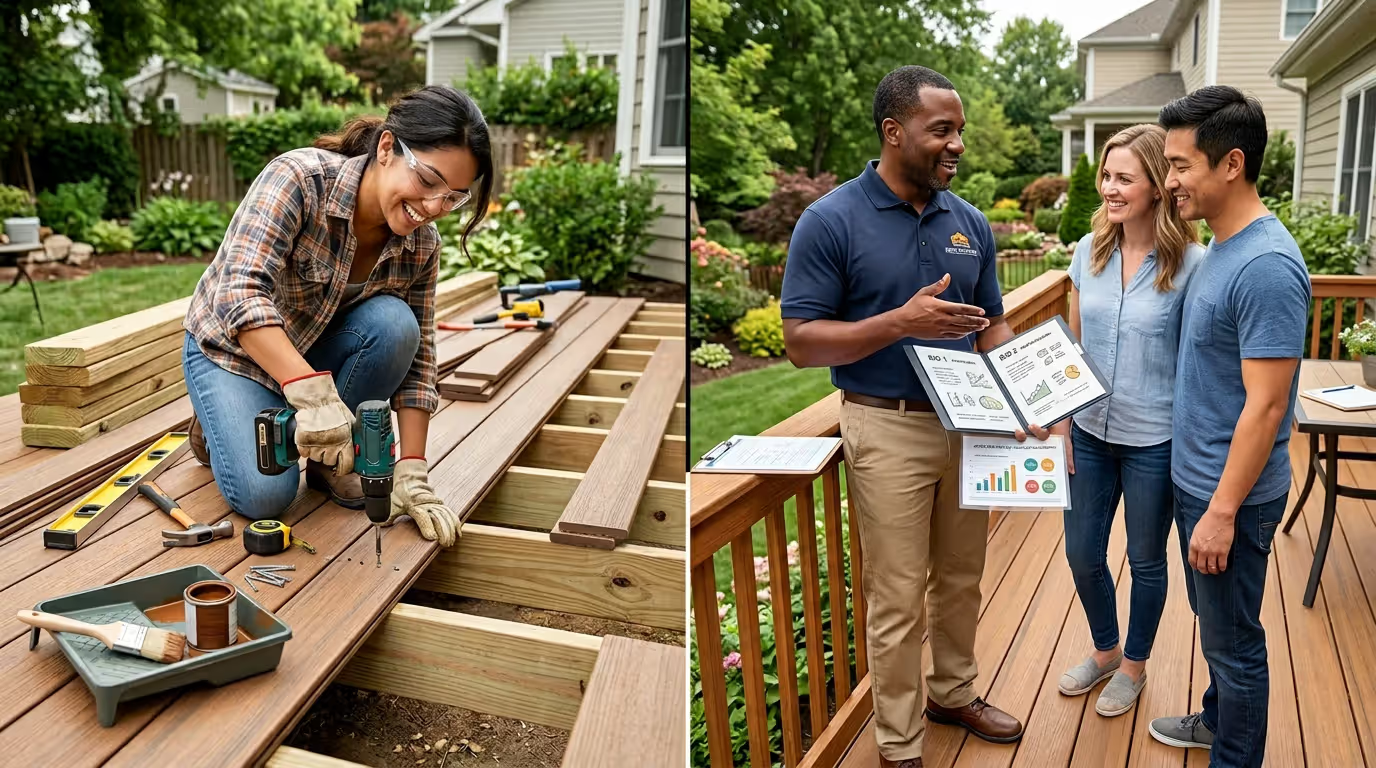
DIY versus hiring pros represents your biggest money decision. Building it yourself can slash costs 40-60% since you're only buying materials and renting tools. But deck construction demands carpentry skills, proper equipment, and physical ability. Mistakes get expensive and potentially dangerous.
A hybrid approach works well: hire professionals for structural framing and footings, then handle decking installation and railings yourself. This ensures code-compliant foundations while capturing savings on simpler tasks.
Timing matters. Contractors get slammed April through August. Schedule your project for late fall or early spring and you might score 10-20% discounts. Many contractors cut rates during slow periods to keep their crews employed.
Material selection creates massive savings opportunities. Choose pressure-treated wood over composite and you'll nearly halve your material costs. You're trading convenience for affordability, but the deck functions identically.
Buying materials yourself can save money if you've got time for comparison shopping. Big-box stores periodically discount decking. Lumber suppliers sometimes extend contractor pricing to serious DIYers. This only works when you calculate quantities accurately and manage delivery yourself.
Keep designs simple. Rectangles cost less than complex shapes. Ground-level beats elevated. Standard railings cost less than custom fabrications.
Hold off on built-in features initially. Add benches and planters later. Start with a functional basic platform and upgrade incrementally when your budget recovers.
Counterintuitive tip: don't automatically pick the lowest contractor bid. Unusually low estimates often signal corner-cutting, inexperience, or planned upselling during construction. Middle-range estimates typically reflect accurate market pricing.
FAQ: Deck Cost Questions Answered
Deck costs vary wildly, but now you've got realistic numbers to work with. A modest 12x12 pressure-treated platform starts around $2,200. An expansive composite deck with all the bells and whistles can exceed $25,000.
Match your investment to how you'll actually use the space. Building a basic platform for occasional grilling? Standard materials work perfectly fine. Creating an outdoor living room where your family hangs out nightly? Quality materials and thoughtful features justify spending more.
Keep that 10-15% cushion for surprises. Construction always uncovers something unexpected. Maybe soil conditions require deeper footings. Maybe you'll decide halfway through that upgraded railings look way better.
Get at least three estimates from licensed contractors before committing. Request photos of completed projects and verify references. Rock-bottom pricing rarely delivers optimal value.
Your deck will probably serve your household 15-30 years depending on material quality and maintenance. That's thousands of hours enjoying outdoor space. A modest additional investment upfront in quality materials or professional installation frequently pays off through better durability and satisfaction.
Start planning today and you could be grilling steaks on your new deck before summer hits.