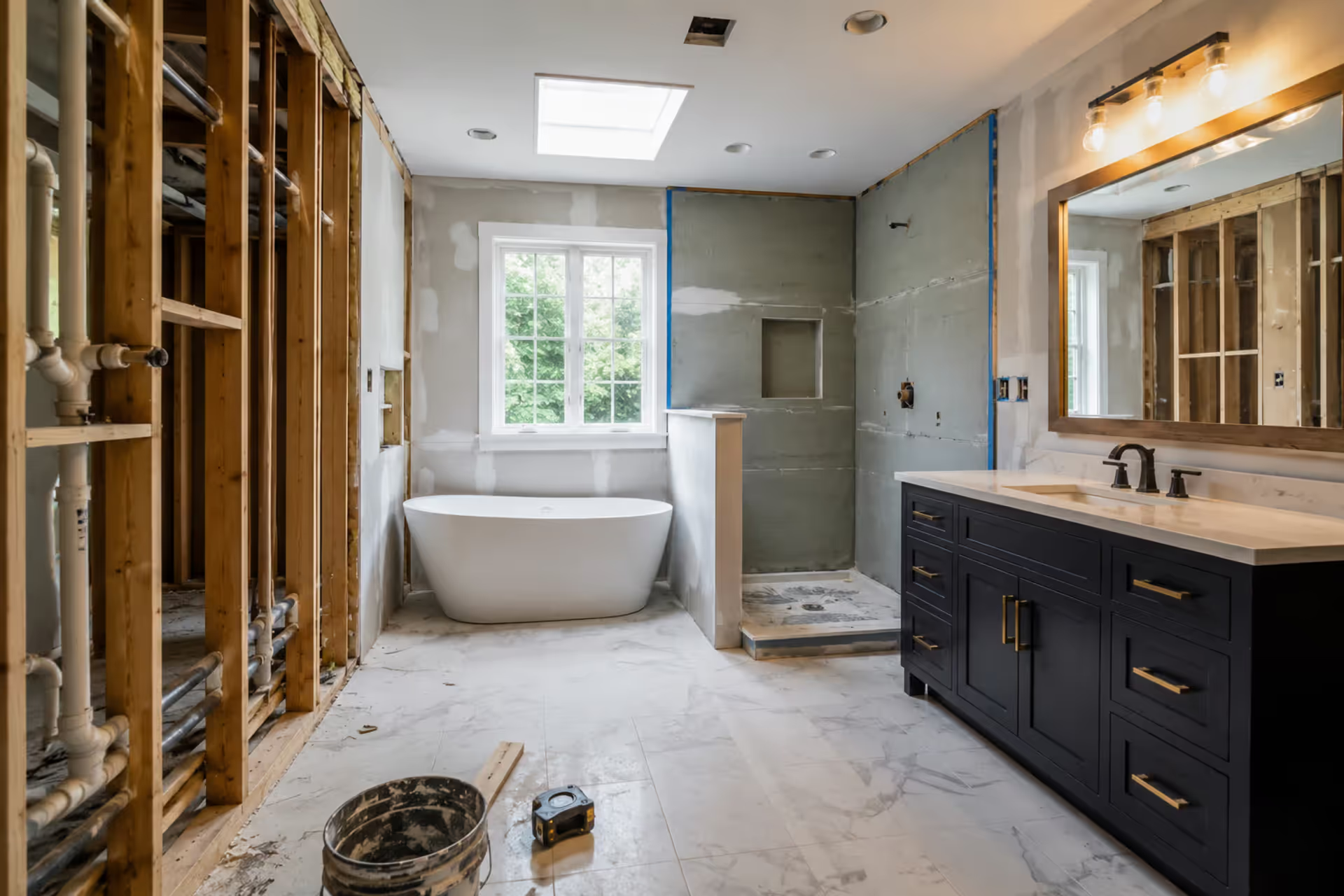
How Much Does It Cost to Add a Bathroom?
How Much Does It Cost to Add a Bathroom?

Content
Adding a bathroom to your home is one of those projects that sounds simple until you start asking contractors for quotes. The numbers can swing wildly—from around $5,000 for a basic half bath to well over $100,000 for a luxury master suite. What drives these differences? Everything from where you're building to what fixtures you choose matters. But here's the thing: understanding the cost breakdown helps you plan smarter and avoid the sticker shock that catches most homeowners off guard.
Average Cost to Add a Bathroom
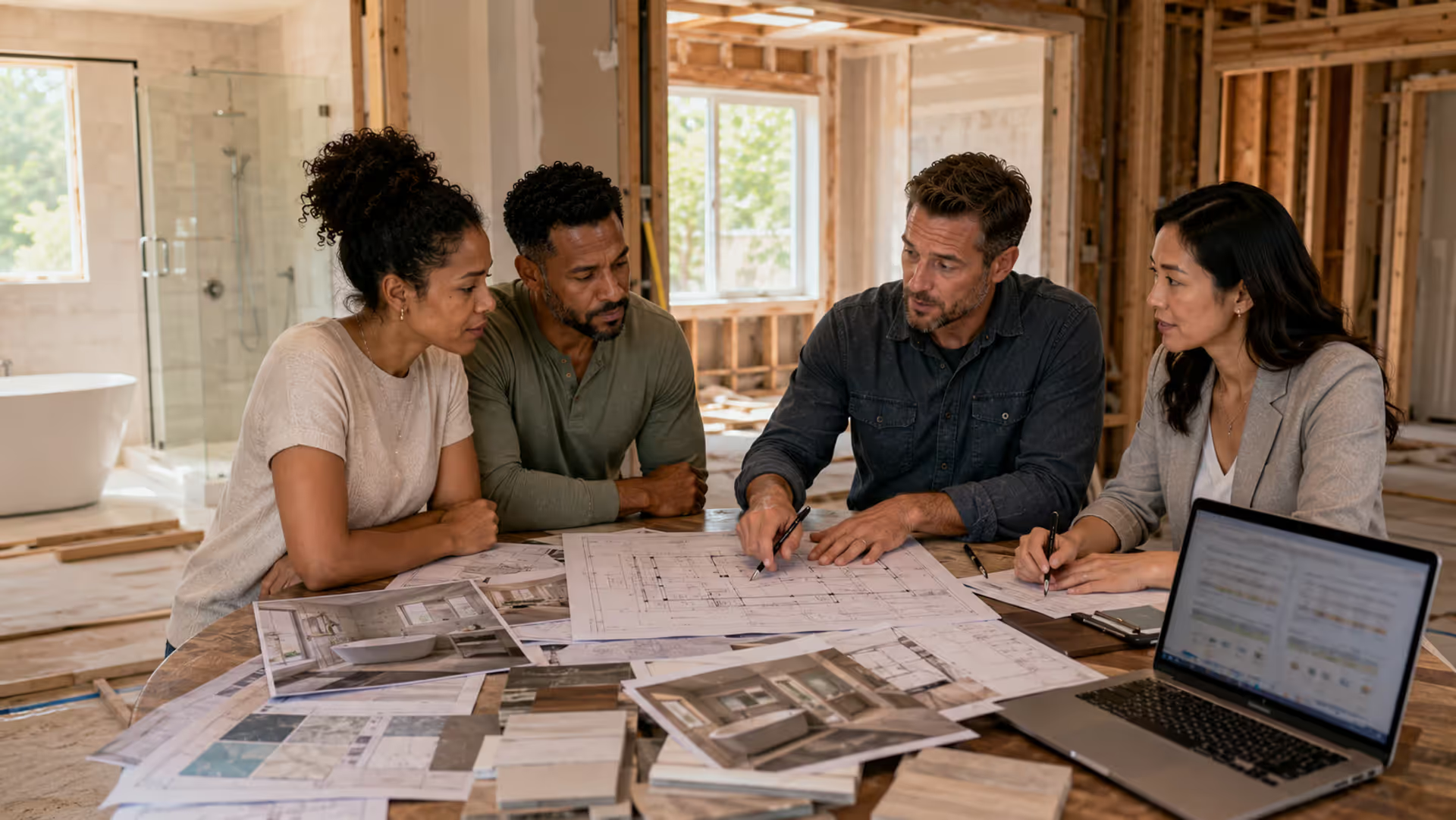
Let's talk numbers. The national average cost to add a bathroom sits between $15,000 and $60,000 for most projects. That's a wide range, and where you land depends heavily on the bathroom type you're building.
A half bath—just a toilet and sink—typically runs $5,000 to $25,000. These are the most budget-friendly options because they require less plumbing and occupy minimal space. Perfect for a first-floor addition near existing water lines.
Full bathrooms with a tub or shower cost significantly more. Expect to spend $15,000 to $50,000 for a standard full bath. The plumbing complexity jumps here, and you're dealing with more square footage, more fixtures, and more finishes.
Master bathroom additions sit at the top of the price pyramid. These luxury spaces can cost anywhere from $35,000 to $120,000 or more. Double vanities, walk-in showers, soaking tubs, heated floors—the features add up fast.
Regional variations matter too. Building in San Francisco or New York City? You'll pay 30-50% more than the national average. Labor costs in major metro areas are substantially higher, and permit fees can be brutal. Meanwhile, homeowners in the Midwest or rural South often see prices 15-25% below national averages.
The pattern I see most often is homeowners budgeting for the low end and getting surprised by the mid-range reality. Plan for the middle of your bathroom type's range, then add 15% for contingencies.
Author: Olivia Hartwel;
Source: johnhranec.com
What Affects the Cost of Bathroom Addition
Several factors determine whether you're spending $10,000 or $80,000. Understanding these variables helps you control costs where possible and anticipate where you can't.
Location and Space Availability
Where you build matters enormously. Adding a bathroom next to existing plumbing—like above or beside another bathroom—can save you $3,000 to $8,000 compared to a distant location. You're using the same plumbing stack, which means less pipe, less labor, less demolition.
Converting existing space costs less than building an addition. Turning a closet into a powder room? You've already got the square footage, walls, and climate control. Building an entirely new addition means foundation work, framing, roofing, and exterior finishing—easily adding $20,000 to $40,000 to your project.
Basement bathrooms come with their own challenges. If you're below the main sewer line, you'll need an ejector pump system. That adds $2,000 to $5,000 to your costs but makes the project possible.
Plumbing and Electrical Work
Plumbing represents the biggest cost variable in most bathroom additions. Running new water supply lines and drain pipes typically costs $1,500 to $4,000 for a simple installation. But if you're far from existing plumbing or need to relocate the main stack, costs can hit $8,000 to $15,000.
Electrical work adds another $1,000 to $3,000 for standard installations. You'll need dedicated circuits for outlets, lighting, and any ventilation fans. If your electrical panel is maxed out, you might need an upgrade—tack on another $1,500 to $3,000.
Don't forget ventilation. Building codes require it, and proper exhaust fan installation runs $200 to $600 depending on ductwork complexity.
Fixtures and Material Quality
This is where your choices directly control costs. A basic toilet costs $100 to $300. A high-efficiency or smart toilet? $800 to $3,000. Vanities range from $200 for a basic model to $4,000+ for custom cabinetry.
Shower and tub choices create similar spreads. A fiberglass shower insert costs $400 to $1,200. A custom-tiled walk-in shower with frameless glass doors runs $3,000 to $8,000. Freestanding soaking tubs start around $800 but can exceed $5,000 for designer models.
Flooring and tile selections matter too. Vinyl plank flooring costs $2 to $8 per square foot installed. Porcelain or natural stone tile runs $10 to $30 per square foot or more.
Labor Costs
Labor typically represents 40-60% of your total project cost. General contractors charge $50 to $150 per hour depending on your location and their experience level. Specialized trades cost more—licensed plumbers run $70 to $150 per hour, electricians charge $65 to $130 per hour.
Most bathroom additions require multiple trades: plumbers, electricians, framers, drywall installers, tile setters, painters. Coordinating all these professionals is part of what a general contractor manages, which is why many homeowners hire one despite the markup.
Cost Breakdown by Bathroom Type
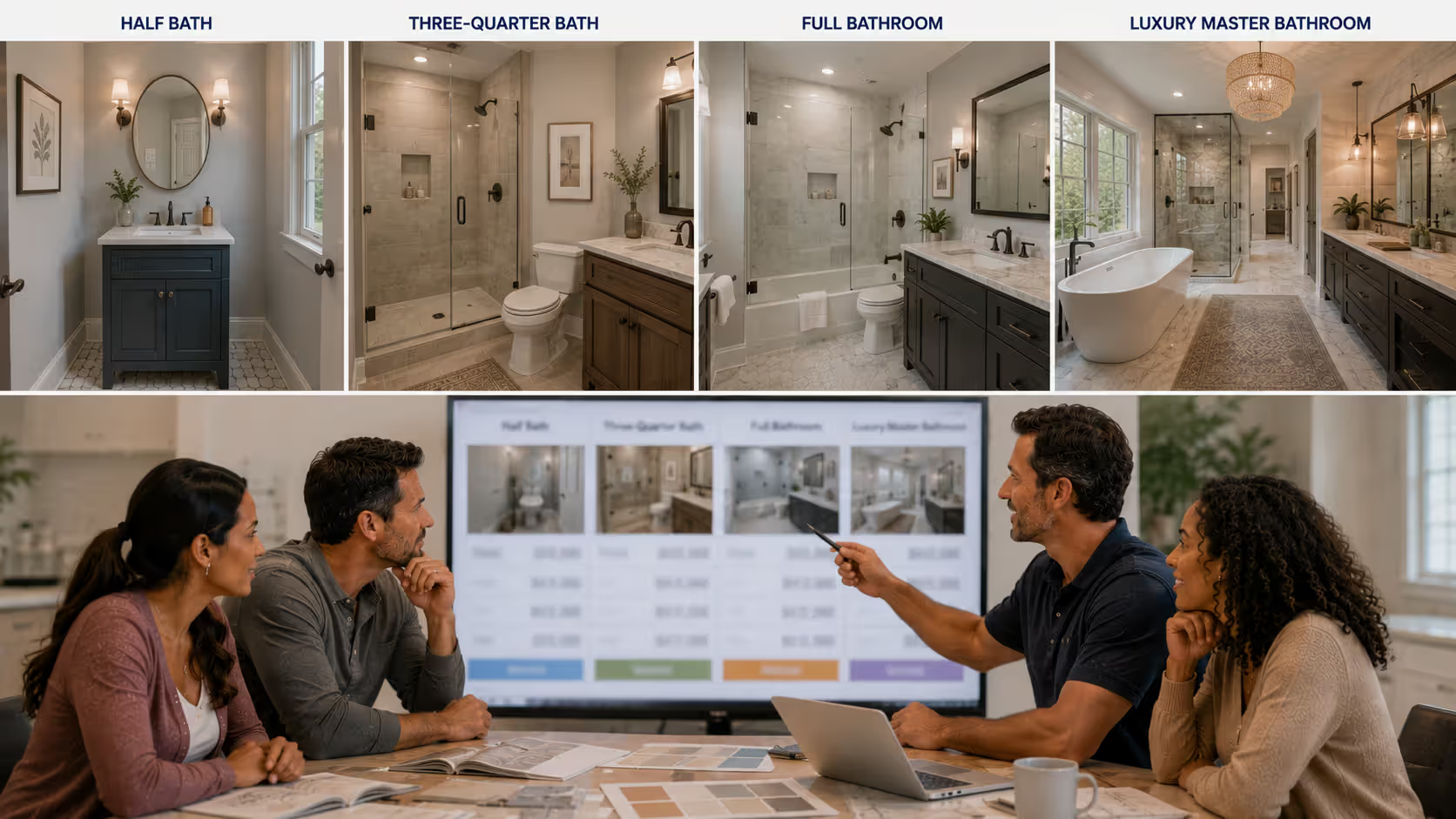
Different bathroom types come with predictably different price tags. Here's how they compare:
| Bathroom Type | Size (sq ft) | Average Cost Range | Key Features Included |
| Half Bath | 20-30 | $5,000-$25,000 | Toilet, sink, vanity, basic flooring |
| Three-Quarter Bath | 35-50 | $12,000-$40,000 | Toilet, sink, shower, standard fixtures |
| Full Bath | 40-60 | $15,000-$50,000 | Toilet, sink, tub/shower combo, ventilation |
| Master Bath | 80-150+ | $35,000-$120,000+ | Double vanity, separate shower and tub, luxury finishes, upgraded fixtures |
Let's break down what you're actually paying for in a mid-range full bathroom addition costing around $30,000:
Plumbing: $4,000-$6,000. This covers supply lines, drain pipes, vent stack, and fixture installation. If you're tapping into nearby plumbing, you'll land on the lower end.
Electrical: $1,500-$2,500. Includes wiring for lighting, outlets, ventilation fan, and potentially in-floor heating.
Fixtures: $3,000-$6,000. A mid-range toilet ($300-$600), vanity with sink ($800-$1,500), tub/shower combo ($1,200-$2,500), faucets and hardware ($500-$1,000).
Flooring: $800-$2,000. Covers materials and installation for 50 square feet of tile or waterproof flooring.
Walls and Paint: $1,500-$3,000. Drywall, tile work for shower surround, waterproofing, and painting.
Permits: $500-$2,000. Varies dramatically by location.
Labor: $12,000-$18,000. This is your general contractor coordination plus trade labor for installation.
Miscellaneous: $1,000-$2,000. Ventilation fan, lighting fixtures, mirrors, accessories, and the inevitable unexpected items.
The simpler option usually wins here for budget-conscious homeowners. A three-quarter bath with just a shower instead of a tub/shower combo can save you $2,000 to $4,000 while still providing full functionality.
Hidden Costs When Adding a Bathroom
Author: Olivia Hartwel;
Source: johnhranec.com
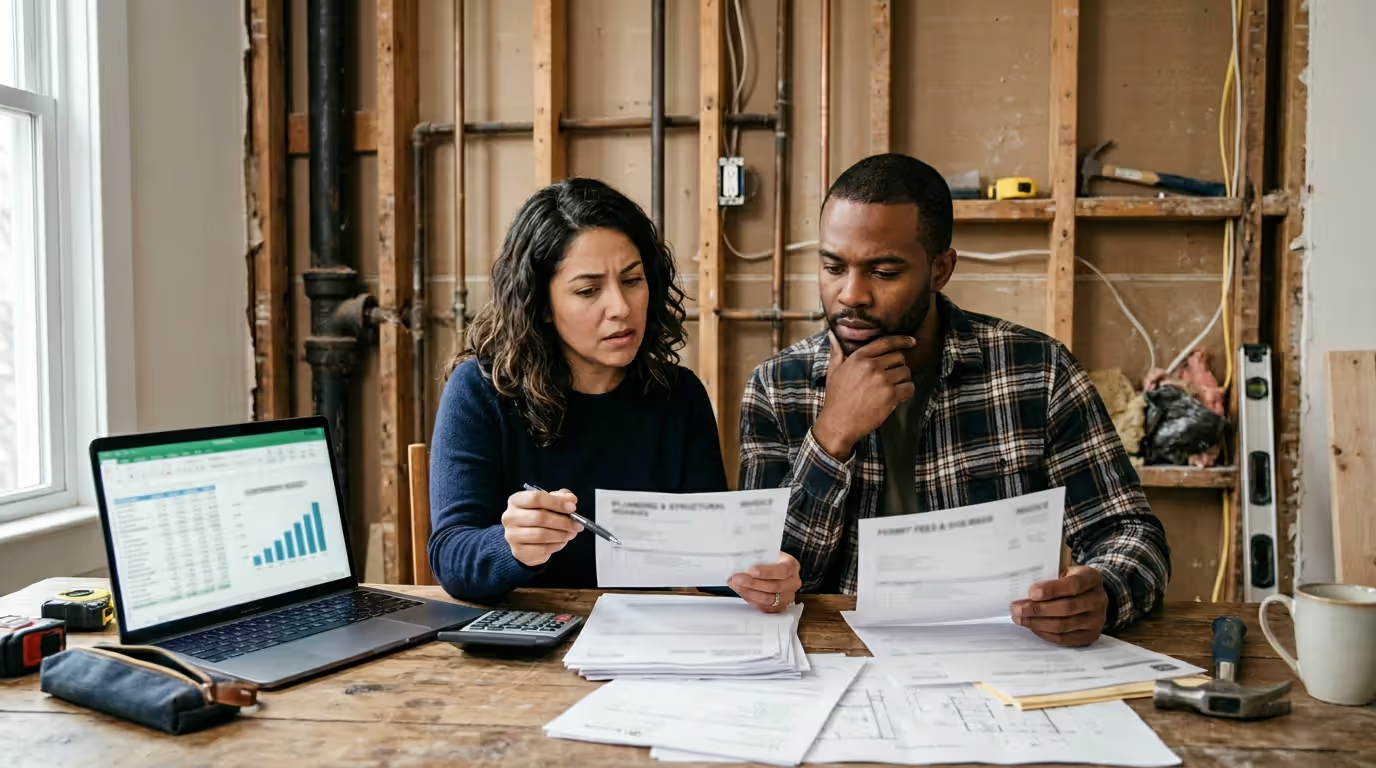
The quoted price rarely tells the whole story. These hidden costs catch homeowners by surprise more than any other aspect of bathroom additions.
Permits and inspections are non-negotiable. Depending on your municipality, expect to pay $500 to $3,000 for building permits, plumbing permits, and electrical permits. Some jurisdictions require multiple inspections throughout the project, each with its own fee. Skip permits and you risk fines, difficulty selling your home later, and insurance complications if something goes wrong.
Structural modifications often become necessary once walls open up. Need to relocate a load-bearing wall? That's $1,500 to $5,000 for proper beam installation. Reinforcing floor joists to support a heavy soaking tub adds $1,000 to $3,000. These aren't optional—they're safety requirements.
HVAC adjustments get overlooked in initial planning. Your new bathroom needs heating and cooling. Extending existing ductwork costs $500 to $2,000. If your system can't handle the additional load, you're looking at $1,500 to $4,000 for system modifications or a mini-split installation.
Unexpected plumbing issues emerge when contractors open walls. Old galvanized pipes that need replacement? Sewer line problems? Inadequate water pressure requiring a pump? Budget an extra $2,000 to $8,000 for plumbing surprises. They happen on roughly 30% of bathroom addition projects.
Code compliance upgrades can be required when you pull permits. Your local building department might require you to bring other systems up to current code—even systems not directly related to your bathroom addition. This might include upgrading nearby electrical panels, installing GFCI outlets throughout the house, or adding smoke detectors.
The biggest mistake homeowners make is not budgeting for the unknowns. I always recommend adding 20% to any bathroom addition estimate. In 15 years of contracting, I've seen maybe five projects come in under budget. The rest? They hit unexpected issues—old plumbing, structural surprises, code requirements nobody anticipated. That buffer keeps your project moving when surprises happen.
— Martinez Elena
Return on Investment for Adding a Bathroom
Here's the good news: adding a bathroom is one of the better home improvement investments you can make. But the ROI varies significantly based on circumstances.
The national average ROI for adding a bathroom sits around 50-60%. That means a $30,000 bathroom addition typically adds $15,000 to $18,000 to your home's value. Not a full return, but respectable compared to many renovations.
However, certain scenarios deliver much better returns:
Increasing bathroom count in under-served homes. If you've got a four-bedroom house with only one bathroom, adding a second bathroom can return 80-100% of your investment. Families won't even consider homes without adequate bathroom-to-bedroom ratios. The sweet spot is one bathroom per two bedrooms.
Adding a master bathroom to a master bedroom that lacks one returns 60-75% typically. Buyers expect master suites in modern homes, and adding one brings your home up to current market standards.
Half bath additions on the main floor return 60-70% and dramatically improve daily livability. Not having to run upstairs every time guests need a bathroom matters more than you'd think.
The worst ROI scenarios? Adding a fourth bathroom to a three-bedroom house rarely makes financial sense—you might see only 30-40% return. Over-improving for your neighborhood is another ROI killer. A $100,000 luxury master bath in a neighborhood where homes sell for $300,000 won't pay off.
Beyond pure numbers, bathroom additions improve market appeal. Homes sell faster when bathroom counts meet buyer expectations. In competitive markets, that speed can be worth thousands in carrying costs and negotiating position.

Author: Olivia Hartwel;
Source: johnhranec.com
How to Plan Your Bathroom Addition Project
Smart planning makes the difference between a smooth project and a nightmare. Here's how to approach it.
Budget planning starts with honest assessment. Don't just look at the construction costs—factor in 15-20% for contingencies, permit fees, temporary inconveniences, and the inevitable upgrades you'll want once you see options. If you can't comfortably afford the mid-range estimate for your bathroom type, wait and save more.
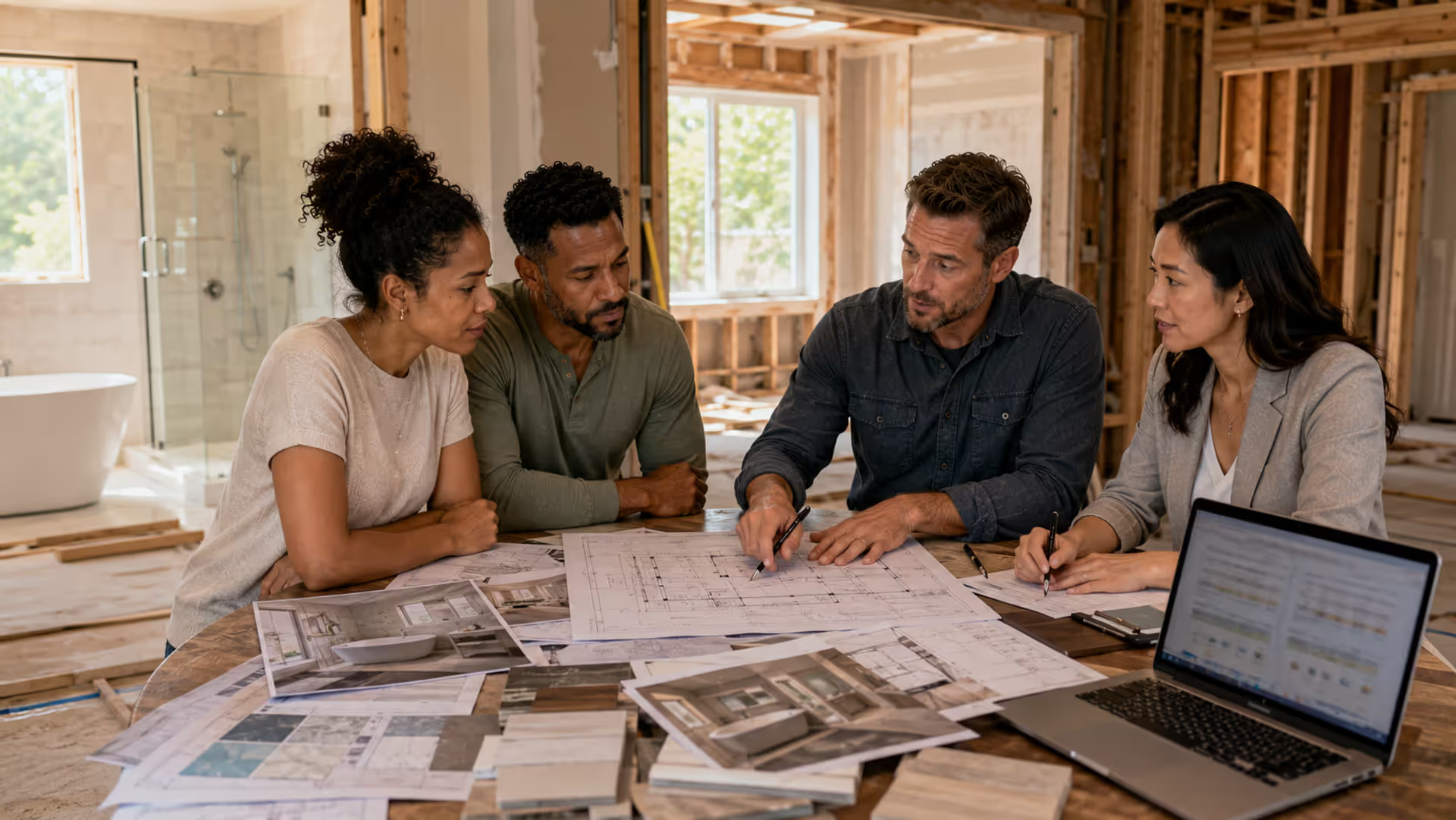
Hiring the right contractor matters enormously. Get at least three detailed bids from licensed, insured contractors. Check references. Look at previous bathroom projects they've completed. The cheapest bid is rarely the best choice—you're looking for value, not just low price.
Ask potential contractors these questions:
- How many bathroom additions have you completed in the past year?
- Will you pull permits and handle inspections?
- What's your payment schedule?
- Who will be on-site daily managing the work?
- What happens if we encounter unexpected issues?
Timeline expectations should be realistic. A simple half bath takes 2-4 weeks. A full bathroom addition runs 4-8 weeks. Complex master suite additions can stretch to 10-16 weeks. Weather, permit delays, and material backorders can extend any timeline. Don't plan to have guests arriving the week after your estimated completion date.

Author: Olivia Hartwel;
Source: johnhranec.com
Cost-saving strategies exist without sacrificing quality. Here are the ones that actually work:
Build near existing plumbing. This single decision saves more money than any other.
Choose mid-range fixtures over luxury models. The functionality difference is minimal, but you'll save 30-50% on fixture costs.
Handle demolition yourself if you're capable. Contractors charge $1,500 to $3,000 for demo work you might do in a weekend.
Buy your own fixtures and materials. You'll skip the contractor markup, typically 15-30%. Just ensure everything arrives on time so you don't delay the project.
Do the painting yourself. Professional painting costs $800 to $2,000 for a bathroom. You can knock this out in a weekend with quality results.
What not to skimp on: plumbing work, electrical work, waterproofing, and ventilation. These are the systems that cause expensive problems when done poorly. Pay for quality here.
FAQ: Bathroom Addition Cost Questions Answered
Adding a bathroom ranks among the more complex home improvement projects you'll tackle. The costs are substantial, the planning requires attention to detail, and the execution demands skilled professionals. But for homes that genuinely need additional bathrooms, few projects improve daily life and home value as effectively.
Start with honest assessment of your needs and budget. Are you solving a real problem—too few bathrooms for your household—or just wanting an upgrade? If you're addressing genuine need, the investment makes sense. If you're over-improving for your neighborhood, reconsider.
Get multiple detailed bids from licensed contractors. Ask questions. Check references. The relationship you build with your contractor will determine whether this project is smooth or stressful.
Budget realistically with contingency funds. Bathroom additions almost never come in under initial estimates. Plan for the middle of your bathroom type's cost range, then add 15-20% for surprises.
The right bathroom addition improves your daily life immediately and positions your home better for eventual resale. Just make sure you're making the decision based on clear-eyed cost understanding rather than wishful budget thinking.