How Much Does It Cost to Paint a Room?
How Much Does It Cost to Paint a Room?

Content
Painting a room is one of the most cost-effective ways to refresh your home's look. But prices vary wildly depending on size, prep work, and who's holding the brush. Most homeowners spend between $380 and $790 for a professional paint job on a standard bedroom. DIY? You're looking at $100 to $300 in materials. The catch is knowing what drives those numbers up or down—and whether your time is worth the savings.
Average Room Painting Costs by Size
Room dimensions matter more than you'd think. A 10x10 room isn't just smaller than a 12x12—it's about 80 square feet less wall space to cover. That translates directly to paint, labor, and time.
Here's what you can expect across common room sizes:
These ranges assume standard 8-foot ceilings, two coats of paint, and walls in decent shape. The pattern I see most often is homeowners underestimating prep time—it's usually 40% of the total job.
A 12x12 bedroom typically runs $400 to $700 with a pro, or about $120 to $280 if you're doing it yourself. That's the most common size people search for, and it's a good benchmark for estimating other rooms.
| Room Size | Square Footage | DIY Cost Range | Professional Cost Range | Time Required |
| Small (10x10) | 100 sq ft | $80–$200 | $300–$500 | 4–6 hours (DIY) / 2–3 hours (Pro) |
| Medium (12x12) | 144 sq ft | $120–$280 | $400–$700 | 6–8 hours (DIY) / 3–4 hours (Pro) |
| Large (15x15) | 225 sq ft | $180–$400 | $600–$1,000 | 8–12 hours (DIY) / 4–6 hours (Pro) |
| Master Bedroom (16x18) | 288 sq ft | $230–$500 | $750–$1,300 | 10–14 hours (DIY) / 5–7 hours (Pro) |
| Living Room (20x20) | 400 sq ft | $320–$650 | $1,000–$1,800 | 12–16 hours (DIY) / 6–9 hours (Pro) |
What Affects the Cost of Painting a Room
Three big factors push prices up or down. Ignore them when budgeting and you'll get sticker shock.
Paint Quality and Type
Not all paint is created equal. Budget latex runs $20 to $30 per gallon. Premium brands like Benjamin Moore or Sherwin-Williams? $50 to $80 per gallon.
But here's the thing—cheap paint needs three coats. Good paint covers in two. You'll actually use less of the expensive stuff, and it lasts years longer. The math works out in favor of quality almost every time.
Specialty finishes add cost fast. Flat paint is cheapest. Eggshell costs 10–15% more. Semi-gloss and high-gloss can run 20–30% higher. Primers add another $15 to $40 per gallon, though many newer paints have primer built in.
Author: Nathan Cole;
Source: johnhranec.com
Wall Condition and Prep Work
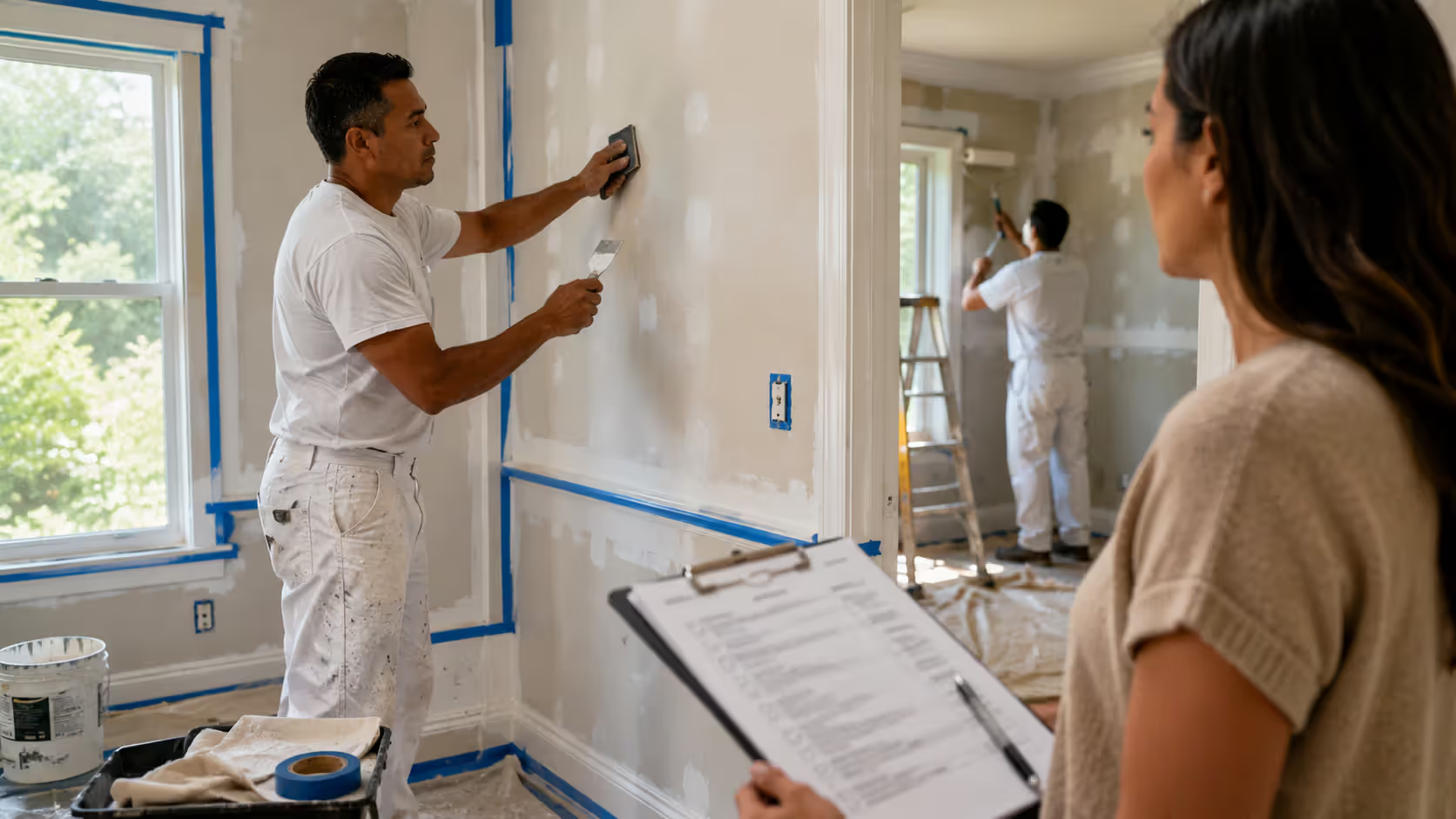
Smooth, clean walls? You're golden. Holes, cracks, texture removal, or wallpaper? That's where costs explode.
Professional painters charge $1 to $3 per square foot just for prep work on damaged walls. Removing wallpaper adds $1 to $2 per square foot. Skim coating to smooth textured walls? Another $1.50 to $3.50 per square foot.
A common mistake is thinking painters will fix everything included in their base quote. They won't. Extensive repairs are always extra—sometimes doubling the total cost.
Ceiling Height and Architectural Details
Standard 8-foot ceilings are priced normally. Vaulted or 10+ foot ceilings add 20–40% to labor costs. Painters need scaffolding or extension equipment, and it's slower, more careful work.
Crown molding, wainscoting, built-in shelves, or coffered ceilings? Each detail adds time. Expect to pay $1 to $4 per linear foot for trim work, depending on intricacy. A room with elaborate woodwork can cost twice as much as a plain box, even if the wall square footage is identical.
The biggest pricing variable isn't the paint or even the room size—it's the prep work. A homeowner sees a room that needs painting. We see fifteen nail pops, three patches, baseboard gaps, and a texture mismatch. That's the difference between a $500 job and a $900 job.
— Mitchell Robert
Professional Painter Costs vs DIY
Professional painters charge one of two ways: per square foot or per room. In 2026, expect $2 to $6 per square foot for labor and materials combined. Hourly rates run $25 to $75 per hour, but most pros avoid hourly billing—it creates disputes.
Per-room pricing is cleaner. A standard bedroom? $300 to $700. Living room? $800 to $1,500. The quote usually includes two coats, minor prep, and cleanup.
DIY costs are just materials. You'll need:
- Paint: $40–$160 (depends on room size and quality)
- Primer: $15–$40 (if needed)
- Supplies (brushes, rollers, tape, drop cloths, trays): $30–$60
- Patching compound and sandpaper: $10–$25
Total: $95 to $285 for a typical bedroom.
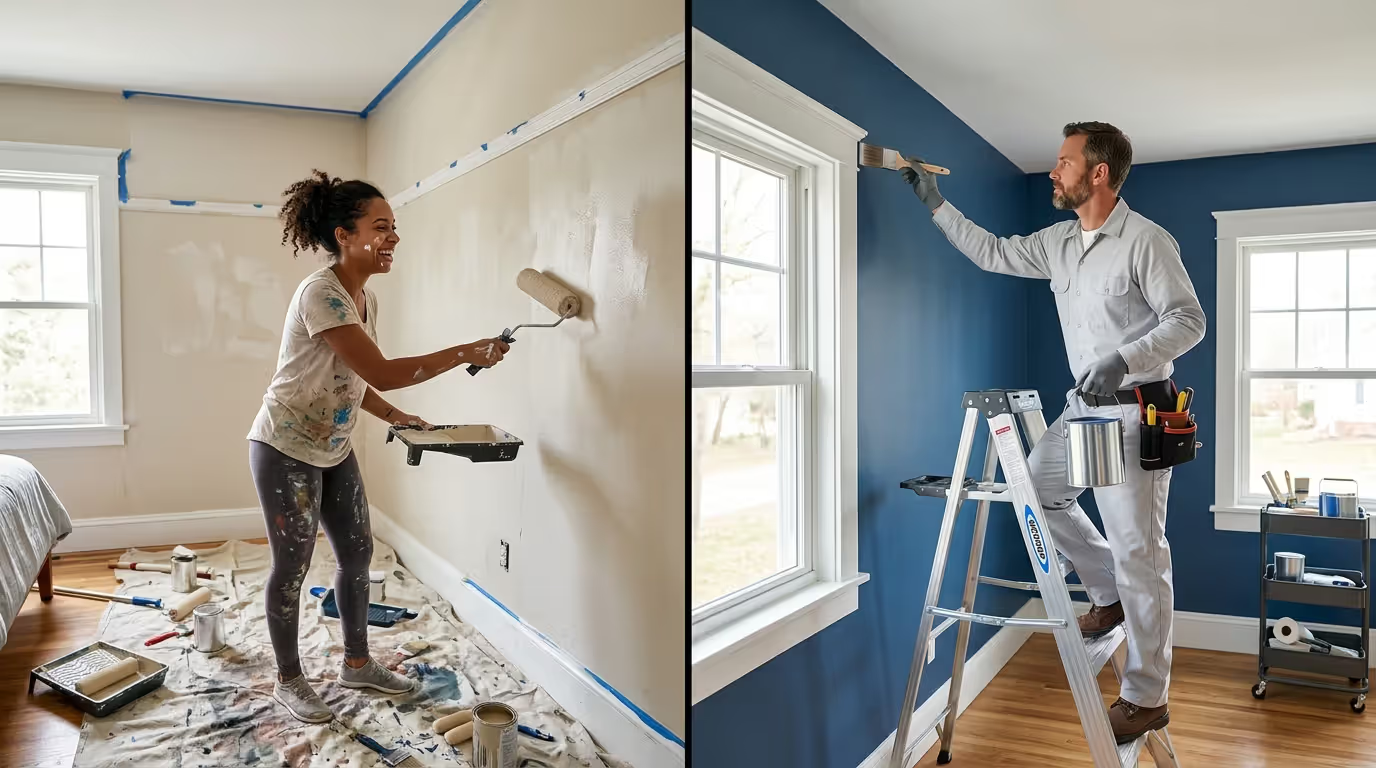
The trade-off isn't just money—it's time and quality. A pro finishes in half a day what takes you a full weekend. And their cut lines are cleaner. But if you're patient and detail-oriented, DIY can look nearly as good.
One thing people don't calculate: opportunity cost. If your time is worth $30 an hour and the job takes 12 hours, that's $360 in "invisible" cost. Suddenly the $500 professional quote looks different.
Author: Nathan Cole;
Source: johnhranec.com
Cost to Paint Specific Room Elements
Sometimes you don't need the whole room done. Here's what individual elements cost:
Walls: $1.50 to $4 per square foot professionally, or $0.40 to $1.20 per square foot DIY. A single accent wall in a 12x12 room (about 96 square feet) runs $150 to $400 with a pro, $40 to $120 yourself.
Ceilings: $1 to $2.50 per square foot for flat ceilings, $2 to $4 for textured or vaulted. Ceilings cost more than walls because they're awkward to reach and paint drips constantly. A 12x12 ceiling (144 square feet) costs $150 to $575 professionally.
Doors: $50 to $150 per door with a pro, $10 to $30 DIY. Panel doors with detail cost more than flat slab doors. Removing the door to paint it properly adds $20 to $40 to the professional price—but the finish is way better.
Trim and baseboards: $1 to $4 per linear foot. A 12x12 room has about 48 linear feet of baseboard, so that's $50 to $200 professionally. Painting trim is tedious—lots of taping and small brush work. It's why many people hire out trim even when they DIY the walls.
Windows: $50 to $150 per window for frames and sills. More if you're painting muntins (those little grids between panes).
The simpler option usually wins here—if you're hiring a pro anyway, bundle everything. The per-item cost drops when painters do the whole room at once.
How to Get Accurate Painting Estimates
Getting quotes is free. Getting good quotes takes work.
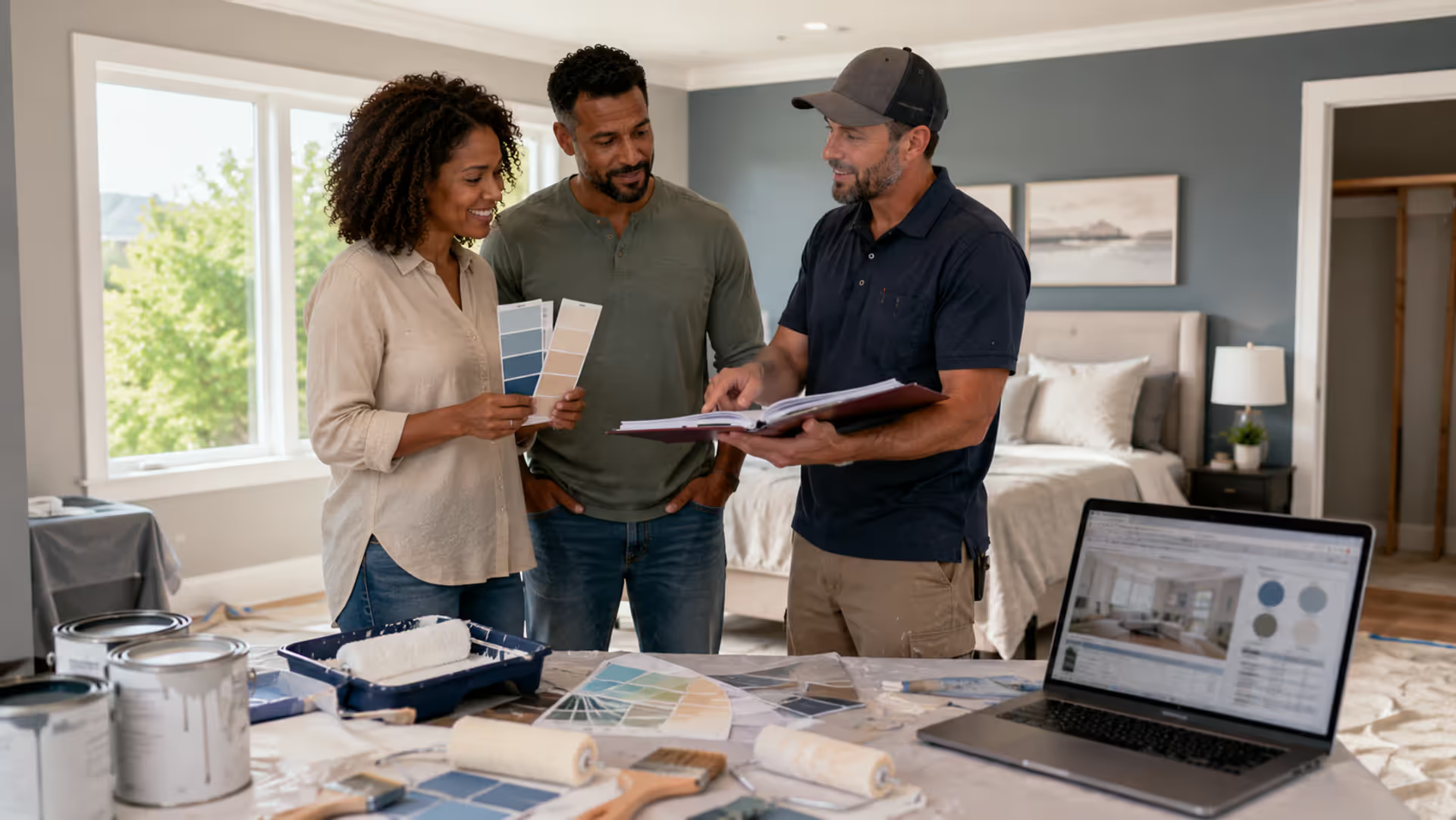
Contact at least three painters. Not just anyone—check reviews, verify insurance, and ask for recent references. When they visit, have them quote the same scope: number of coats, paint quality, prep work included, and cleanup.
Ask these specific questions:
- What prep work is included? (Patching, sanding, priming?)
- What brand and grade of paint will you use?
- How many coats?
- Do you move furniture or is that on me?
- What's your payment schedule? (Never pay everything upfront.)
- How long will the job take?
- Is there a warranty on the work?
Red flags to watch for:
- Quotes way below everyone else (they'll cut corners or add surprise charges)
- No written estimate
- Cash-only, no contract
- Can't provide insurance certificate
- Pressure to decide immediately
A detailed written estimate should list square footage, paint brand, number of coats, prep work, labor cost, materials cost, and total. Vague quotes lead to vague results.
One counterintuitive point: the middle quote is usually the best value. The lowest bidder is often inexperienced or desperate. The highest might be padding the estimate. The middle quote typically reflects fair market rate from someone who knows their worth.

Author: Nathan Cole;
Source: johnhranec.com
Ways to Reduce Room Painting Costs
You can't change square footage, but you can control other variables.
Do your own prep. Painters charge $1 to $3 per square foot for prep. If you patch holes, sand rough spots, clean walls, and tape everything yourself, you'll save 30–40% on labor. Just do it right—bad prep shows through every coat.
Buy your own paint. Some painters mark up materials 20–30%. Buying paint yourself cuts that out. But ask first—some pros won't warranty work if you supply materials.
Paint multiple rooms at once. Painters give discounts for larger jobs. Doing three bedrooms together might save 15–20% per room compared to one at a time.
Choose simpler colors. Bright reds, deep blues, and dark colors need extra coats. White, beige, and light gray cover easier and cost less.
Time it right. Painters are busiest in spring and summer. Book in late fall or winter and you'll get better rates—sometimes 10–15% off.
Skip the ceiling. If your ceiling is in decent shape, leave it. Painting walls alone costs 30–40% less than walls plus ceiling.
Use cheaper paint in low-traffic areas. Save the premium stuff for hallways and kids' rooms. Guest bedrooms and closets can use mid-grade paint just fine.
A common mistake? Buying the cheapest supplies for DIY jobs. A $3 roller leaves fuzz in the paint. A $2 brush loses bristles. Spend $40 on decent tools and your finish will look twice as good.
FAQ: Room Painting Cost Questions Answered
Painting costs aren't mysterious once you break them down. Room size, wall condition, and who does the work are your three main variables. A typical bedroom runs $400 to $700 professionally, $120 to $280 DIY. That's your baseline.
But don't just chase the lowest price. A rushed job with cheap paint looks bad in six months. A careful job with quality materials looks great for years. The difference in cost is usually $100 to $200—small compared to the daily visual impact.
Get multiple quotes. Ask detailed questions. Decide whether your time and skill level make DIY worth it. And remember that prep work matters more than the actual painting. Do that part right and the rest is just rolling paint on a wall.