
What Will Your Bathroom Remodel Cost?
How Much Does a Bathroom Remodel Cost?

Content
Planning a bathroom upgrade? Before you dive into design boards and fixture catalogs, you need concrete budget numbers. Bathroom renovation costs span an enormous range—from modest $4,000 refreshes to six-figure luxury transformations. The difference between these extremes depends on your space size, material selections, labor requirements, and how extensively you're changing the existing layout.
National Average Bathroom Remodel Costs
Here's what Americans actually spend on bathroom upgrades.
The typical homeowner invests $7,500 to $28,000 on bathroom work. This wide spread reflects differences in project scope, regional labor costs, material quality, and bathroom dimensions.
Standard mid-tier projects land in the $12,000 to $18,000 zone. This budget covers replacement fixtures, updated tile and flooring, fresh paint, and solid-quality finishes. You're not buying luxury brands, but the result looks clean and modern.
Basic cosmetic updates run $3,500 to $7,500. At this price point, you're refreshing surfaces without touching plumbing infrastructure. New paint, updated hardware, replacement toilet, maybe a stock vanity—these changes improve appearance without major construction.
Premium renovations begin around $30,000 and frequently reach $75,000 or higher. These budgets support custom tilework, designer fixtures, radiant floor heating, and frameless glass enclosures. Luxury master bathrooms sometimes exceed $100,000, particularly when the scope includes relocating plumbing lines, expanding square footage, or installing spa amenities.
What does a bathroom remodel cost per square foot? Most projects fall between $150 and $500 per square foot. Budget-conscious renovations might achieve $100 per square foot, while luxury builds can surpass $600 per square foot.
Regional location significantly impacts pricing. Coastal cities like Seattle or Boston carry much steeper labor rates and permit fees compared to Midwest markets like Indianapolis or Kansas City. This geographic variation can swing total costs by 30% to 50%.
Bathroom Remodel Cost by Project Scope
Your renovation's depth matters more than almost any other variable.
Partial Bathroom Updates
Full demolition isn't always necessary. Strategic upgrades can dramatically improve your bathroom's look and function.
Surface-level projects typically cost $2,500 to $8,000. Common improvements include painting walls and cabinets, installing a new vanity and mirror, upgrading light fixtures, replacing the toilet, or refinishing an existing tub. Tub refinishing alone saves $1,500 to $3,000 compared to replacement.
These projects leave plumbing locations and basic layout unchanged. This strategy works perfectly when your bathroom functions well but appears dated.
One common pitfall: updating individual elements without considering overall cohesion. That sleek $2,200 floating vanity clashes badly with your outdated beige ceramic tile from decades past.
Full Bathroom Renovations
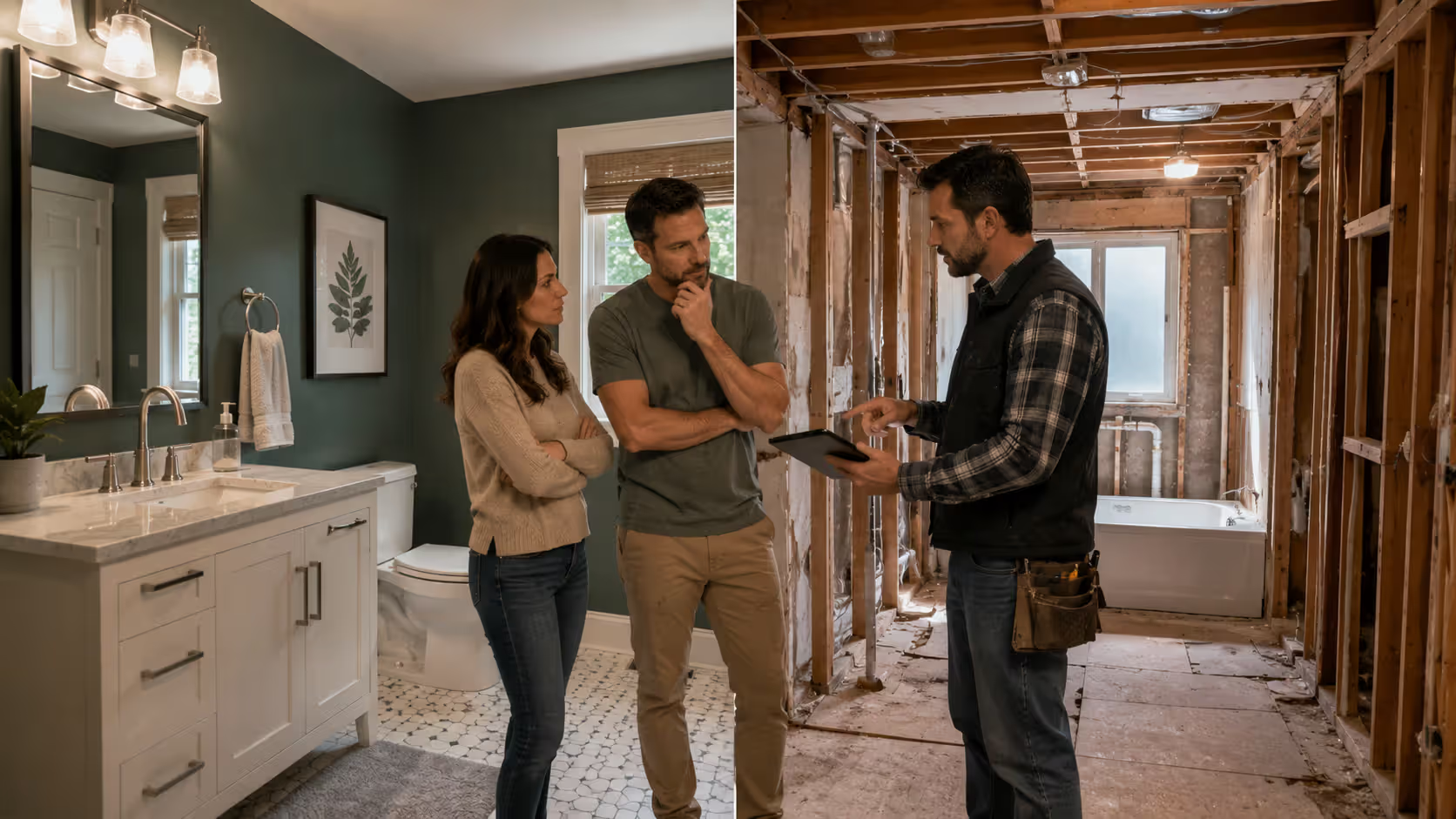
Most substantial projects fall into this category. You're stripping the space to framing and rebuilding with fresh materials throughout.
Complete bathroom renovations cost $10,000 to $30,000 for standard-sized bathrooms, varying with finish quality and your selections. How much does bathroom remodel cost for this scope? Your investment covers new plumbing fixtures, complete tile installation, replacement flooring, vanity and countertop, toilet, shower or tub unit, updated lighting, and frequently electrical system upgrades.
Complete renovations allow layout modifications when beneficial. Relocating a toilet adds $800 to $2,500 in plumbing labor, but improved traffic flow often justifies the expense.
Contractors typically recommend replacing everything simultaneously rather than phased updates. You'll reduce overall labor costs and avoid mismatched wear patterns between old and new elements.
Author: Nathan Cole;
Source: johnhranec.com
Luxury Bathroom Remodels
Creating a true spa experience requires substantial investment.
High-end remodels begin around $35,000 and commonly reach $60,000 to $80,000. Upscale master bathrooms can exceed $100,000. How much is a bathroom remodel cost at this tier? It depends on your material choices and custom feature list.
Expect frameless glass shower enclosures, natural stone tile throughout, custom-built cabinetry, premium fixtures from manufacturers like Kohler or Grohe, radiant floor heating, towel warmers, and possibly steam showers or sculptural freestanding tubs. Skilled craftsmanship commands premium pricing—experienced tile setters and finish carpenters charge top rates, but their work quality shows.
These renovations frequently involve structural modifications: expanding the footprint, adding skylights or windows, raising ceiling heights, or removing walls. Structural changes drive costs upward quickly.
Cost Breakdown by Bathroom Size
Your bathroom's square footage directly influences total investment.
Half bathrooms (powder rooms) cost least to renovate. These compact 15 to 25 square foot spaces lack showers or tubs, keeping costs to $3,000 to $8,000 for quality work. Simpler layouts, fewer fixtures, and reduced tile coverage keep expenses down. How much for a bathroom remodel of this size? Even upscale powder rooms rarely surpass $15,000 unless you're incorporating exotic materials or custom millwork.
Full bathrooms (typically 35 to 55 square feet) represent standard projects. Plan for $8,000 to $18,000 for mid-tier finishes, or $20,000 to $35,000 for premium materials. You're installing a tub or shower, toilet, and vanity, plus substantially more tile and flooring coverage.
Master bathrooms (75 to 160 square feet or larger) demand the biggest budgets. Basic master bath work starts at $12,000 to $25,000. Mid-range renovations hit $25,000 to $45,000. How much does a bathroom renovation cost for luxury master suites? Expect $50,000 to $100,000 and beyond. Double vanities, separate shower and tub installations, enclosed toilet areas, and extensive tile coverage compound expenses rapidly.
However, size alone doesn't determine cost. A compact bathroom featuring custom marble tile and luxury fixtures can exceed a larger basic renovation's price tag.
What Affects the Cost of a Bathroom Remodel
Several key factors determine whether you'll spend $8,000 or $80,000.
Labor costs typically consume 40% to 60% of total budgets. Plumbing professionals charge $75 to $150 hourly. Licensed electricians run $65 to $130 per hour. Tile installation specialists cost $30 to $120 hourly depending on experience and regional market. General contractors usually charge 15% to 25% of total project value for coordination and management.
Material selections create enormous price variations. Ceramic tile costs $2 to $15 per square foot; natural stone runs $10 to $50 per square foot. Stock vanities start at $300; custom cabinetry can top $3,000. Your material choices directly control final expenses.
Plumbing and electrical modifications escalate costs significantly, especially when relocating fixtures or modernizing outdated systems. Moving a shower costs $2,000 to $5,000. Upgrading electrical to current code standards might add $1,000 to $3,000. Older homes frequently conceal problems—corroded pipes, obsolete wiring—that require attention once walls open.
Building permits are mandatory for most bathroom renovations involving plumbing or electrical modifications. Fees range from $150 to $1,500 based on location and project complexity. Avoiding permits seems tempting but creates complications during home sales.
Layout modifications cost substantially more than cosmetic improvements. Removing walls, relocating plumbing infrastructure, or expanding bathroom dimensions adds thousands to budgets. Sometimes improved functionality justifies the investment.
Fixtures and finishes span every conceivable price range. Toilets cost $150 to $1,500. Faucets range from $50 to $800. Shower systems run $200 to $3,000 and higher. Budget options function adequately unless you're pursuing a specific aesthetic.
Here's an interesting reality: extreme budget materials often backfire. That $300 vanity might look acceptable initially, but it'll show significant wear within three years. Mid-range materials typically deliver optimal value.

Author: Nathan Cole;
Source: johnhranec.com
Cost by Individual Bathroom Components
Breaking down individual elements reveals where money goes.
| Component | Typical Investment | Key Considerations |
| Vanity & sink | $300 – $3,500 | Prefabricated units reduce costs; custom cabinetry increases expenses |
| Toilet | $150 – $1,200 | Standard models are economical; dual-flush and smart toilets add cost |
| Shower/tub | $400 – $8,000 | Prefab inserts stay affordable; custom tile installations get expensive |
| Tile (materials & installation) | $8 – $50/sq ft | Ceramic remains budget-friendly; natural stone and complex patterns cost more |
| Flooring | $3 – $30/sq ft | Vinyl and standard ceramic are economical; radiant heating adds $10–$20/sq ft |
| Lighting | $100 – $1,500 | Standard fixtures keep costs low; designer options and recessed lighting add up |
| Countertops | $200 – $2,500 | Laminate stays inexpensive; quartz and marble command premium prices |
| Faucets & fixtures | $100 – $1,200 | Builder-grade remains affordable; designer brands cost substantially more |
| Paint & finishing | $200 – $800 | Basic paint stays cheap; specialty finishes and wallpaper increase budgets |
| Ventilation fan | $100 – $500 | Code-required in most jurisdictions; higher-quality models operate quietly |
How much does it cost to redo a bathroom when totaling individual components? Add your selected items, then multiply by 1.5 to cover labor, unexpected issues, and miscellaneous materials. This calculation provides realistic budget expectations.
How much to redo a bathroom also depends on what you're replacing. Projects with functional layouts and accessible plumbing cost less than those requiring major reconfiguration.
Don't overlook small items that accumulate: grout, caulk, trim, paint, cabinet hardware, towel bars, toilet paper holders. Allocate $500 to $1,000 for these finishing details.
Author: Nathan Cole;
Source: johnhranec.com
How to Budget for Your Bathroom Renovation
Strategic budgeting prevents mid-project financial surprises.
Consider your home's overall value. Financial advisors suggest investing 5% to 10% of your home's value in bathroom remodeling. A $300,000 property justifies $15,000 to $30,000 in bathroom investment. Exceeding this ratio risks over-improving relative to your neighborhood's standards.
Homeowners should expect to spend between 5% and 10% of their home's value on a bathroom remodel to see a strong return on investment.
— Thompson Michael
Establish realistic expectations for your project type. Research typical costs for your intended scope. Obtain three detailed quotes from licensed contractors. Pricing will vary, but you'll identify unrealistic outliers.
Include a 10% to 20% contingency reserve. Problems emerge once demolition begins. Aging plumbing might need replacement. Subfloors could be water-damaged. Mold might require remediation. Contingency funds keep projects moving when unexpected issues surface.
Identify your highest priorities. Determine what matters most in your daily routine. If you take lengthy showers, invest in an excellent shower system and quality tile. If you rarely use the tub, choose a basic alcove model and allocate more budget toward the vanity.
Explore financing alternatives. Home equity loans, HELOCs, and personal loans can fund major renovations. Some homeowners leverage credit cards offering 0% introductory periods for smaller projects. Cash payment remains ideal when feasible, but financing makes sense when adding genuine home value.
DIY vs. contractor: understand your capabilities. Self-performed work can reduce labor costs by 20% to 40%. Painting, demolition, vanity installation, or toilet replacement—these suit handy homeowners. However, specialized work like plumbing, electrical, and tile installation demands professional expertise. Poor DIY tile looks terrible and can cause water damage. Faulty plumbing creates leaks. Recognize when to hire professionals.
A frequent mistake? Underestimating DIY time requirements. Projects taking professionals two weeks might consume two months of your weekends. Consider the inconvenience of a non-functional bathroom.

Author: Nathan Cole;
Source: johnhranec.com
Document everything in writing. Contractors should provide comprehensive estimates listing all materials, labor, timeline, and payment schedules. Specify exact product models and brands. Vague estimates lead to disputes.
Prepare for disruption. Renovations invariably take longer than projected. Arrange backup bathroom access. If this is your only bathroom, budget for portable toilet rental ($150 to $300 monthly) or coordinate use of a neighbor's or relative's facilities.
Frequently Asked Questions About Bathroom Remodel Costs
Bathroom remodels represent significant financial commitments, but they rank among the smartest home improvements available. You use this space daily, and thoughtfully designed bathrooms immediately enhance quality of life.
Success lies in aligning budget with objectives. A $10,000 mid-range renovation delivers excellent value for most homeowners. You receive updated fixtures, fresh finishes, and improved functionality without excessive spending. Luxury investments make sense in high-value homes when you're planning extended ownership. Budget approaches work when preparing to sell or simply needing to update dated spaces.
Avoid rushing the planning phase. Research materials thoroughly, obtain multiple contractor quotes, and consider how you actually use the space. The most successful bathroom remodels balance aesthetics with functionality—they look beautiful and work even better.
Remember that contingency reserve. You'll appreciate having it when contractors discover rotted subfloor or outdated wiring requiring updates. Bathroom remodels always reveal surprises, but thorough planning and realistic budgeting keep those surprises manageable.
Begin with clear vision, establish realistic budgets, hire qualified professionals for complex work, and you'll create a bathroom you'll enjoy for years ahead.