Bedroom Painting Cost Guide
How Much Does It Cost to Paint a Bedroom?

Content
You're staring at your bedroom walls thinking they need a refresh. The color's outdated, there are scuff marks near the door, and honestly, you're just tired of looking at it. So what's this going to run you?
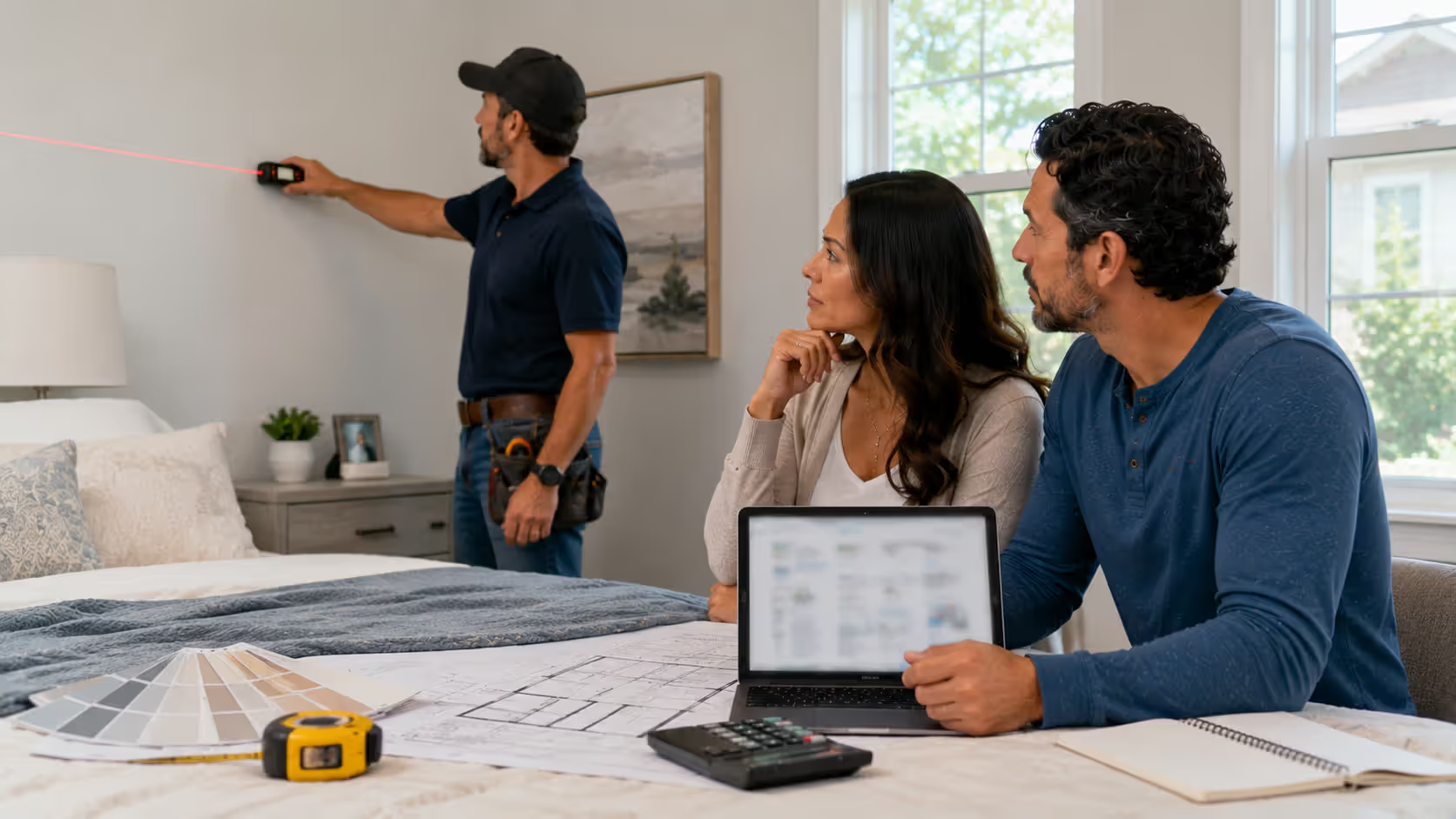
Most people spend between $300 and $900 to paint a bedroom, but that's a pretty wide range. Here's what actually drives that number up or down: your room's size, the paint you choose, your walls' current condition, and whether you're doing this yourself or calling someone who paints rooms every single day.
The thing nobody tells you upfront? The paint itself is usually the smallest expense. Everything else—your time, fixing wall damage, buying supplies you'll use once—that's where costs pile up fast.
Average Bedroom Painting Costs by Room Size
Bigger rooms eat more paint. Seems obvious, right? But the cost difference between a small bedroom and a master suite can shock people.
Let's break this down by actual room sizes you'd find in real homes.
Small bedrooms around 10x10 or 10x12 feet typically cost $200-$400 if you're doing it yourself. Hire someone and you're looking at $350-$600. We're talking about 300-350 square feet of wall space here—not including the ceiling.
Standard bedrooms in the 12x12 to 14x14 range run $300-$550 for DIY or $500-$800 with a pro. You're covering roughly 400-500 square feet of walls.
Large bedrooms starting at 15x15 feet need $400-$700 worth of materials if you're handling it, or $700-$1,200 for professional work. Master bedrooms with sitting areas? Add another $200-$400 to those estimates.
The per-square-foot math works out to roughly $1.50-$3.50 when you do it yourself, jumping to $3-$6 when you hire out. Ceilings add another 20-30% to your total square footage—and your budget.
| Room Size | Wall Square Footage | DIY Budget | Professional Budget | Time Investment |
| Small (10x12) | 300-350 sq ft | $200-$400 | $350-$600 | 6-8 hours |
| Standard (12x14) | 400-500 sq ft | $300-$550 | $500-$800 | 8-12 hours |
| Large (15x17) | 550-700 sq ft | $400-$700 | $700-$1,200 | 12-16 hours |
| Master (18x20+) | 800+ sq ft | $550-$900 | $1,000-$1,800 | 16-24 hours |
These numbers assume you're doing two coats on walls only, your walls are in decent shape, and you've got standard 8-foot ceilings. Tray ceilings, accent walls, or using multiple colors? Expect to spend more time and money.
Author: Caleb Norton;
Source: johnhranec.com
What Affects Bedroom Painting Costs
Your room's dimensions set the baseline, but plenty of other factors can double your final bill.
Paint Quality and Finish Types
Paint prices range from $15 per gallon for builder-grade stuff to $80 for premium brands. That's not just marketing hype—expensive paint actually covers better, lasts longer, and often needs just two coats instead of three or four.
One gallon covers about 350-400 square feet. Most bedrooms need 2-3 gallons for two full coats.
Paint finish types for different rooms matter more than most people realize. Here's what works where:
Flat or matte hides wall imperfections beautifully but shows every fingerprint and can't handle scrubbing. Fine for adult bedrooms that don't see much action.
Eggshell has a slight sheen and actually survives cleaning. This is what most bedrooms should use—durable enough for real life, soft enough to look good.
Satin reflects more light and handles frequent washing. Perfect for kids' rooms where you'll be wiping off crayon marks and mystery stains.
Semi-gloss is overkill for bedroom walls but works great on trim, doors, and inside closets where you need maximum durability.
I've watched countless homeowners buy flat paint to save $10 per gallon, then discover they can't clean a single mark without removing paint. Eggshell costs slightly more but saves massive headaches.
Room Condition and Prep Work
This is where budgets explode. Walls in good shape need maybe an hour of cleaning and filling a few nail holes—call it $20 in supplies.
Walls with problems? Different story entirely.
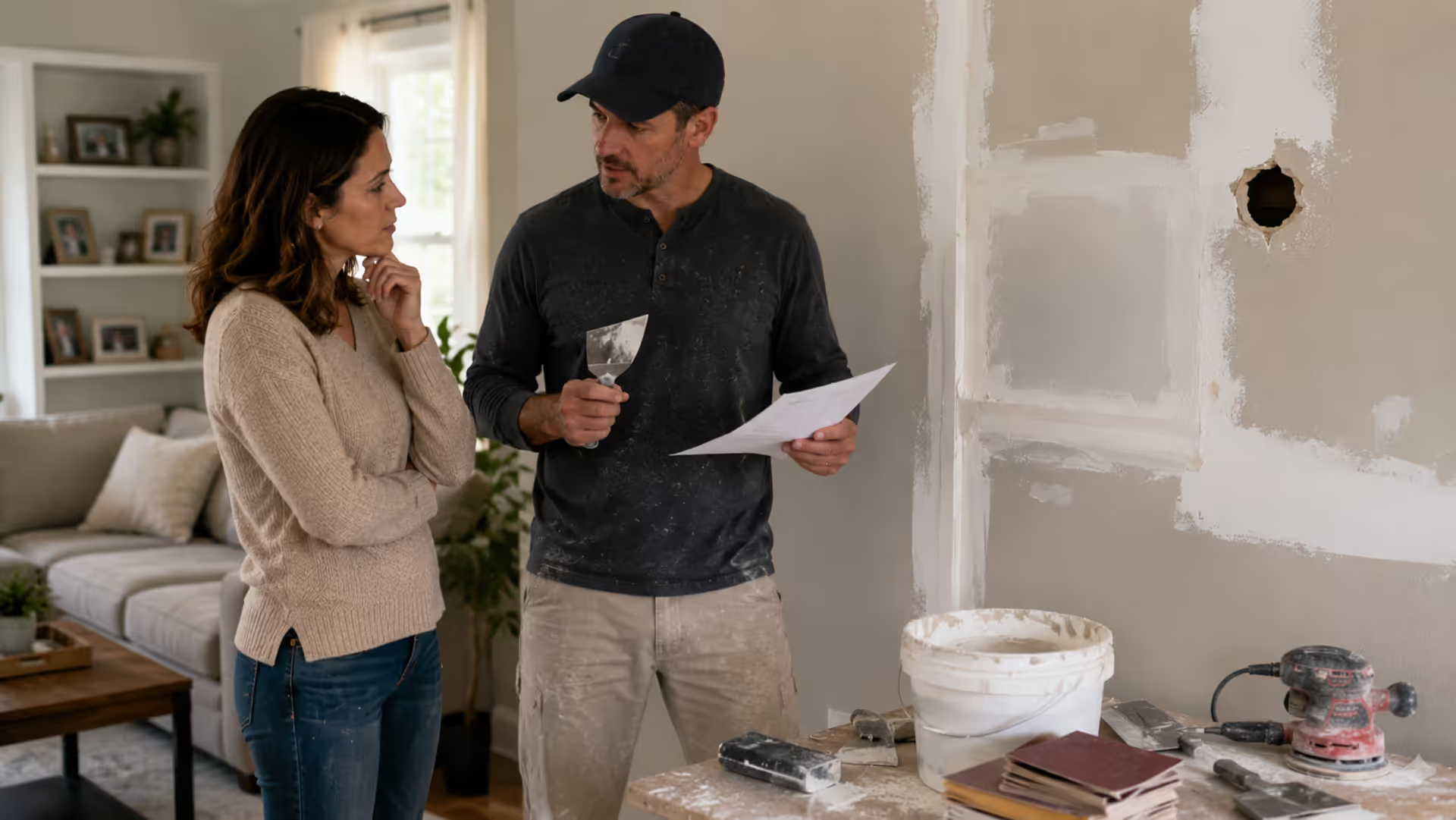
Fixing nail holes and small cracks adds $50-$100 in materials and 2-3 hours of work. Significant damage or water stains can run $150-$400 depending on how bad things are. Sometimes prep takes longer than the actual painting.
Textured walls or wallpaper? Brace yourself. Professionals charge $1-$2 per square foot to strip wallpaper—potentially $400-$800 before you've opened a paint can. Smoothing textured walls requires skim coating at $1.50-$3 per square foot.
Primer's another consideration. High-end paints include primer, but you'll still need a separate primer coat when covering dark colors, dealing with stains, or painting fresh drywall. That's another $20-$35 per gallon and an extra day on your timeline.
When budgeting for a bedroom paint job, homeowners often underestimate prep work costs, which can account for 30-40% of the total project expense. The walls might look fine at first glance, but once you start working, you discover issues that need addressing before any paint goes on.
— Martinez David
Labor Costs vs DIY Savings
Professional painters charge $25-$75 per hour depending on where you live and their experience level. Most quote by the room or square footage instead of hourly, but knowing their time investment helps you evaluate whether their bid's fair.
A skilled crew finishes a typical bedroom in 4-6 hours including prep. You're paying for speed, expertise, and not having to clean up afterward.
DIY eliminates labor costs but consumes your weekend. If you work full-time, this project might eat your entire Saturday and Sunday—longer if you're learning as you go. Think about what your time's actually worth before deciding. Would you rather spend $500 and have your weekend free, or save $500 but lose two days?
Choosing the Right Paint for Your Bedroom Renovation
Interior paint color selection renovation involves more than scrolling through Pinterest and pointing at pretty colors. Your choices affect how the room feels, how often you'll repaint, and whether you're using the right products for different surfaces.
Start with ceiling versus wall paint. Is ceiling paint different from wall paint? Absolutely, and for good reasons.
Ceiling paint's thicker so it doesn't drip all over you while you're painting overhead. It's almost always flat finish because ceilings don't need to be washable—nobody's touching them. The flat finish also hides imperfections better and doesn't create glare. Plus it dries faster so you can finish quicker.
Wall paint comes in multiple finishes and handles cleaning much better since walls get touched, bumped, and occasionally need scrubbing. It's formulated expecting regular contact.
Can I use ceiling paint on walls? Technically yes, but you'll regret it. That flat finish shows every mark and won't survive cleaning attempts. You'll be repainting within a year. Using wall paint on ceilings works better—it costs more and you don't need the drip-resistance, but it won't cause problems.
For best paint colors for small rooms, lighter shades still win. They bounce light around and make spaces feel bigger. Soft whites, pale grays, gentle beiges—these are popular for good reason. But don't feel trapped—one darker accent wall can add depth without making the room feel cramped.
Neutral paint colors renovation guide favorites include:
Warm whites like Swiss Coffee or Alabaster create cozy spaces without the sterile hospital feel of pure white.
Greiges (gray-beige hybrids) like Agreeable Gray or Repose Gray work with almost any furniture and hide dirt better than bright white.
Soft grays with blue or green undertones give you that calm, spa-like vibe that bedrooms need.
Warm beiges still work beautifully in traditional homes, especially when you want that wrapped-in-warmth feeling.
These neutrals make decorating easier later and appeal to buyers if you sell.
DIY Bedroom Painting: Is It Worth

Author: Caleb Norton;
Source: johnhranec.com
Let's look at real numbers. Painting a 12x12 bedroom yourself typically requires:
- Paint (2 gallons): $60-$160
- Primer (if needed): $25-$35
- Painter's tape: $8-$15
- Drop cloths: $15-$30
- Roller frames and covers: $15-$25
- Brushes: $10-$20
- Paint tray: $5-$10
- Spackling compound: $8-$12
- Sandpaper: $5-$8
Total investment: $150-$315
That same room painted professionally costs $500-$800. You save $350-$485 by doing it yourself.
But what are you trading for those savings? Eight to twelve hours of your time, sore muscles, and the learning curve of getting clean lines and even coverage. First-timers often need three coats because they don't load the roller properly or miss spots.
Common DIY mistakes that waste time and money:
Skipping primer when you actually need it. That dark purple wall won't disappear under two coats of beige—you'll need four or five. Primer would've solved this.
Buying cheap paint. You'll use more product, spend more time applying extra coats, and repaint sooner. Not the savings you think.
Rushing the taping. Sloppy tape application creates bleed-through and means hours fixing edges with a tiny brush.
Painting in the wrong order. Always do ceiling first, then walls, then trim. Doing it backward creates unnecessary cleanup.
The decision's pretty straightforward: if your time's valuable and you're not confident in your painting skills, hire someone. If you enjoy hands-on projects and have a free weekend, DIY saves serious money.
How to Choose Paint Colors for Your Bedroom
Author: Caleb Norton;
Source: johnhranec.com
How to choose paint color for renovation starts with understanding your space and what happens there. Bedrooms serve different purposes than living rooms—you want calming, restful colors that help you unwind.
First, check your natural light. North-facing bedrooms get cooler, bluer light and need warmer paint colors. South-facing rooms get warm, golden light and can handle cooler tones. East and west exposures change throughout the day, so check samples at different times.
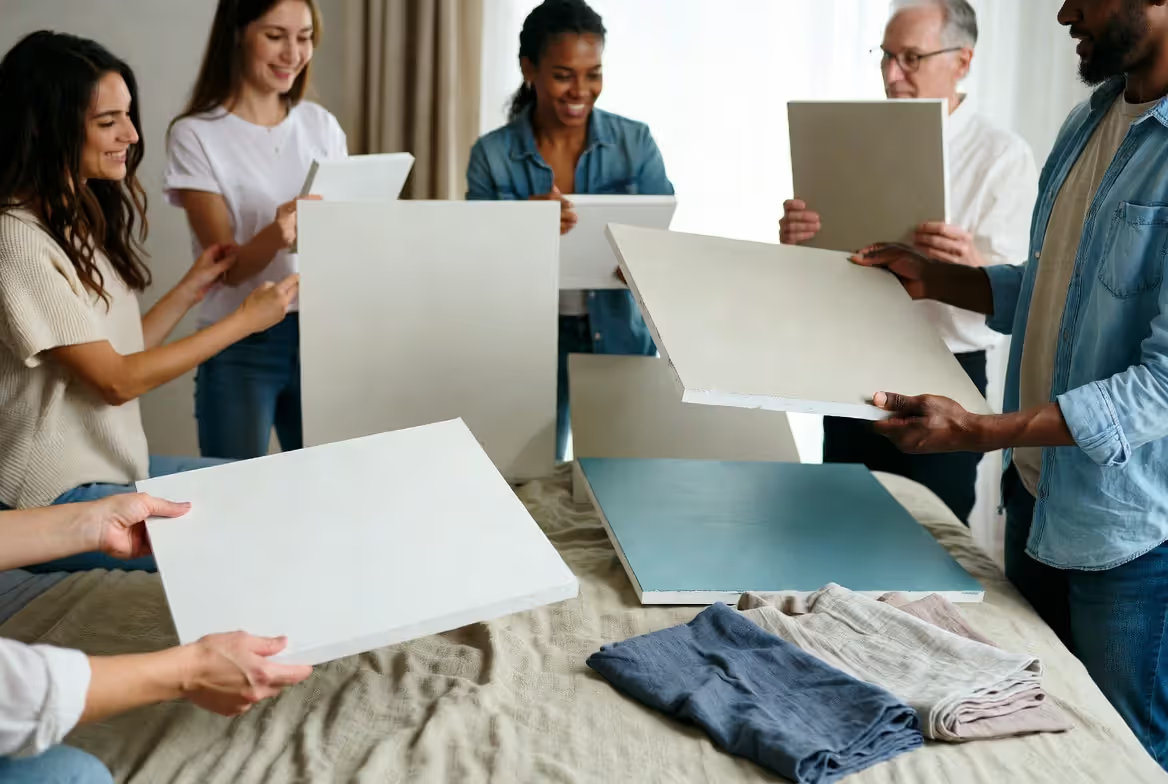
Testing samples isn't optional. Buy small sample containers and paint 2x2 foot sections directly on your walls. Live with them for several days, checking how they look in morning light, afternoon sun, and evening lamplight. Colors transform dramatically based on lighting—what looks perfect in the store might feel completely wrong at home.
Paint samples on multiple walls if possible. Colors look different on walls that get direct sunlight versus walls that stay shaded all day.
Coordinate with what you're keeping: flooring, furniture, bedding. Bring fabric samples or photos when you're picking paint. That beige you love might clash horribly with your carpet's undertones.
Think about the mood you want. Cool colors (blues, greens, lavenders) promote relaxation and work perfectly in bedrooms. Warm colors (reds, oranges, yellows) energize—great for home offices but potentially too stimulating for sleeping spaces.
Don't forget how finish affects appearance. Satin finish in a deep color looks richer and more dramatic than the same color in flat. The sheen changes how you perceive the color.
One trick: go lighter than you think. Paint looks darker spread across four walls than it does on a tiny chip. When you're torn between two shades, pick the lighter one.
When to Repaint Your Bedroom
How often should you repaint your walls? It depends, but typical bedrooms need fresh paint every 5-7 years under normal conditions.
That timeline accelerates when:
- Kids or pets use the room (3-5 years)
- The room gets heavy daily use (4-5 years)
- You used cheap paint originally (3-4 years)
- The room has humidity issues (3-5 years)
It extends when:
- It's a guest room that barely gets used (8-10 years)
- You splurged on premium paint (7-10 years)
- The room has great ventilation and no moisture problems
When to repaint house interior becomes obvious when you notice these signs:
Fading or color changes from sun exposure. South and west-facing walls fade noticeably over the years.
Marks and stains that won't clean off. When scrubbing removes paint instead of dirt, it's time to repaint.
Chipping or peeling means the paint's failing. This happens faster in humid rooms or when cheap paint was used.
Outdated colors. When your walls scream "2005," a fresh coat modernizes everything.
Life changes. New furniture, different bedding, or just wanting something fresh are perfectly valid reasons.
How often should you paint the interior of your house overall? A rotation schedule works well: tackle one or two rooms each year instead of the whole house at once. This spreads out the cost and effort while keeping your home looking fresh.
Bedrooms usually need attention less often than high-traffic areas like hallways or living rooms. Kitchens and bathrooms face grease and moisture, so they might need repainting every 3-4 years. Bedrooms can go longer.
FAQ: Bedroom Painting Cost Questions Answered