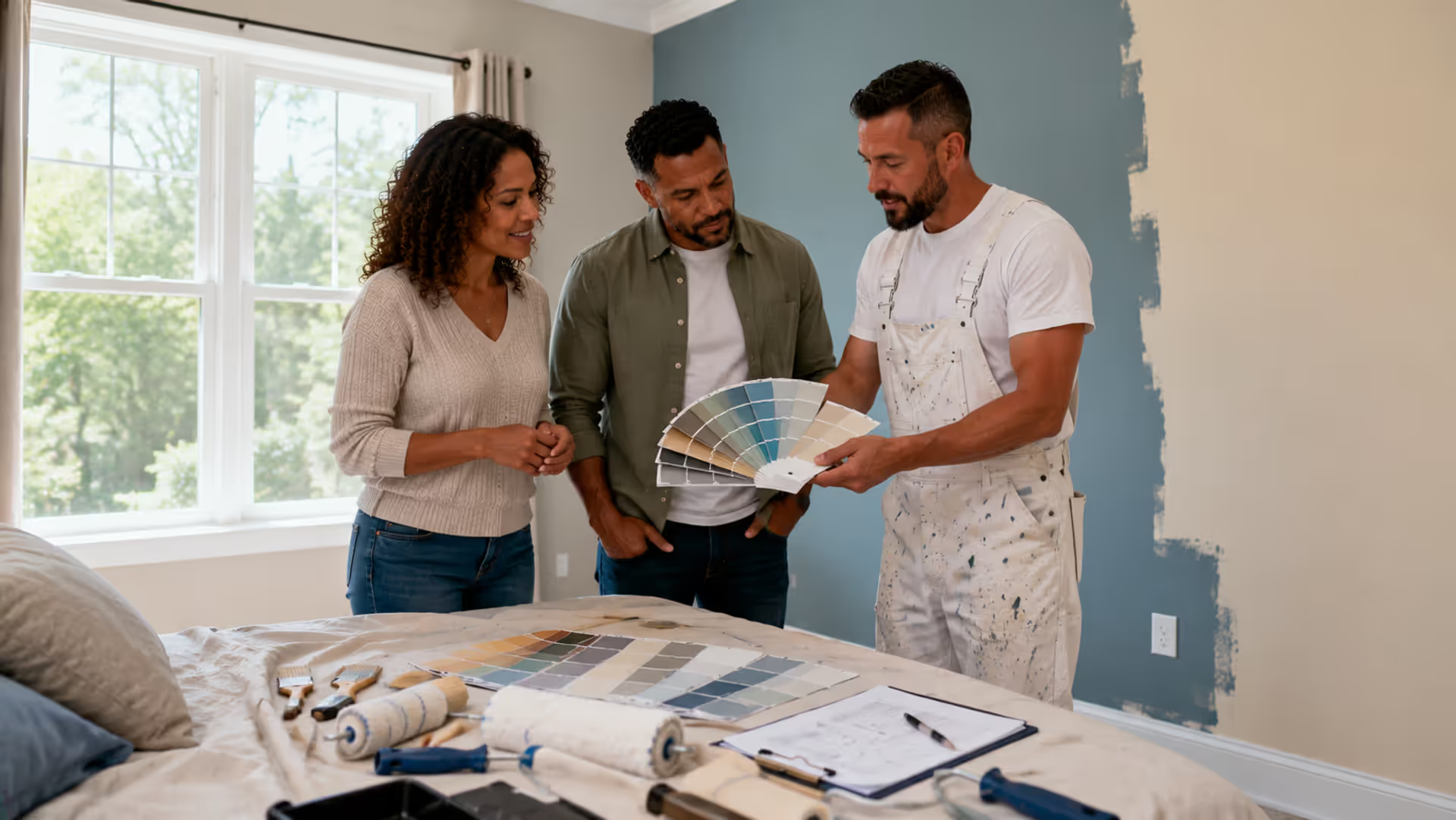
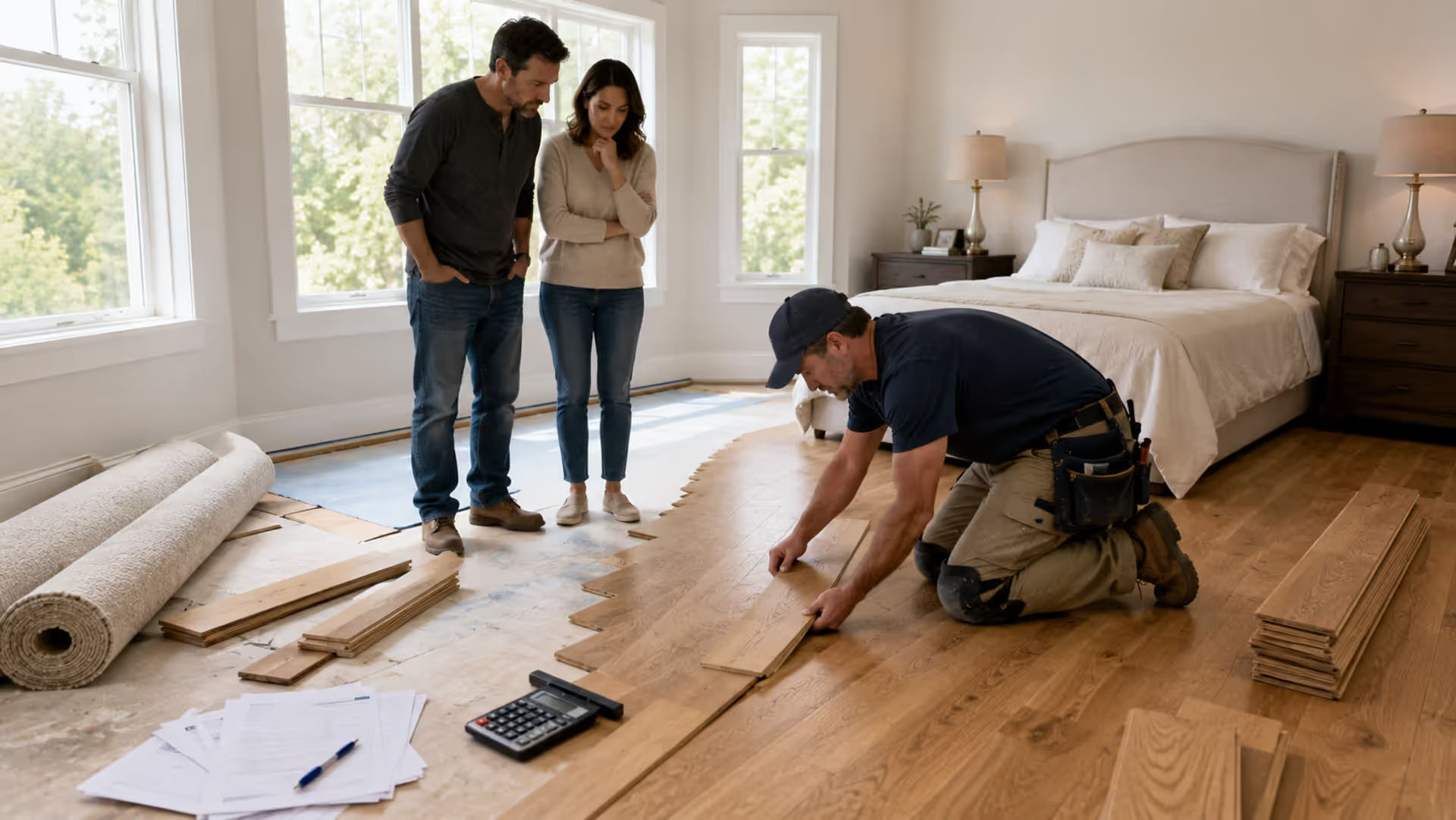
Homeowners replacing old carpet with new hardwood flooring in a bedroom
Replace Carpet with Hardwood Cost Guide

Content
Last year, my neighbor Rachel tore out the beige carpet in her master bedroom—you know, the kind that was probably installed when Clinton was president. Her 320-square-foot project ran $5,200 all-in. She told me the worst part wasn't the cost. It was finding sawdust in her coffee mug two weeks after the crew left.
Most homeowners spend somewhere between $6,000 and $16,000 for this type of project. Why such a huge spread? Your final bill depends on what's hiding beneath that carpet, which wood species you fall in love with, and whether you live in Manhattan or rural Montana.
I'm breaking down every line item so you'll know exactly where your money goes and which corners you can actually cut without regretting it five years from now.
Average Cost to Replace Carpet with Hardwood Floors
Right now in 2026, you're looking at $8–$25 per square foot for the complete job. That covers ripping out carpet, fixing whatever surprises lurk underneath, and installing new wood planks.
A typical 300-square-foot bedroom? Plan on $2,400–$7,500. Got a 500-square-foot great room? You're in the $4,000–$12,500 neighborhood.
Here's what different room sizes actually cost:
- 150 square feet (small bedroom): $1,200–$3,750
- 300 square feet (average bedroom): $2,400–$7,500
- 500 square feet (living room): $4,000–$12,500
- 1,200 square feet (full floor): $9,600–$30,000
Something interesting happens with bigger projects—your per-square-foot price drops. Contractors spend similar time setting up whether they're doing 200 square feet or 900. Equipment rental, initial prep work, and the drive to your house cost the same regardless. When you're covering more ground, those fixed costs get spread thinner.
The sweet spot right now sits around $12 per square foot. That number gets you decent solid hardwood from a reputable installer who'll actually answer when you call back next year. Use it as your reality check when comparing bids.
Cost Breakdown: Materials, Labor, and Removal
Let me show you where every dollar actually goes when you're figuring out how much to replace carpet with hardwood.
Author: Nathan Cole;
Source: johnhranec.com
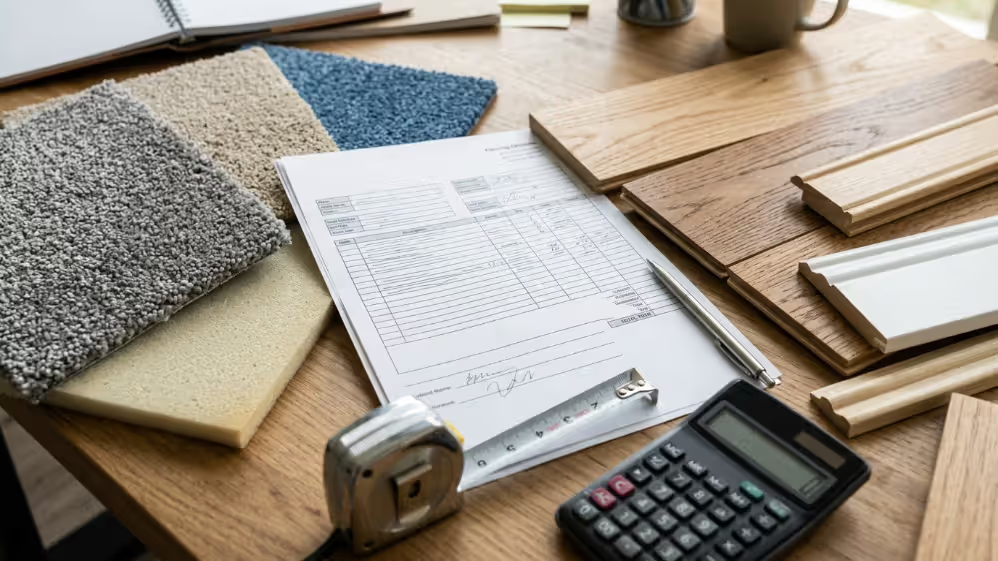
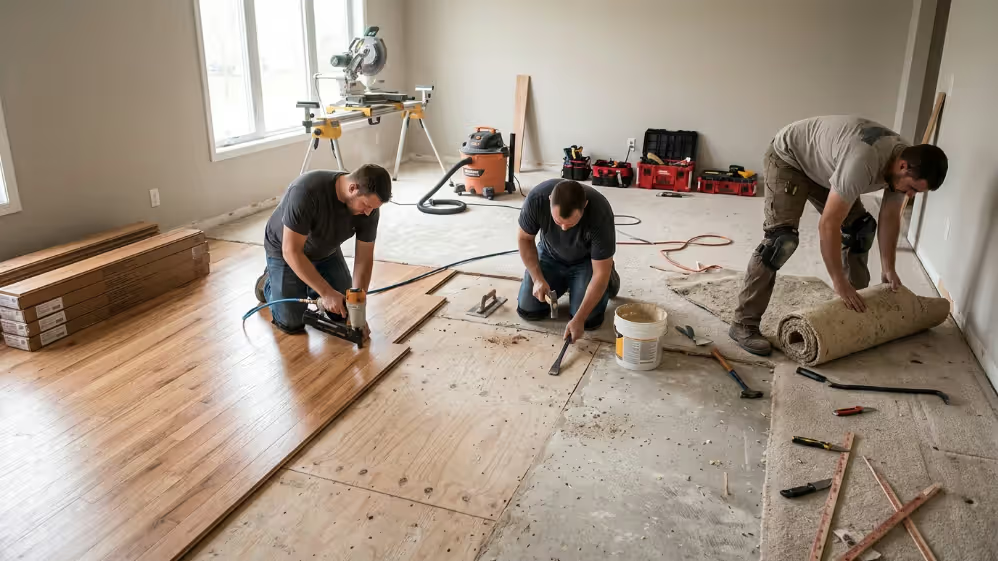
Carpet demolition and disposal: You'll pay $1–$2 per square foot. Crews yank up carpeting, haul out padding, pry up those metal tack strips that always seem to find your bare feet, then dump everything. Some contractors roll this into their main quote. Others break it out separately. Always ask which approach they're using before signing anything.
Subfloor preparation: Runs $2–$5 per square foot when repairs are needed. Plenty of homes just need minor touch-ups after carpet comes out. But serious problems—unlevel sections or plywood damaged from that basement flood in 2019—can hit $8 per square foot for the bad spots.
Hardwood materials: Expect $3–$14 per square foot depending on your taste. Domestic oak or maple falls in the $3–$7 zone. High-end imports like Brazilian walnut or African mahogany? You're paying $8–$14. Engineered products typically land between $4–$10.
Installation labor: Professional installers charge $4–$8 per square foot. You're paying for accurate measurements, precise cuts, proper nailing technique, and clean edges. Want a herringbone pattern or custom borders? Tack on another $2–$4 per square foot.
Surface finishing: Unfinished hardwood needs sanding, staining, and multiple coats of polyurethane—that's an extra $1–$3 per square foot. Pre-finished wood costs more upfront but you skip this entire headache.
Here's what catches people off guard: trim work. New baseboards or quarter-round to cover expansion gaps will add $2–$6 per linear foot. A 12x15 room has 54 linear feet of perimeter. Do the math.
Factors That Affect Replacement Costs
Two identical-looking bedrooms on the same street can end up with totally different price tags. Here's why.
Author: Nathan Cole;
Source: johnhranec.com
Hardwood Type and Quality
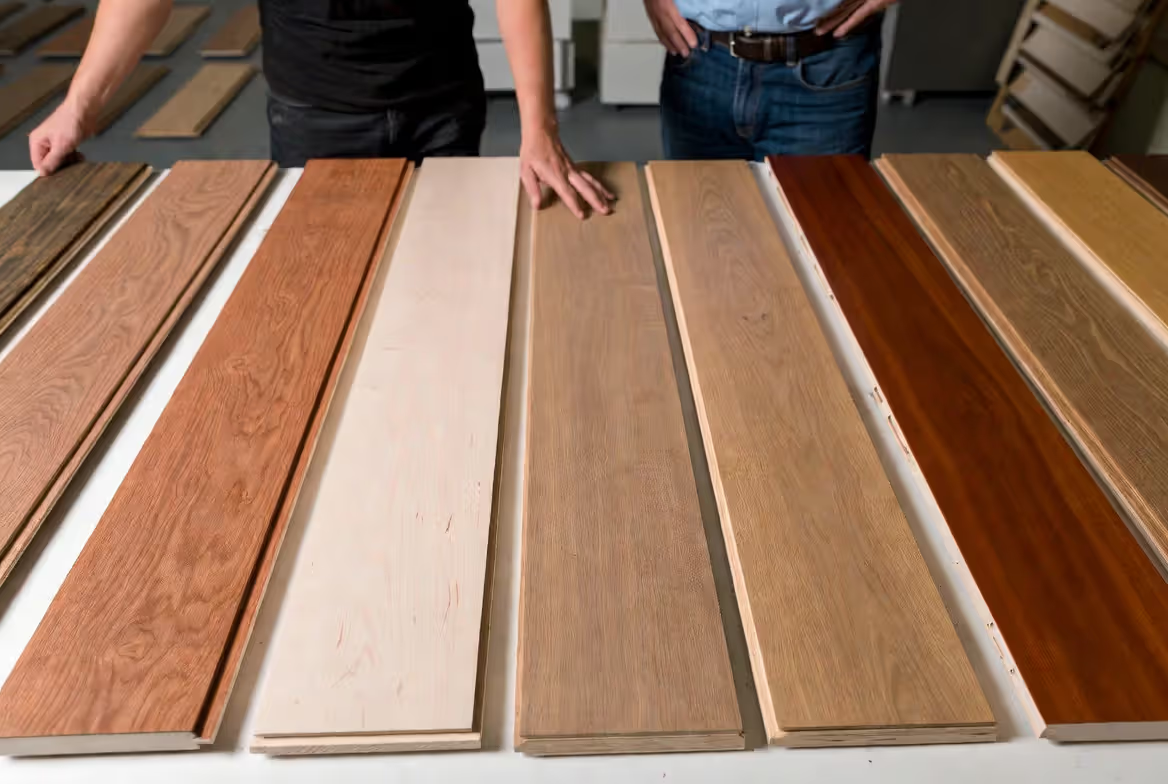
Your wood choice impacts the final bill more than anything else. Solid domestic species—oak, maple, hickory—give you serious bang for your buck. They're tough enough to refinish six or seven times, and every installer from here to Alaska knows how to work with them.
Engineered hardwood usually costs 10–30% more than solid planks, but it handles situations where solid wood throws a tantrum. Basement installation? Engineered's your answer. House built on a concrete slab? Same deal. You get real wood veneer bonded to a stable plywood core that doesn't panic when humidity changes.
Imported exotics deliver jaw-dropping beauty but prepare your wallet. Brazilian walnut alone costs $10–$14 per square foot just for materials. Then you need an installer who's actually worked with that specific species—and those specialists don't charge bargain rates.
Wider planks cost more than standard 2.25-inch strips. Five-inch or seven-inch boards add $1–$3 per square foot while creating that modern, high-end aesthetic. The catch? You need premium lumber to keep wider boards from warping. Cheaper wide planks are a recipe for disaster.
Subfloor Preparation Requirements
This is where budgets go sideways. Carpet hides everything. Hardwood hides nothing.
When your subfloor is level, dry, and solid, you're golden. But houses built before 1990 often have issues hiding under that carpet. Squeaky spots need additional fasteners. Uneven sections require leveling compound. Old water damage means cutting out chunks of plywood and installing new sections.
I'd budget an extra $500–$1,500 for subfloor work if your house is over 30 years old. Smart move? Pay for a pre-installation inspection so you know what's coming instead of getting ambushed with surprise charges halfway through the job.
Concrete subfloors need moisture barriers and modified installation approaches. That typically adds $1–$2 per square foot compared to installing over wood.
Geographic Location and Labor Rates
Where you live creates massive price swings for the cost of replacing carpet with hardwood. Labor rates vary by 100% or more depending on your market.
High-cost metros (San Francisco, New York, Boston): Labor alone hits $10–$15 per square foot. Total project costs run 40–60% above national averages.
Mid-range markets (Atlanta, Phoenix, Dallas): Labor falls in the $6–$9 per square foot range. These cities track pretty close to nationwide numbers.
Affordable regions (rural Midwest, smaller Southern cities): Labor drops to $4–$7 per square foot. Materials cost roughly the same everywhere, so location creates the biggest savings opportunity here.
Material availability matters too. Specialty woods ship from limited suppliers. If you're in rural Wyoming ordering premium Brazilian teak, expect $200–$500 in freight charges.
How Long Does Hardwood Installation Take
You're looking at 3–7 days from start to walking on finished floors. Here's the realistic timeline:
Day 1: Carpet removal and subfloor inspection. An average room takes 2–4 hours to clear. Good contractors haul debris away that same day.
Day 2: Fixing subfloor issues discovered during inspection. Minor repairs might wrap up in a few hours. Major reconstruction can eat a full day or longer.
Day 3–4: Actual hardwood installation. Experienced crews can cover 300–500 square feet daily, though room complexity affects this. Simple rectangular rooms move fast. Hallways with five doorways slow everything down.
Day 5–7: Finishing unfinished hardwood (if you went that route). Sanding, stain application, and protective coats require 2–3 days since each layer needs drying time.
Pre-finished hardwood cuts your timeline in half. You can use it immediately. That's why it dominates the market despite costing more upfront.
Things that extend timelines:
- Moving and storing furniture
- Major subfloor reconstruction
- Intricate patterns or custom inlays
- Stair installation (add 1–2 days)
- Multiple rooms with precise transition strips
Replacing an entire floor? Consider staying with relatives temporarily. The dust gets everywhere, plus there's constant noise and chemical fumes from finishing products.
Author: Nathan Cole;
Source: johnhranec.com
Hardwood vs. Other Flooring Options: Cost Comparison
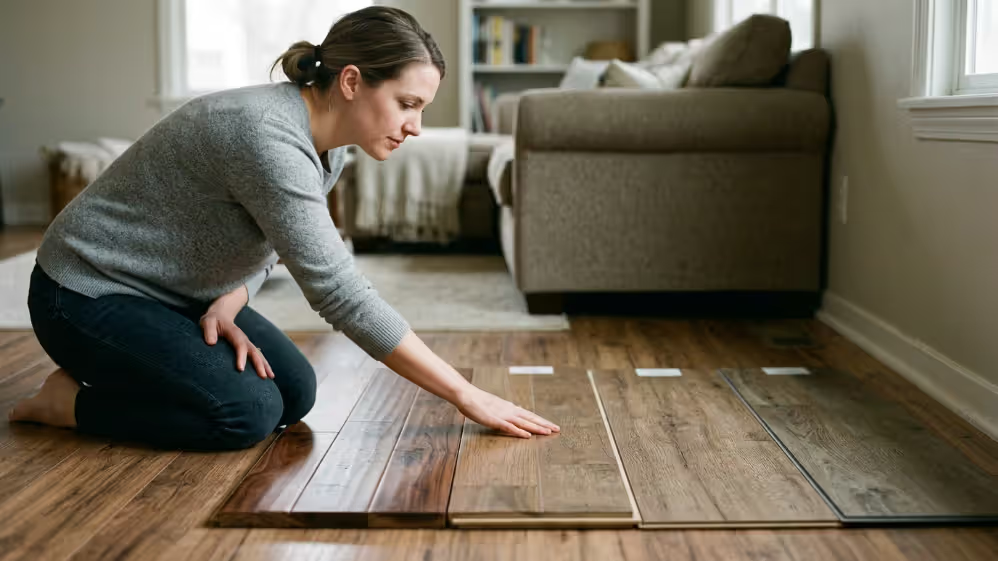
Hardwood isn't your only option for ditching carpet. Here's how alternatives compare on cost and lifespan.
Laminate flooring: Installed costs land at $3–$8 per square foot. Photographs make it resemble wood, but physically it feels synthetic—because it is. Printed plastic over fiberboard core. You can't refinish it. Lifespan hits 10–15 years before replacement.
I've seen this scenario play out constantly: homeowners choose laminate to save money, then kick themselves within five years when wear patterns become impossible to ignore.
Engineered hardwood: Installed costs run $6–$14 per square foot. You get authentic wood veneer over plywood core. How thick that top layer is determines whether you can refinish it—usually 1–3 times. Expected lifespan reaches 20–40 years.
This splits the difference between laminate and solid hardwood. It's the smart choice for basements and concrete foundation installations.
Luxury vinyl plank (LVP): Costs $4–$10 per square foot installed. Completely waterproof, highly abuse-resistant, and simpler to install than hardwood. From across a room it looks convincing, but up close and underfoot, you know it's not genuine wood. No refinishing possible.
Solid hardwood: You'll invest $8–$25 per square foot installed. Refinishing potential: 4–7 times over its lifespan. With reasonable maintenance, it lasts 50–100+ years. Adds more resale value than any alternative.
Author: Nathan Cole;
Source: johnhranec.com
When each option makes practical sense:
- Laminate: Rental properties, extremely tight budgets, temporary solutions
- Engineered hardwood: Below-grade installations, concrete foundations, high-humidity regions
- LVP: Bathrooms, kitchens, households with three large dogs
- Solid hardwood: Primary living areas, bedrooms, maximizing property value
Ways to Reduce Your Carpet to Hardwood Replacement Costs
Material pricing is largely fixed, but you control other budget components.
Handle carpet removal yourself: Save $1–$2 per square foot by doing demolition work personally. It's physically demanding and creates a massive mess but isn't technically complex. Rent a dumpster for $300–$500 and dedicate a weekend. Just don't damage the subfloor—repairs cost more than your savings.
Select mid-grade materials: Premium red oak costs 40% less than exotic imports while performing identically long-term. You're paying extra for unique grain patterns and coloring, not durability improvements. Most visitors won't notice the difference.
Choose pre-finished over unfinished: Yes, materials cost more upfront. But you eliminate on-site finishing, which means no sanding dust coating everything, no chemical odors, and 2–3 fewer labor days. Total project expense often ends up lower.
Schedule during off-season: Flooring contractors experience peak demand March through August. Book installation between November and February and negotiate 10–15% off labor rates.
Gather multiple estimates: I've witnessed 30% price variations between contractors for identical scope. Collect at least three detailed bids. The lowest isn't automatically best, but you'll quickly identify who's unreasonably high.
Combine adjacent spaces: Per-square-foot pricing drops on larger jobs. Installing 800 square feet at once costs less per foot than doing 300 now and 500 next year.
Stay with domestic species: Imported cherry from South America runs $12–$14 per square foot for materials. Domestic cherry costs $5–$7 while delivering 90% of the visual appeal at half the price.
One area you absolutely shouldn't skimp: installation quality. Poor workmanship voids manufacturer warranties and creates squeaks, gaps, and cupping within months. Rock-bottom labor rates end up costing more when you're hiring someone else to fix the mess.
Hardwood Flooring Cost Comparison by Type
| Wood Species | Cost per Sq Ft | Strength Rating | Installation Challenge | Ideal Applications |
| Red Oak (solid) | $3–$6 | Durable (Janka 1290) | Moderate skill needed | Living areas, bedrooms, dining spaces |
| Maple (solid) | $4–$7 | Highly durable (Janka 1450) | Moderate skill needed | Heavy-traffic zones, kitchens |
| Engineered Oak | $5–$9 | Durable (varies by veneer) | Easy to moderate | Basements, concrete slabs, humid environments |
| Hickory (solid) | $5–$8 | Extremely durable (Janka 1820) | Moderate to difficult | Heavy-use areas, rustic designs |
| Brazilian Cherry | $8–$14 | Exceptionally durable (Janka 2350) | Difficult | Luxury properties, showcase floors |
| Bamboo (engineered) | $4–$8 | Moderately durable (variable) | Easy | Eco-focused buyers, contemporary aesthetics |
Janka hardness ratings measure dent resistance—higher numbers mean tougher flooring that withstands wear better.
The biggest mistake homeowners make is underestimating subfloor prep costs. I'd say 40% of carpet removal jobs reveal problems that add $800 to $2,000 to the project. Always get a pre-installation inspection and budget a 15% contingency for surprises.
— Martinez Robert
FAQ: Carpet to Hardwood Replacement Questions Answered
Replacing carpet with hardwood ranks among the smartest upgrades for your property. The upfront investment stings—I won't sugarcoat that reality. But you're purchasing flooring that outlasts you, authentically increases property value, and eliminates the allergen-trapping, stain-prone headaches carpet creates.