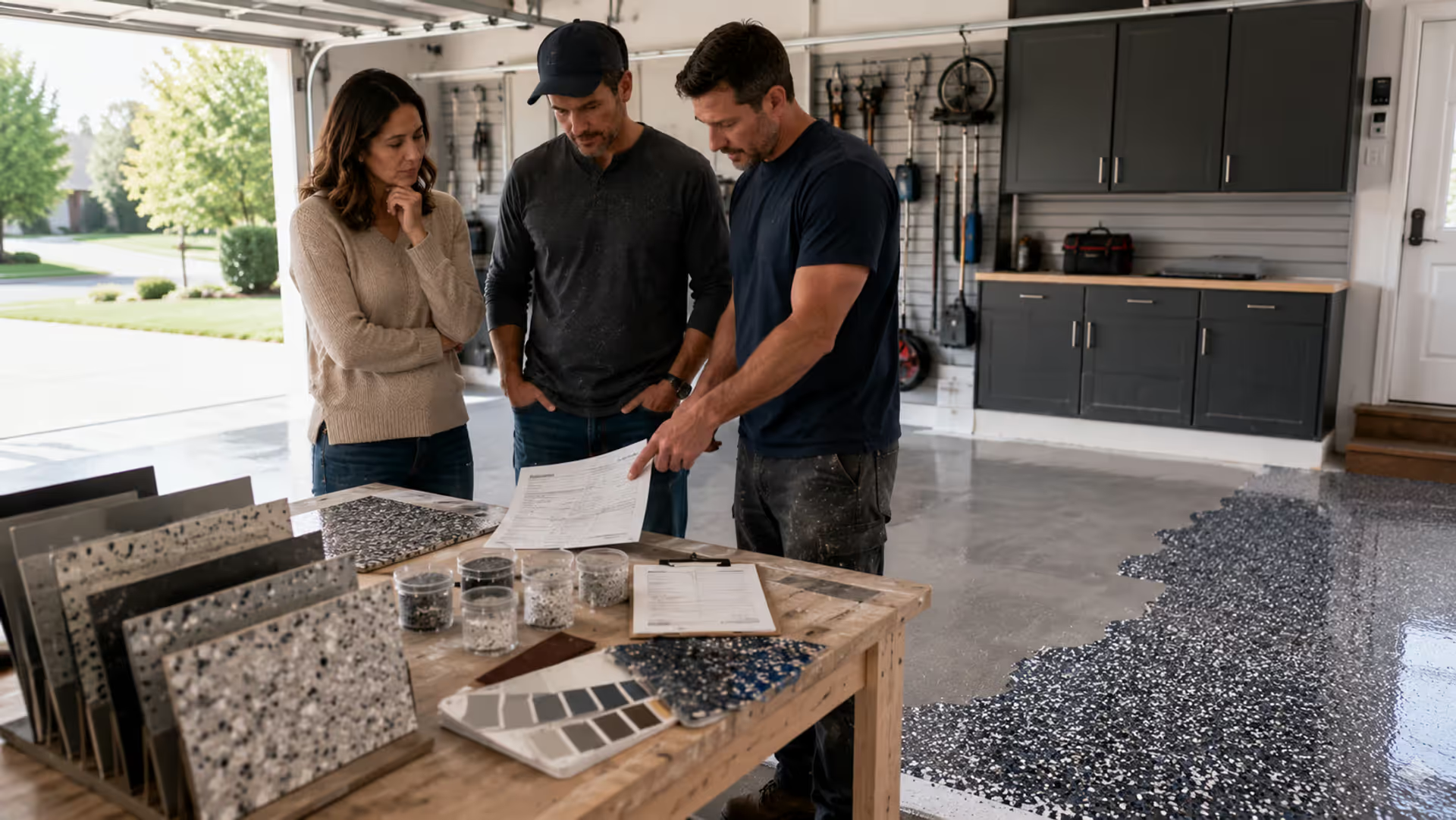
Homeowners reviewing epoxy garage floor options and pricing with a contractor
How Much Does an Epoxy Garage Floor Cost?

Content
My neighbor just had his garage floor done last month. The transformation? Honestly stunning—what was cracked, oil-stained concrete now looks like something from a luxury car dealership. His first comment to me: "I should've asked about the price before falling in love with the samples." That's the thing with epoxy flooring. Most contractors will charge you somewhere between $3 and $12 per square foot for professional work. The DIY route drops that to around $2 per square foot, but you'll earn every penny of those savings through backbreaking labor. Let me break down what you'll actually spend and why those numbers fluctuate so wildly.
Average Epoxy Garage Floor Cost Breakdown
Most two-car garages measure about 400 square feet. Getting that professionally coated will set you back anywhere from $1,200 to $4,800 depending on your location and the system you choose.
Here's how the pricing shakes out per square foot:
DIY materials from Home Depot or Lowe's: You're looking at $2 to $5 per square foot just for supplies. The "savings" come with a catch—you'll spend an entire weekend plus several weeknights (figure 20-30 hours) on your hands and knees for a standard two-car space.
Professional installation packages: Expect $3 to $12 per square foot all-in. That price includes grinding your concrete, fixing any cracks, applying the coating, cleanup, and typically some kind of warranty.
Premium custom finishes: These run $8 to $15+ per square foot. We're talking metallic pigments that create depth effects, custom color matching, or polyaspartic systems that cure overnight instead of taking days.
Your zip code matters more than you'd think. I compared quotes across the country last year—San Francisco installers wanted 45% more than Nashville contractors for identical work. Big cities consistently cost more. Boston-area crews bill out at $85 per hour while similar pros in smaller Texas markets charge $45. That labor gap alone can mean $800 to $1,500 difference in your final invoice.
Here's what catches people off guard: prep work expenses. Your slab might look fine to you, but contractors often uncover cracks, oil that's soaked deep into the concrete, or moisture problems once they start working. Fixing these issues typically adds $500 to $2,000 before anyone even opens an epoxy can.
Single-car garages (around 200 square feet) generally run $600 to $2,400 professionally done. Three-car spaces (roughly 600 square feet) range from $1,800 to $7,200. Larger areas sometimes get slightly better per-square-foot rates since the crew's setup time gets spread across more coverage.
What Affects the Cost of Epoxy Garage Flooring
Square footage obviously drives your total, but there's a quirk here. Smaller garages actually pay more per square foot because contractors still need their full crew, equipment rental, and a complete workday whether your space is 150 or 600 square feet.
Author: Caleb Norton;
Source: johnhranec.com
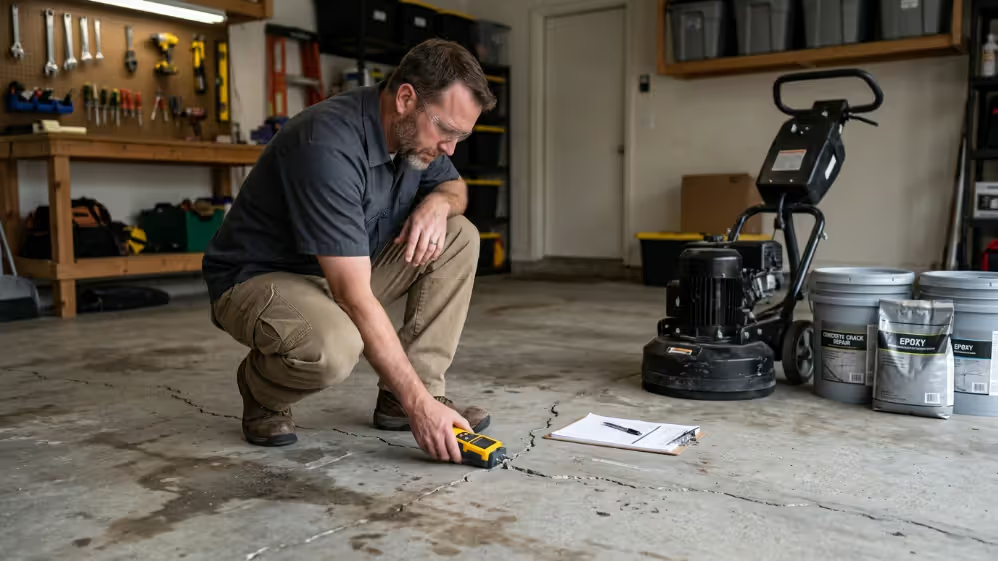
Surface prep quality routinely doubles what you'll pay. Epoxy creates a chemical bond with concrete, which means the surface needs to be absolutely clean and properly textured. This work includes:
- Grinding or shot-blasting to open up the concrete pores: tack on $1 to $3 per square foot
- Filling cracks with specialized polyurea or epoxy compounds: $100 to $500 depending on how bad things are
- Removing oil stains through degreasing and acid etching: $200 to $600
- Installing moisture barriers on problematic slabs: $1 to $2 per square foot
Product quality creates massive price swings. Those water-based epoxy kits at big box stores cost $50 to $200 total but usually fail within three years. Professional-grade 100% solids epoxy systems require $300 to $800 just in materials, yet they'll serve you for a decade or longer.
Labor costs fluctuate based on your region and the installer's expertise. Certified applicators with manufacturer training charge premium rates—usually justified by superior results. Labor alone typically accounts for $3 to $6 per square foot in most markets.
Your existing floor's condition plays a massive role. Newly poured concrete in great shape? Minimal prep needed. Old concrete with previous coatings, stains, or damage? Brace yourself for extensive (read: expensive) preparation work.
Customization options add up fast:
- Decorative color flakes broadcast into the coating: $0.50 to $2 per square foot
- Metallic pigments creating three-dimensional visual effects: $2 to $5 per square foot
- Custom color matching or intricate patterns: $1 to $3 per square foot
- Additional clear topcoats for extra durability: $1 to $2 per square foot
Most standard quotes include basic flake options. Metallic finishes and designer patterns push you into premium pricing territory.
Types of Garage Floor Coatings and Their Costs
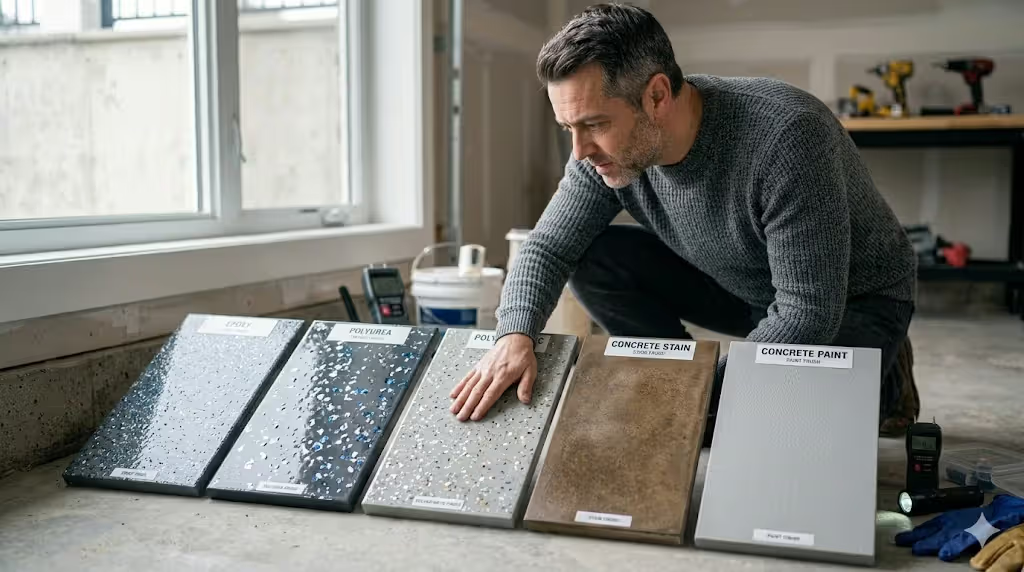
Epoxy dominates garage flooring, but you've got several alternatives worth considering:
Epoxy systems remain most homeowners' first choice. These two-part coatings bond chemically with your concrete, creating a tough surface that handles vehicles, chemical spills, and impacts. Standard epoxy installations cost $3 to $8 per square foot; metallic or thick-build systems jump to $8 to $15.
Polyurea applications cure incredibly fast—often ready for vehicles within 24 hours. They flex better than epoxy, making them perfect for concrete that expands and contracts with temperature changes. Plan on spending $5 to $10 per square foot installed. That speed advantage matters when you can't sacrifice your garage for multiple days.
Polyaspartic formulations offer superior UV resistance and the fastest cure times available. Skilled installers can finish a complete garage in one day. These premium coatings run $7 to $15 per square foot but won't yellow or fade like some epoxy products do.
Concrete staining adds color without building any surface thickness. It's purely decorative—provides zero protective qualities. Costs run $2 to $4 per square foot. This only makes sense if your concrete is pristine and you want aesthetic enhancement without functional benefits.
Standard concrete paint represents the budget option at $1 to $3 per square foot. It looks acceptable initially but chips and peels within one to three years under normal vehicle traffic. I wouldn't recommend it for active garages.
| Coating Style | Price Per Sq Ft | Time to Install | Expected Lifespan | Maintenance Needs |
| Epoxy | $3–$8 | 2–3 days | 10–20 years | Minimal |
| Polyurea | $5–$10 | 1 day | 15–20 years | Nearly none |
| Polyaspartic | $7–$15 | 1 day | 15–25 years | Nearly none |
| Concrete Stain | $2–$4 | 1 day | 5–10 years | Moderate |
| Concrete Paint | $1–$3 | 1 day | 1–3 years | Frequent |
Author: Caleb Norton;
Source: johnhranec.com
Tight budgets often push people toward cheaper alternatives. Just remember that concrete paint will actually cost you more over time through constant reapplication every couple years.
Is Epoxy Good for Garage Floors
For residential garages with regular vehicle use, epoxy performs exceptionally well. It creates a hard, chemical-resistant barrier that withstands hot tires, oil drips, and dropped tools without showing damage.
Durability really stands out as epoxy's main selling point. Properly installed systems resist abrasion, impacts, and chemical exposure far better than bare concrete. You won't see tire tracks, and spilled fluids wipe away without leaving stains. Quality epoxy handles full-size trucks and SUVs without cracking or delaminating.
Chemical resistance makes epoxy particularly suitable for garages. Motor oil, transmission fluid, gasoline, antifreeze—none of these penetrate or stain the surface. This protection really matters if you perform vehicle maintenance or store lawn equipment that might leak.
Visual appeal has evolved significantly over the past decade. Contemporary epoxy systems offer dozens of colors plus decorative flake options that hide dirt while adding texture. Metallic epoxy creates stunning, three-dimensional appearances that rival high-end commercial showrooms.
Maintenance demands stay minimal. Sweep regularly, mop occasionally with mild soap. That's your complete routine. No annual sealing, no waxing, no special chemical treatments required.
For residential applications, epoxy delivers excellent performance. It's probably overkill for garages storing only seasonal decorations, but perfect for active spaces housing vehicles, workshops, or fitness equipment.
Author: Caleb Norton;
Source: johnhranec.com
One critical distinction worth noting: not all epoxy products perform equally. Water-based DIY kits from retail stores don't compare to professional-grade 100% solids systems. The inexpensive versions typically peel within two to three years.
How Long Does Epoxy Garage Floor Last
Professional installations typically deliver 10 to 20 years of service. Premium systems occasionally push past 25 years with appropriate care.
DIY epoxy? You'll get 3 to 7 years if you're lucky. This performance gap stems from surface preparation thoroughness and product quality. Professional contractors properly grind concrete to ensure strong adhesion. They use commercial-grade materials with higher solids content and better chemical composition.
Several factors influence longevity:
- Usage intensity: Daily vehicle traffic shortens lifespan compared to occasional use
- Preparation thoroughness: Inadequate prep virtually guarantees premature failure
- Product grade: 100% solids epoxy outlasts water-based formulations by many years
- Climate extremes: Significant temperature fluctuations stress the coating
- Maintenance consistency: Regular cleaning extends life; neglect accelerates deterioration
Polyaspartic and polyurea systems typically last longest—15 to 25 years isn't unusual. They command higher upfront investment, though.
Is Epoxy Flooring Slippery
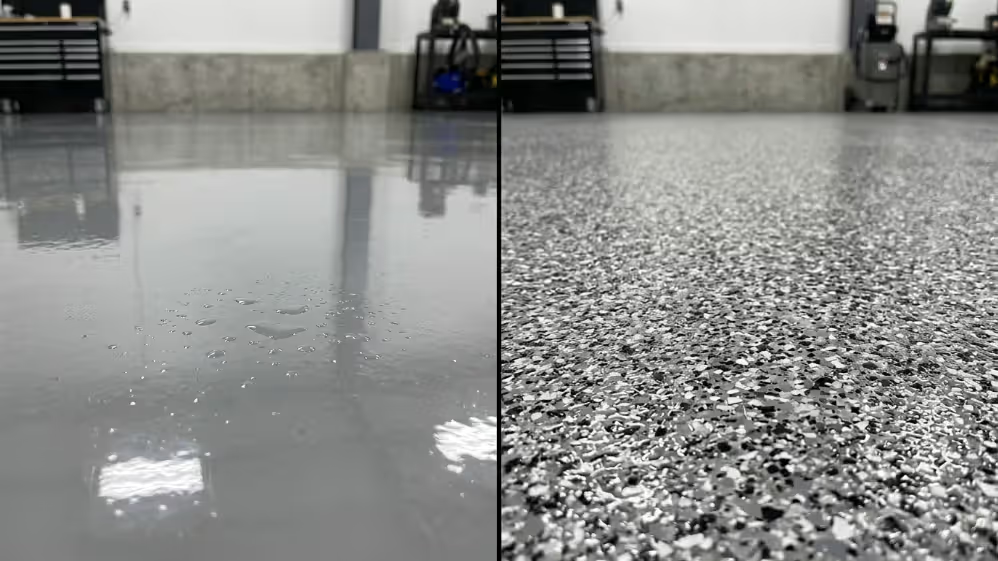
Smooth epoxy finishes can definitely be slippery, particularly when wet. Think polished concrete but marginally less slick.
Fortunately, installers offer several solutions:
Decorative flakes create texture that significantly improves traction. Greater flake density equals better grip. Full-broadcast applications (where flakes completely cover the base coat) deliver excellent slip resistance.
Anti-slip additives mixed into the topcoat provide another option. These microscopic particles create subtle surface texture that's barely visible yet noticeably safer.
Textured topcoats offer the most aggressive slip resistance. They're particularly valuable in rainy climates or for homeowners prioritizing safety.
Smooth epoxy without texture modifications? Yes, that's genuinely slippery when wet. Reputable installers never leave floors in that condition. Always discuss slip-resistant options during your consultation.
Is an Epoxy Garage Floor Worth the Investment
For homeowners planning to stay put for at least 5 to 7 years, epoxy typically represents a solid investment.
Return on investment presents some complexity since epoxy rarely returns its complete cost at resale. Real estate appraisers don't usually assign substantial value to garage flooring. However, it does enhance your property's appeal to potential buyers. A professionally finished epoxy floor signals consistent property maintenance.
You'll likely recoup 50% to 75% of installation costs through increased home value. That's respectable compared to many upgrades, though not as strong as kitchen or bathroom renovations.
Longevity compared to cost reveals epoxy's true value. Consider the alternative: repainting your garage floor every 2 to 3 years at $400 to $800 per application. Over 15 years, you'd spend $2,000 to $4,000 on repeated painting versus a single $2,500 epoxy installation. The economics favor epoxy.
Comparing cheaper alternatives: Concrete paint costs less initially but fails rapidly. Stains provide aesthetics without protection. Interlocking floor tiles work adequately but cost nearly as much as epoxy while appearing less professional.
Best candidates for epoxy:
- Active garages with daily vehicle parking
- Workshop or hobby areas where chemical spills occur
- Garages converted to home gyms or entertainment spaces
- Properties where appearance and curb appeal matter
- Homes in harsh climates where concrete needs protection
Skip epoxy if your garage purely stores seasonal items and never houses vehicles. The investment won't deliver sufficient value.
Homeowners obsess over initial costs while ignoring total lifecycle value. A properly installed quality epoxy system will outlast four or five paint applications while maintaining superior appearance throughout. The real question isn't whether epoxy fits your budget—it's whether you can afford repeatedly repainting every few years.
— Mike Stevens
Installation Timeline and What to Expect
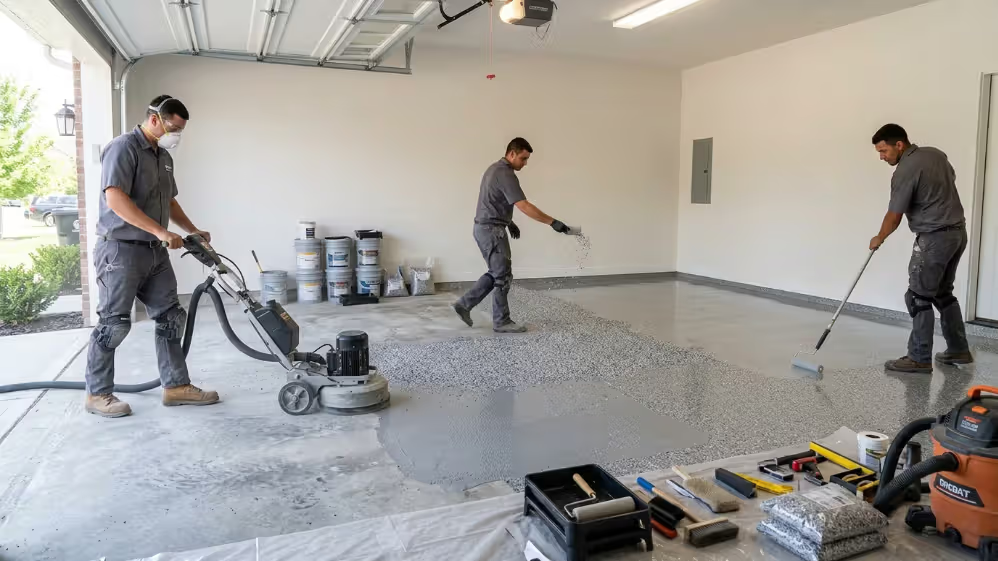
Professional crews typically complete installations in 2 to 5 days start to finish. Here's the typical sequence:
Day 1: Surface preparation (4 to 8 hours). Crews grind or shot-blast concrete, repair cracks, and thoroughly clean the surface. This step determines success or failure—rushed preparation guarantees premature coating failure.
Day 2: Primer and base coat application (3 to 6 hours). Once concrete dries completely, installers apply primer followed by the first epoxy layer. The garage remains off-limits during application and initial curing.
Day 3: Decorative elements and topcoat (3 to 5 hours). Flakes get broadcast onto the base coat, then a clear topcoat seals everything. Some installers complete this step on Day 2 when conditions permit.
Days 4–5: Curing period. Light foot traffic becomes safe after 24 hours, but wait 3 to 7 days before parking vehicles. Complete curing requires 7 to 10 days.
DIY projects follow similar timelines but frequently stretch longer since you're working around your regular schedule.
Author: Caleb Norton;
Source: johnhranec.com
Seasonal timing significantly impacts results. Epoxy cures optimally between 60°F and 90°F with low humidity. Summer works well in most climates. Winter installations risk failure in cold regions—epoxy won't cure properly below 50°F.
Spring and fall provide ideal conditions across most of the United States. Avoid winter in northern states and peak summer in extremely hot regions where concrete surface temperatures exceed 100°F.
Garage access disruption surprises many homeowners. You'll need to completely empty your garage—vehicles, storage shelves, everything. Alternative parking becomes necessary for 4 to 7 days. This logistical challenge catches people unprepared more than any other aspect.
Frequently Asked Questions About Epoxy Garage Floors