How Much Does It Cost to Completely Renovate a House?

Content
Thinking about a major home renovation? You're probably wondering what the real price tag looks like. The national average for a complete house renovation ranges from $100,000 to $200,000, but that number can swing wildly based on your home's size, condition, and your goals. Before you commit to tearing up floors and knocking down walls, you need the full picture—including whether staying put and renovating actually makes more financial sense than moving to a new place.
Average Cost Breakdown for a Full Home Renovation
Let's talk numbers. A complete renovation touches every major system and surface in your home: electrical, plumbing, HVAC, flooring, kitchen, bathrooms, and often structural elements. You're essentially creating a new home within your existing walls.
The national average sits around $150,000 for a full renovation, but this figure masks huge variations. Your actual costs depend on home size, project scope, regional labor rates, and material choices. In high-cost markets like San Francisco or New York, expect to add 30-50% to these baseline figures.
Renovation Costs by Home Size
Size matters. A lot. Here's what you're looking at across different home sizes:
These ranges assume you're working with a structurally sound home. Foundation issues, mold remediation, or extensive structural work can push you well beyond these figures.
Costs by Renovation Scope (Cosmetic vs. Structural)
Not all renovations are created equal. The scope determines everything.
Cosmetic renovations focus on surfaces and aesthetics. You're painting, refinishing floors, updating fixtures, maybe replacing countertops. Think of it as a deep refresh. Your home's bones stay intact. This typically runs $25–$75 per square foot.
Mid-range renovations go deeper. You're replacing major components: new kitchen cabinets, bathroom remodels, updated electrical panels, new HVAC systems. Some walls might come down. Expect $75–$150 per square foot.
High-end complete renovations rebuild almost everything. Custom cabinetry, luxury finishes, system overhauls, structural modifications, additions. This is where you see $150–$300+ per square foot. At this level, you're often better off building new—unless location or sentimental value keeps you anchored.
The pattern I see most often is homeowners underestimating the domino effect. You start with a kitchen remodel, then realize the adjacent flooring doesn't match. Then the living room looks dated. Before long, you've committed to a whole-house project.
| Home Size | Cosmetic Renovation | Mid-Range Renovation | High-End/Complete Renovation |
| 1,000 sq ft | $25,000–$50,000 | $75,000–$125,000 | $150,000–$250,000 |
| 1,500 sq ft | $40,000–$75,000 | $112,500–$187,500 | $225,000–$375,000 |
| 2,000 sq ft | $50,000–$100,000 | $150,000–$250,000 | $300,000–$500,000 |
| 2,500+ sq ft | $65,000–$125,000 | $187,500–$312,500 | $375,000–$625,000+ |
Hidden Expenses Most Homeowners Overlook
The sticker price never tells the whole story. Budget-busting surprises hide in plain sight.
Permits and inspections can add $1,000–$5,000 depending on your project scope and municipality. Some jurisdictions are notoriously slow, delaying your timeline and inflating costs. Don't skip this step—unpermitted work creates nightmares when you sell.
Temporary housing becomes necessary for extensive renovations. Living through a full gut job isn't realistic. Figure $2,000–$4,000 per month for short-term rentals, plus storage costs for your furniture. A six-month project can add $12,000–$24,000 you didn't plan for.
Design and architecture fees run 5-15% of your total project cost. For a $150,000 renovation, that's $7,500–$22,500. Yes, you can skip the architect for simple projects. But complex renovations without proper planning end up costing more in change orders and mistakes.
Contingency budget is non-negotiable. Set aside 15-20% for unexpected issues. Open up walls and you'll find surprises: outdated wiring, hidden water damage, asbestos, structural deficiencies. Every contractor will tell you the same thing: budget for unknowns.
Financing costs add up fast if you're borrowing. Home equity loans and HELOCs carry interest. A $100,000 renovation loan at 7% over ten years costs you nearly $40,000 in interest. Cash is king, but most homeowners finance at least part of the project.
Don't forget the soft costs: eating out more because your kitchen is demolished, higher utility bills during construction, landscaping repair after heavy equipment tears up your yard. These nibble away at your budget in $50 and $100 increments that add up to thousands.

Author: Sophie Langston;
Source: johnhranec.com
When Renovating Costs More Than Moving
Sometimes staying put is the expensive choice. Here's when moving makes more financial sense.
Major structural issues change the math entirely. Foundation problems can cost $20,000–$100,000+ to fix. Severe settling, cracked slabs, or failing pier-and-beam systems often exceed the home's value. If your foundation needs major work, seriously consider selling as-is and moving.
Outdated systems throughout create a compounding problem. If your electrical, plumbing, HVAC, and roof all need replacement simultaneously, you're looking at $50,000–$100,000 before you touch a single aesthetic element. A newer home eliminates these costs for at least 10-15 years.
Location limitations can't be renovated away. You can't fix a bad commute, poor school district, or neighborhood decline with a remodel. If your home's location no longer serves your life, renovation just creates an expensive house in the wrong place.
Over-improving for the neighborhood destroys your ROI. Dropping $300,000 into a complete renovation when comparable homes sell for $350,000 means you'll never recoup your investment. Your home's value is capped by surrounding properties. This is where it's cheaper to move than renovate—you're literally throwing money away.
Severe code violations or hazardous materials multiply costs fast. Knob-and-tube wiring throughout, extensive asbestos, underground oil tanks, or major code violations can require $30,000–$80,000 in remediation before you even start your actual renovation. Sometimes a clean slate costs less.
Is it worth renovating an old house? It depends on what "old" means. A well-maintained 1920s home with good bones can be a great renovation candidate. A neglected 1960s house with multiple failing systems might not be.
Financial Comparison: Renovating vs. Relocating
Let's compare the true costs side by side. Most people only consider the obvious expenses and miss the full picture.
True Cost of Moving to a New Home
Moving isn't just about the purchase price. Here's what you're really paying:
Realtor commissions on your current home typically run 5-6% of the sale price. Selling a $400,000 home costs you $20,000–$24,000 right off the top.
Closing costs hit both ends of the transaction. Selling costs (title insurance, transfer taxes, attorney fees) add another 1-3%. Buying costs (origination fees, appraisal, inspection, title insurance) add 2-5% of the purchase price. On a $500,000 purchase, that's $10,000–$25,000.
Moving expenses for a full household run $3,000–$10,000 depending on distance and volume. Cross-country moves or large homes push toward the higher end.
Immediate repairs and updates in your new home are almost inevitable. Budget $10,000–$30,000 for immediate needs: painting, minor repairs, making the space yours.
Mortgage costs matter too. If you're moving up in price, your monthly payment increases. A $100,000 higher mortgage costs roughly $600 more per month at current rates—$7,200 annually.

Author: Sophie Langston;
Source: johnhranec.com
Side-by-Side Cost Analysis
Here's how the numbers actually compare:
| Cost Category | Renovating Current Home | Moving to New Home |
| Initial costs | $100,000–$200,000 (renovation) | $500,000+ (purchase price) |
| Hidden fees | $15,000–$40,000 (permits, temp housing, contingency) | $35,000–$60,000 (commissions, closing costs, moving) |
| Financing costs | $20,000–$40,000 (interest on renovation loan) | Varies widely (depends on mortgage terms) |
| Timeline | 4–12 months | 3–6 months (search + close) |
| Total estimated cost | $135,000–$280,000 | $535,000–$560,000+ |
| Potential ROI | 50-70% recouped on high-end renovations | Market appreciation (variable) |
This comparison assumes you own your current home outright or have substantial equity. The math shifts if you're underwater on your mortgage or in a declining market.
The simpler option usually wins here: if your home's location works and the structure is sound, renovating typically costs less than moving up to a comparable new home. But that's not always the right answer.
How to Decide If Renovation Is Worth the Investment
Numbers alone don't make this decision. Several factors determine whether renovating makes sense for your situation.
Home equity is your starting point. If you have substantial equity, you can borrow against it at reasonable rates. Low equity means expensive personal loans or draining savings—both bad options for renovation financing.
Neighborhood value trajectory matters enormously. Renovating in an appreciating neighborhood with strong schools and amenities protects your investment. Declining neighborhoods cap your upside regardless of renovation quality. Check recent sales trends and talk to local realtors about five-year projections.
Emotional attachment has real value, even if it's hard to quantify. If your home holds deep memories, your kids are settled in great schools, and your community connections are strong, staying put might be worth paying a premium. Just be honest about whether emotion is clouding financial judgment.
Timeline flexibility affects costs significantly. Rush jobs cost 15-25% more than projects with flexible schedules. If you can wait for contractor availability and weather windows, you'll save substantially.
Resale value considerations depend on your horizon. Planning to stay 10+ years? Renovate for your preferences. Selling within five years? Focus on renovations with proven ROI: kitchens, bathrooms, curb appeal. Avoid over-personalizing.
Lifestyle needs are the ultimate deciding factor. If your current home can't accommodate your life—too small for a growing family, too large for empty nesters, lacks home office space for remote work—renovation might just delay the inevitable move.
The biggest mistake I see is homeowners renovating to market trends rather than their actual needs. You're not renovating for the next buyer—you're creating a space you'll live in for years. If the numbers work and the location serves your life, renovation almost always beats the disruption and transaction costs of moving.
— Martinez Elena
One counterintuitive point: sometimes a modest renovation plus staying put beats both a complete renovation and moving. A $50,000 strategic update might solve 80% of your problems without the cost or disruption of either extreme option.
Should You Renovate or Sell Your House As Is
Author: Sophie Langston;
Source: johnhranec.com
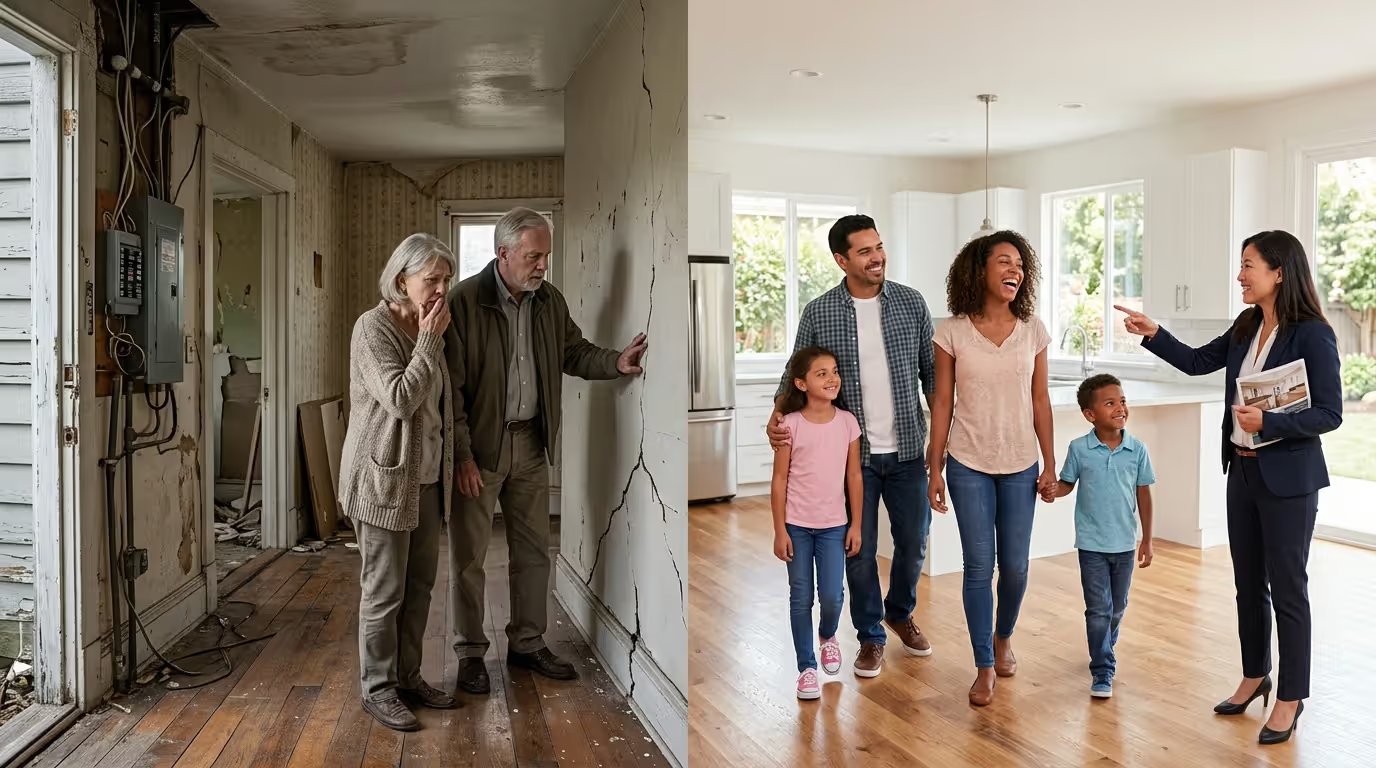
This decision hinges on market conditions and your home's current state.
Market conditions shift the calculus. In a strong seller's market with low inventory, you can sell as-is and still get competitive offers. Buyers expect to renovate and factor that into their offers. In a buyer's market with high inventory, renovating before selling helps you stand out and command premium prices.
Home condition assessment requires brutal honesty. Walk through with a critical eye—or better yet, hire a pre-listing inspector. Major visible issues (outdated kitchens, worn finishes, old appliances) turn off buyers and lower offers. But if your home is structurally sound with decent bones, selling as-is to investors or renovation-minded buyers might be your best move.
ROI expectations for pre-sale renovations are tricky. Minor updates—fresh paint, new fixtures, landscaping—return 100-200% in higher sale prices. Major renovations rarely return more than 60-80% of costs. The sweet spot is strategic cosmetic updates that make your home show well without deep investment.
Seller's market vs. buyer's market changes everything. In a seller's market, you'll get offers regardless of condition. Save your renovation money. In a buyer's market, you're competing with move-in-ready homes. Strategic updates become necessary to attract offers at your target price.
Time constraints often make the decision for you. Need to relocate quickly for a job? Sell as-is. Have six months to prepare? Strategic renovations make sense if the ROI justifies it.
Consider this scenario: Your home needs $40,000 in updates but would sell for $380,000 as-is or $440,000 renovated. The math says renovate—you net an extra $20,000 after costs. But if you need to move in 60 days, that timeline doesn't work. Sell as-is and move on.
The renovate-or-sell-as-is guide really comes down to three questions: How much time do you have? What's your local market doing? And what's the realistic ROI on improvements?
FAQ: Home Renovation Cost Questions Answered
The renovation-versus-moving decision isn't just about money. It's about your life, your timeline, and what makes sense for your family's next chapter.
Start by getting real numbers. Hire a contractor for renovation estimates. Talk to realtors about your home's current value and what you could buy elsewhere. Run the numbers honestly, including all those hidden costs most people ignore.
Then look beyond the spreadsheet. Does your neighborhood still serve your needs? Can your current home's footprint accommodate your life? Are you renovating because you love your home and location, or because moving feels overwhelming?
There's no universal right answer. For some, a $150,000 renovation creates the perfect home in an ideal location. For others, that same money becomes a down payment on a better-suited property in a new neighborhood.
The key is making an informed choice with your eyes open. Understand the true costs of both paths, recognize the hidden expenses, and be honest about your priorities. Whether you choose to renovate or relocate, you'll move forward with confidence knowing you made the decision that works for your situation.
And remember: you can always start small. A modest renovation might reveal whether staying put long-term makes sense, or confirm that moving is your better path. You don't have to decide everything today.