What Does a Home Addition Really Cost?
Cost of Home Addition Guide

Content
Planning a home addition is thrilling. But the price tag often shocks homeowners. Industry data shows most people underestimate final costs by 20 to 30 percent. That gap becomes painful when you're mid-construction and the money runs out.
Adding square footage involves far more than erecting walls and installing a roof. Foundation work, permit applications, utility hookups, interior finishes, and regional labor costs create a complex pricing puzzle. A modest expansion in one state might match the cost of a substantial addition elsewhere.
This guide delivers actual numbers, realistic price ranges, and the surprise expenses that ambush unprepared homeowners. You'll discover which factors inflate your budget, where smart cuts make sense, and how to create a financial plan that survives reality.
Average Home Addition Costs by Type
Addition costs vary dramatically by project type. A compact expansion runs a small fraction of what you'd invest in a full second level. Here's what different projects typically cost in 2026.
Single-Room Addition Costs
A standard room addition—bedroom, home office, or family room—typically runs $25,000 to $90,000. This broad range reflects variables like dimensions, finish quality, and utility extension requirements.
A straightforward 12x12 bedroom with standard finishes might land between $35,000 and $50,000. But incorporate a bathroom, custom carpentry, or luxury materials, and you're approaching $70,000 or beyond.
Foundation requirements dictate much of your expense. Slab foundations in warm climates cost considerably less than full basement foundations required in northern regions.
Sunroom Addition Costs
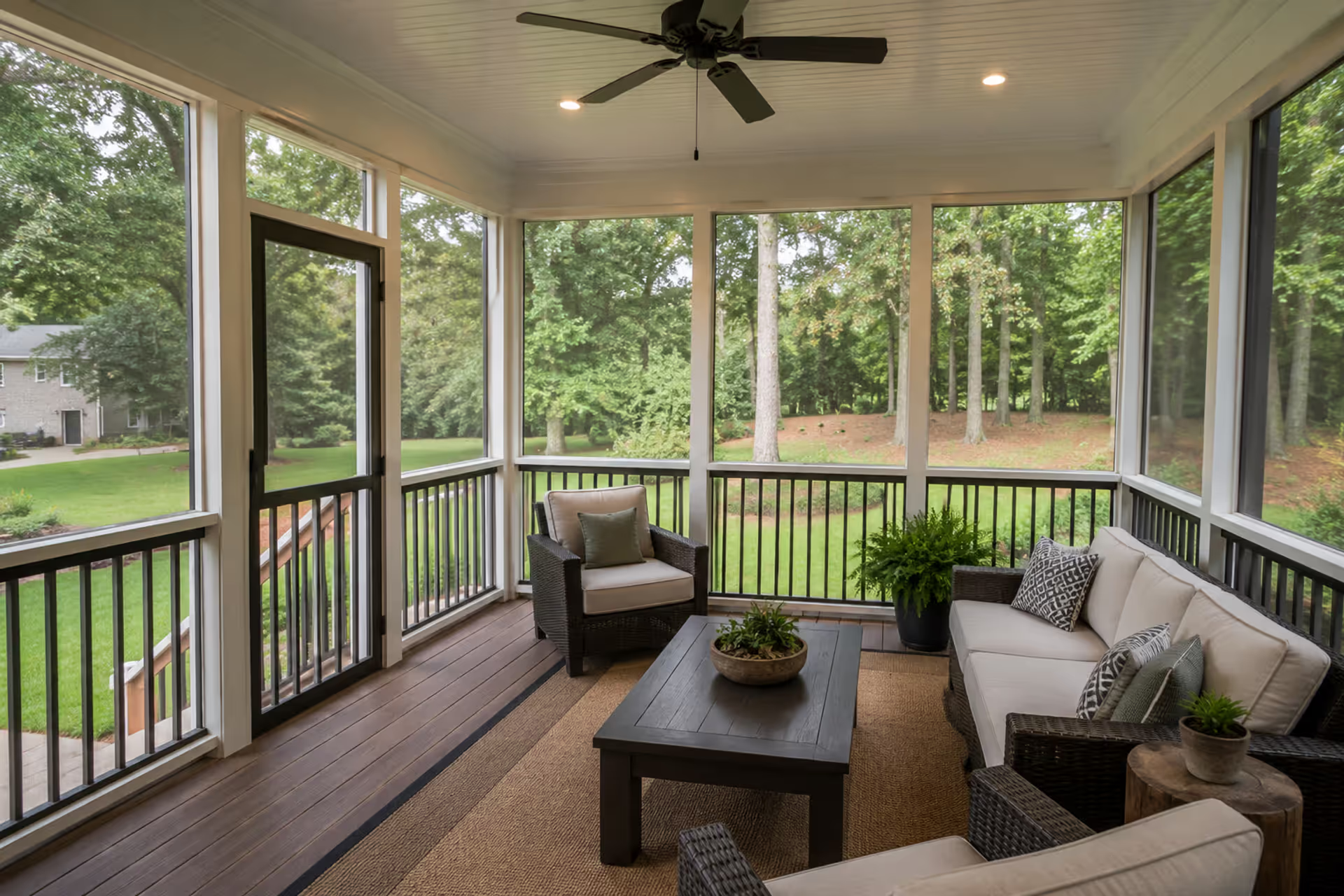
Sunroom projects span from $15,000 for a basic three-season kit to $80,000 for a custom four-season room with climate control and high-performance glazing. Your intended use determines the investment.
Three-season sunrooms feature simpler construction without heating or cooling systems. They're ideal for mild weather but unusable during temperature extremes. Four-season rooms include full insulation and HVAC integration, functioning comfortably year-round.
Window quality affects comfort more than homeowners anticipate. Standard single-pane glass creates a sweltering summer space and frigid winter room. Invest in energy-efficient glazing for genuinely usable space.
Second-Story Addition Costs
Adding a complete second level represents the priciest option, typically ranging from $100,000 to $300,000. You're constructing an entire floor atop your current home.
Your current foundation and walls must handle the increased load. Many homes require structural reinforcement, adding $10,000 to $30,000 before vertical construction begins. Older homes frequently demand more extensive structural upgrades than recent construction.
Temporary relocation becomes necessary during portions of the project. After contractors remove your roof, weather protection disappears. Most second-level additions take four to six months, with at least partial displacement from your home.
Cantilevered Bump-Out Costs
Bump-outs expand an existing room by two to four feet without new foundation requirements. Projects typically cost $8,000 to $30,000 based on dimensions and complexity.
These excel at enlarging tight kitchens, creating breakfast nooks, or forming window seats in bedrooms. The cantilevered approach means your addition extends from the existing structure, with floor joists providing support.
Building codes impose limits, though. Most jurisdictions restrict bump-outs to roughly four feet of projection. Exceed that threshold and you'll need foundation support, eliminating the cost benefit.
| Addition Type | Average Cost Range | Typical Square Footage | Cost Per Square Foot |
| Single-Room Addition | $25,000–$90,000 | 150–300 sq ft | $150–$300 |
| Sunroom Addition | $15,000–$80,000 | 100–300 sq ft | $120–$300 |
| Second-Story Addition | $100,000–$300,000 | 1,000–2,000 sq ft | $150–$250 |
| Cantilevered Bump-Out | $8,000–$30,000 | 25–100 sq ft | $200–$400 |
| Closet Addition | $3,000–$15,000 | 25–100 sq ft | $100–$200 |
Closet Addition Costs
Closet construction costs $3,000 to $15,000 depending on whether you're repurposing existing space or creating new square footage. Converting a bedroom corner into a reach-in closet runs $3,000 to $6,000. Constructing a walk-in closet within a larger addition costs $8,000 to $15,000.
Custom organization systems add $1,000 to $5,000 beyond basic construction. A common pattern: homeowners invest in the addition but economize on closet systems, undermining the project's purpose.
Home Addition Cost Per Square Foot
Per-square-foot pricing fluctuates wildly based on project specifics. Straightforward additions with basic finishes begin around $100 per square foot. Elaborate projects with premium materials can exceed $400 per square foot.
Here's the counterintuitive reality: smaller additions carry higher per-square-foot costs than larger ones. A 50-square-foot expansion might reach $300 per square foot because fixed expenses—permits, design work, foundation prep—don't scale down proportionally.
Typical 2026 ranges:
Basic addition: $100–$150 per square foot. Includes standard framing, basic electrical and plumbing infrastructure, builder-grade finishes, and straightforward roof integration.
Mid-range addition: $150–$250 per square foot. Upgraded materials, more intricate roofline, enhanced fixtures, and professional design consultation.
High-end addition: $250–$400+ per square foot. Custom everything—architectural design, premium materials, challenging structural engineering, luxury finishes.
Geography creates enormous price swings. Construction in San Francisco or New York City costs 50 to 100 percent more than rural markets. Coastal city labor rates frequently exceed $100 hourly compared to $50 to $70 in Midwest markets.
Author: Olivia Hartwel;
Source: johnhranec.com
What Affects the Cost of Adding a Room to Your House
Multiple factors determine whether your addition costs $30,000 or $100,000. You control some variables. Others are fixed.
Foundation requirements represent the largest variable. Simple slab foundations cost $4 to $8 per square foot. Full basement foundations run $20 to $40 per square foot. Sloped lots or poor soil conditions add another 20 to 30 percent for site preparation.
Permits and inspections typically cost $1,000 to $5,000 based on your municipality and project scope. Some jurisdictions mandate architectural drawings even for straightforward additions, adding $2,000 to $5,000 in design fees.
Utility extensions accumulate quickly. Electrical service to a new addition costs $1,000 to $3,000. Plumbing line extensions run $1,500 to $4,000. HVAC capacity expansion or ductwork extension costs $3,000 to $8,000.
Matching existing materials frequently costs more than standard products. Discontinued siding, specialty brick, or intricate roof designs require premium pricing to maintain visual harmony.
Labor rates fluctuate by region and season. Contractors experience peak demand during spring and summer, when prices climb. Winter construction in temperate climates can reduce labor costs by 10 to 15 percent.
Existing structure condition impacts costs more than anticipated. Foundation problems, antiquated wiring, or code violations require correction before expansion begins. These discoveries can add $5,000 to $20,000 in unanticipated expenses.
Author: Olivia Hartwel;
Source: johnhranec.com
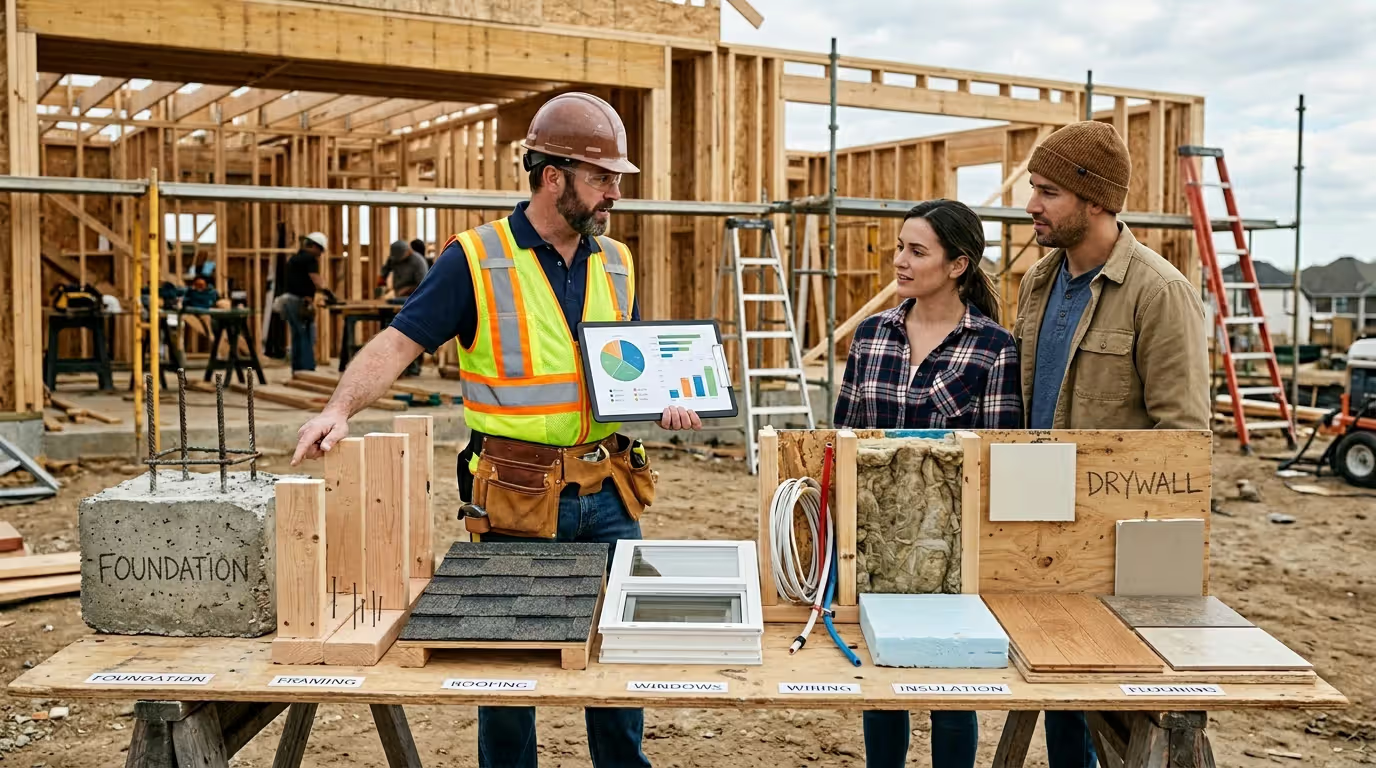
Home Addition Cost Breakdown by Component
Knowing where your budget goes enables smarter decisions about splurging versus economizing.
Here's a representative breakdown for a mid-range room addition:
Foundation and sitework: 15–20% of total investment ($7,500–$15,000 on a $75,000 project). Covers excavation, concrete work, and site preparation.
Framing and structural work: 20–25% ($15,000–$18,750). Lumber, construction labor for walls and roof structure, plus structural engineering when necessary.
Roofing: 5–8% ($3,750–$6,000). Materials and labor for integration with existing roof and weatherproofing.
Exterior finishes: 8–12% ($6,000–$9,000). Siding, trim, windows, and doors coordinated with your existing home.
Electrical: 8–10% ($6,000–$7,500). Wiring, outlets, switches, fixtures, and potential panel upgrades.
Plumbing: 5–10% ($3,750–$7,500). Varies significantly based on whether you're incorporating a bathroom or just extending basic lines.
HVAC: 5–10% ($3,750–$7,500). Extending current systems or installing new heating and cooling capacity.
Insulation: 3–5% ($2,250–$3,750). Wall and ceiling insulation meeting current energy codes.
Drywall and interior finishes: 15–20% ($11,250–$15,000). Installation and finishing of drywall, painting, trim work, and flooring.
Permits and fees: 2–4% ($1,500–$3,000). Building permits, inspections, and utility connection fees.
These percentages shift with different addition types. Sunrooms allocate more budget to windows and less to interior finishes. Second-story additions prioritize structural work over foundation expenses.
Author: Olivia Hartwel;
Source: johnhranec.com
Planning Your Room Addition Budget
Most contractors suggest budgeting 20 percent above your estimated costs. That's not pessimism—it reflects consistent patterns. Nearly every project uncovers unexpected complications once demolition begins or excavation reveals hidden conditions.
Begin with your maximum comfortable spending limit, then subtract 20 percent. That becomes your working project budget. The remaining 20 percent serves as your contingency reserve for surprises.
Homeowners' biggest budgeting error is planning to the last dollar based on preliminary estimates. When we discover outdated wiring or foundation problems—which happens on nearly every project—they lack financial flexibility. Projects stall while they search for additional funds.
— Mitchell Sarah
Financing options include:
Home equity loans or lines of credit generally provide the most favorable interest rates since your property secures them. Current 2026 rates span 7 to 10 percent based on creditworthiness and loan-to-value ratio.
Cash-out refinancing becomes attractive when you can lock in rates below your existing mortgage. You're incorporating the addition cost into a larger, new mortgage.
Personal loans suit smaller projects below $50,000. Interest rates run higher—typically 9 to 15 percent—but your home isn't pledged as collateral.
Contractor financing offers convenience but frequently carries expensive terms. Scrutinize the fine print carefully. Some promotional "zero percent" arrangements convert to 20+ percent interest without full payoff by specific deadlines.
ROI considerations become relevant if you're planning to sell within five years. Most room additions recoup 50 to 70 percent of their cost at resale. Bathrooms and primary bedroom suites generally return more than specialized spaces like home theaters.
For long-term homeowners, ROI becomes less significant. The real value lies in enhanced daily living, not just resale figures.
When to hire professionals: Avoid DIY attempts on structural modifications, electrical systems, plumbing, or permit-required work. The risk of expensive mistakes or code violations outweighs any savings. However, you can manage demolition, painting, and finish work to trim 10 to 15 percent from labor expenses.
How to Save Money on a Home Addition
Strategic planning reduces costs without quality compromise.
Timing matters. Plan construction for winter in temperate climates when contractors face lighter schedules. You'll secure better pricing and receive more focused attention. Avoid winter work in harsh-weather regions—delays outweigh any savings.
Material choices present significant savings potential. Builder-grade finishes cost 30 to 50 percent less than premium alternatives. For most spaces, mid-range materials deliver excellent appearance and durability. Reserve premium selections for prominent, high-traffic areas.
Simplify the design. Intricate rooflines, unusual angles, and custom architectural features inflate costs rapidly. A straightforward rectangular addition with uncomplicated roof integration costs substantially less than architecturally ambitious designs.
Bundle projects. If other work looms—roof replacement, siding updates, HVAC improvements—coordinate with your addition. Contractors frequently reduce pricing for combined work since they're already mobilized on site.

Author: Olivia Hartwel;
Source: johnhranec.com
Get multiple bids. Three to five proposals establish realistic price ranges and identify outliers. However, resist automatically selecting the lowest quote. Unusually low bids often signal overlooked items or quality shortcuts.
Do your own project management if you possess adequate time and temperament. Contracting separate subcontractors instead of employing a general contractor saves 15 to 25 percent. You assume responsibility for scheduling, coordination, and troubleshooting.
Handle finish work yourself. Painting, trim installation, and flooring are DIY-accessible tasks saving $3,000 to $8,000 in labor. Be honest about your skill level and available time.
One critical mistake to avoid: economizing on structural work or waterproofing. These elements disappear once construction completes, but they're essential for longevity. Investing an additional $2,000 in proper waterproofing beats spending $15,000 repairing water damage three years later.
FAQ: Home Addition Cost Questions Answered
Adding space to your home demands substantial investment. Yet it frequently costs less and disrupts life less than relocating, particularly in competitive housing markets.
Success requires realistic planning. Understand the specific cost drivers for your situation. Allocate contingency funds. Never compromise on structural integrity or code compliance to save a few thousand dollars.
Obtain detailed proposals from multiple contractors. Inquire about their contingency recommendations and typical cost overruns. Examine references and confirm licensing plus insurance coverage.
Keep in mind: the lowest proposal rarely delivers optimal value. Quality craftsmanship costs more initially but generates savings throughout your addition's lifespan. Well-executed additions enhance daily living and preserve value during eventual resale.
Begin with a precise vision of your needs, a realistic budget including contingencies, and contractors you trust. This combination maximizes your chances of completing your addition within budget while achieving the space you've envisioned.