
Kitchen Cabinet Painting Costs
Cost of Painting Kitchen Cabinets Guide

Content
Want to update your kitchen without dropping $40,000 on a full renovation? Cabinet painting might be your answer. You're looking at spending anywhere from a few hundred bucks (if you're doing it yourself) to around $10,000 for professional work—but that range depends on factors most homeowners don't consider until they're halfway through the project.
Average Cost to Paint Kitchen Cabinets
In 2026, professional cabinet painting runs $3,000-$10,000 for most homes. A typical medium-sized kitchen lands around $5,500.
Here's what you'll actually pay based on your kitchen's footprint:
A compact 10x10 kitchen with roughly 10-15 cabinet pieces typically costs $2,500-$4,500. Medium-sized kitchens measuring about 12x15 feet with 15-25 cabinet components run $4,500-$7,500. Larger 15x20 kitchens featuring 25 or more pieces climb to $7,500-$12,000.
These figures assume you're hiring experienced professionals and using quality materials—not the cheapest options from big-box stores.
Tackling it yourself? Materials alone cost $200-$600 for an average kitchen. You'll need primer, cabinet-grade paint, brushes, rollers, sandpaper, degreaser, and painter's tape.
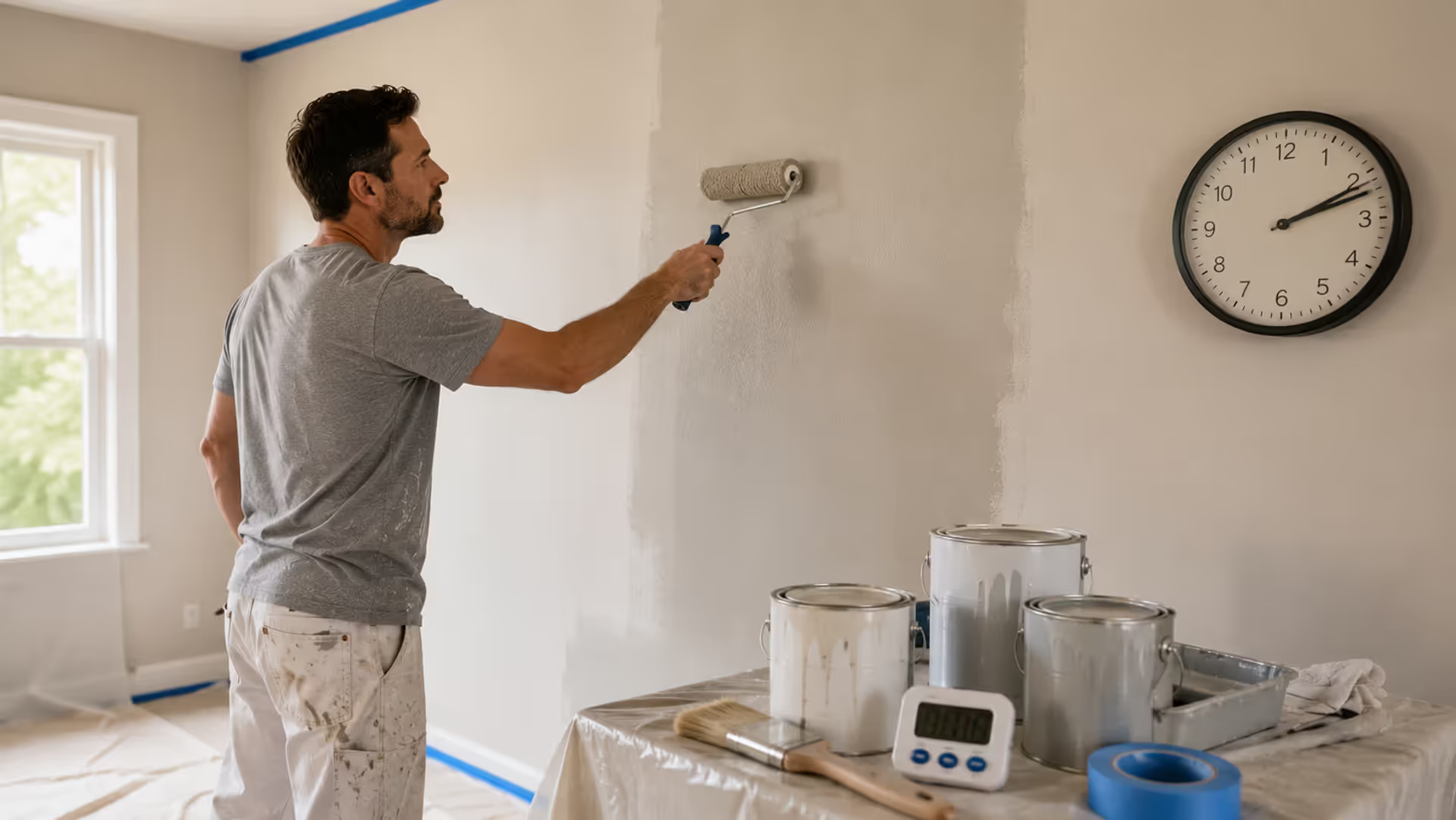
Here's what nobody tells you about DIY: plan on 40-80 hours of actual work for a medium kitchen. That includes removing doors, cleaning decades of grease, sanding, priming, painting multiple coats, waiting for everything to dry, then reinstalling. Most people estimate half that time and end up frustrated three weekends in.
Professional painters charge $50-$100 hourly in most markets. Some quote per piece instead—expect $75-$150 per door depending on complexity and your zip code.
The biggest mistake I see homeowners make is choosing painting based solely on the lower upfront cost. If your cabinet boxes are falling apart or the layout doesn't work, you're just putting lipstick on a pig. Paint works beautifully when the bones are good, but it can't fix structural problems or poor functionality.
— Martinez Elena
Geography matters enormously. That $4,000 Columbus quote becomes $6,500 in San Francisco. Coastal metros and major cities typically run 30-50% higher than rural areas or smaller markets.
What Affects Kitchen Cabinet Painting Costs
Multiple variables determine your final invoice. Understanding them helps you budget realistically and spot quotes that don't make sense.
Cabinet Material and Condition
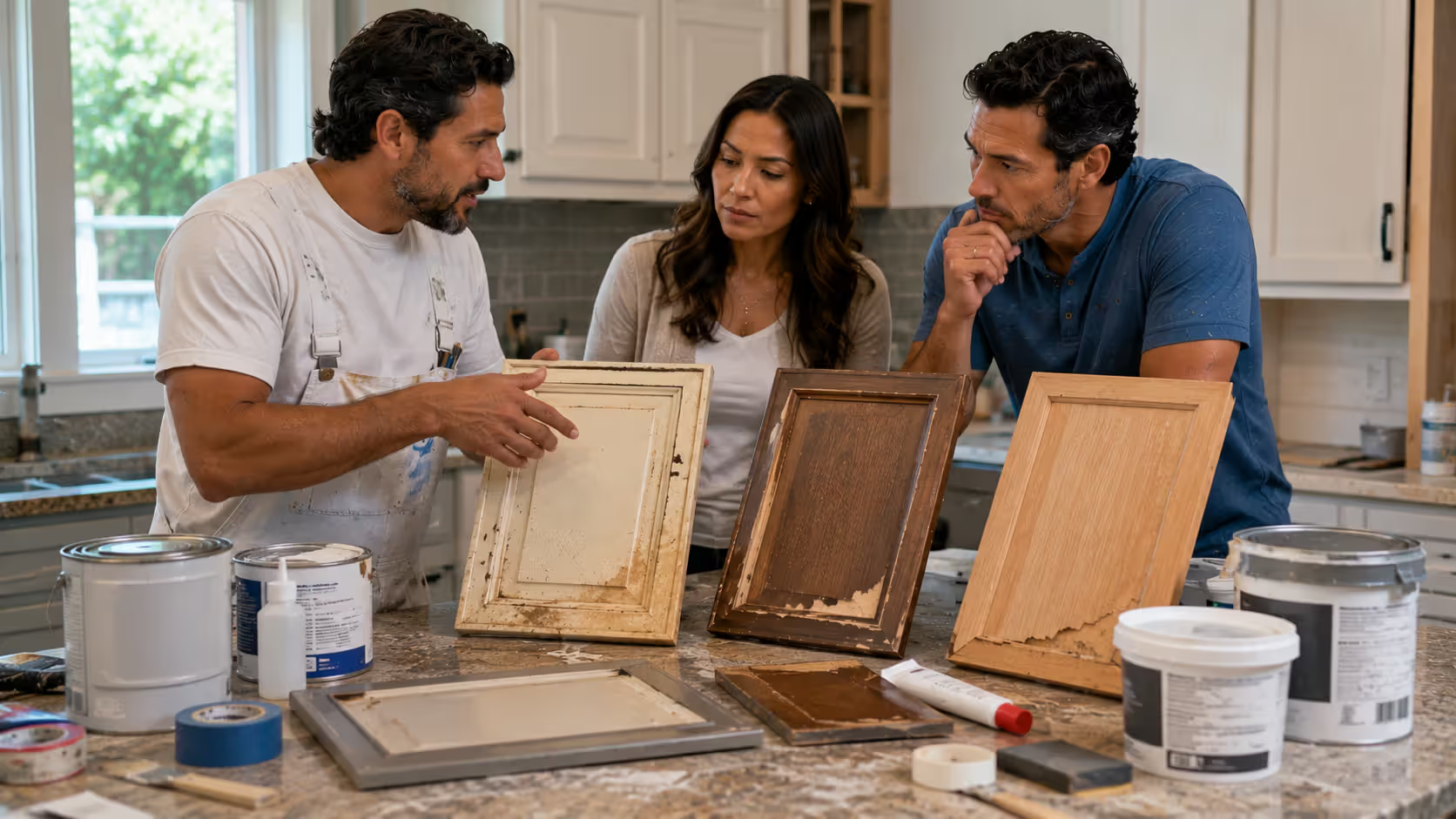
Solid wood cabinets are straightforward to paint. Oak, maple, cherry, hickory—they all accept paint well after basic cleaning and light sanding.
MDF (medium-density fiberboard) requires more attention. Sure, the surface is smooth, but it's also incredibly porous. You'll need excellent primer and likely an extra coat of paint. This bumps professional quotes by $500-$1,000.
Laminate or thermofoil creates real challenges. Paint struggles to stick to these slick surfaces without aggressive prep—chemical deglossers, specialty bonding primers, extra sanding. Some contractors refuse these jobs entirely. Others tack on 25-40% to their standard rates.
Existing condition rivals material importance. Built-up grease, water damage, or peeling veneer demands extra prep time. Each problematic door might need wood filler, extensive sanding, or replacement. That's an additional $50-$100 per door.
I see this pattern constantly: hidden damage appears once work begins. Set aside a 10-15% contingency for surprises.
Author: Caleb Norton;
Source: johnhranec.com
Kitchen Size and Cabinet Count
How do contractors actually price your job? They count every single door, drawer face, and cabinet box—not just your kitchen's square footage. A galley kitchen crammed with twenty small cabinets will cost more than an open-plan kitchen with ten large units, even if both rooms measure 120 square feet.
Glass-front upper cabinets cost less since you're only painting frames. Cabinets with raised panels, intricate molding, or decorative details take longer and cost more. Flat-panel (slab-style) doors are cheapest to paint.
Cabinet boxes matter too. Some quotes include interior painting, others don't. Adding interior painting increases costs 30-40% but makes a huge difference when you open doors.
Paint Type and Finish Quality
Cabinet paint needs to withstand moisture, grease, and constant handling. Regular wall paint won't cut it.
Oil-based options run $45-$70 per gallon. They're extremely tough with a smooth finish, but drying takes forever and the smell is brutal. Many painters have abandoned it due to VOC regulations.
Water-based acrylic latex alternatives cost $35-$60 per gallon. Modern versions match oil-based durability while drying faster and cleaning up easier. Most professionals default to this now.
Specialized cabinet formulas like Benjamin Moore Advance or Sherwin-Williams ProClassic run $50-$80 per gallon. These products are engineered specifically for horizontal surfaces with self-leveling properties that minimize brush strokes.
What about sheen? Semi-gloss wipes clean easily but shows surface imperfections. Satin hides flaws better while still being scrubbable. High-gloss looks stunning in photos but reveals every ding and scratch. Matte finishes look contemporary but show wear quickly.
An average kitchen needs 2-3 gallons of paint plus 1-2 gallons of primer. Cheap out here and you'll watch cabinets chip within twelve months.
Labor and Location Factors
Labor represents 65-75% of total costs. Experienced cabinet specialists charge more than general handymen but work faster and deliver superior results.
Where you live creates massive price swings. That same kitchen project costs $3,000-$6,000 in the Midwest and South. Mountain West states run $3,500-$7,000. Northeast homeowners pay $4,500-$8,500. West Coast residents face $5,000-$10,000.
When you schedule matters too. Painters often discount November through February work when business slows. You might save 15-20% by scheduling winter projects.
Cabinet Types and Their Impact on Renovation Costs
Your cabinet type—whether existing or planned—significantly influences painting costs and renovation strategy.
| Cabinet Type | Typical Cost | Renovation Considerations | Painting Cost Impact |
| Stock | $100-$300 per linear foot | Factory-made standard sizes, limited options, available immediately | Simplest to paint—basic construction with fewer details requiring attention |
| Semi-Custom | $150-$650 per linear foot | Adjustable dimensions, superior materials, expanded style choices | Requires more time—higher-quality construction justifies the investment |
| Custom | $500-$1,500+ per linear foot | Built to exact specifications, premium woods, unlimited design freedom | Most expensive—intricate details demand meticulous attention |
Stock options arrive factory-produced in predetermined dimensions. They typically use particleboard with wood veneer or MDF doors. These paint adequately when in decent shape, but lower-quality construction means they might not justify painting if they're over 15-20 years old.
Mid-range semi-custom options provide adjustable sizing and better-quality materials. You'll find solid wood frames with higher-quality MDF or plywood. These are excellent painting candidates since the underlying structure is solid enough to warrant the investment.
High-end custom options feature premium construction with solid wood or top-grade plywood. If you have custom cabinets, painting almost always beats replacing—the bones are too good to discard.
Wood vs MDF Considerations for Painting
Solid wood cabinets (maple, oak, cherry, hickory) are ideal for painting. Natural grain shows through paint, which some people embrace and others dislike. Oak's pronounced grain is especially divisive—you'll either love it or spend extra on grain filler.
MDF doors provide perfectly smooth surfaces without grain. They're popular for sleek, modern aesthetics. But here's the catch: MDF weighs significantly more than wood doors of the same size. More importantly, moisture exposure causes irreversible damage—water creates permanent swelling and bubbling that no amount of paint can conceal.
Plywood boxes with MDF doors combine advantages—durable structure with smooth paintable surfaces. This combination appears frequently in semi-custom cabinets.
Here's what surprises people: cabinet door style matters more than material for painting costs. Simple shaker-style doors cost the same to paint in wood or MDF. Raised-panel doors with intricate details require more time regardless of material.
Painting vs Refacing vs Replacing Kitchen Cabinets
Author: Caleb Norton;
Source: johnhranec.com
Three main options exist for updating worn cabinets. Each carries different costs, timelines, and appropriate scenarios.
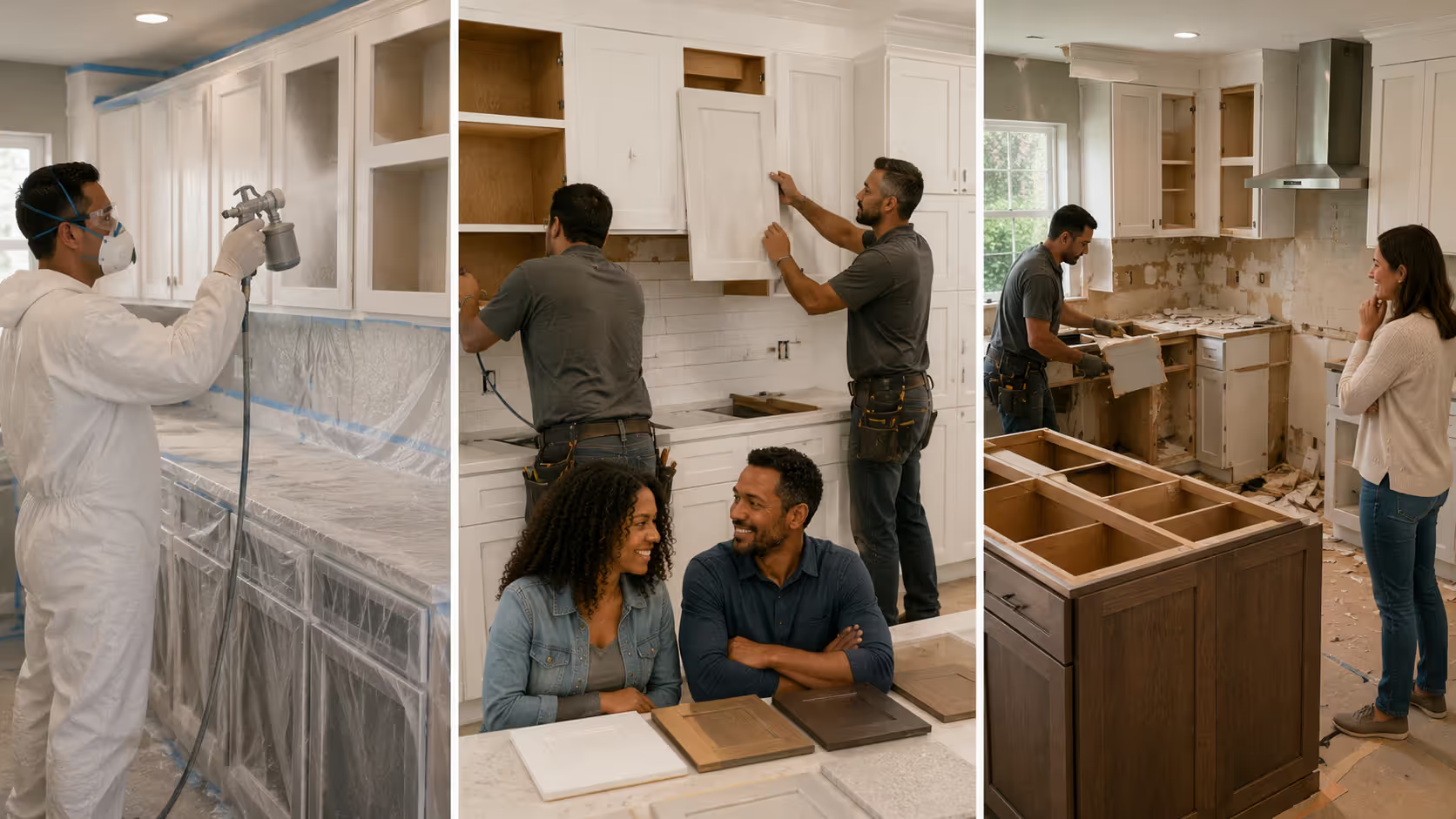
Painting involves removing all doors and drawer faces, prepping every surface, applying primer then multiple paint coats, and reinstalling with fresh hardware. You're looking at $3,000-$10,000 and about a week of work. Done right, it lasts 8-15 years.
Choose this when: Cabinet boxes are structurally sound, layout functions well, you like the door style, and you want a different color.
Refacing maintains your current cabinet boxes while replacing every door, drawer face, and applying new veneer to visible frames. Want to switch from oak to maple? Change door styles? This accomplishes both. Expect $8,000-$18,000, three to five days of disruption, and 15-20 years of life.
Choose this when: Boxes are structurally intact but doors are damaged, you want different door styles, or you're switching from oak to smooth finishes.
Replacement removes everything down to the studs and builds from scratch. Budget $15,000-$45,000+, plan for two to four weeks of work, and expect 20-50 years of durability depending on what you buy.
Choose this when: Cabinet boxes are damaged, layout is inefficient, you're changing the footprint, or cabinets are beyond salvaging.
What about return on investment? Painting typically recovers about 75-80% of what you spend when you sell. Refacing returns 60-70%. Full replacement returns 50-60% unless you're in high-end markets where updated kitchens are expected.
One consideration: painting is the only option you can easily redo in 5-10 years for a different color. Refacing and replacing are longer-term commitments.
Planning Your Kitchen Cabinet Renovation
Strategic planning prevents expensive mistakes. Start by evaluating actual needs versus wants.
Author: Caleb Norton;
Source: johnhranec.com
Layout and Functionality First
Before spending anything on paint, evaluate whether your current layout functions properly. Can you move comfortably between sink, stove, and refrigerator? Is there adequate counter space near each work zone?
If you're constantly fighting your kitchen layout, painting won't solve that frustration. You might need to relocate cabinets or change the configuration—which means replacement, not painting.
But if the layout works and you simply dislike the color or finish, painting is your most economical move.
Consider how cabinet arrangement affects painting costs. Painting upper and lower cabinets costs less than painting uppers, lowers, and a full wall of pantry cabinets. Each additional cabinet section increases the bill.
Hardware Selection and Upgrade Costs
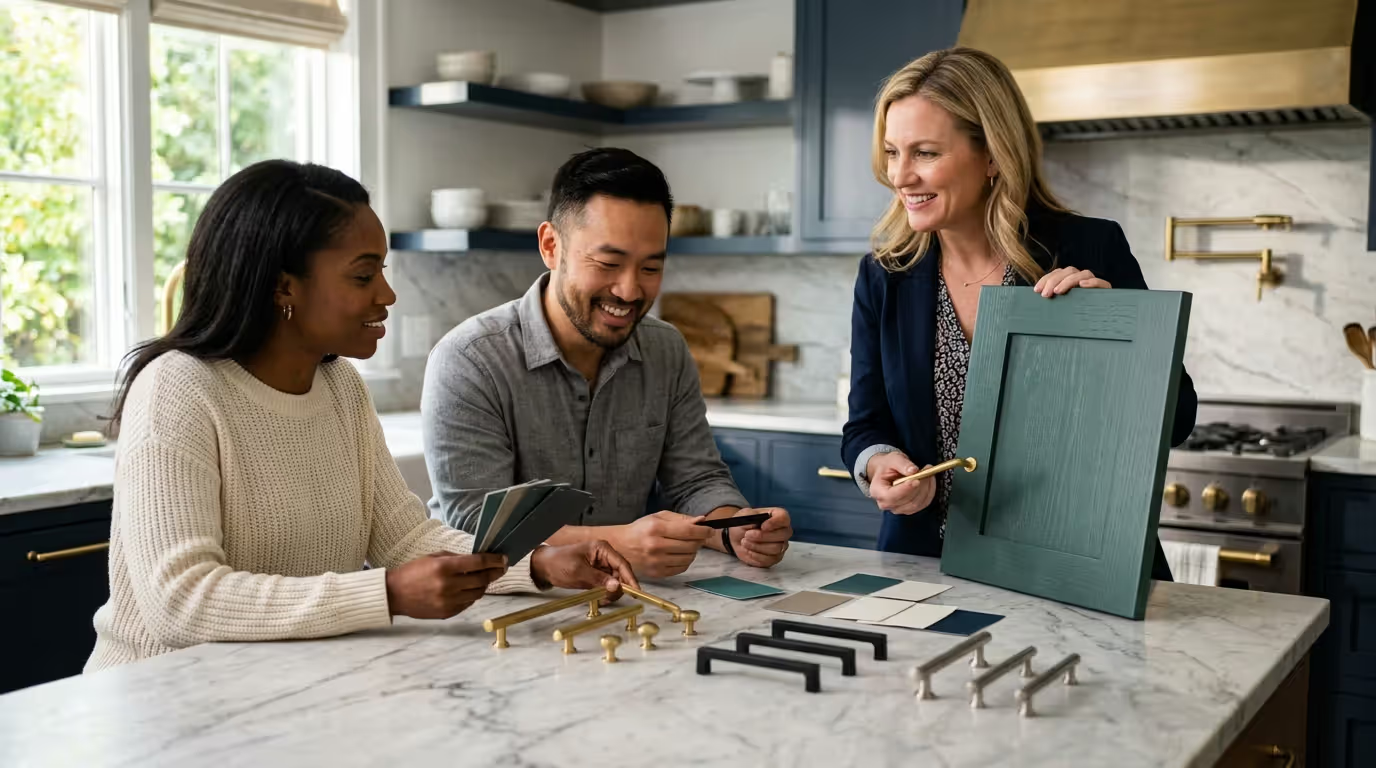
Fresh hardware transforms painted cabinets. Seriously, don't skip this step. Fresh paint with old, worn hardware looks incomplete.
Budget $3-$15 per pull or knob. Multiply by the number of doors and drawers—this adds up quickly. A kitchen with 30 cabinet fronts needs 30-60 pieces of hardware depending on your style choices.
Builder-grade knobs run $3-$5 each. Mid-range options land between $6-$12. Designer hardware starts at $15 and climbs past $50 for custom pieces.
Installation is usually DIY-friendly if you're keeping identical hole configuration. Switching from knobs to pulls, or changing hole spacing, requires drilling new holes and filling old ones. That's extra work potentially adding $200-$400 to professional quotes.
One common mistake: choosing hardware before finalizing paint color. Pick your paint first, then select complementary hardware. Matte black hardware works with most colors. Brass and gold tones pair better with warm paint colors. Chrome and nickel suit cooler tones.
Timing and Preparation Requirements
Author: Caleb Norton;
Source: johnhranec.com
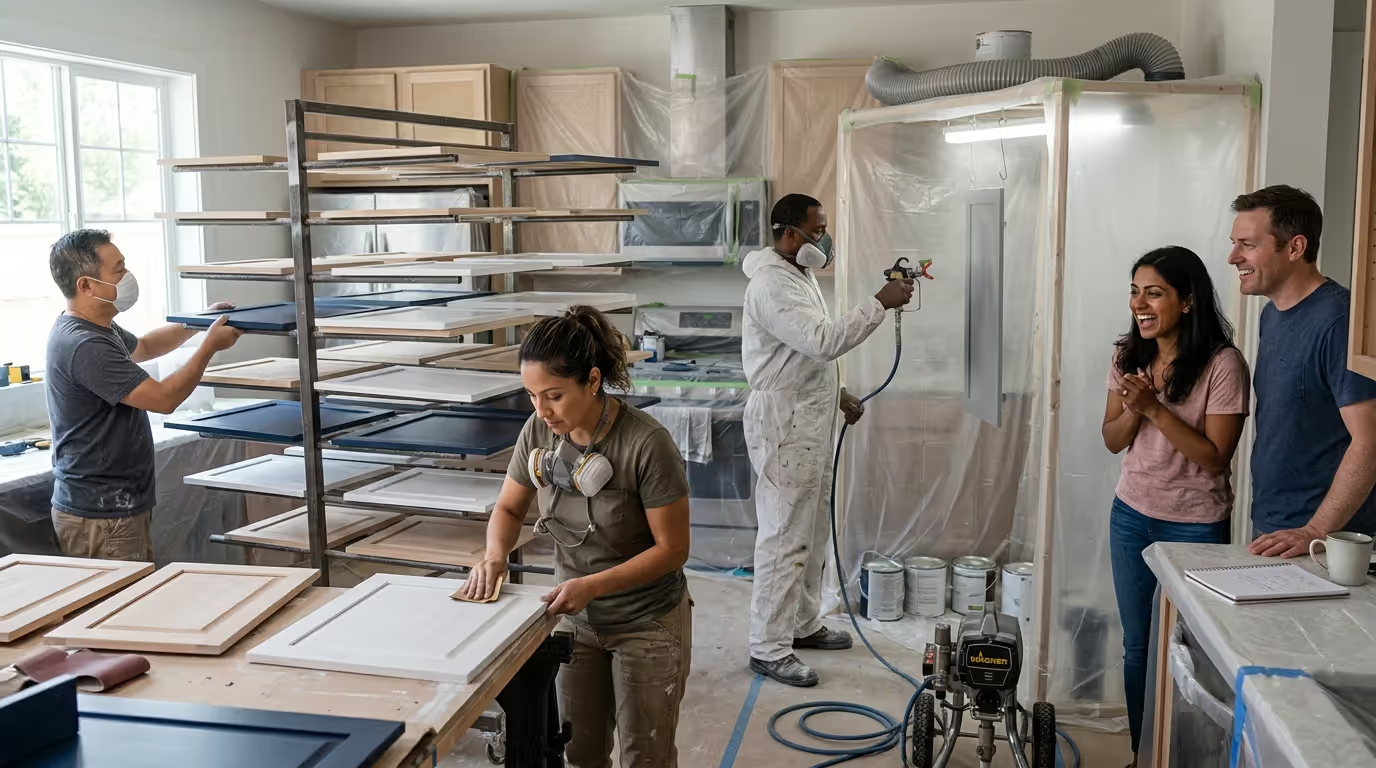
Cabinet painting isn't a weekend project. Professional jobs take 4-7 days start to finish. DIY projects stretch to 2-4 weeks when working evenings and weekends.
Your kitchen becomes unusable during the work. Here's the reality:
Day one and two involve removing everything, scrubbing off years of cooking residue, and sanding surfaces. Days three and four are for priming and applying initial color coats. Days five and six bring final coats and crucial drying time. Day seven means reassembling and installing hardware.
You'll need temporary kitchen arrangements. Stock up on paper plates, plan simple meals, and budget for eating out more than usual.
Mid-season months work best for cabinet painting—think April, May, September, and October. Comfortable temperatures and moderate humidity levels help paint cure correctly. Summer heat makes paint dry too quickly, creating lap marks. Winter cold extends drying time and can compromise finish quality.
How to Reduce Cabinet Painting Costs

Author: Caleb Norton;
Source: johnhranec.com
You can trim expenses without sacrificing quality through strategic decisions about where to save.
Handle your own prep work. Remove doors and hardware yourself. Clean all surfaces thoroughly with degreaser—TSP (trisodium phosphate) works excellently. Light sanding roughens the surface so paint adheres better. Contractors charge $1,000-$2,500 for prep work that you can knock out over a weekend.
Keep existing hardware if it's in decent shape. Give it a thorough cleaning with degreaser, or apply a fresh coat of spray paint to update the look. New hardware for an average kitchen runs $200-$800.
Paint only visible surfaces. Cabinet interiors can wait if money's tight. Focus your budget on doors, drawer fronts, and visible cabinet faces. You can always tackle interiors during a future project.
Select simpler colors. White, off-white, and light gray require fewer coats than dark colors. Dark paint shows imperfections more readily and needs more meticulous prep work, increasing labor costs.
Time your project wisely. Contact multiple painters during their slow months and request quotes. Winter pricing often comes in 10-20% below peak-season rates.
Purchase your own materials. Some painters mark up materials 20-30%. If they'll allow it, buy paint and supplies yourself at contractor pricing from local paint stores.
But here's where not to cut corners: don't skip primer, don't buy cheap paint, and don't rush drying time between coats. These "savings" lead to peeling, chipping, and a paint job that looks terrible within a year.
The practical option usually wins. If you're handy and have time, DIY can work. But if you're juggling work and family, paying professionals often makes more sense than stretching a project across multiple weekends.
FAQ: Cabinet Painting Cost Questions Answered