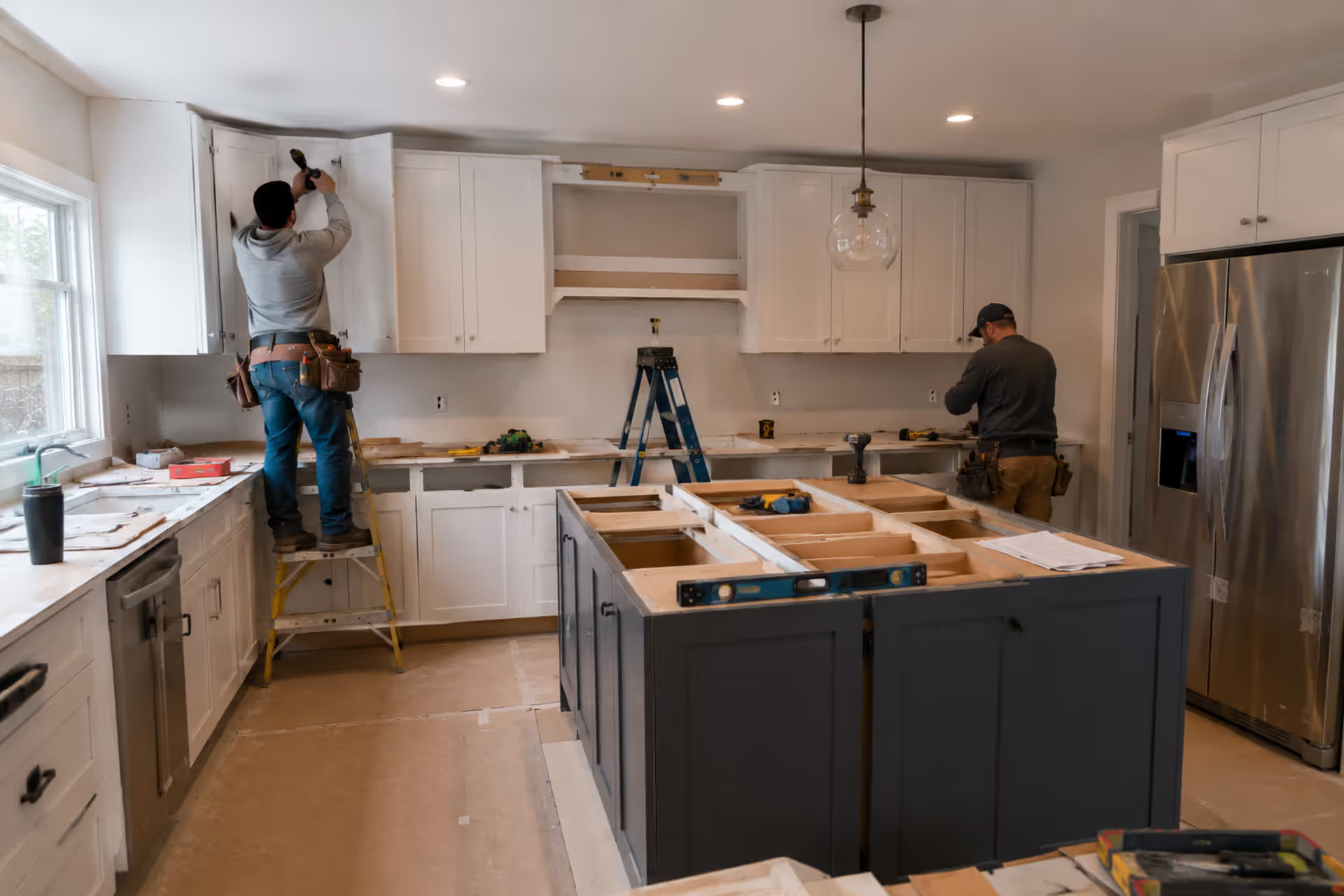
Do I Need a Permit to Remodel My Bathroom?

Content
Here's something most homeowners don't realize until they're knee-deep in renovation plans: that bathroom update you've been dreaming about might need official approval from your local building department. And here's the kicker—whether you get permits or skip them can affect your taxes years down the road when you sell your house.
I've watched countless homeowners launch bathroom projects thinking they'll just swap a few fixtures and call it done. Then they discover their contractor needs permits for half the work. Or worse, they finish everything without permits and face problems during their home sale three years later.
The permit question isn't just about following rules. It connects directly to how the IRS treats your renovation expenses, what you can claim on your taxes, and whether you'll have documentation when the tax man comes knocking.
When Bathroom Remodels Require Permits
Your local building department cares about three main categories of work: plumbing changes, electrical modifications, and anything touching your home's structure.
Let's start with plumbing—the biggest permit trigger in bathroom projects. Moving your toilet even six inches? You'll need a permit in most cities. Same goes for relocating sinks, adding new water lines, or reconfiguring drainage pipes. That popular tub-to-shower conversion everyone's doing? Definitely requires permits because you're messing with the drain configuration and possibly the water supply.
Electrical work follows similar logic. Adding outlets near the vanity, installing new light fixtures in different locations, or putting in heated floors all need permits and inspections. Now, if you're just replacing one light fixture with another in the exact same spot—same wiring, same junction box—most jurisdictions give that a pass. But the moment you're running new circuits or adding GFCI outlets (which building codes now require near water sources), you're in permit territory.
Structural changes? Those always need permits. Knocking down a wall to expand your bathroom into the hallway closet requires approval, even if it's not load-bearing. Adding windows, relocating doors, or cutting into floor joists for new plumbing—all of it needs official oversight.
The good news: purely cosmetic updates fly under the radar. Painting walls, replacing cabinet hardware, hanging new mirrors, installing towel racks, or updating shower curtains won't bring building inspectors to your door.
Here's where it gets murky. Replacing fixtures at their current locations exists in a gray zone. In Houston, you might swap out your entire vanity without permits. Try that in Portland, and you could need multiple approvals. Municipal codes differ wildly on this point.
Geography creates massive variation. I've seen rural counties where you can practically rebuild your entire bathroom without permits, while urban areas require approval for replacing a toilet. Some states impose strict statewide codes that override local preferences. Others let each municipality write its own rules.
One dangerous assumption I see repeatedly: homeowners trusting their contractor's claim that "we don't need permits for this." Some contractors avoid permits to save time or hide the fact they're unlicensed. But here's the reality—you, the property owner, carry the legal responsibility. When that home inspector discovers unpermitted work during your sale, it's your problem to solve, not your long-gone contractor's.
How Bathroom Renovation Permits Affect Your Taxes
Getting permits creates a paper trail that matters more than most people realize, especially for tax purposes down the road.
Think about your home's cost basis—that's your original purchase price plus any legitimate improvements you've made. When you eventually sell, the IRS calculates your taxable gain by subtracting this basis from your sale price. Every documented bathroom improvement increases your basis, potentially saving thousands in capital gains taxes.
The IRS doesn't technically require permits to claim improvements on your taxes. But permitted work gives you bulletproof documentation if you're ever audited. Those permit records, inspection approvals, and finalized certificates prove that work actually happened and met code requirements. Without permits, you're defending yourself with just receipts and photos—evidence that auditors routinely challenge.
Skipping permits creates problems beyond taxes. I know a homeowner in Denver who did a complete bathroom gut job without permits. When the city discovered it during a routine inspection for unrelated work, they forced him to tear everything out and start over—this time meeting current code requirements, which were more stringent than when he'd originally done the work. He essentially paid twice for the same bathroom.
Your homeowners insurance adds another layer of risk. Many policies exclude coverage for damage stemming from unpermitted work. That water leak from your unpermitted plumbing modification? You might be covering the entire repair bill yourself.
The documentation benefits extend beyond immediate tax considerations. If you later convert your primary home into a rental property, those permitted improvements become depreciable assets. You'll need that permit documentation to justify your depreciation schedule to the IRS.
Author: Olivia Hartwel;
Source: johnhranec.com
Tax Deductible Home Improvements for Bathrooms
Most homeowners expect their $25,000 bathroom renovation to generate a nice tax deduction. I hate to be the bearer of bad news, but if you live in the house, you can't write off that expense in the year you spend it.
The IRS treats bathroom improvements to your primary residence as capital additions that increase your cost basis. You won't see tax benefits until you sell the property—and even then, only if you have taxable gains exceeding the $250,000 individual or $500,000 married filing jointly exclusions.
This surprises people who've just dropped serious money on renovations. They're looking for something to offset that expense on their tax return, and it's just not there for personal residences.
Capital Improvements vs. Repairs: What the IRS Considers
The IRS draws a bright line between repairs and improvements, though that line gets blurry in practice.
Repairs keep things running as they currently are. You're fixing a leaky faucet, replacing broken toilet parts, regrouting existing tile, or patching water-damaged drywall. These maintain your bathroom's existing condition without adding value or extending its useful life.
Improvements make things better than before. You're replacing the entire plumbing system, installing new tile throughout, upgrading to high-end fixtures, or expanding the bathroom's footprint. These add value, extend useful life, or adapt the space for different uses.
Why does this distinction matter? For rental properties, repairs give you immediate tax deductions against rental income. Improvements must be depreciated over 27.5 years. That's a huge difference in tax timing.
For your primary residence, both categories increase your basis, but the distinction becomes important if you later convert the house to a rental. Those improvements you made years ago start generating depreciation deductions once you're renting the place out.
The IRS uses a "betterment, adaptation, or restoration" test. Work that materially enhances your bathroom beyond its previous state, modifies it for substantially different purposes, or rebuilds it after deterioration typically qualifies as an improvement.
Here's a real-world example that illustrates the gray area: replacing a worn-out vanity with an identical model. Technically, you're maintaining function—suggesting it's a repair. But if you're upgrading materials or style significantly, it leans toward improvement territory.
Author: Olivia Hartwel;
Source: johnhranec.com
Most bathroom projects combine repairs and improvements in the same job. Maybe you're fixing a persistent leak (repair) while simultaneously renovating the entire space (improvement). You need to allocate costs properly between these categories. The plumber's charges for stopping the leak count as repairs. The new tile, vanity, and fixtures are improvements.
| Type of Work | How IRS Classifies It | Tax Treatment | Bathroom Scenario | What Documentation You Need |
| Fixing a leaking pipe | Repair | Immediate deduction for rentals only | Replacing a corroded pipe section | Invoice itemizing the repair work |
| Replacing all bathroom plumbing | Capital Improvement | Adds to basis; depreciate if rental | Complete repipe of bathroom water and drain lines | Full contractor invoice, permits, before/after photos |
| Repainting walls | Repair | Immediate deduction for rentals only | Repainting in same or similar color | Paint receipts and labor invoices |
| Full bathroom renovation | Capital Improvement | Adds to basis; depreciate if rental | New tile, vanity, toilet, shower system | Detailed receipts, permit records, signed contract |
| Replacing broken toilet | Repair | Immediate deduction for rentals only | Installing similar replacement model | Receipt showing comparable fixture |
| Upgrading to luxury fixtures | Capital Improvement | Adds to basis; depreciate if rental | High-end toilet, rainfall shower system | Invoice with product specifications |
Home Office Bathroom Renovations and Tax Benefits
Running a legitimate home office might—and I emphasize might—allow you to deduct a portion of bathroom renovation costs. But the IRS sets a high bar for home office qualifications.
Your workspace needs regular, exclusive business use as your principal place of business. You can't claim home office deductions just because you check work emails from your spare bedroom. The IRS requires dedicated space used consistently and exclusively for business.
Even with a qualified home office, you can't write off your entire bathroom renovation. Instead, you calculate what percentage of your home the office occupies and apply that fraction to indirect expenses.
Let's say your home office takes up 12% of your house's total square footage. You renovate a bathroom that serves your entire household, including the area where your office sits. You might claim 12% of the renovation cost as a home office expense—but only by treating it as a capital improvement subject to depreciation, not an immediate deduction.
Most tax professionals I've talked to recommend against claiming bathroom renovations under home office deductions unless the bathroom exclusively serves business purposes. The IRS scrutinizes home office claims intensely, and bathroom deductions raise red flags.
There's an exception worth mentioning. If you run a business where clients regularly visit your home—say you're a therapist with a home practice—and you renovate a bathroom specifically for client use, you've got a stronger case. Document the business purpose thoroughly and keep that bathroom separate from personal use.
Energy Efficient Bathroom Upgrades and Tax Credits
Energy-efficient renovations offer one of the few opportunities for immediate tax benefits on your primary residence. Federal programs provide tax credits for qualifying improvements, and bathrooms offer several possibilities.
The Energy Efficient Home Improvement Credit got extended with enhanced benefits through 2032, covering up to 30% of qualifying costs within annual limits. Here's what might apply to your bathroom:
Water-efficient toilets meeting WaterSense certification can qualify. You're looking for models that use no more than 1.28 gallons each time you flush—some newer dual-flush models use even less. The credit covers both the fixture cost and installation labor, subject to annual caps.
ENERGY STAR certified bathroom exhaust fans qualify too. Modern ventilation fans use roughly 70% less energy than older models while moving air more effectively. If you're replacing that loud, inefficient fan that's been rattling for years, you might qualify for a credit.
Tankless water heaters serving your bathroom could qualify if they hit specific efficiency benchmarks. Gas-powered units typically need a Uniform Energy Factor of 0.95 or higher. Electric models have different standards.
LED lighting generally doesn't qualify for federal credits, though many states and utility companies offer rebates. Check your local programs.
The annual credit caps matter significantly. For 2026, you're limited to $1,200 per year for energy property, with specific sublimits for different categories. Spending $8,000 on energy-efficient bathroom improvements doesn't get you a $2,400 credit—you're capped at the annual maximum.
Documentation requirements are strict. You need manufacturer certifications confirming products meet efficiency standards. Keep these with your tax records permanently. The IRS doesn't require you to submit them with your return, but you'll need them if you're audited.
State and local programs add complexity and opportunity. California offers additional rebates for water-conserving fixtures. Colorado credits greywater recycling systems. New York provides incentives for heat pump water heaters. Stacking these with federal credits maximizes your savings.
Here's a timing detail most people miss: energy credits apply in the year you start using the improvement, not when you pay for it. Buy a qualifying water heater in December 2025 but install it in January 2026? You claim the credit on your 2026 tax return.

Author: Olivia Hartwel;
Source: johnhranec.com
How Bathroom Renovations Impact Your Property Taxes
Property tax implications of bathroom projects vary dramatically depending on where you live. Some homeowners see zero increase. Others get hit with reassessments that substantially raise their annual tax bills.
Different municipalities follow different reassessment schedules. Some reassess annually. Others work on three-year or five-year cycles. California, thanks to Proposition 13, limits assessment increases to 2% yearly unless you sell the property or complete new construction.
Permitted improvements often trigger automatic reassessments. When you pull permits, that information typically flows to the assessor's office, eventually prompting a visit to evaluate how your improvements affect property value.
Adding bathrooms increases assessed value more than renovating existing ones. Converting a half-bath to a full bath with a shower typically generates larger assessment increases than updating fixtures in your existing full bathroom.
Timing can work in your favor. Completing renovations right after your area's assessment cycle might delay tax increases for a year or more. Finishing just before assessments means paying higher taxes immediately.
Some jurisdictions offer temporary exemptions for improvements. Texas allows homeowners to temporarily exempt increased value from certain improvements for one or two years. Research what your local area offers.
Here's a common misconception: skipping permits avoids property tax increases. Assessors conduct physical inspections and use aerial imaging technology. They notice new construction and major renovations. Getting caught with unpermitted work can trigger back taxes plus penalties.
The increase might be less dramatic than you fear. A $30,000 bathroom renovation doesn't raise your property taxes by $30,000. It increases your assessed value by some portion of that amount, and you pay your local tax rate on the increase. If your renovation adds $20,000 to assessed value and your rate is 1.1%, you're paying an extra $220 annually.
Documenting Your Bathroom Remodel for Tax Purposes

Author: Olivia Hartwel;
Source: johnhranec.com
Solid documentation protects your tax position and establishes your basis when you eventually sell. Start documenting before the first sledgehammer swings.
Take comprehensive photos. Shoot wide angles showing the entire bathroom and close-ups of specific features. Make sure your camera or phone date-stamps the images. After completion, photograph again from the same angles. This visual timeline proves the scope of transformation.
Save every single receipt. I mean everything—not just the major contractor invoices. Materials from Home Depot, specialty fixture purchases from that boutique showroom, design consultation fees, permit costs. Organize them chronologically in a dedicated file folder or digital system.
Permit documentation proves critical. Keep the application, approval notices, inspection records, and final sign-off certificate. These establish that work was legal and met code requirements. Store copies separately from originals—scan everything to cloud storage as backup.
Contractor agreements and invoices should detail the work performed. A receipt saying "bathroom work - $18,000" doesn't cut it. You need itemization: labor broken down by trade, materials listed specifically, fixtures identified by model, dates of service.
Payment verification matters equally. Canceled checks, credit card statements, bank transfer records—anything proving you actually paid. The IRS wants evidence of real financial transactions, not just invoices.
Create a summary spreadsheet tracking everything. Categorize expenses: plumbing, electrical, tile work, fixtures, labor. Calculate totals for each category. Include permit numbers and dates. This summary makes tax preparation easier and provides quick reference during audits.
For rental properties, documentation becomes even more critical. You must separate repairs from improvements, allocate expenses across different depreciation categories, and track depreciation schedules over decades. Property management software that automatically categorizes expenses saves enormous headaches.
Keep these records for at least seven years after selling the property. The IRS can audit returns up to three years after filing (six years for substantial underreporting), but you might need documentation decades later during basis disputes.
The biggest mistake I see homeowners make is treating renovation receipts like grocery receipts—keeping them for a few months then tossing them. Those bathroom renovation records can cut your capital gains taxes by tens of thousands when you sell. I've watched clients lose $40,000 in basis increases because they couldn't prove improvements they'd completed a decade earlier. Keep everything, digitize everything, store it in multiple locations.
— Elena Martinez
Common Mistakes When Claiming Bathroom Renovation Deductions
Homeowners make the same tax errors repeatedly with bathroom renovations. Avoiding these mistakes prevents audit headaches and preserves your tax savings.
Trying to deduct personal residence improvements as current-year expenses tops the list. You can't write off your primary home's bathroom renovation on this year's return unless it qualifies for specific credits like energy efficiency programs. Yet taxpayers attempt this constantly, leading to rejected returns or audit adjustments.
Misclassifying improvements as repairs happens frequently with rental properties. Landlords prefer immediate deductions, creating temptation to label complete renovations as "maintenance." The IRS recognizes this pattern instantly. Replacing everything in a bathroom constitutes an improvement—period. Depreciate it over 27.5 years.
Missing energy credit deadlines or documentation requirements frustrates many homeowners. You bought that WaterSense toilet but never got the manufacturer's certification statement. Now you can't claim the credit. Or you missed the "placed in service" timing and claimed it on the wrong year's return.
Skipping permits to save money backfires during home sales. The buyer's inspector discovers undocumented work. Suddenly you're negotiating price concessions, paying for retroactive permits, or even removing and redoing work to current code. That $600 saved on permits becomes a $6,000 problem.
Inadequate cost allocation between repairs and improvements creates complications. Your contractor's invoice lumps everything together. You need to separate the emergency pipe repair from the renovation expenses. Without proper division, you risk either missing legitimate deductions or claiming expenses incorrectly. Ask contractors to itemize invoices whenever repair and renovation work happen simultaneously.
Another issue: homeowners forgetting to include permit fees, design consultations, dumpster rentals, and material delivery charges in their basis calculations. These "secondary" expenses still count as part of the total improvement cost and can add up to thousands of dollars over a major remodel.
People also lose documentation after refinancing, moving, or changing accountants. Digital backups solve this problem. Scan every document, save copies to cloud storage, and keep organized folders by project year. Paper receipts fade surprisingly fast, especially thermal printer receipts from hardware stores.
Homeowners converting primary residences into rentals often overlook prior renovation costs entirely. That bathroom remodel you completed five years ago still matters because it contributes to the property's depreciable basis once converted into income-producing property. Missing those historical costs means losing deductions every single year afterward.
FAQ