How Much Does Flooring Cost?

Content
Last month I watched my neighbor Karen write a check for $18,000 to replace every floor in her 1,400-square-foot ranch. Same week, another homeowner three doors down finished a similar-sized project for $6,200. Both homes turned out beautiful—you'd never guess one cost nearly triple the other just by walking through.
What separated these projects? Karen went with engineered hardwood throughout. Her neighbor made smarter choices: real wood in the entryway and living room where everyone sees it, then switched to quality vinyl in bedrooms and hallways where nobody's really looking.
Walk into any flooring showroom and you'll find price tags spanning $2 vinyl planks up to $22-per-square-foot exotic hardwoods. Most people assume higher prices equal better results. That's not how this works. I've seen $15 marble tiles crack in family kitchens within two years, while $6 porcelain in the same conditions still looks factory-fresh after a decade. Three kids and two dogs will destroy expensive materials faster than budget options if you pick wrong.
The difference between smart renovators and those with regrets? Understanding that your kitchen needs completely different flooring than your bedroom. Kitchens demand waterproof, indestructible surfaces. Bedrooms need comfort and noise reduction. Pick materials based on actual room demands rather than price tags, and you'll get floors that perform beautifully without draining your renovation budget.
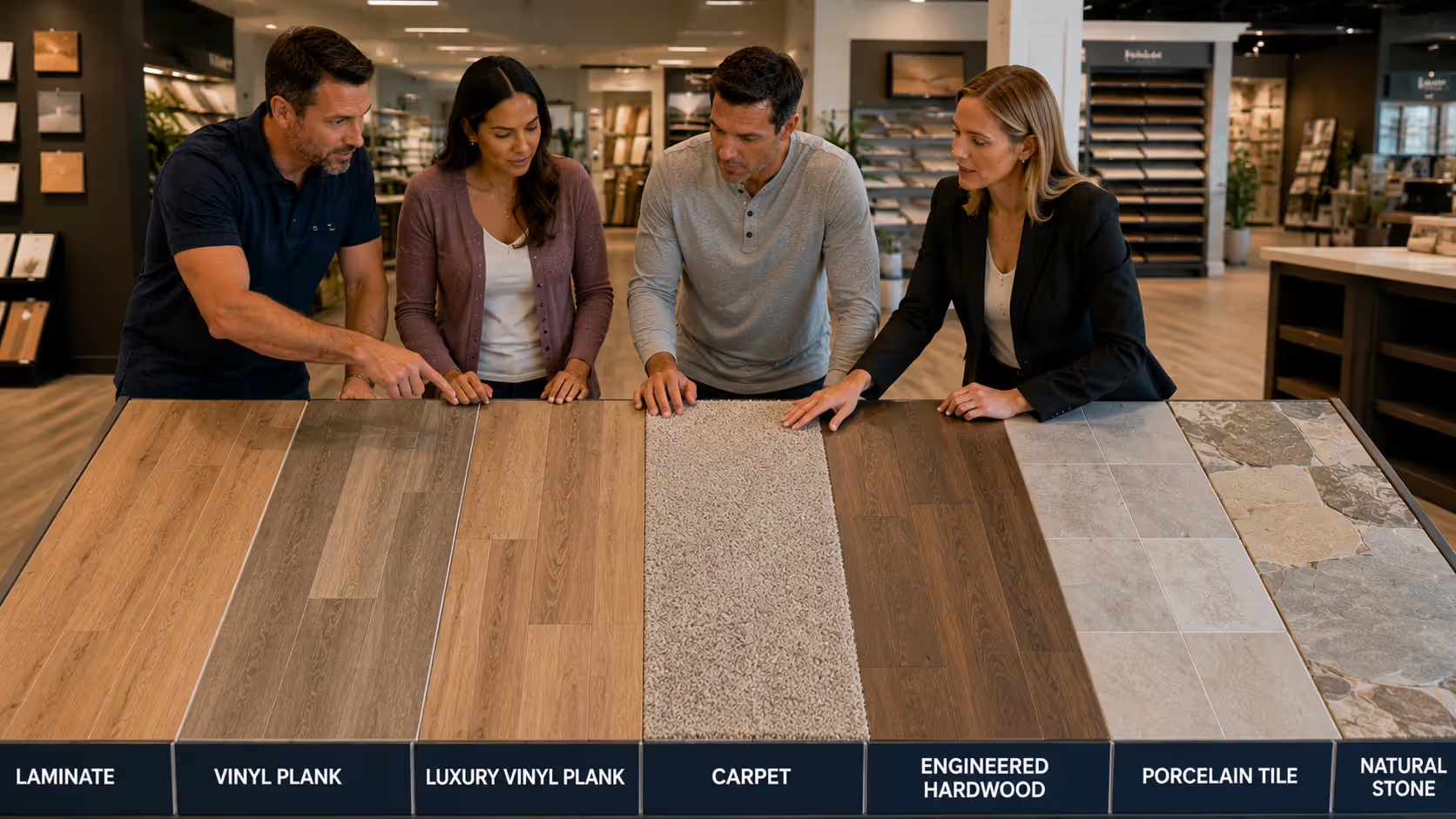
Average Flooring Costs by Material Type
These prices come from actual 2026 contractor invoices—materials plus labor included. Your local market will vary, sometimes dramatically.
Laminate flooring: Most installations land between $3–$8 per square foot completed. Today's laminate bears zero resemblance to that shiny, obviously-fake stuff from 2010. Run your hand across current products and you'll feel textured grain patterns that mimic real wood convincingly.
Standard vinyl plank: Expect $4–$10 per square foot installed. The click-together design eliminates messy adhesives, cutting installation time by 40% compared to glue-down versions. Waterproof cores mean spilled drinks won't destroy your investment.
Luxury vinyl plank (LVP): Finished installations cost $6–$14 per square foot. That extra thickness creates more substantial feel when you walk across it. Manufacturers back these with 15–25 year warranties compared to 10-year coverage on cheaper vinyl.
Carpet: Installed prices range $3–$12 per square foot. Basic polyester starts around $3. Mid-tier nylon hits $6–$8. Premium wool pushes past $12. Here's what salespeople won't emphasize—the padding underneath affects comfort and lifespan nearly as much as the carpet fibers themselves.
Engineered hardwood: Budget $8–$16 per square foot installed. You're getting genuine wood on top (usually 2–4mm thick) bonded to plywood layers underneath. This construction tolerates temperature swings and humidity changes better than solid planks, particularly crucial in climates with harsh winters and humid summers.
Solid hardwood: Plan on $10–$22 per square foot installed. Oak dominates the market (available in red and white), followed by maple and hickory. Exotic species like Brazilian cherry or Australian cypress command premium prices at the high end.
Ceramic tile: Figure $7–$15 per square foot installed. The tile itself only accounts for $2–$5 per square foot. Labor eats up most of your budget because proper tile installation demands genuine skill and careful attention.
Porcelain tile: Installed costs run $8–$18 per square foot. Porcelain's denser composition delivers superior freeze-thaw resistance and absorbs virtually no water compared to ceramic. Visually they look similar, but performance gaps become obvious in bathrooms and outdoor spaces.
Natural stone (marble, slate, travertine): You'll spend $15–$30+ per square foot installed. Every piece displays unique characteristics—either a selling point or an annoyance depending on your design preferences. Don't forget ongoing expenses for sealers and specialty cleaning products.
Most complete flooring replacements cost $10,000–$20,000. Homeowners keeping expenses under $8,000 typically use primarily laminate and basic carpet. Projects exceeding $25,000 usually involve hardwood and tile throughout most living spaces.
Author: Nathan Cole;
Source: johnhranec.com
What Drives Flooring Costs Up or Down
Material selection obviously impacts your bottom line, but four other factors swing final costs just as dramatically.
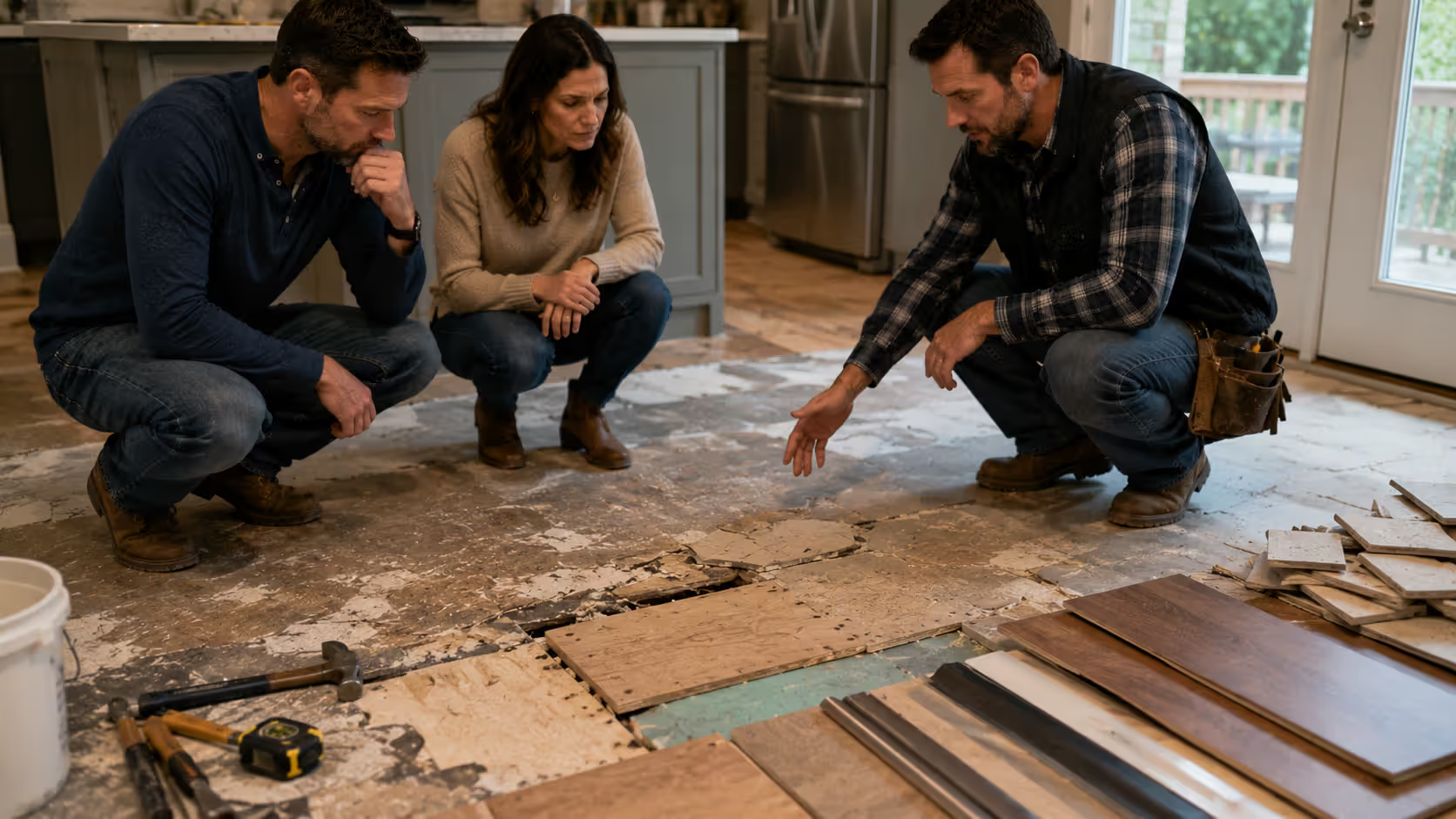
Subfloor condition separates straightforward installations from nightmare projects. Uneven concrete, water-damaged plywood, or structural problems can tack on $2–$5 per square foot before installers even touch your new flooring. These repairs take longer than the actual floor installation, which explains the labor charges. Ignore subfloor issues and you'll hear squeaks within weeks, feel soft spots within months, and watch your new floor fail within years.
Room layout significantly impacts labor efficiency. Installing 500 square feet in one rectangular room costs less per square foot than spreading that same area across five small bedrooms. Every doorway needs a transition strip. Every corner demands precise cuts. L-shaped rooms, angled walls, and built-in furniture slow down installation crews and increase labor charges proportionally.
Installation patterns dramatically affect labor time. Straight plank installation in a rectangular room takes half the time of diagonal layouts or herringbone patterns. Want custom borders or medallion inlays? That's specialty work commanding 30–50% premiums over standard installation. Stairs create another complexity level—expect $40–$80 extra per step for carpet or hardwood.
Regional labor markets vary wildly. New York and San Francisco installers charge $6–$8 per square foot for labor alone. Small-town contractors in the Midwest might charge $2–$3 per square foot for identical work. Materials cost roughly the same everywhere thanks to national suppliers, but labor can double your project budget depending on your zip code.
Existing flooring removal creates expenses most people forget during initial planning. Pulling up carpet costs $1–$2 per square foot. Tile glued directly to concrete? That's $2–$3 per square foot and requires jackhammers or specialized grinders. Some installers include removal in their quotes. Others charge separately. Clarify this before signing contracts.
The pattern repeats across every flooring project: homeowners budget for materials, then act shocked when installation, prep work, and extras inflate costs by 50–80%. Build a 20% buffer for unexpected subfloor problems and you'll avoid unpleasant mid-project surprises.
Author: Nathan Cole;
Source: johnhranec.com
High-End Flooring Materials Worth the Investment
Certain rooms justify premium materials. Others absolutely don't. The distinction comes down to traffic patterns, visibility to guests, and long-term value calculations.
Solid Hardwood and Engineered Wood
Real wood makes financial sense in spaces that define your home's character while enduring daily abuse. Entryways, living rooms, dining rooms, and main hallways benefit most from this investment.
Solid hardwood accepts multiple refinishing cycles—sand it down and restain it six or seven times before you reach the tongue-and-groove joints. That translates to 75–100 years of service life with proper maintenance. Oak remains most popular (available in red and white varieties), maple works well in contemporary designs, and hickory offers exceptional hardness for high-traffic areas.
Engineered hardwood delivers most benefits at roughly 70% of solid wood's cost. The top layer is genuine wood bonded to plywood layers underneath. Once installed, it looks identical to solid hardwood. The plywood core provides dimensional stability, making it suitable for basements or homes with radiant heat systems. Depending on how thick that top wood layer is, you might refinish it once, maybe twice if you're lucky.
Avoid wood entirely in bathrooms, laundry rooms, and mudrooms. Water destroys wood floors regardless of finish quality. Even engineered versions with moisture-resistant cores eventually fail under standing water exposure.
Author: Nathan Cole;
Source: johnhranec.com
Porcelain and Natural Stone Tile
Tile belongs in wet areas and spaces where durability trumps comfort underfoot. Kitchens, bathrooms, entryways, and mudrooms represent prime candidates.
Porcelain's density makes it harder than ceramic, and lower porosity means water can't penetrate the surface. It survives freeze-thaw cycles without cracking, making it suitable for outdoor patios and unheated spaces. Large-format tiles—24×48 inches or bigger—create seamless modern aesthetics with minimal grout lines to scrub. Rectified edges allow tight grout joints that nearly disappear.
Natural stone brings visual character that manufactured products can't replicate. Marble slabs display unique veining patterns. Slate offers texture and color variation. Materials like travertine feature organic pitting and surface irregularities that create distinctive rustic character. The tradeoff? Maintenance demands—stone requires annual or biannual sealing, and acidic spills permanently etch the surface.
Installation costs for tile frequently exceed material costs. Proper waterproofing membranes, thinset application, and grout work require genuine expertise. Cheap tile installed perfectly looks better than expensive tile installed poorly. Never economize on the installer.
Luxury Vinyl Plank (LVP)
LVP occupies the sweet spot between performance and affordability for many homeowners. It mimics hardwood or tile convincingly while costing less and handling moisture far better.
Current-generation LVP uses photographic imaging and embossed textures that align with printed grain patterns. Wear layer thickness determines longevity—12-mil for normal residential traffic, 20-mil for heavy-use areas or commercial applications. Thicker products feel more substantial when you walk across them.
The waterproof core provides genuine 100% water resistance, not marketing-speak "water-resistant" claims. Spill an entire bucket and it won't damage the floor. That makes it perfect for basements prone to dampness, bathrooms, kitchens, and homes with pets who have occasional accidents.
The limitation? Perception. It's still plastic. Real estate agents will tell you it doesn't boost resale value the way hardwood does. But for rental properties, vacation homes, or families with young children and dogs, practical benefits outweigh prestige factors.
The biggest mistake I see is homeowners choosing flooring based solely on the showroom sample. You need to consider the entire lifecycle—installation, maintenance, and how it'll look in five years with your actual lifestyle. Sometimes the budget option is the smarter long-term choice, even if you can afford more.
— Mitchell Sarah
Budget-Friendly Flooring That Looks Expensive
Several affordable materials have become so convincing they fool experienced contractors on first glance. Success depends on knowing which ones deliver visual impact without premium price tags.
Modern laminate bears zero resemblance to the shiny, obviously-fake products from two decades ago. Current products use embossed textures synchronized to printed wood grain. Hand-scraped finishes and wire-brushed surfaces add three-dimensional depth. Premium laminate costs $2–$3 per square foot in materials while mimicking hardwood that sells for $8–$10.
The giveaway appears at cut edges and transitions. Laminate can't be refinished, and the fiberboard core is obviously not wood if someone examines exposed edges. But once installed with matching trim and proper transitions, most visitors can't distinguish it from genuine hardwood at normal viewing distances.
Standard vinyl plank provides similar aesthetics to LVP at half the cost. Differences come down to thinner wear layers (6–8 mil versus 12+), less sophisticated textures, and shorter warranties. In bedrooms or home offices with light traffic, those compromises don't affect daily life.
Porcelain tile imitating natural stone costs $3–$6 per square foot versus $10–$20 for actual marble or slate. Digital printing technology creates realistic veining and color variation. Some manufacturers add subtle texture mimicking natural stone's surface irregularities. You skip maintenance headaches—no sealing required, no etching from acidic cleaners.
Carpet tiles work surprisingly well in bedrooms and home offices. They cost $2–$4 per square foot, install easily (many use peel-and-stick backing), and individual tiles can be replaced if one gets stained or damaged. Once installed, they look like wall-to-wall carpet but offer flexibility traditional broadloom can't match.
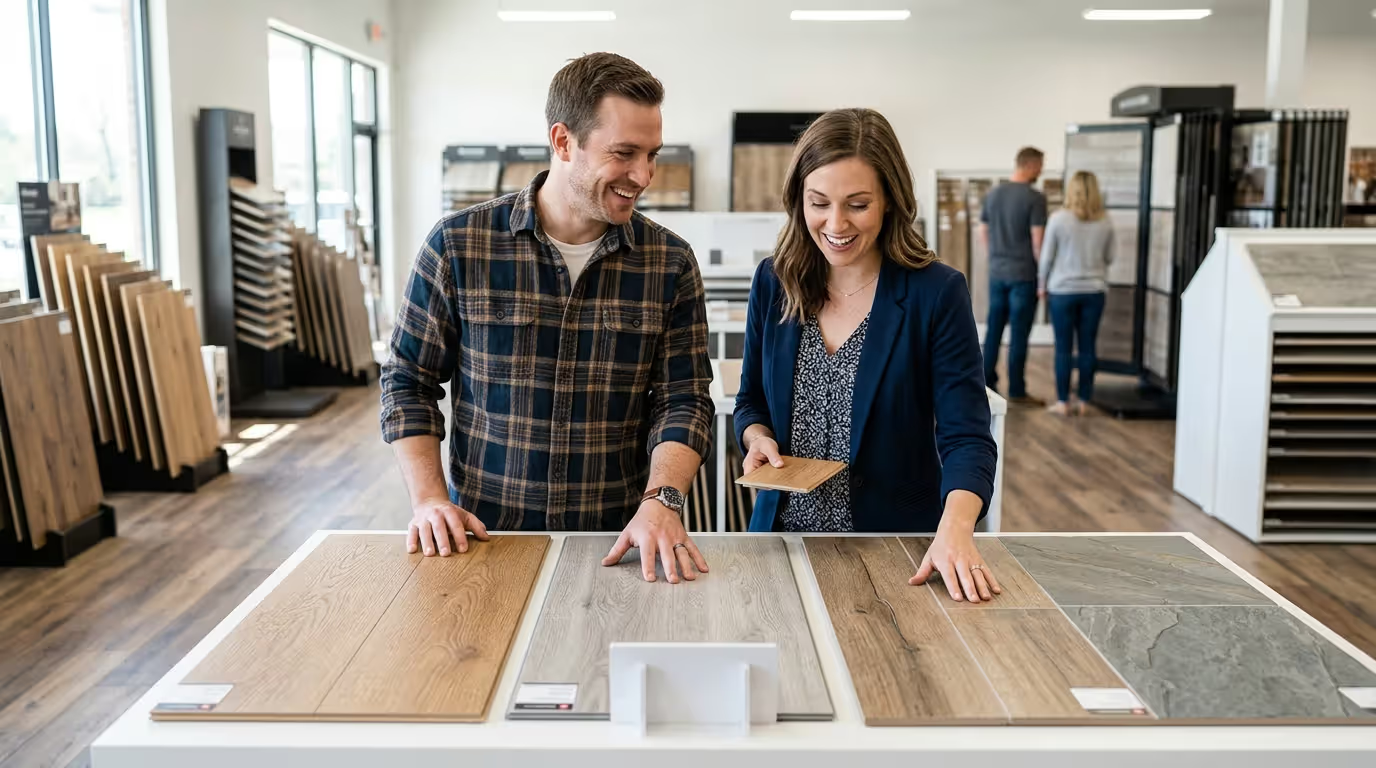
The trick with affordable materials? Select products with realistic variation. Real wood and stone show natural inconsistencies. Look for flooring with at least 10–15 different plank or tile designs in each carton. Perfectly uniform patterns scream "fake" from across the room.
Author: Nathan Cole;
Source: johnhranec.com
Where to Save on Flooring Without Sacrificing Quality
Strategic cost-cutting means matching materials to actual room requirements instead of defaulting to premium products everywhere.
Bedrooms rarely justify expensive flooring. They see minimal foot traffic, zero moisture exposure, and guests spend little time evaluating them. Basic carpet, standard vinyl plank, or entry-level laminate performs perfectly well. You're saving $3–$5 per square foot compared to hardwood with zero functional compromise. That's $600–$1,000 saved on a typical 200-square-foot bedroom.
Closets need nothing fancy. Builder-grade carpet or basic vinyl does the job. Nobody evaluates your home based on closet floors. Some homeowners leave existing closet flooring untouched even when replacing everything else.
Basements demand waterproof materials but not expensive ones. Standard vinyl plank or basic LVP makes more sense than hardwood or carpet in below-grade spaces. Even finished basements with good drainage systems experience humidity fluctuations. Why risk wood in an environment working against it?
DIY installation cuts costs by 40–60% on labor. Floating floors—laminate, engineered hardwood, and vinyl plank—use click-lock systems that genuinely work for DIY installation. You need a miter saw, tapping block, spacers, and patience, but the process is straightforward. Tile and solid hardwood are different animals—those require specialized tools and years of experience. Botched DIY tile work looks terrible and can cause water damage behind walls.
Builder-grade materials work fine in low-visibility spaces. The hallway leading to bedrooms, the laundry room, or the area under your dining table don't need premium finishes. Save your budget for spaces people actually notice and interact with daily.
Here's something counterintuitive: choosing cheaper flooring sometimes frees up budget for better installation. A perfectly installed budget floor with clean transitions and tight seams looks better than premium material installed sloppily with visible gaps and uneven heights.
Flooring Upgrade Priority Guide for Your Renovation
When you can't afford replacing everything at once, this sequence maximizes both daily enjoyment and resale value.
Priority 1: Main living areas. Living room, dining room, and kitchen floors should coordinate visually. These spaces create your home's first impression and get used most intensely. They're also what buyers notice immediately during home tours. Hardwood or high-quality LVP pays dividends here. You're typically looking at 400–800 square feet, so even premium materials remain manageable budget-wise.
Priority 2: Entryway and main hallway. The floor people see when they walk through your front door sets expectations for the entire house. This is often just 150–300 square feet, which means you can afford premium materials without breaking the bank. Match or coordinate with your main living areas for visual flow.
Priority 3: Primary bathroom. If you're doing one bathroom, make it yours. Quality tile here improves your daily routine and adds resale appeal. Guest bathrooms can wait—they get occasional use and buyers expect to personalize them anyway.
Priority 4: Kitchen. Kitchens need durable, water-resistant flooring, but cabinets and countertops influence resale value more than floors do. Quality LVP or mid-grade porcelain tile performs excellently here without consuming your budget. Save expensive materials for more visible spaces.
Priority 5: Bedrooms. Comfort and quiet matter more than visual impact. Carpet or budget vinyl plank works perfectly well. Most buyers plan to replace bedroom flooring to match their furniture and personal style anyway, so your investment here doesn't translate to higher offers.
Priority 6: Secondary bathrooms and utility spaces. These are purely functional. Basic tile or vinyl gets the job done. Nobody judges homes based on laundry room floors or powder room tile patterns.
Last priority: Spaces you might change later. Unfinished basements, bonus rooms above garages, or areas where you're planning future renovations can wait. Don't install flooring you'll tear up in 18 months when you build that home office or convert the bonus room into a bedroom.
ROI considerations vary by market, but national averages show hardwood flooring recovers 75–85% of installation costs at resale. Carpet recovers 50–60%. Tile in bathrooms and kitchens recovers 60–70%. These figures assume professional installation and current design trends. Dated styles or poor installation quality tank these numbers.

Author: Nathan Cole;
Source: johnhranec.com
Common Flooring Cost Mistakes to Avoid
Skipping subfloor preparation costs more in the long run. That $2 per square foot you save by not leveling or repairing the subfloor turns into squeaky floors, visible dips, and premature wear within two years. Floating floors need flat surfaces within 3/16 inch over 10 feet. Tile requires even stricter tolerances—1/8 inch over 10 feet. Pay for prep work upfront or pay for reinstallation later.
Choosing style over durability in high-traffic areas backfires fast. That gorgeous but soft pine floor in your kitchen will show dents from dropped pans within months. High-gloss finishes reveal every scratch, footprint, and speck of dust. Families with kids, pets, or heavy daily traffic should lean toward matte or satin finishes and harder materials like porcelain, oak, or quality LVP.
Buying the cheapest material in the showroom often creates hidden replacement costs. Ultra-budget laminate with thin wear layers chips at the edges. Cheap carpet mats down after two years. Low-grade vinyl can fade near windows with direct sunlight exposure. Spending an extra $1–$2 per square foot on mid-range products frequently doubles the floor's lifespan.
Ignoring maintenance requirements causes regret later. Marble looks stunning in photos, but it stains from coffee, wine, and acidic cleaners. Dark hardwood shows dust constantly. Textured tile traps dirt inside grout lines. Before buying, ask yourself whether you're realistically willing to maintain that material every week for the next decade.
Mismatched flooring transitions make homes feel disjointed. Too many different materials and colors create visual clutter. Smart renovations usually stick to one or two primary flooring types throughout the house. Continuous flooring makes smaller homes feel larger and creates a more cohesive design flow.
Another common mistake is underordering materials. Flooring manufacturers produce products in batches called dye lots, and slight color variations happen between production runs. If you run short halfway through installation, matching the exact shade later can become impossible. Most contractors recommend ordering 10–15% extra for cuts, waste, and future repairs.
Timing also matters more than people realize. Installing floors before finishing messy renovations like painting, drywall work, or cabinet installation risks scratches and damage before you even move furniture in. Flooring should usually happen near the end of the renovation process, not the beginning.
FAQ