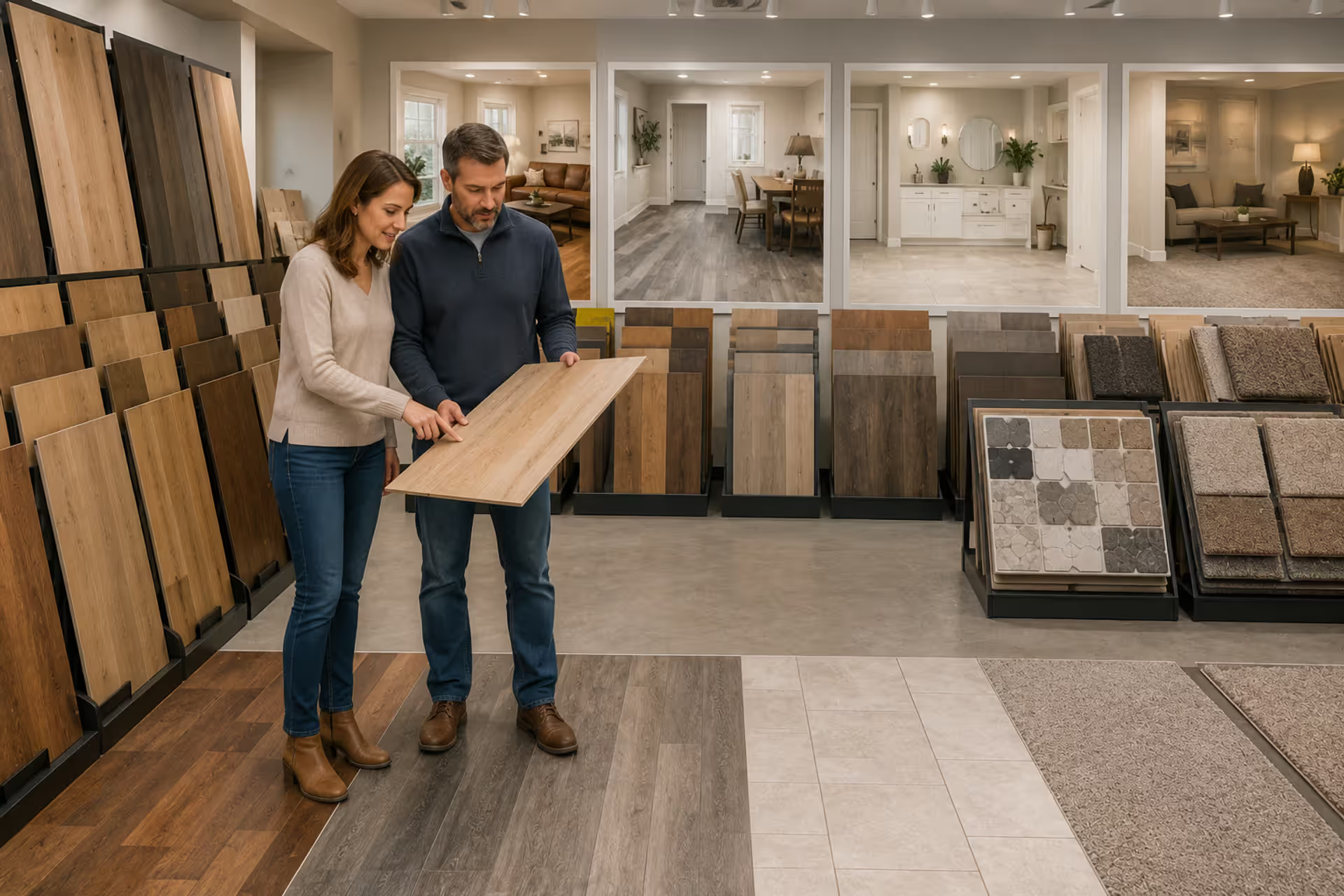
Homeowners comparing flooring options in a showroom
How Much Does It Cost to Replace Flooring?

Content
Replacing your home's flooring is one of those projects that can transform a space overnight. But it's also one that sends most homeowners straight to Google, calculator in hand. The truth? Costs vary wildly depending on what you choose and where you live. You might spend $3 per square foot for basic vinyl or push past $25 for premium hardwood with intricate installation. Let's break down exactly what you'll pay in 2026 and what drives those numbers up or down.
Average Flooring Replacement Costs by Material Type
Understanding how much new flooring costs starts with knowing your material options. Each type sits in its own price bracket, and installation complexity changes the final bill significantly.
Hardwood flooring remains the premium choice. Solid hardwood runs $6 to $12 per square foot for materials alone, with installation adding another $4 to $8. You're looking at $10 to $20 total per square foot. Engineered wood costs slightly less—around $8 to $15 installed—but still delivers that classic wood look.
Laminate offers the budget-friendly alternative. Material costs sit between $1 and $5 per square foot, with installation pushing the total to $3 to $8. It's improved dramatically over the past decade. Some products now mimic hardwood so well you need to touch them to tell the difference.
Carpet pricing depends heavily on quality. Basic builder-grade carpet starts around $2 per square foot installed. Mid-range options run $4 to $7. High-end wool or patterned carpets can hit $10 to $15 per square foot with pad and installation included.
The cost of flooring installation guide numbers below reflect typical 2026 pricing across most U.S. markets. Your actual costs might shift 15-20% based on your region.
| Flooring Type | Material Cost/Sq Ft | Installation Cost/Sq Ft | Total Cost/Sq Ft | Lifespan | Best For |
| Solid Hardwood | $6–$12 | $4–$8 | $10–$20 | 30–100 years | Living rooms, bedrooms, dining rooms |
| Engineered Wood | $4–$10 | $4–$6 | $8–$16 | 20–40 years | Any room, including basements |
| Ceramic Tile | $2–$7 | $5–$10 | $7–$17 | 15–20 years | Bathrooms, kitchens, entryways |
| Porcelain Tile | $3–$10 | $5–$12 | $8–$22 | 20–50 years | High-traffic areas, wet spaces |
| Vinyl Plank (LVP) | $2–$7 | $2–$5 | $4–$12 | 10–25 years | Kitchens, bathrooms, basements |
| Sheet Vinyl | $1–$4 | $2–$4 | $3–$8 | 10–20 years | Laundry rooms, utility spaces |
| Laminate | $1–$5 | $2–$4 | $3–$9 | 10–25 years | Bedrooms, living areas, rentals |
| Carpet | $1–$8 | $1–$4 | $2–$12 | 5–15 years | Bedrooms, family rooms, stairs |
One pattern I see most often: homeowners underestimate how much the middle-tier materials have improved. You don't always need the premium option to get great results.
Tile Flooring Installation Costs and Price Factors
Tile installation represents one of the more labor-intensive flooring options. That's where costs climb quickly.
Author: Sophie Langston;
Source: johnhranec.com
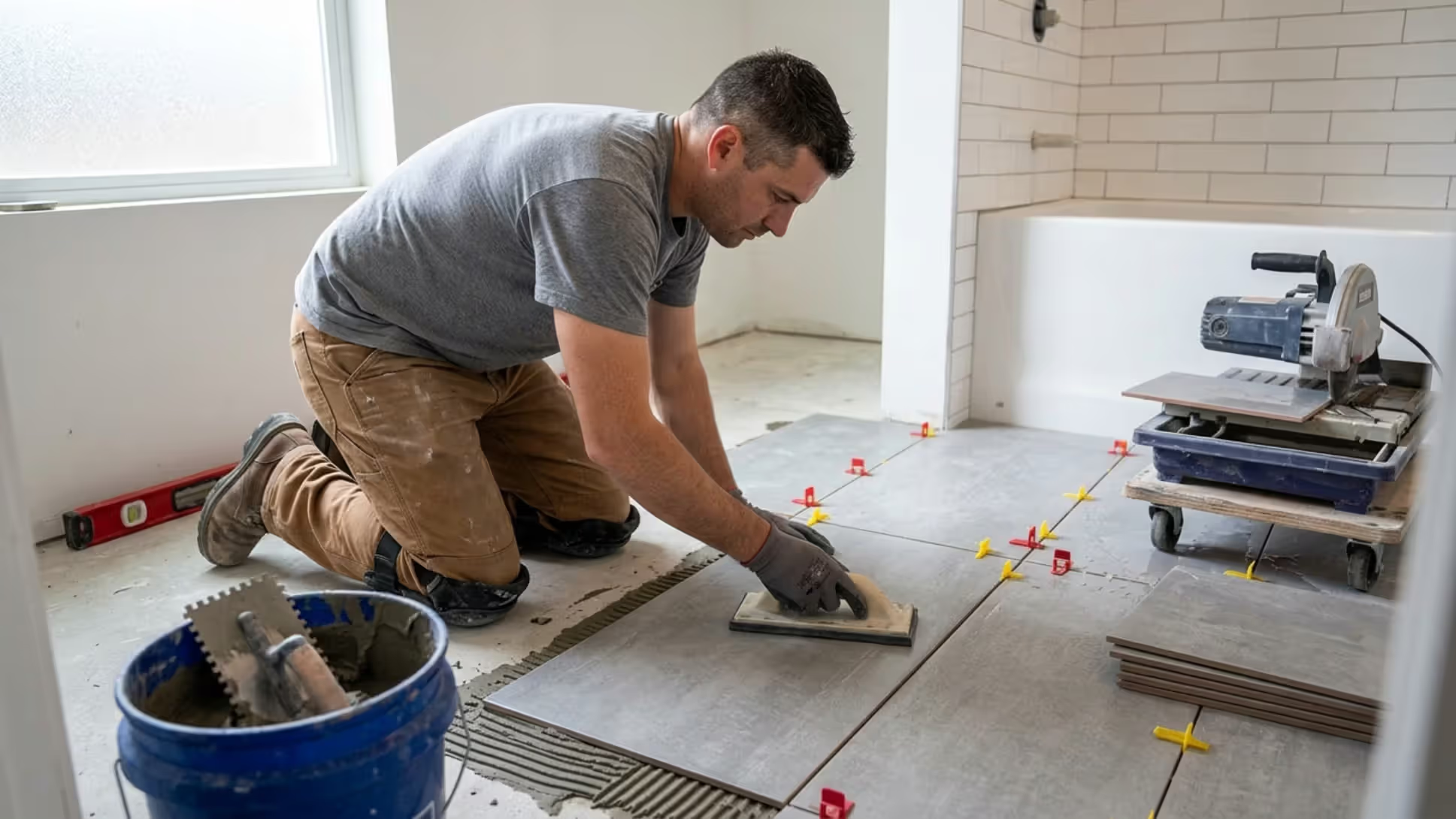
The cost of tile installation breaks down into several components. Material selection comes first. Basic ceramic tiles start at $2 per square foot. Porcelain tiles—denser and more durable—begin around $3 and can reach $10 or more for designer options. Natural stone tiles like marble or travertine push into the $8 to $20 range just for materials.
Labor tells the bigger story. How much does it cost to install tile when you factor in professional work? Expect $5 to $10 per square foot for standard installation. That assumes a straightforward layout on a level subfloor.
Complexity multiplies costs fast. A simple grid pattern costs less than diagonal layouts. Herringbone or chevron patterns? Add another $2 to $4 per square foot for the extra cutting and precision work. Mosaic tiles or intricate borders can double labor costs.
Subfloor preparation often catches people off guard. Tile needs a perfectly level, stable base. If your subfloor has dips, cracks, or flex, you'll pay $2 to $5 per square foot for leveling compound and reinforcement. Some older homes need complete subfloor replacement before tile can go down.
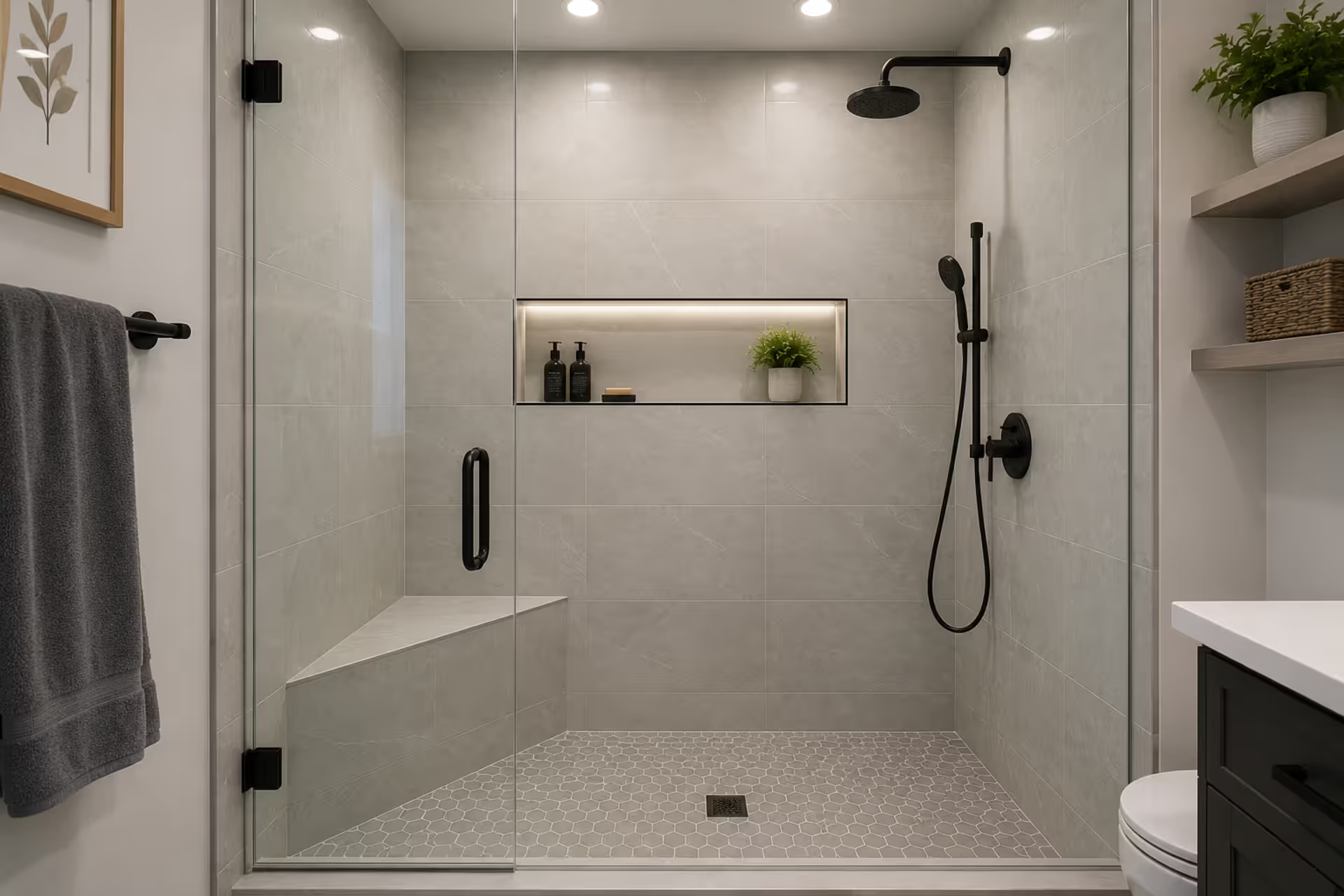
How much does tile installation cost for a typical bathroom? A 100-square-foot bathroom with mid-range porcelain tile runs $1,200 to $2,500 installed. That includes basic prep and a standard layout. Upgrade to natural stone with a custom pattern, and you're looking at $2,500 to $4,000 for the same space.
The biggest mistake homeowners make is choosing tile based only on the price tag at the store. They forget that a $3 tile installed in a complex pattern costs more than an $8 tile laid in a simple grid. Always calculate the total installed price before falling in love with a material.
— Martinez Robert
Geographic location shifts these numbers considerably. Urban markets like New York or San Francisco see labor rates 30-50% higher than rural areas in the Midwest or South.
Vinyl and LVP Flooring Installation Costs
Vinyl flooring has evolved from the dated sheet vinyl of decades past into luxury vinyl plank (LVP) that rivals hardwood in appearance. The pricing reflects this range.
Author: Sophie Langston;
Source: johnhranec.com
Sheet vinyl remains the budget champion. Material costs run $1 to $4 per square foot. Installation adds another $2 to $4, bringing the total to $3 to $8 per square foot. It's waterproof, durable, and perfect for utility spaces. But it won't fool anyone into thinking it's wood or tile.
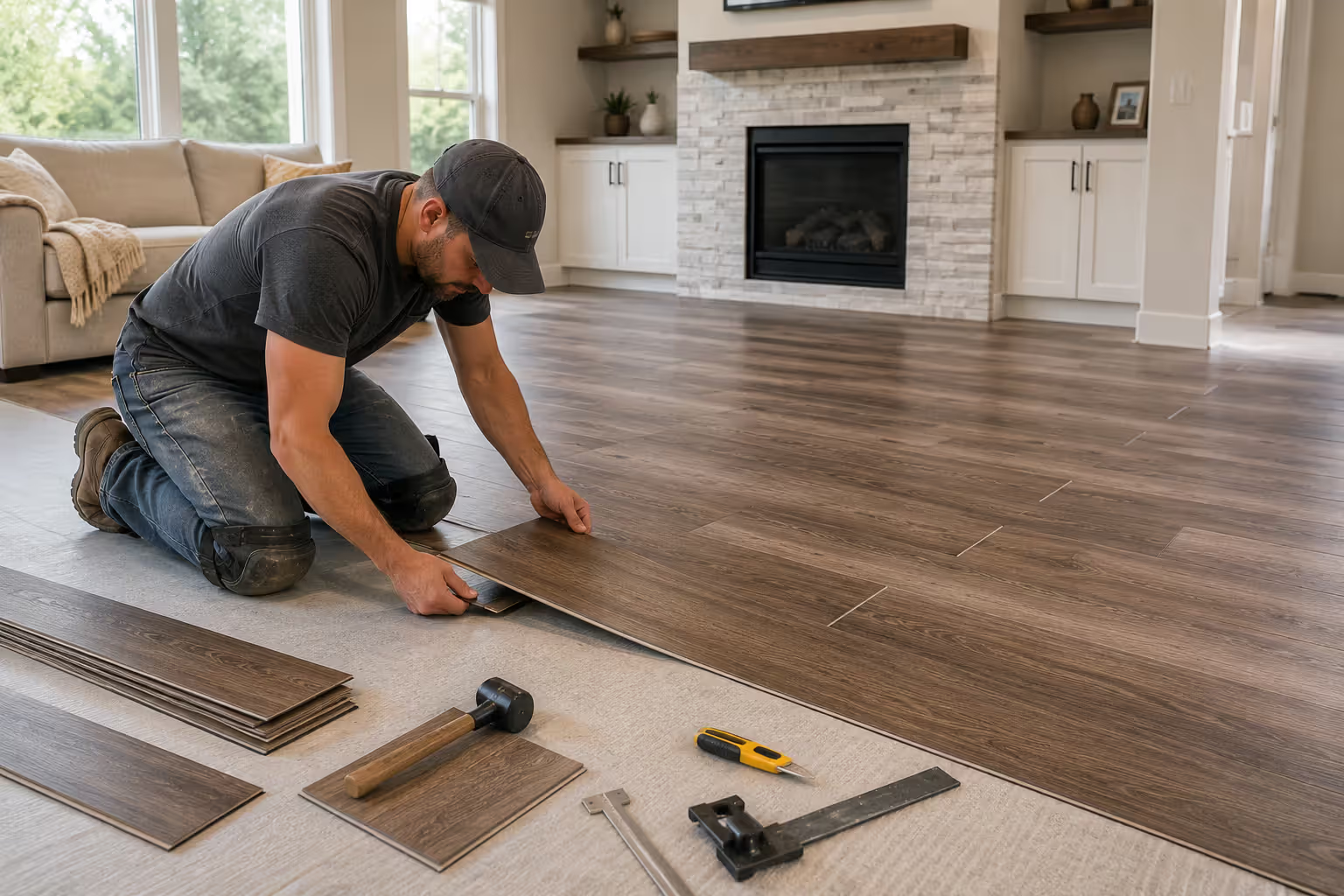
Luxury vinyl plank changed the game. How much does it cost to install LVP flooring? Materials range from $2 to $7 per square foot depending on thickness, wear layer, and design quality. Installation costs $2 to $5 per square foot for most jobs.
Total installed cost: $4 to $12 per square foot. That puts quality LVP in the same ballpark as laminate or engineered wood, but with better water resistance.
The installation method matters. Click-lock floating floors cost less to install—around $2 to $3 per square foot in labor. Glue-down installations run $3 to $5 per square foot. The floating option works great over most existing floors. Glue-down provides a more permanent, solid feel underfoot.
How much does it cost to install vinyl flooring when subfloor prep enters the picture? LVP is forgiving but not magic. Minor imperfections won't show through, but major dips or bumps will telegraph through the planks. Budget $1 to $3 per square foot for underlayment or leveling if needed.
A 500-square-foot living room with mid-grade LVP typically costs $2,000 to $4,000 installed. That includes removing old flooring, minor prep, and standard installation. Compare that to $5,000 to $10,000 for solid hardwood in the same space.
The simpler option usually wins here. If you're debating between sheet vinyl and LVP for a basement, LVP delivers better aesthetics for a modest price increase. For a laundry room where looks matter less? Sheet vinyl saves you money without sacrificing function.
What Affects the Total Cost of Flooring Installation
Several factors push your final bill higher or lower. Understanding these helps you budget accurately and avoid surprises.
Author: Sophie Langston;
Source: johnhranec.com
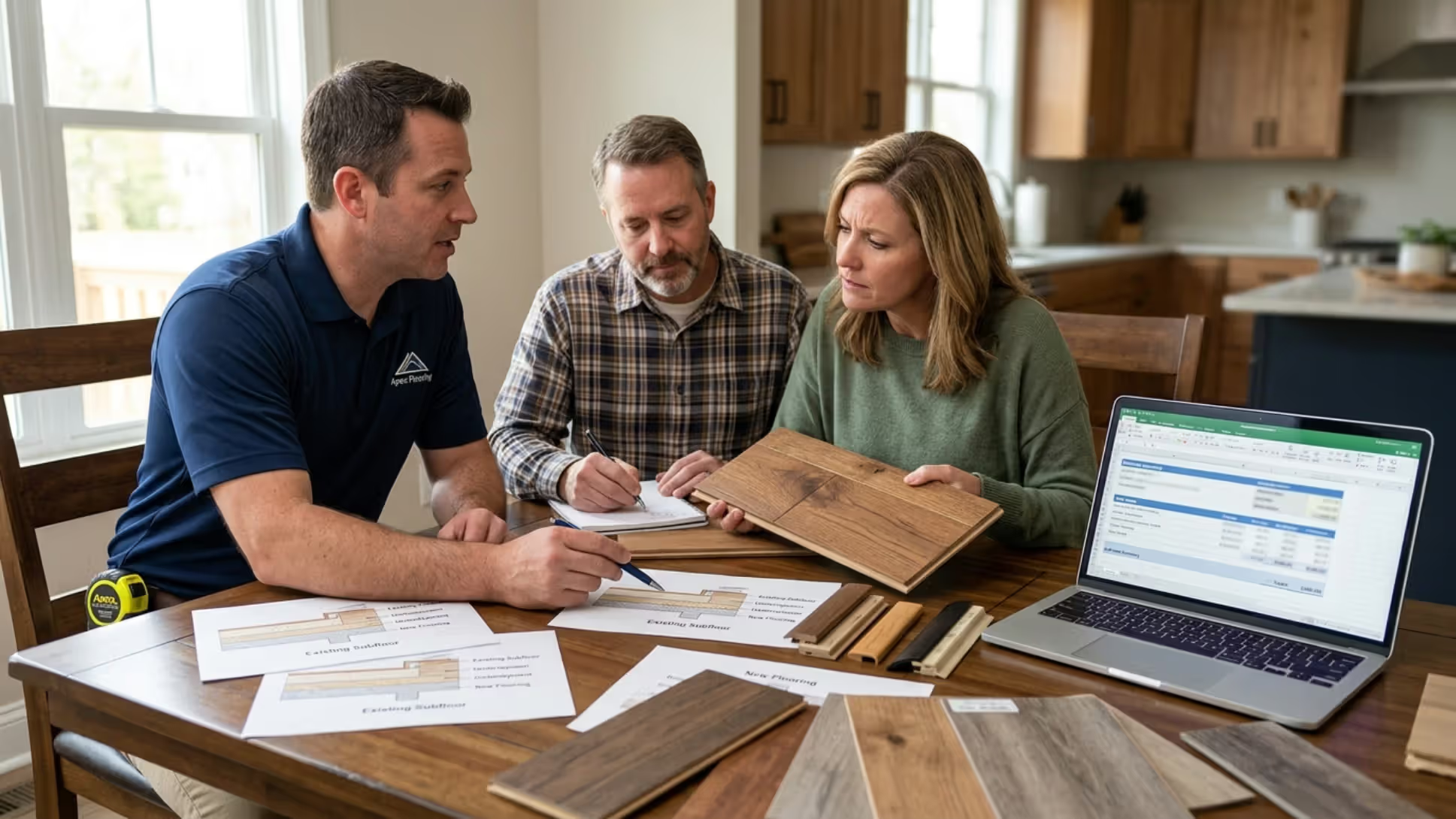
Room size and layout create the foundation. Larger rooms cost more in total dollars but less per square foot due to efficiency. Small rooms or spaces with lots of cuts around cabinets, closets, and doorways increase labor time. How much does flooring installation cost per square foot drops as square footage increases.
Subfloor condition can make or break your budget. A solid, level subfloor means installers can work quickly. Damaged, uneven, or squeaky subfloors need repair first. Expect to pay:
- $2 to $5 per square foot for leveling compound
- $3 to $7 per square foot for new plywood subflooring
- $1 to $2 per square foot for moisture barrier installation
Removal of existing flooring adds cost and mess. Ripping out old carpet runs $1 to $2 per square foot. Tile removal costs more—$3 to $5 per square foot—because it's labor-intensive and creates tons of debris. Some installers include removal in their quote. Others charge separately. Always clarify this upfront.
Geographic location creates huge price swings. Labor rates in major metro areas run 30-50% higher than rural markets. A flooring job that costs $5,000 in Oklahoma might hit $7,500 in Seattle or Boston. Material costs stay more consistent nationally, but local demand affects availability and pricing.
Material quality tiers within each flooring type change the cost of flooring installation dramatically. Budget laminate at $1 per square foot versus premium laminate at $5 per square foot represents the same installation labor. But the material cost quintuples. Don't assume all hardwood, tile, or LVP costs the same.
Labor rates vary by installer experience and market demand. General handymen might charge $2 to $4 per square foot for simple installations. Specialized flooring contractors command $5 to $10 per square foot but deliver better results on complex jobs. Tile setters and hardwood specialists often charge even more.
Furniture moving isn't always included. Some contractors include basic furniture moving in their quote. Others charge $50 to $200 per room or refuse to touch furniture at all. If you're replacing flooring in a furnished home, clarify this before signing a contract.
Transitions and trim add finishing costs. New baseboards run $2 to $5 per linear foot installed. Transition strips between rooms or flooring types cost $5 to $15 per strip. Stair nosing for stairs adds $20 to $40 per step.
The pattern here? Every project has visible costs and hidden ones. The visible costs are materials and basic installation. The hidden costs—prep, removal, trim, furniture—often add 30-50% to the initial estimate.
How to Plan Your Flooring Renovation Budget
Smart planning prevents budget disasters and helps you get the best value for your money.
Author: Sophie Langston;
Source: johnhranec.com
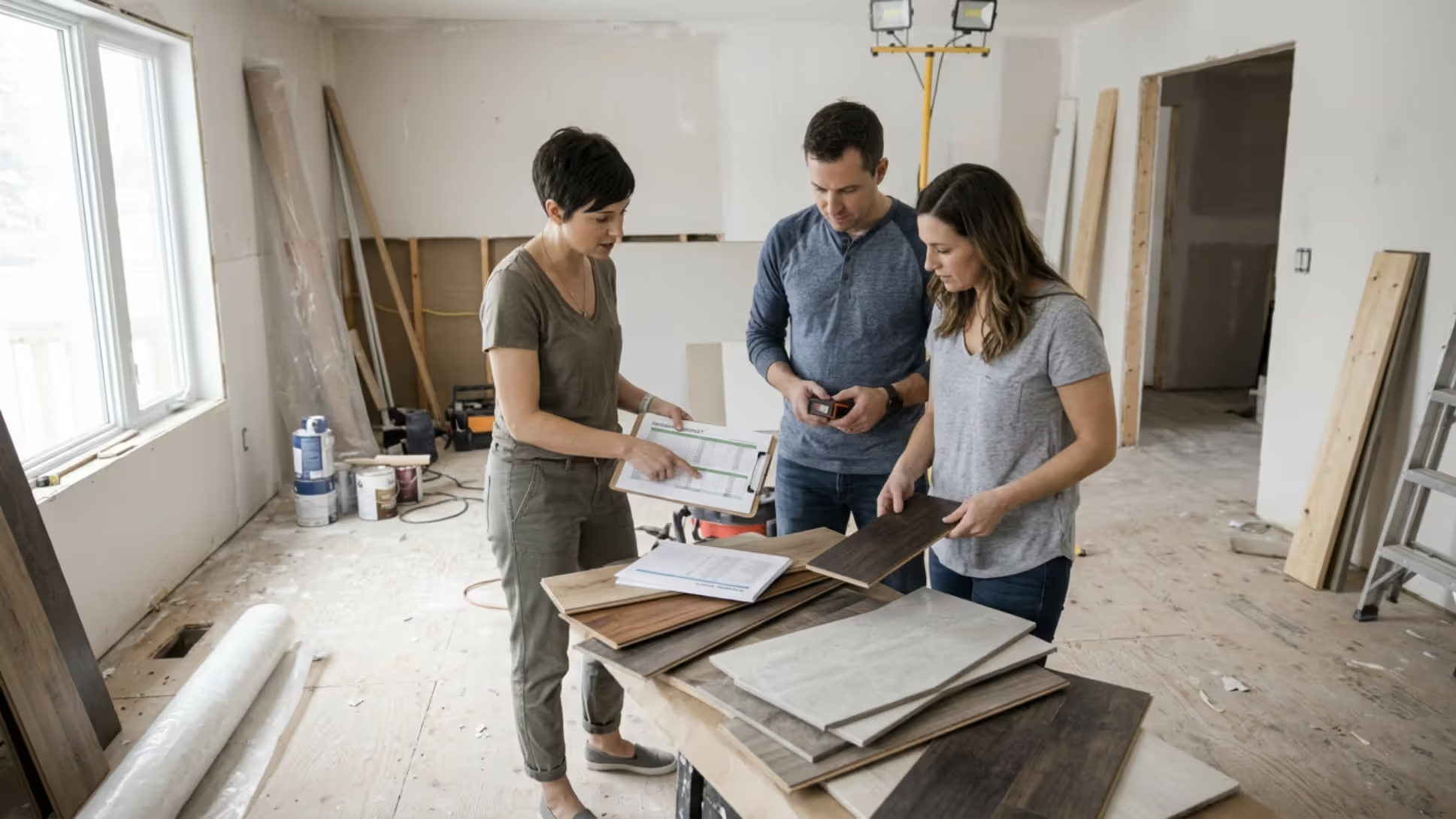
Getting accurate quotes starts with knowing what to ask. Don't just call and ask, "How much for new floors?" Provide specifics:
- Exact square footage of each room
- Current flooring type
- Desired new flooring type
- Subfloor concerns (squeaks, water damage, unevenness)
- Whether furniture moving is needed
- Timeline expectations
Get at least three written quotes. Compare them line by line. The lowest bid isn't always the best deal if it skips prep work or uses inferior materials.
Hidden costs to expect include:
- Disposal fees for old flooring: $100 to $500
- Subfloor repairs: $200 to $2,000 depending on damage
- New baseboards or quarter-round: $300 to $1,000 for an average home
- Transition strips and thresholds: $50 to $300
- Moving costs if you need to vacate during installation: varies
- Upgraded underlayment for sound or moisture protection: $0.50 to $2 per square foot
Budget an extra 15-20% beyond your quotes for unexpected issues. Old homes especially tend to reveal problems once flooring comes up.
DIY versus professional installation creates a major cost split. DIY can cut your total costs by 40-60% if you're handy and have time. Laminate and LVP are DIY-friendly. Tile and hardwood require more skill and specialized tools.
But DIY has hidden costs too. Tool rental runs $50 to $200. Mistakes waste materials. And your time has value. A pro installs 500 square feet of LVP in a day. Your first DIY attempt might take a full weekend.
Financing options help spread costs over time. Many flooring retailers offer 12-24 month interest-free financing. Home equity loans or lines of credit provide lower rates for larger projects. Credit cards work for smaller jobs but watch those interest rates.
When to replace versus repair depends on condition and cost. If your hardwood has isolated damage in one area, sanding and refinishing costs $3 to $5 per square foot. That's cheaper than replacement. But if the wood is warped, deeply scratched throughout, or water-damaged, replacement makes more sense.
Carpet older than 10 years should probably go. It's harboring allergens and losing padding support. Tile with a few cracks can be patched. Tile with widespread cracking or loose sections needs replacement.
The most common budgeting mistake? Choosing materials before understanding total installed costs. That gorgeous imported tile at $8 per square foot becomes $20 per square foot installed with a complex pattern. Always calculate the complete project cost before committing to a material.
FAQ: Flooring Replacement Cost Questions Answered
Replacing flooring ranks among the most visible home improvements you can make. It changes how a room feels and how your home functions daily. But it's also a significant investment that deserves careful planning.
Start with your actual needs, not aspirational Pinterest boards. That imported marble might look stunning, but mid-range porcelain delivers 90% of the look at half the cost. LVP has improved so much that most guests won't know it's not real wood.
Get detailed quotes from multiple contractors. Ask about everything: prep work, removal, disposal, trim, transitions. The cheapest quote often skips steps that matter. The most expensive quote might include services you don't need.
Budget for the unexpected. Older homes especially tend to reveal subfloor issues once the old flooring comes up. Setting aside an extra 15-20% prevents panic when surprises emerge.
And remember: installation quality matters as much as material quality. The most expensive tile looks terrible if it's poorly installed. Mid-range LVP installed by a pro beats premium hardwood installed badly. Choose your installer as carefully as you choose your flooring.
The right flooring at the right price transforms your home without emptying your savings. Take time to plan, compare options, and understand total costs. Your feet—and your wallet—will thank you for years to come.