How Much Do Home Renovations Cost?

Content
Home renovations rarely cost what you expect. You get an estimate, sign a contract, and then watch the numbers climb. Sometimes it's bad luck. Sometimes it's poor planning. But often, it's change orders—those mid-project adjustments that can bloat your budget by thousands without warning.
Understanding renovation costs means understanding two things: what projects typically run, and how change orders reshape those numbers. Most homeowners focus on the first part. The second part is where budgets actually break.
Average Home Renovation Costs by Project Type
Renovation costs in 2026 vary wildly based on location, materials, and scope. But patterns emerge when you look at typical projects across the US.
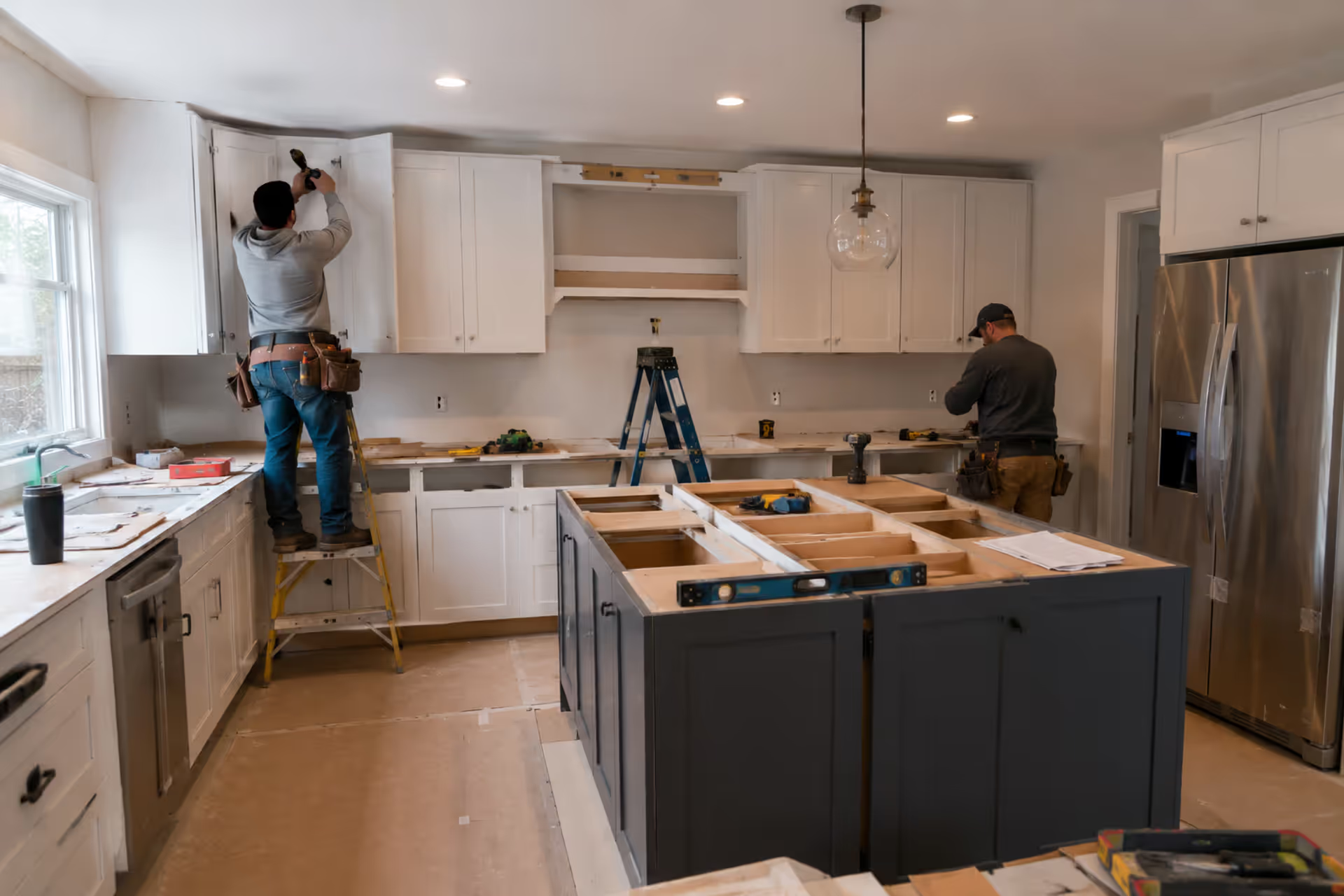
Kitchen remodels run $25,000 to $75,000 for mid-range work. High-end kitchens easily hit $100,000 or more. Bathroom renovations cost $10,000 to $30,000 for a full gut and rebuild. Primary bathrooms with luxury finishes can exceed $50,000.
Room additions start around $50,000 and climb from there. A second-story addition can reach $200,000 or beyond, depending on complexity. Whole-home renovations? Budget $100 to $300 per square foot, sometimes more in high-cost markets.
Here's how common projects compare:
| Project Type | Average Cost Range | Typical Duration | Change Order Frequency |
| Kitchen remodel | $25,000–$75,000 | 6–12 weeks | High |
| Bathroom renovation | $10,000–$30,000 | 3–6 weeks | Medium |
| Primary suite addition | $80,000–$150,000 | 12–20 weeks | High |
| Basement finishing | $30,000–$75,000 | 6–10 weeks | High |
| Whole-home renovation | $150,000–$500,000+ | 4–8 months | Very high |
| Exterior remodel | $15,000–$50,000 | 2–6 weeks | Low |
Notice the change order frequency column. Projects involving hidden infrastructure—kitchens, bathrooms, basements—generate more change orders. You can't see what's behind walls until you open them.
The pattern I see most often is homeowners who budget for the base cost but forget that change orders aren't optional surprises. They're a predictable part of renovation math.
What Is a Change Order in Construction
A change order is a formal document that modifies your original contract. It details new work, adjusted costs, and timeline changes. Think of it as an amendment to your renovation agreement.
Change orders happen for two main reasons. Either you request something different than originally planned, or the contractor discovers conditions that require unexpected work. Both types are legitimate. Both cost money.
Client-requested change orders stem from design changes, upgraded materials, or added scope. You decide mid-project that you want quartz instead of laminate. That's a change order. Contractor-identified change orders address problems discovered during work. The electrician finds knob-and-tube wiring that must be replaced. That's also a change order.
The difference matters because it affects negotiation leverage and cost responsibility. When you change your mind, you'll pay market rates—or higher. When hidden conditions emerge, you still pay, but you might have more room to discuss pricing.

Author: Olivia Hartwel;
Source: johnhranec.com
How Change Orders Work in the Renovation Process
Your contractor identifies work outside the original scope. They prepare a change order document listing the new work, cost breakdown, and schedule impact. You review it. You approve or negotiate. Once signed, it becomes part of your contract.
Good contractors provide detailed change orders with line-item costs. Poor ones offer vague descriptions and lump-sum pricing. The detail level tells you a lot about who you're working with.
Most contracts require written approval before change-order work begins. This protects both parties. But in practice, contractors sometimes start work before getting signatures, especially for time-sensitive issues. This creates confusion and disputes.
Always insist on written change orders before work starts. Verbal agreements disappear when disputes arise.
Change Order vs Original Renovation Estimate
Your original estimate assumes specific scope, materials, and conditions. It's based on plans, specifications, and reasonable assumptions about existing conditions. A change order addresses deviations from those assumptions.
The original estimate locks in baseline pricing. Change orders reflect current pricing, which may be higher due to rush orders, small quantities, or schedule disruptions. You won't get the same per-unit cost on change-order work that you got on the original contract.
This pricing difference surprises homeowners. They expect change-order work to cost proportionally the same as contracted work. It doesn't. Markup structures change, labor efficiency drops, and material pricing shifts.

Author: Olivia Hartwel;
Source: johnhranec.com
How Change Orders Increase Renovation Cost
Change orders don't just add the cost of new work. They multiply costs through markup, labor inefficiency, schedule delays, and material premiums.
Contractors typically mark up change-order work at higher rates than original contract work. Original work might carry a 15-20% markup. Change orders often see 25-35% or more. Why? Because they disrupt workflow, require new ordering, and carry higher risk.
Labor costs increase because workers lose efficiency when plans change. A plumber scheduled for three days of rough-in work now returns for an extra day after other trades finish. That's inefficient. You pay for the inefficiency.
Material costs jump on change orders. Your contractor ordered kitchen materials in bulk at negotiated prices. Now you want different tile. They're buying a small quantity at retail pricing, not contractor wholesale. The difference can be 30-50%.
Change orders typically add 10 to 20 percent to final project costs, but homeowners consistently underestimate this factor because they view each change order in isolation rather than understanding the cumulative impact on budget, schedule, and contractor relationships.
— Martinez Carlos
Timeline delays create hidden costs. Your contractor scheduled trades in sequence. A change order requires rework, which delays subsequent trades. Those trades charge mobilization fees to return. The general contractor extends overhead costs across more weeks. You're paying for time, not just materials and labor.
Here's a real example. A bathroom renovation budgeted at $22,000 included standard fixtures and tile. Mid-project, the homeowner discovered the subfloor was rotted and needed replacement—$2,800 change order. Then they upgraded to heated floors—$3,200 change order. Finally, they changed the vanity to a custom piece—$1,900 change order.
Total change orders: $7,900. But the final bill exceeded the original estimate by $10,300. The extra $2,400 came from extended project management fees, additional plumbing work necessitated by the heated floor, and tile waste from layout changes.

Author: Olivia Hartwel;
Source: johnhranec.com
Common Causes of Renovation Cost Overruns
Most cost overruns trace back to a handful of predictable causes. Understanding them helps you avoid or budget for them.
Unexpected structural issues top the list. You open walls and find termite damage, rotted framing, or inadequate support. These aren't optional repairs. Code requires fixes before you can proceed. Budget impact: $3,000 to $20,000 or more, depending on severity.
Code compliance requirements change between when your house was built and now. Your renovation must meet current codes, which might require new electrical panels, upgraded plumbing vents, or additional structural bracing. Contractors sometimes miss these in initial estimates, especially in older homes.
Scope creep kills budgets slowly. You're already renovating the kitchen, so why not extend the work into the adjacent dining room? Each small addition seems reasonable. Together, they add 30% to your costs.
Poor initial planning causes avoidable change orders. Vague specifications leave room for interpretation. When your "standard bathroom fixtures" don't match your expectations, you'll pay to swap them. Detailed specifications prevent this.
Hidden conditions behind walls are the wild card. You can't know what's there until you look. Asbestos, old wiring, plumbing that doesn't meet code, structural modifications from previous owners—all create unexpected costs.
One homeowner I know budgeted $45,000 for a kitchen remodel. The walls hid unvented plumbing, unauthorized electrical work, and a removed support beam. Code compliance alone added $11,000. The project finished at $62,000.
Change Order Red Flags Every Homeowner Should Know
Not all change orders are legitimate. Some contractors use them to low-bid projects and make profit on the back end. Watch for these warning signs.
Vague descriptions are red flag number one. "Additional framing work: $3,500" tells you nothing. What framing? Where? How many hours? What materials? Detailed change orders list specific work, quantities, and unit costs.
Questionable pricing shows up when change-order rates wildly exceed market norms. If your contractor charges $150 per hour for carpentry on change orders but similar contractors in your area charge $75-$90, you're being overcharged.
Pressure tactics appear when contractors demand immediate approval without giving you time to review or get second opinions. "We need this signed today or the project stops" is a manipulation technique. Legitimate urgent situations are rare.
Missing documentation means no photos, no explanation of why the work is necessary, and no connection to actual conditions. A good contractor shows you the problem, explains options, and documents everything.
Excessive change orders suggest poor initial planning or intentional low-bidding. Two or three change orders on a major renovation is normal. Fifteen change orders suggests something's wrong with the contractor's estimating or ethics.
Pattern recognition matters. If every change order seems to benefit the contractor without clear benefit to you, trust your instincts.
How to Limit Change Orders and Protect Your Budget
You can't eliminate change orders, but you can reduce their frequency and impact.
Thorough pre-construction planning is your best defense. Spend time on design. Make material selections before work starts. Walk through the scope with your contractor in detail. Every decision made during planning is one less change order during construction.
Detailed contracts protect you. Your contract should include specific materials by brand and model number, detailed scope of work, and clear exclusions. "Builder-grade fixtures" means nothing. "Kohler Devonshire faucet, model K-394-4" means something.
Contingency fund sizing depends on project type and building age. Budget 10-15% contingency for newer homes with straightforward projects. Older homes or complex renovations need 20-25% contingency. This isn't waste—it's realistic planning.
Communication strategies prevent misunderstandings that lead to change orders. Weekly meetings with your contractor keep everyone aligned. Document decisions in writing. When you discuss changes, follow up with email confirmation.
Documentation requirements should be in your contract. Require written change orders for any work exceeding $500 beyond the original scope. Require photos documenting hidden conditions that necessitate change orders. Require itemized pricing on all change orders.
Managing Renovation Change Orders Effectively

Author: Olivia Hartwel;
Source: johnhranec.com
When a change order arrives, don't panic. Follow a process.
First, verify the work is actually necessary or that you actually requested it. If the contractor says code requires something, ask for the specific code citation. If they say hidden damage necessitates work, ask to see it yourself.
Second, evaluate pricing. Get comparable quotes if the change order exceeds $2,000. Ask for cost breakdowns showing labor hours, materials, and markup percentages. Compare unit costs to your original contract.
Third, consider alternatives. Does the problem have multiple solutions at different price points? Can you defer work to a later phase? Can you DIY portions to reduce costs?
Fourth, negotiate. Change orders aren't take-it-or-leave-it propositions. Discuss pricing. Ask for reduced markup on large change orders. Propose value engineering alternatives.
Finally, document everything. Keep copies of all change orders. Note dates, conversations, and agreements. If disputes arise later, documentation determines outcomes.
The simpler option usually wins here. Clear communication and written records prevent most change-order disputes.
FAQ: Renovation Costs and Change Orders Questions Answered
Renovation costs extend beyond initial estimates when you factor in change orders and their ripple effects. The projects that finish on budget aren't lucky—they're well-planned. Homeowners who understand change orders before work starts make better decisions when change orders arrive.
Start with realistic cost expectations based on your project type and home age. Add appropriate contingency funding. Choose contractors who provide detailed estimates and transparent change-order processes. Document everything in writing.
When change orders appear, evaluate them systematically. Verify necessity, assess pricing, consider alternatives, and negotiate when appropriate. Not every change order is avoidable, but many are manageable when you approach them strategically.
Your renovation budget should reflect both the work you plan and the changes you'll inevitably encounter. That's not pessimism. It's experience talking.