Home Siding Cost Guide
How Much Does Siding Cost for Your Home?

Content
When homeowners ask me about siding costs, I tell them straight: you're looking at $8,000 to $24,000 for most homes, though prices swing wildly depending on what you choose. Here's the reality—you'll pay anywhere from $3 to $15 per square foot installed. That's a huge range, right? The material you pick doesn't just affect your upfront bill. It determines whether you're repainting every five years or enjoying maintenance-free living for decades. Choose fiber cement over vinyl? You might spend double. But you could also get 50 years of service instead of 25.
Average Siding Costs by Material Type
Nothing impacts your final invoice more than the material itself. We're talking potential $15,000 differences between budget-friendly options and premium products on an average home.
Vinyl Siding Costs
There's a reason vinyl covers nearly 30% of American homes. You're spending $3 to $7 per square foot installed—that's hard to beat. For a typical 2,000 square foot house, expect to write a check for $6,000 to $14,000.
Now, not all vinyl performs equally. The cheap stuff? It's usually 0.040 inches thick. Sure, it costs less, but I've seen it dent from a well-thrown baseball. Step up to 0.046 inches or thicker, and you're getting panels that actually resist impact. Better yet, premium vinyl includes fade warranties that actually mean something. Yeah, you'll pay 20-30% more for the upgrade, but it's money well spent if you plan to stay put.
Fiber Cement Siding Costs
Expect to pay between $6 and $12 per square foot for fiber cement installation. That same 2,000 square foot home? Now we're talking $12,000 to $24,000.
Why so much? This stuff is heavy—like, seriously heavy. It won't burn, rot, or attract termites. The material itself costs more to manufacture, and installation takes longer because crews need special saws (that silica dust is no joke). Labor typically runs 30-50% higher than vinyl jobs.
Here's the trade-off: fiber cement can last over 50 years. That's nearly double what you'll get from vinyl. If you're planning to stay in your home long-term, that math starts looking pretty good.
Wood Siding Costs
Want authentic wood? Cedar or redwood will set you back $8 to $15 per square foot installed.
But here's what nobody tells you upfront: the maintenance never stops. Every 3-7 years, depending on your climate, you're repainting or restaining. Each round costs $3,000 to $7,000 for an average home. Over 30 years? That's potentially another $20,000 on top of your initial investment.
Cedar costs less than redwood while both naturally resist decay. Pine runs cheaper—$5 to $10 per square foot—but you'll maintain it more frequently. Engineered wood products split the difference, giving you wood's appearance at $4 to $9 per square foot with better moisture resistance than the real thing.
Insulated Siding Costs
Insulated vinyl adds foam backing to standard vinyl panels. You're paying $4 to $9 per square foot installed—about 20-50% more than regular vinyl.
The foam core (usually rigid EPS or polyurethane) adds R-2 to R-4 to your walls. Not earth-shattering, but measurable. Where does this help most? Older homes with minimal wall insulation or thin sheathing see the biggest gains.
Don't expect miracles on a well-insulated modern home. But if you've got a 1960s ranch with barely any wall insulation? You might cut heating and cooling costs by 10-15%.
| Material Type | Cost Per Sq Ft Installed | Lifespan (Years) | Maintenance Needs | Typical ROI |
| Vinyl | $3–$7 | 20–30 | Almost none | 70–75% |
| Fiber Cement | $6–$12 | 50+ | Repainting every 10-15 years | 75–80% |
| Wood (Cedar/Redwood) | $8–$15 | 20–40 | Frequent staining/painting | 65–70% |
| Insulated Vinyl | $4–$9 | 20–30 | Almost none | 70–75% |
| Engineered Wood | $4–$9 | 25–35 | Periodic painting | 70–75% |
Author: Nathan Cole;
Source: johnhranec.com
What Affects Your Siding Replacement Cost
Material selection is just the beginning. Several other factors can add thousands to your bottom line.
Your home's size matters, obviously—but it's not straightforward math. A 2,000 square foot floor plan doesn't equal 2,000 square feet of walls. Wall area depends on ceiling height, roof design, and stories. A two-story colonial needs less siding than a sprawling ranch with the same square footage.
Where you live dramatically affects labor costs. Most markets charge $40 to $70 per hour for professional installation. In Boston or San Francisco? Try $80 to $100+ per hour. Labor typically eats up 40-50% of your total budget.
Removing old siding adds $1,000 to $3,000 for most homes. Some contractors include this in their quote, others don't. Always ask upfront. Got old asbestos siding? Removal jumps to $4,000 to $8,000 because of special handling requirements.
Wall preparation often reveals surprises. Rotten sheathing, water damage, structural issues—these can blow your budget fast. I always tell homeowners to budget an extra 10-15% for unexpected repairs. Homes built before 1990 almost always need some sheathing work.
Trim details and architectural complexity extend installation time. Lots of corners, bay windows, or decorative elements? You're looking at 20-30% higher costs than a simple rectangular box.
Permits typically run $200 to $500 in most areas. Some towns don't require them for siding replacement, but most do. Your contractor should handle this, but verify it's included in your quote.
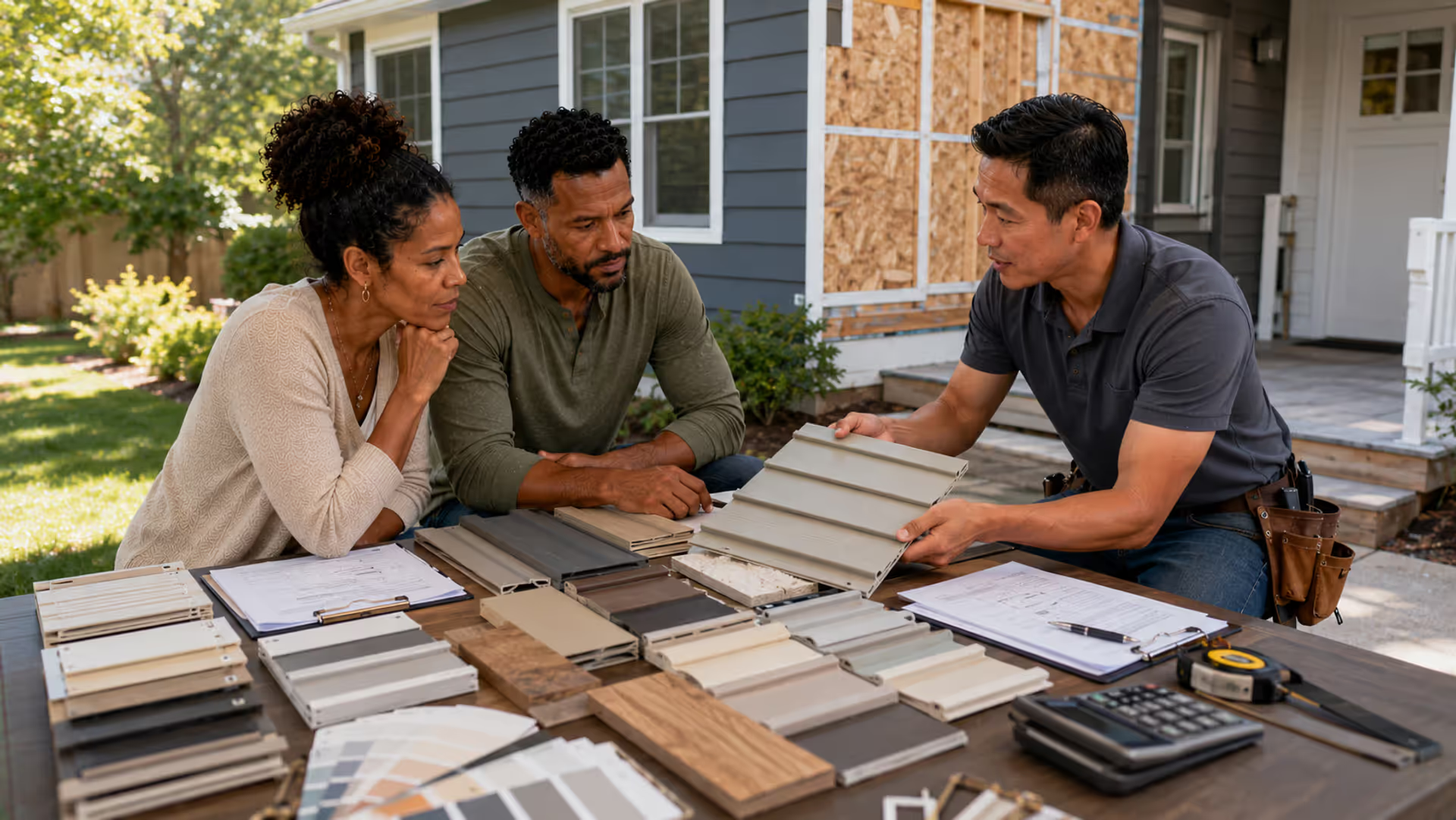
The biggest budget shock homeowners face isn't the siding itself—it's discovering rotted wall sheathing once we remove the old material. I recommend setting aside 15% of your budget for these hidden repairs, especially on homes over 30 years old.
— Martinez Robert
Vinyl vs Fiber Cement Siding: Cost and Value Comparison
These two materials dominate the renovation market. Which one's right for you depends on budget, maintenance tolerance, and how long you'll own the home.
Upfront Installation Costs
Vinyl wins this round hands down. You'll spend roughly half what fiber cement costs for the same square footage. On a 2,000 square foot home, that's a $6,000 to $10,000 difference.
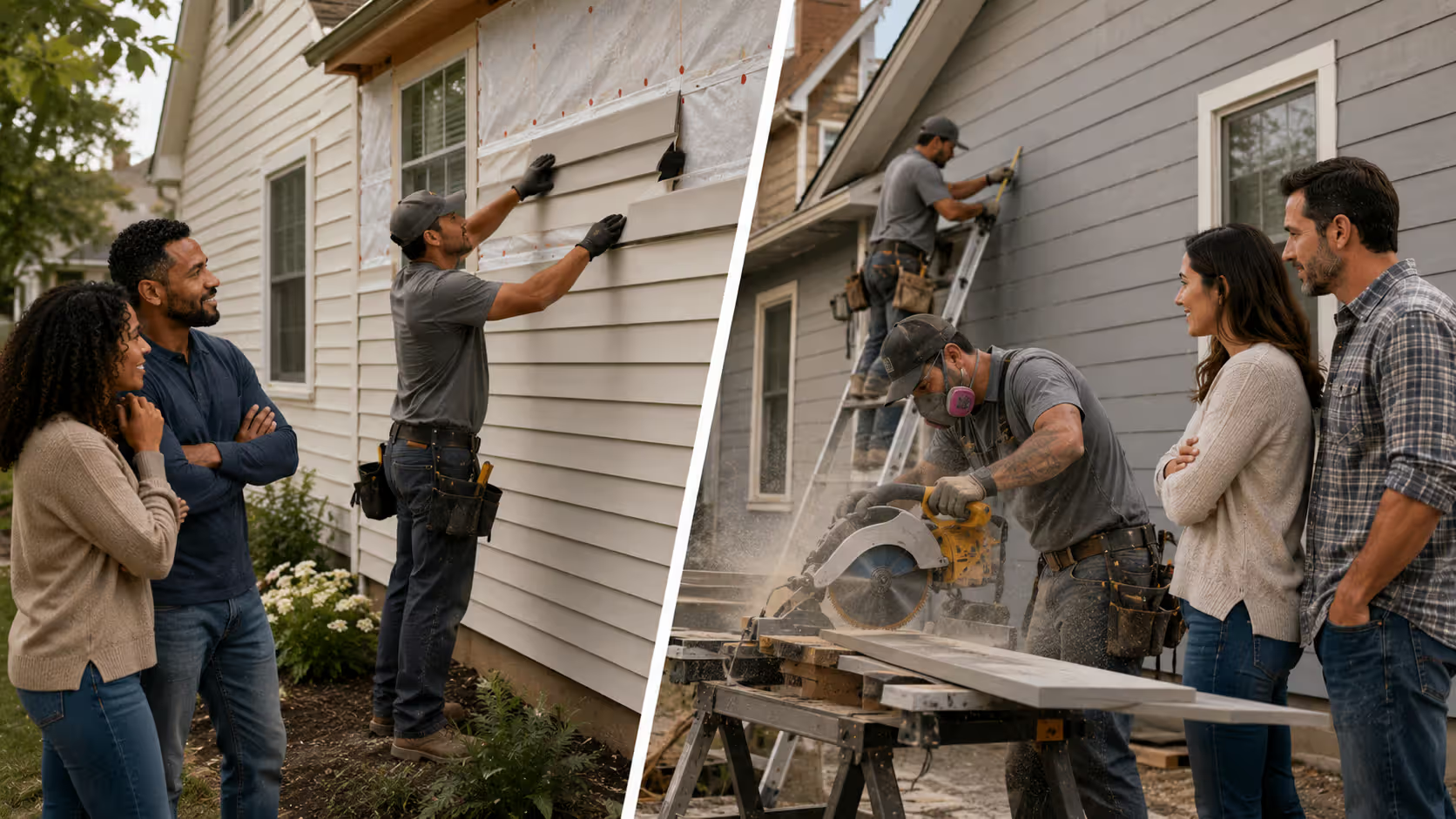
Labor explains much of this gap. Fiber cement weighs about 2.5 pounds per square foot versus vinyl's 1 pound. That means two-person crews, special cutting equipment, and respiratory protection for silica dust.
Fiber cement installations take 30-50% longer than vinyl jobs. What a crew finishes in 5 days with vinyl might take 7-8 days with fiber cement.
Author: Nathan Cole;
Source: johnhranec.com
Long-Term Maintenance and Painting Requirements
This is where things get interesting. Vinyl never needs painting. The color goes all the way through, so scratches don't show. Wash it occasionally with a garden hose and you're done.
Fiber cement comes primed or factory-painted. Pre-painted costs more upfront but includes factory finishes lasting 15-25 years before repainting. Primed fiber cement needs painting right after installation, then again every 10-15 years.
Professional fiber cement painting costs $1.50 to $3.50 per square foot. For a 2,000 square foot home, that's $3,000 to $7,000 per cycle. Over 40 years of ownership, figure on two or three painting jobs—that's $6,000 to $21,000 in lifetime costs.
Suddenly vinyl's initial savings compound over time. Total cost of ownership for fiber cement can exceed vinyl by $15,000 to $30,000 over several decades.
Durability and Lifespan Differences
Fiber cement outlasts vinyl significantly. It resists impact better, won't crack in cold weather, and handles hail and wind-driven debris without flinching. It's non-combustible, earning superior fire ratings.
Vinyl can crack when it's really cold and warp under intense heat, though modern formulations handle temperature swings better than older products. Hail, sports equipment, or lawn equipment can dent it more easily.
The lifespan difference is substantial: 50+ years for fiber cement versus 20-30 for vinyl. This matters most if you're staying long-term. Planning to sell in 10-15 years? Vinyl's lower cost and solid ROI make more financial sense.
How Siding Color and Finish Impact Your Budget
Author: Nathan Cole;
Source: johnhranec.com
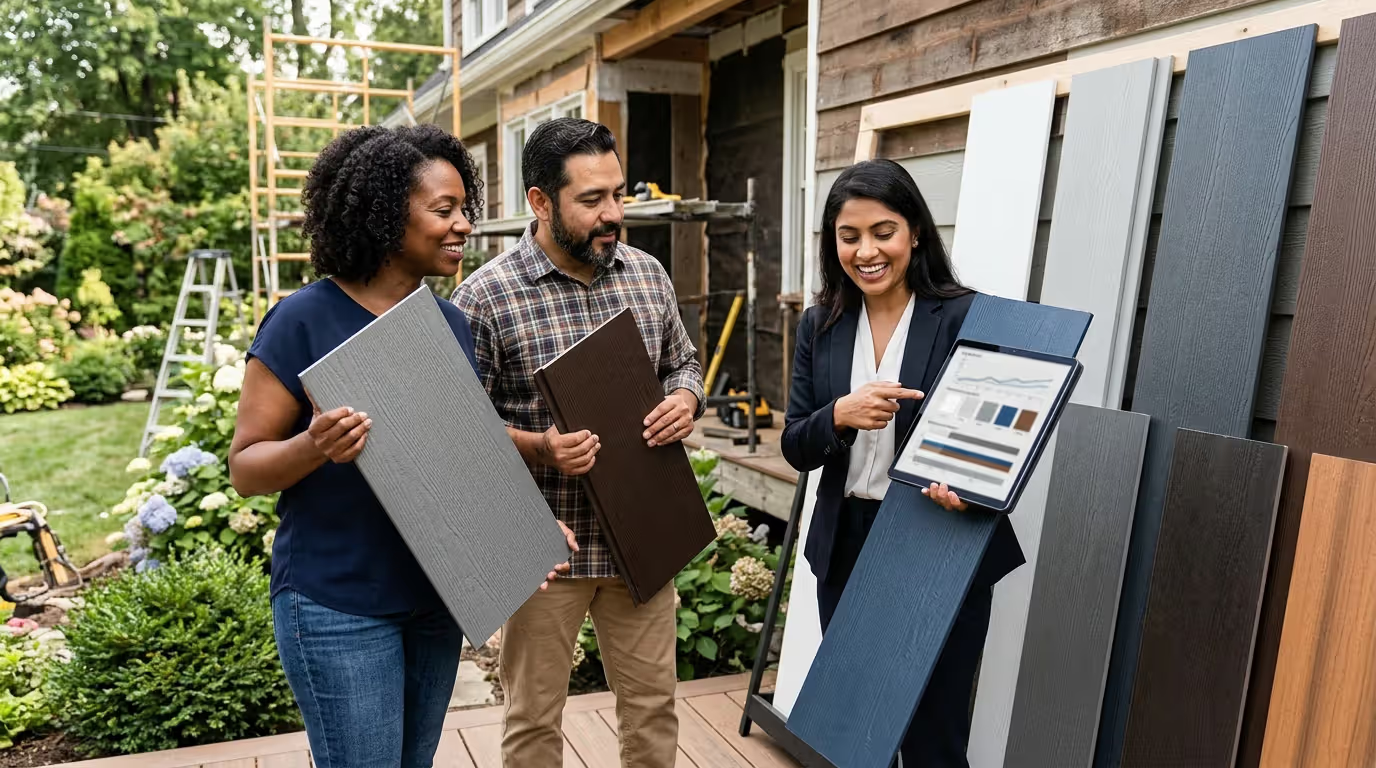
Color seems like a cosmetic decision, but it affects both immediate costs and long-term performance.
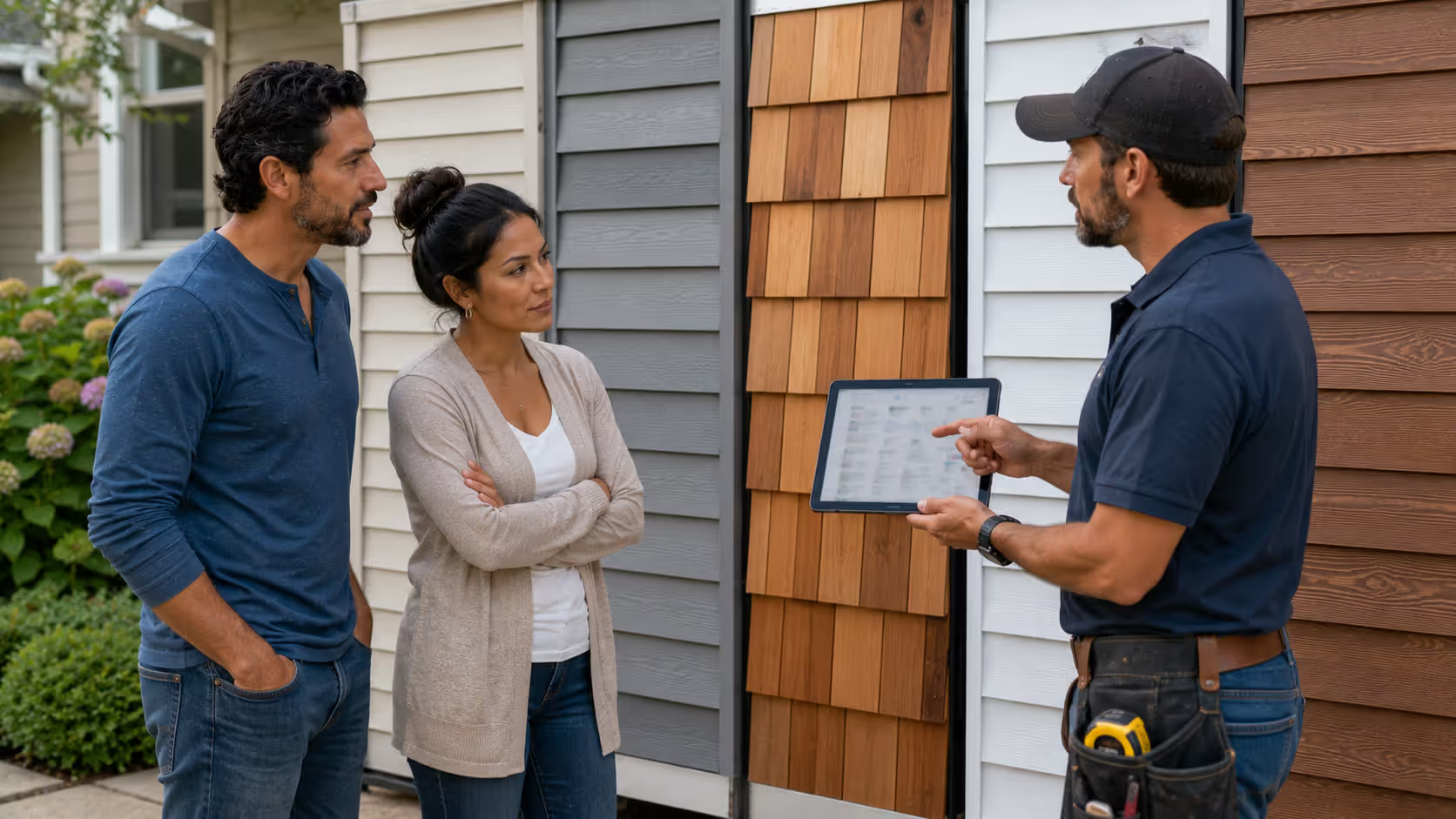
Standard color palettes cost least. Manufacturers produce massive quantities of whites, tans, grays, and beiges, keeping prices competitive. You've got dozens of options in this range without paying extra.
Premium and custom colors bump material costs 10-30%. Deep colors—especially dark blues, reds, and browns—cost more in vinyl because they need extra UV stabilizers to prevent fading. Dark colors absorb more heat, potentially causing warping on south and west exposures in hot climates.
Factory-finished materials cost more than primed versions. Pre-painted fiber cement adds $0.50 to $1.50 per square foot over primed, but factory finishes outperform field-applied paint. They cure in controlled environments and come with better warranties.
Texture and profile choices also affect pricing. Smooth finishes cost less than wood-grain textures. Standard horizontal lap siding is cheapest. Vertical siding, board-and-batten, shake patterns, and scalloped profiles run 15-40% more because of complicated installation.
Energy efficiency ties to color more than most people realize. Lighter colors reflect more solar radiation, keeping homes cooler in summer. The difference is real: white or light gray siding can be 10-15 degrees cooler than dark siding on sunny summer days. That translates to lower AC bills, especially in southern climates.
Benefits of Insulated Siding Worth the Extra Cost
Author: Nathan Cole;
Source: johnhranec.com
Insulated siding promises energy savings and comfort improvements. Does it deliver enough value to justify the 20-50% price premium?
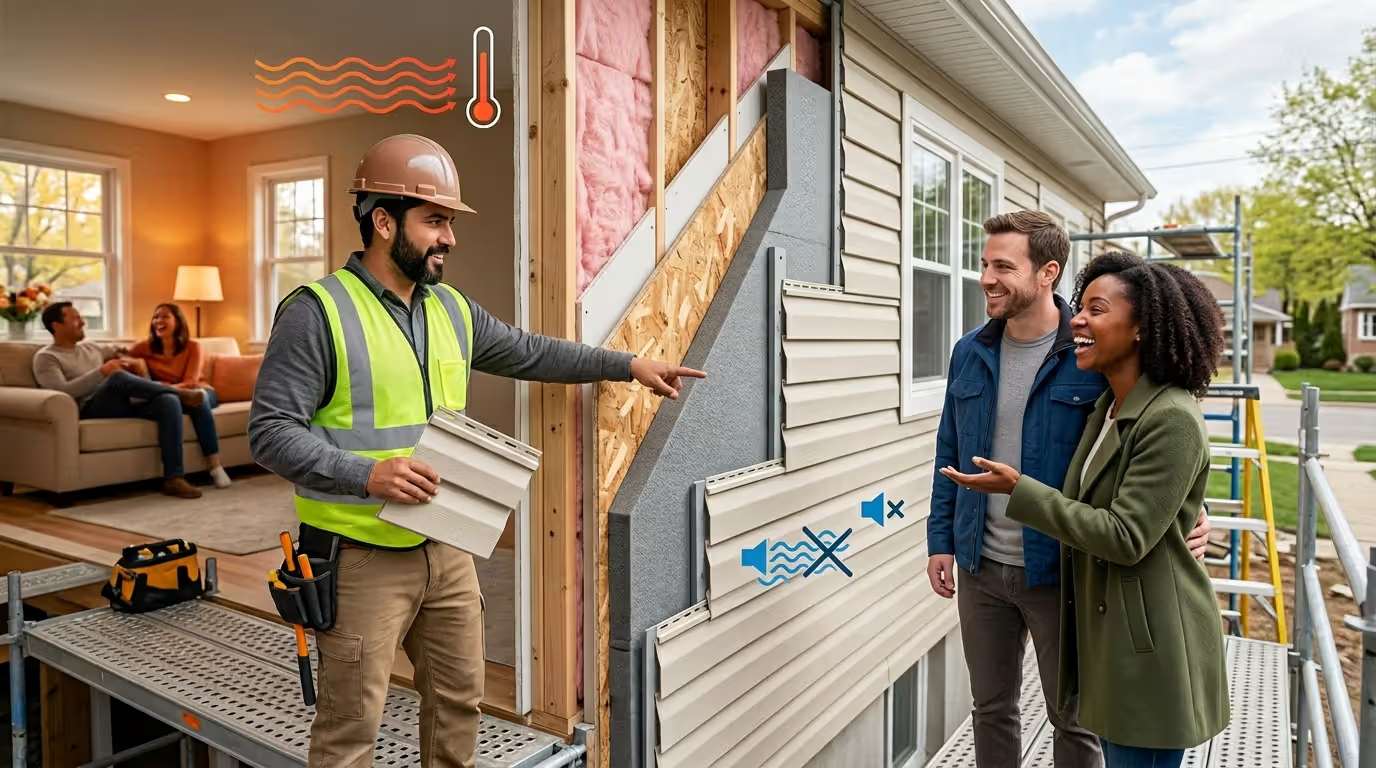
Energy savings are modest but real. Insulated siding adds R-2 to R-4 to your wall assembly. Homes with minimal existing wall insulation might see heating and cooling cost reductions of 10-15%. The average home might save $150 to $300 annually.
Run the numbers: if insulated siding costs $3,000 more than standard vinyl, you're looking at a 10-20 year payback from energy savings alone. Not amazing, but not terrible either.
Comfort improvements matter more than energy bills for many homeowners. Insulated siding reduces drafts and cold spots along exterior walls. Homes feel more comfortable, especially in rooms on north walls or above garages.
Noise reduction is an underrated benefit. The foam backing dampens outside noise significantly. Homes near busy roads, airports, or loud neighbors experience 30-40% less noise intrusion compared to hollow vinyl.
Insulated siding also provides a flatter, more rigid surface than hollow vinyl. It resists denting and buckling better, and the foam backing helps panels maintain their shape over time.
When does it make financial sense? Insulated siding delivers the best value when:
- Your home has minimal wall insulation (common in pre-1980 construction)
- You live in a climate with cold winters or hot summers
- You plan to own the home 15+ years
- Noise reduction would significantly improve your quality of life
- You can comfortably afford the monthly payment increase
Skip insulated siding if your walls already have adequate insulation or you're planning to sell within 5-10 years. The ROI won't materialize fast enough to justify the investment.
Planning Your Siding Renovation: Budget and Timeline Tips

Author: Nathan Cole;
Source: johnhranec.com
Smart planning prevents budget overruns and scheduling disasters.
Start by getting three to five quotes from licensed contractors. Good quotes itemize material costs, labor, removal, disposal, trim work, and extras. Beware quotes that lump everything into one number—they hide potential add-ons.
Insist contractors inspect your home before quoting. Drive-by estimates miss hidden problems. Proper inspections include checking behind existing siding in several spots to assess sheathing condition.
Before and after planning deserves more attention than most homeowners give it. Take extensive photos of your home's current condition. Document existing damage thoroughly. This protects you against disputes about whether damage happened during installation or existed beforehand.
Consider your home's other exterior components. If trim, soffit, fascia, or gutters are aging, replace them during your siding project. Combined work saves labor costs versus doing jobs separately. Scaffolding is already up, making additional work more economical than standalone projects.
Timing affects both pricing and contractor availability. Spring and fall? That's when everyone wants siding done. Costs jump 10-20% during these seasons, and contractors book up weeks or months in advance.
Summer and winter offer better value. Many contractors discount services during slower periods. Winter installation works fine in most climates as long as temperatures stay above 40°F during work. Below that, vinyl gets brittle and can crack during cutting and nailing.
Financing options have expanded considerably. Major siding manufacturers offer financing through contractors, often with 0% interest for 12-18 months. Home equity loans and HELOCs provide lower long-term rates if you need extended repayment.
Some contractors offer payment plans, but these usually carry higher effective interest rates than other options. Compare all financing carefully before committing.
Get everything in writing. Your contract should specify:
- Exact materials (brand, style, color, thickness)
- Start and completion dates
- Payment schedule (never pay more than 10% upfront)
- Warranty coverage for materials and labor
- Who handles permits and inspections
- Cleanup and disposal procedures
- What happens if weather delays the job
A common mistake? Automatically choosing the lowest bid. Rock-bottom quotes often come from contractors who cut corners on prep, use lower-grade materials than specified, or add charges later. Mid-range bids typically offer the best value.
Set realistic timeline expectations. Average homes take 5-10 days for vinyl or engineered wood, 7-12 days for fiber cement, and 10-15 days for real wood siding. Weather delays happen frequently, so build buffer time into your plans.
FAQ: Siding Cost Questions Answered