Window Replacement Cost Guide
How Much Does It Cost to Replace Windows?

Content
You're facing a major home investment when you decide to replace your windows. This single upgrade touches everything from your monthly electric bill to how your house looks from the street, plus it affects comfort and what you'll get when you eventually sell. Most homeowners spend somewhere between $300 and $1,200 for each window they install, but that's just scratching the surface. If you're doing your whole house, you're looking at $5,000 to $15,000 in most parts of the country. Let's dig into what really drives these numbers.
Average Window Replacement Costs by Type
Different window styles come with wildly different price tags. What you pick affects not just your wallet today, but how much hassle the installation crew faces tomorrow.
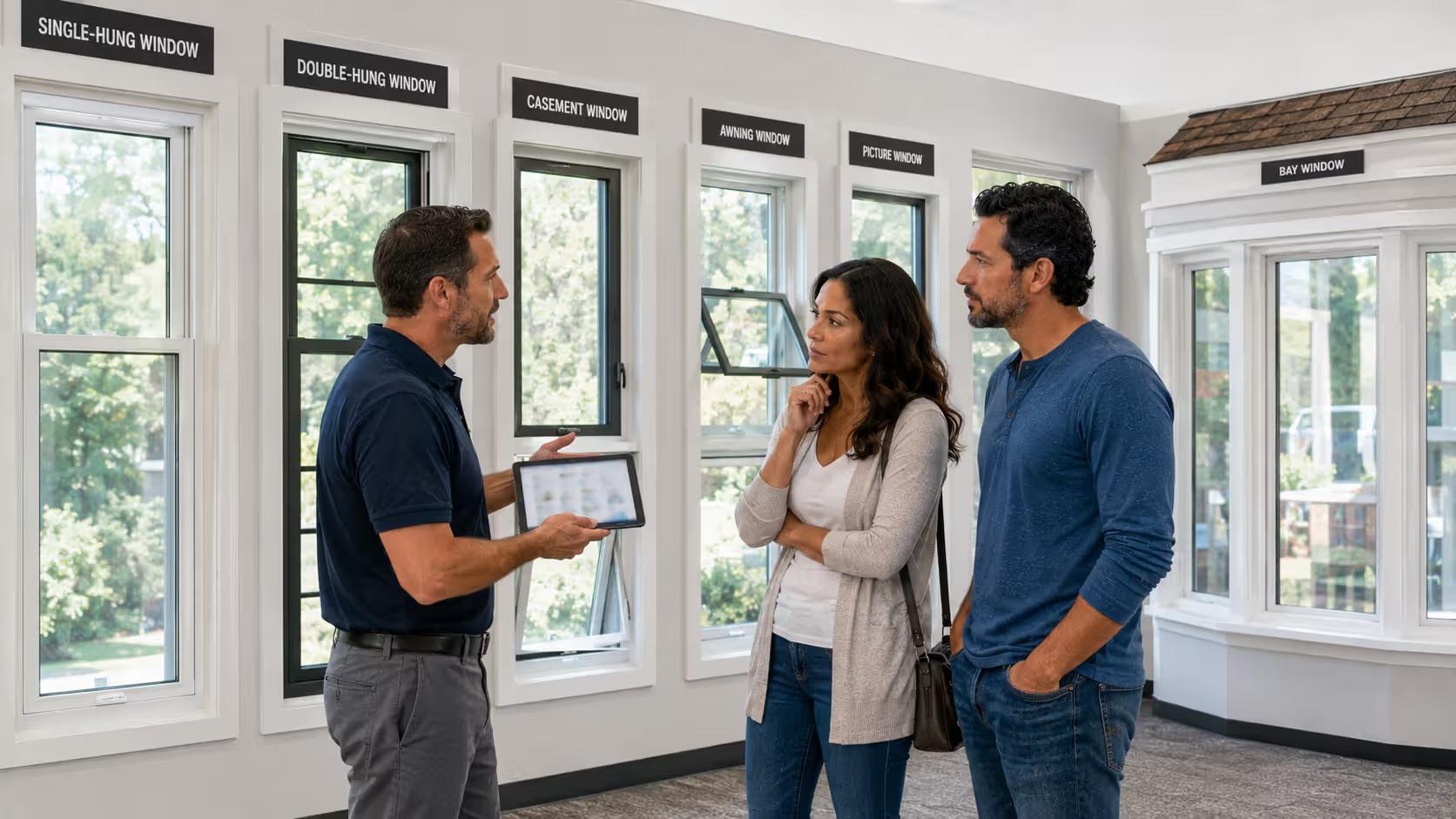
Single-Hung and Double-Hung Windows
Single-hung windows give you the cheapest entry point. The bottom section slides up while the top stays put. You'll spend $200 to $600 per window once everything's installed. Double-hung versions let both sections move independently, which makes cleaning the outside much easier and gives you better control over airflow. Plan on $300 to $800 including installation.
Here's why double-hung dominates American homes: they work with practically any house style, and every installer has done hundreds of them. That familiarity keeps labor predictable. When people renovate, they almost always upgrade from single-hung to double-hung. Ask them why, and they'll tell you it's all about being able to clean both sides without climbing a ladder.
Casement and Awning Windows
Casement windows swing open from hinges on one side, usually with a crank handle. When they're closed, that compression seal beats almost everything else for stopping drafts. Budget $400 to $1,000 per window installed. Awning windows hinge at the top and tilt outward, creating a little roof when they're open. These run $400 to $900 installed.
Both styles shine in spots where you can't easily reach across to lift a window. Casements look fantastic on modern homes. The catch? You'll pay more for replacement hardware down the road, and installation takes longer than standard double-hungs.
Author: Olivia Hartwel;
Source: johnhranec.com
Picture and Bay Windows
Picture windows trade ventilation for views and light. These fixed panes range from $300 to $1,200 installed, mostly depending on how big you go. Large custom picture windows easily hit $2,000 or more.
Bay windows create serious curb appeal. They stick out from your wall, giving you extra space inside and a striking look outside. Standard bay installations cost $1,500 to $3,500, while custom designs can push past $5,000. Installation requires structural support and often means cutting into your siding, which explains why labor costs jump so high.
| Window Type | Average Cost per Window | Best For | Pros/Cons |
| Single-Hung | $200–$600 | Budget-focused projects, traditional homes | Pro: Cheapest option you'll find. Con: Less airflow, tough to clean outside |
| Double-Hung | $300–$800 | Most residential applications | Pro: Simple maintenance, fits any style. Con: Costs more than single-hung |
| Casement | $400–$1,000 | Best weatherproofing, awkward locations | Pro: Superior seal, opens fully. Con: Higher parts cost, slower installation |
| Awning | $400–$900 | Wet climates, basement installations | Pro: You can open them in the rain. Con: Size options are limited |
| Picture | $300–$1,200+ | Framing views, flooding rooms with light | Pro: Unobstructed views, maximum daylight. Con: Zero ventilation |
| Bay | $1,500–$3,500+ | Adding square footage, boosting curb appeal | Pro: Expands interior space, dramatic appearance. Con: Major investment, needs structural changes |
What Affects the Cost of Window Replacement
The window itself is just one piece of what you'll actually pay. Several factors pile on top of each other to create your final bill.
Frame material swings your price dramatically. Vinyl keeps costs down while wood pushes them up. Fiberglass costs even more. We'll break this down completely in the next section.
Glass features can double your costs fast. Basic double-pane windows cost way less than triple-pane. Add Low-E coatings, argon gas, or impact-resistant glass, and your price climbs—but so does performance.
Labor rates change depending on where you live. Contractors in expensive cities charge more. You're typically adding $100 to $300 per window for professional work. Complicated situations—second-story installs, weird sizes, structural changes—push that number higher.
How many windows you're doing affects your per-unit cost. Replace fifteen windows and you'll pay less per window than if you only replace three. Contractors discount bigger jobs pretty consistently.
Access difficulty matters more than most people expect. Ground-floor windows? Straightforward. Upper floors need scaffolding or lifts, tacking on $50 to $150 per window. Pulling out old storm windows or ancient aluminum frames eats up extra time too.
Permits aren't always required for simple replacements, but some cities demand them, especially if you're changing window sizes or cutting into walls. When you need one, expect $50 to $200 for the whole project.
Window Frame Materials and Their Price Differences
Author: Olivia Hartwel;
Source: johnhranec.com
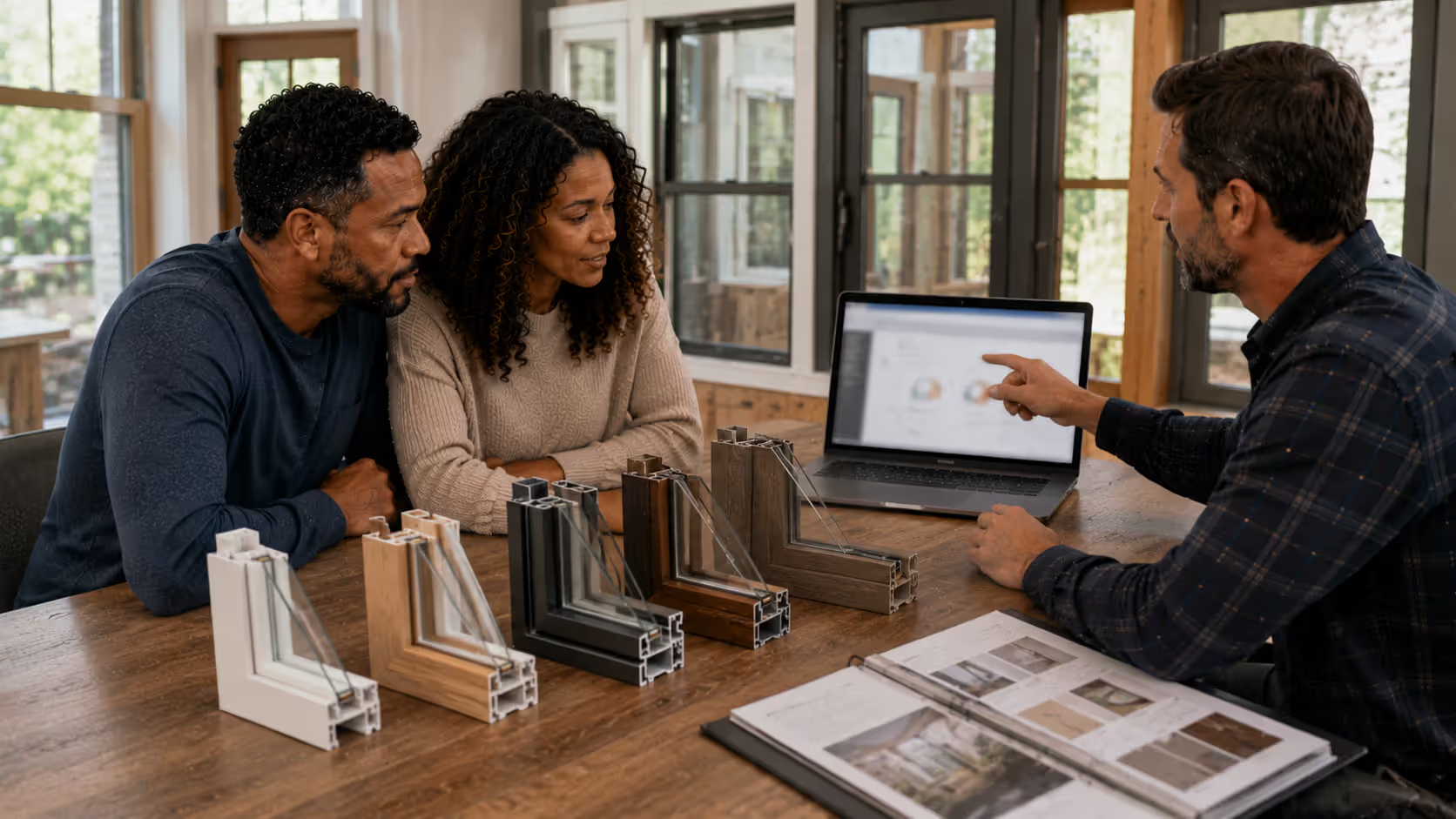
Your frame material choice affects everything: upfront cost, how long they last, maintenance hassles, and energy performance. Each material brings its own trade-offs.
Vinyl owns the biggest market share for replacements. It's affordable, low-maintenance, and performs decently on energy. You're spending $300 to $600 per window installed. These frames handle moisture well, won't corrode, and never need painting. But they expand and contract when temperatures swing, and if you want a different color later, you're replacing the whole window. Quality varies wildly—cheap vinyl warps and fades fast.
Wood gives you classic beauty and the best insulation. Plan on $500 to $1,200 per installed window. Wood frames take any paint or stain color you want. They're the go-to for historic home projects. The downside? Ongoing maintenance. Wood needs regular painting or sealing to avoid moisture damage and bugs. In humid areas, this becomes a serious commitment.
Aluminum delivers strength and thin profiles that maximize glass area. You'll pay $400 to $800 installed. Aluminum won't warp or rot, and it holds up great in coastal areas. But it conducts heat and cold readily unless it has thermal breaks built in. You see aluminum more in commercial buildings than homes.
Fiberglass wins on pure performance. It's stronger than vinyl, more stable than wood, and delivers excellent energy efficiency. Installation runs $600 to $1,200 per window. Fiberglass takes paint, barely expands with temperature changes, and lasts decades with almost no maintenance. Higher upfront costs keep it from dominating the market, but it deserves serious consideration if you want maximum long-term value.
Composite frames mix wood fibers with polymer materials, aiming for wood's looks with vinyl's easy maintenance. You're paying $500 to $1,000 installed. Performance falls somewhere between vinyl and fiberglass. It's a solid middle-ground option.
| Material | Cost Range | Lifespan | Energy Efficiency | Maintenance |
| Vinyl | $300–$600 | 20–30 years | Good thermal performance | Minimal—just wash occasionally |
| Wood | $500–$1,200 | 30–40+ years | Excellent insulation | High—refinish every 3-5 years |
| Aluminum | $400–$800 | 30–40 years | Decent with thermal breaks | Low—occasional washing |
| Fiberglass | $600–$1,200 | 40–50+ years | Top-tier efficiency | Nearly none—can paint if you want |
| Composite | $500–$1,000 | 25–35 years | Above average | Moderate—basic cleaning |
Energy-Efficient Windows and Long-Term Savings
Energy-efficient windows cost more upfront. But they cut your heating and cooling bills, which changes the math over time.
Double-pane windows are standard now. Two glass layers with an insulating gap between them dramatically reduce heat transfer compared to old single-pane windows. Most double-pane windows use argon gas between the panes since it insulates better than regular air. You're spending $400 to $800 per window installed.
Triple-pane windows add a third layer of glass. They perform best in harsh climates and cost $600 to $1,200 installed. That extra pane also blocks more noise. However, triple-pane windows are heavy, which can stress hardware, and the energy savings over double-pane are marginal in mild climates.
Low-E coatings are microscopically thin metallic layers applied to glass. They reflect infrared radiation, keeping heat inside during winter and blocking it during summer. Low-E adds $30 to $75 per window but can cut energy loss by 30% to 50%. Few upgrades deliver this kind of reliable value.
Gas fills—argon or krypton—replace the air between panes. Argon is standard and affordable. Krypton insulates better but costs more, usually reserved for narrower gaps. This upgrade adds $30 to $100 per window.
What about actual dollar savings? Your climate and current window condition determine this. Replace single-pane windows in a cold climate and you might save $200 to $400 yearly on energy. That means a $10,000 window project pays for itself through energy savings in 15 to 25 years. That's not a quick payback, but factor in improved comfort, eliminated drafts, and higher home value, and the picture brightens.
Energy Star-certified windows meet strict efficiency standards set by the EPA. They're rated for specific climate zones. Northern homes should look for windows with U-factors below 0.30. Southern homes should focus on low Solar Heat Gain Coefficients (SHGC) to keep summer heat out.
How Long Do Replacement Windows Last
Longevity depends on material and how well you maintain them. Here's what to expect realistically.
Vinyl windows last 20 to 30 years. Quality matters hugely—premium vinyl with thicker frames and better hardware can hit 35 years. Cheap vinyl might start failing at 15 years with warped frames or broken seals.
Wood windows can go 30 to 40 years or more with proper care. Historic wood windows sometimes reach 100 years. Neglect kills wood fast. Once paint fails and moisture gets in, rot follows.
Aluminum windows last 30 to 40 years. They're nearly indestructible physically, though seals and hardware eventually wear out. Coastal salt can corrode frames over time.
Fiberglass windows claim the longevity crown, lasting 40 to 50 years or more. The material resists UV damage and temperature cycling.
Warranties deserve close attention. Most manufacturers offer limited lifetime warranties on frames and sashes but limit glass seals and hardware to 10 to 20 years. Read the fine print—many warranties are prorated and exclude labor.
Maintenance directly affects how long windows actually last. Clean them twice a year. Lubricate moving parts annually. Check weatherstripping and caulking every few years. Vinyl and fiberglass need minimal attention. Wood demands the most care.
One thing people overlook: condensation between panes signals seal failure. The window still works, but insulation is shot. Once this happens, replacement is your only real option.

Author: Olivia Hartwel;
Source: johnhranec.com
Does Replacing Windows Increase Your Home's Value
Yes, though not dollar-for-dollar. Window replacement typically recovers 70% to 80% of project costs in added home value nationally. Your specific market and economic conditions create variation.
Window replacement ranks among the rare renovations that buyers immediately recognize. Fresh windows communicate that a property has received proper care, and this perception influences purchase offers. Beyond pure ROI calculations, you're eliminating a negotiation liability—buyers won't demand credits to address aging, inefficient windows.
— Elena Martinez
ROI data from recent remodeling cost-versus-value studies shows vinyl window replacement averaging around 72% cost recovery at resale. Wood window replacement performs slightly better in upscale markets. But ROI is just one metric. New windows make your property more appealing to buyers, potentially speeding up sales and strengthening offers.
Appraisers document window condition and energy features. New energy-efficient windows contribute positively, though they won't dramatically transform your appraised value. Think of it as protecting value rather than creating it.
Buyer appeal is where windows really shine. Buyers notice exterior appearance immediately. They feel drafts during walkthroughs. New windows eliminate objections. They're especially valuable in competitive markets where buyers compare multiple similar properties.
Energy certifications provide extra leverage. Homes with Energy Star-certified windows qualify for green certifications and energy-efficient mortgages, letting buyers qualify for slightly larger loans. Some states and utilities offer rebates or tax incentives for energy-efficient window installation, which you can promote when selling.
Should you replace windows right before listing? It depends. If your windows look visibly old, damaged, or drafty, replacement eliminates a major buyer concern. If they're functional despite looking dated, you might not recover enough value to justify the expense.
How to Choose the Right Windows for Your Renovation

Author: Olivia Hartwel;
Source: johnhranec.com
Picking the right windows means balancing cost, performance, looks, and installation practicalities.
Sizing starts with your existing openings. Replacement windows designed to fit within current frames cost less to install than full-frame replacements that require removing trim and siding. Measure carefully—width, height, and depth. Most manufacturers stock standard sizes in one-inch increments. Custom dimensions add 15% to 30% to your costs.
Climate should drive material and glazing choices. Cold climates need low U-factors and multiple panes. Hot climates need low SHGC to block heat gain. Humid regions favor moisture-resistant materials—vinyl, fiberglass, or aluminum over wood.
Architectural style matters more than people think. Double-hung windows suit traditional and colonial architecture. Casements fit modern and contemporary designs. Picture windows work well with mid-century and ranch styles. Mixing styles creates visual confusion. Match your home's established character.
Installation timing can save money and headaches. Spring and fall work best since moderate temperatures help caulking and sealants cure properly. Clear areas around windows inside and out before installers arrive. Remove curtains, blinds, and furniture. Expect dust and disruption.
Hire experienced installers. Poor installation ruins even premium windows. Look for contractors certified by window manufacturers. Check references and see recent finished projects. Get at least three quotes. The lowest bid isn't always best—budget installation often involves shortcuts.
Here's a surprising strategy: you don't have to replace all windows at once. Start with the worst performers—usually north-facing windows and those in main living areas. You can phase the project over a year or two if budget is tight.
FAQ: Window Replacement Cost Questions Answered